
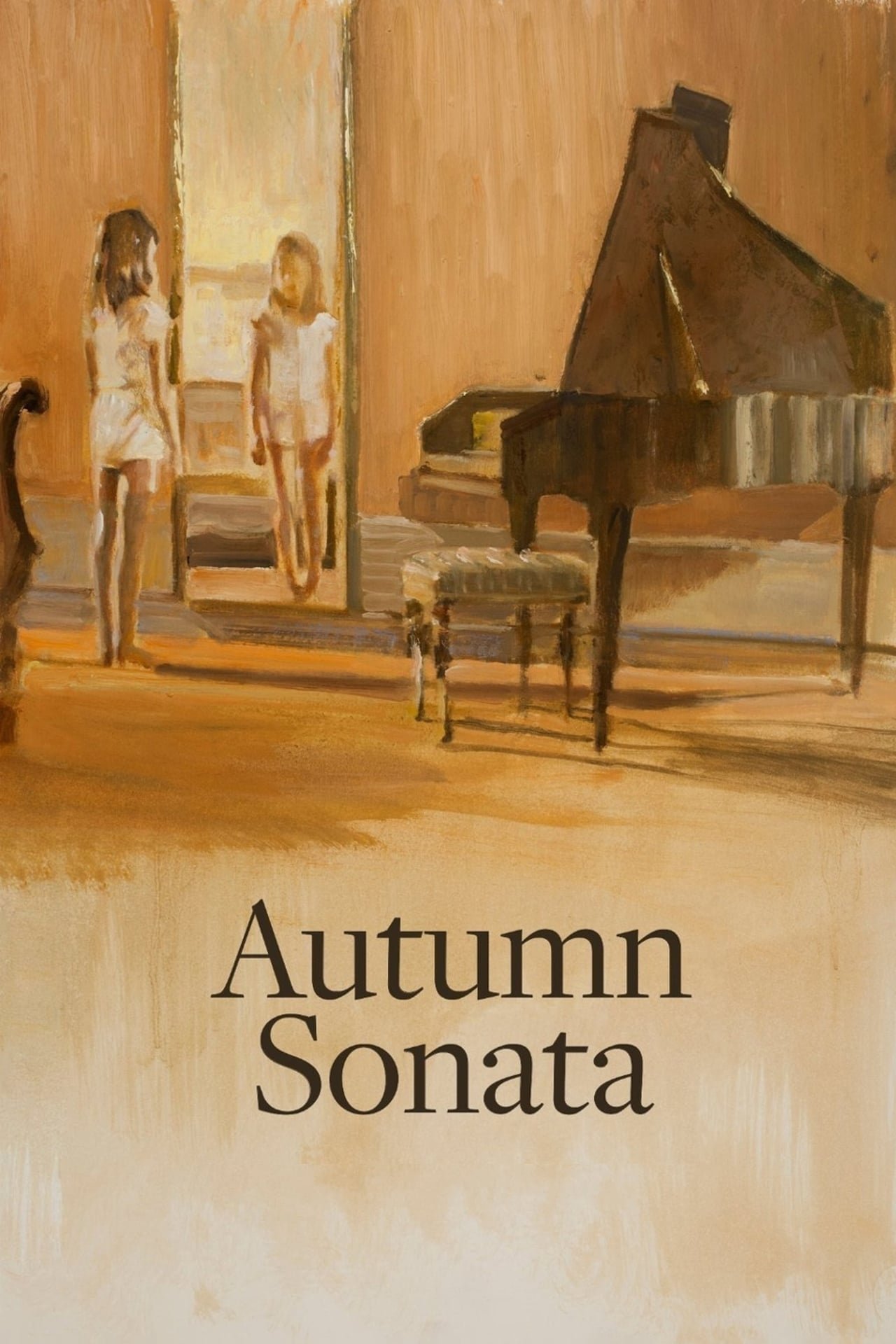
What the Film Is About
My own encounter with Autumn Sonata left me grappling with the raw vulnerability pulsing through almost every frame. I found myself drawn not by the promise of grand events, but by the quiet devastation and the piercing honesty of the emotional standoff between mother and daughter. At its core, this film circles the slow, inexorable unpeeling of familial pain—the kind that lingers beneath polite conventions for decades yet refuses to fade. The true conflict here isn’t external: it’s the seething ache between two women who love, disappoint, and tragically misunderstand one another.
In that sense, I felt that Autumn Sonata is less concerned with plot than with the ache of reconciliation and the desperate search for forgiveness. The film gently but unflinchingly follows Eva as she invites her mother Charlotte—a renowned pianist but a distant parent—into her home, daring to voice old wounds that have festered in silence. It’s an emotional confrontation staged in whispers and glances as much as in words, one that ultimately asks whether we can ever truly be seen—or healed—by those who shaped us.
Core Themes
What struck me immediately was that the film dives deep into the terrain of maternal love and its failures. It’s a study in the ways care can turn to neglect, attention into ambition, and how the hunger for parental approval can haunt a person throughout their life. The themes of guilt, longing, and regret ripple relentlessly through each carefully composed shot. I never felt like I was watching a mere family drama; instead, it felt as if I was witnessing the anatomy of intergenerational wounds—ones amplified by artistic obsession and emotional repression.
As I watched, I realized how specific this film feels to its moment—late 1970s Europe, the aftershocks of a changing world, the shifting position of women’s roles, especially in creative or public life. The film interrogates the sacrifices women make—not only in the name of art, but in the pursuit of recognition and self-worth. Charlotte’s dedication to her career is both her triumph and her downfall; her art consumes the parts of her that might have nurtured her children, and this creates a battleground for validation and resentment.
And yet, I couldn’t help seeing the universality in it all. The struggle to connect, to patch over generational rifts, to question what we owe to those who raised us and what they owe us in return—these questions resonate as strongly now as they did then. In fact, I’d argue that the film’s laser focus on the private agonies of one family opens space for anyone who has ever felt the sting of unmet expectations. Even today, as families continue to renegotiate the line between individual fulfillment and communal obligation, the themes of Autumn Sonata hit with undiminished force.
Symbolism & Motifs
What elevated my viewing from mere observation to genuine engagement was Bergman’s masterful use of motif and symbol. Throughout the film, music emerges as a central metaphor for communication and its breakdown. Charlotte’s piano playing is not just a marker of her talent; it becomes a stand-in for her emotional expressiveness, one that is reserved for audiences and withheld from her family. I found myself fixating on how music, in this story, represents both a bridge and a chasm: moments when Eva and Charlotte play together bristle with unspoken frustration and longing, revealing more than their words ever could.
Hands, too, are a powerful recurring visual motif. The close-up shots of hands—nervous, hesitant, sometimes trembling—suggest the yearning for connection but also the barriers between touch and true intimacy. Every time Charlotte’s fingers glide across the piano keys, I saw a parallel to her failed attempts to reach her daughter emotionally: precise, beautiful, but ultimately distant and practiced.
The autumnal setting itself is no accident; it’s a quietly insistent presence. The season’s decaying beauty feels symbolic of both decline and possibility: the potential for putting old ghosts to rest before a final winter. The domestic interiors, with their deep shadows and golden light, seemed to me a visual echo of that emotional state—half illumination, half obscurity. In that interplay, I found a subtle commentary on memory itself: unreliable, flickering between warmth and chill.
Finally, silence is a motif as forceful as any image or phrase. What isn’t said—and how it hangs between the characters—becomes almost unbearable. This pointed quietness serves as a reminder of the walls we build out of fear or habit, and, for me, it’s the lingering silences that carry the deepest wounds.
Key Scenes
Key Scene 1
The moment I found most essential is the nocturnal conversation between Eva and Charlotte—the heart of the film’s confessional reckoning. Here, I watched as all the protective layers evaporate, leaving behind nothing but naked pain and yearning. The dialogue is relentless: Eva dredges up childhood humiliations, feelings of abandonment, her jealousy of her mother’s career, and the repercussions of emotional neglect. Instead of a tidy confrontation, it became, in my eyes, a sprawling litany of what might have been, what was lost or never given.
This scene crystallizes the tragic gap between intention and effect: Charlotte may have believed she was doing her best, while Eva’s reality was defined by exclusion and self-doubt. It’s not just the grievances that move me; it’s the raw, almost dangerous honesty with which they’re aired. The mother and daughter are finally forced to see the shape of their pain through the other’s eyes. This confrontation is what the whole film circles, and it never releases its grip—for me, it’s the axis around which everything turns.
Key Scene 2
One sequence that startled me with its complexity was the scene where Charlotte plays the piano and Eva, longing for her mother’s approval, tries to perform herself. There’s something devastating about the gulf in artistry, yes—but even more so, the gulf in attention. The music becomes an indictment: Eva pours her vulnerability into the keys, only to receive tepid, clinical feedback from Charlotte.
For me, this isn’t just about art; it’s a microcosm of their entire relationship. The inability to recognize or cherish each other’s efforts—no matter how faltering—reveals the film’s central wound. It’s here that I felt the sharpest sting of envy, admiration, and disappointment, all entwined. It’s also the moment where Charlotte’s own humanity peeks through her narcissistic shell; she perhaps glimpses a fragment of what she has denied her daughter. The scene is an emotional Rorschach test—what each character hears is as revealing as what she plays.
Key Scene 3
The film’s closing moments remain etched in my mind. After all the tears, accusations, and failed reconciliations, Eva writes a letter to her mother—a gesture more of longing than closure. I see the letter as a final attempt at connection, a testament to how hope persists even in the aftermath of devastation. There is no tidy resolution, no grand forgiveness; instead, the film leaves us with a sense of ongoing struggle, suggesting that some fissures cannot be sealed in a single conversation—or even a shared lifetime.
What matters most, to me, is that Eva continues to reach out, even as she recognizes the limits of her mother’s ability to reciprocate. This closing act reframes all that preceded it, shifting the story from tragedy to a quiet act of perseverance. In refusing platitudes or false healing, Autumn Sonata acknowledges the messy, halting nature of love and repair. That honesty lingers long after the credits roll.
Common Interpretations
Whenever I read reactions to Autumn Sonata, I find a few main currents running through critical and audience interpretation. Most agree that the film is a merciless examination of maternal relationships and the emotional collateral of artistic ambition. Some critics see Charlotte’s failings as an indictment of the mythic, self-absorbed “great artist”—particularly the rare female genius forced to choose between family and vocation. Within this context, Bergman’s film becomes, for many, a parable about the costs of privilege and the consequences of devotion to one’s craft.
Others, though—and I often count myself in this group—view the confrontation less as a blunt accusation and more as a meditation on forgiveness and the impossibility of perfect understanding between generations. For these viewers, the film is not just about blame, but about the yearning to be loved by those who are ultimately as fallible as anyone. A third, slightly more psychoanalytic strand interprets the narrative through the lens of Freudian family trauma and unresolved childhood wounds; this can offer insight, but I sometimes think it risks flattening the film’s emotional complexity.
What I think unites these interpretations, though, is an acknowledgment that there are no easy answers. Bergman refuses both melodrama and easy catharsis; he’s more interested in exposing the quiet cruelties and impossible hopes we carry into adulthood. The performances—especially those of Ingrid Bergman and Liv Ullmann—draw praise for their naked willingness to inhabit discomfort. There’s a general consensus that, regardless of one’s read on the specifics, the film’s honesty is both its greatest gift and its sharpest weapon.
Films with Similar Themes
- Cries and Whispers – Another Bergman film that probes the interior lives of women, dealing with pain, estrangement, and longing for connection within a family beset by unspoken grievances.
- Terms of Endearment – This American drama also interrogates the complicated bond between mother and daughter, illustrating the push-pull of love, resentment, and reconciliation over many years.
- Ordinary People – A portrait of familial dysfunction and grief, where suppressed emotions threaten to destroy the possibility of understanding and healing in the aftermath of tragedy.
- The Piano – Jane Campion’s celebrated film about a mother, her daughter, and the role of music in both dividing and bridging emotional chasms, set against a backdrop of personal longing and creative passion.
When I try to distill why Autumn Sonata lingers so stubbornly in my mind, it’s not just the elegance of the filmmaking or the searing performances. It’s the film’s refusal to tidy away the messiness of familial love—its capacity, at once, for devastation and redemption. It says, unflinchingly, that sometimes the people we need most are the least able to give us what we desire, and yet we continue to reach for them—if only to touch the edges of our longing. For me, that makes it not only a film for its era, but an enduring exploration of what it means to be human, flawed, and endlessly searching for connection.
If you’re curious about how this film was originally perceived or how it compares to similar works of its era, these resources may be helpful.
Related Reviews
If you found value in my perspective, you might also enjoy exploring my thoughts on other cinematic landmarks such as Persona and Scenes from a Marriage.