
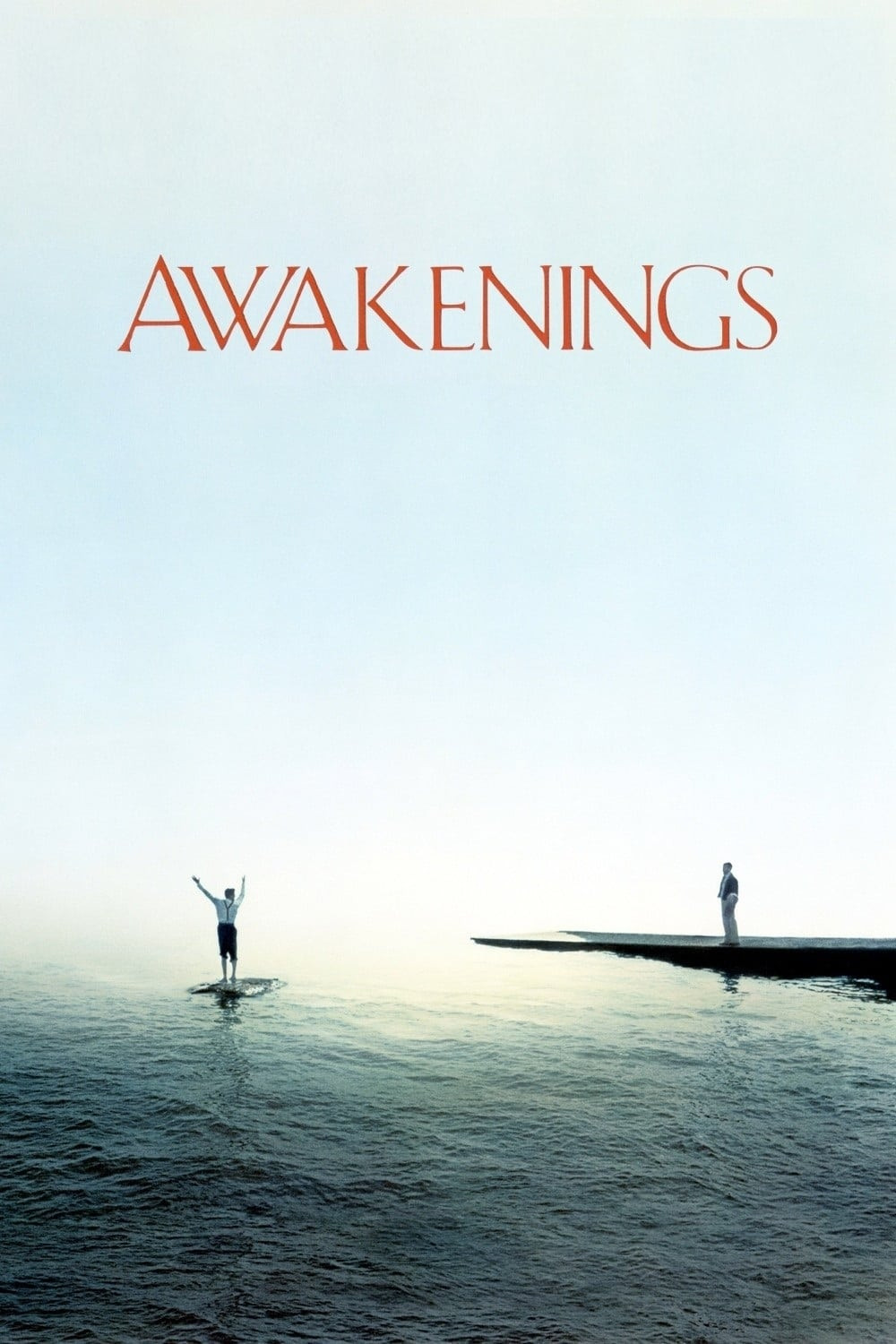
What the Film Is About
When I first saw Awakenings, it left me feeling as if I’d experienced something almost out of time: a convergence of hope, loss, and the brief, miraculous resurgence of life itself. For me, the film isn’t just about patients waking from catatonia. It feels more like a meditation on the nature of presence—what it truly means to be alive, to experience wonder, and to confront the inevitable boundaries of human existence.
At its core, I experienced the film as a tale of human longing—from both the patients, who yearn to reconnect with time they have lost, and the doctors, who seek to bridge the divide between science and empathy. The emotional axis of the movie rests in those fleeting moments of awakening, which underscore not only the fragility of these characters’ conditions but also the resilience of their spirits.
Core Themes
What continues to strike me about Awakenings is the depth of its exploration of human dignity. The film tackles the complex idea that consciousness, however fleeting or impaired, never erases an individual’s inherent worth. Every interaction, every touch, and every hesitant word exchanged between the catatonic patients and their caregivers is imbued with the heavy weight of lost years and the miraculous possibility of recovery.
For me, the film also grapples with the limits—and the hubris—of medical science. Dr. Sayer’s journey is not simply about curing disease; it’s about learning to listen to the silent narratives written inside those he aims to help. The movie constantly returns to the theme of empathy over technique, underscoring that no pharmaceutical breakthrough can substitute for genuine human connection. Released in 1990, these themes resonated in an era grappling with the ethics of emerging biotechnology and deeper conversations around patient autonomy. Today, the message remains urgent, especially in our discussions about disability, mental health, and the quality of life.
I was moved most by how the film asks where hope fits in a world ruled by unpredictable biology and fate. Does hope transform disappointment, or does disappointment eclipse hope? Awakenings never answers this outright; instead, it lets the viewer sit in that tension—never making suffering or joy feel tidy or simple.
Symbolism & Motifs
In rewatching the film, I noticed how frequently everyday objects became powerful symbols. The recurring motif of hands—stilled by illness and then coming alive with tremors of animation—spoke volumes to me about agency and communication. When Leonard first manages to roll a ball or simply clutch a pen, there’s a cosmic weight to those gestures. They’re less about physical recovery than about regaining a place within the living tapestry of the world.
I was also absorbed by the film’s use of windows and mirrors. Glass in the film comes to represent isolation, fragile hope, and both the division and the potential permeability between the world of the “well” and those lost inside themselves. Looking out a window, a patient might see a world on the move—one that they yearn to join. For Dr. Sayer, the glass barrier is also emotional, forcing him to examine where his connection to his patients ends and where his sense of helplessness begins.
And throughout, music operates as a subtle motif of memory and time. The act of playing records or recalling beloved melodies often produces a ripple of recognition in the patients. It’s through music that I felt the movie acknowledged a deep, even primal, connection to joy—one that survives the body’s betrayals.
Key Scenes
Key Scene 1
Early in the film, there’s a delicate moment when Dr. Sayer sits with Leonard’s mother. She shows him photographs and speaks of the boy she remembers. This scene is quietly devastating; it crystallizes the way that disease doesn’t just alter an individual—it reshapes the lives, expectations, and memories of everyone around them. To me, it’s here that I understood the film’s insistence on dignity. When Dr. Sayer listens, truly listens, the boundaries of doctor and patient dissolve, and what becomes visible is a shared humanity rather than a clinical case. It’s not a scene about medicine, but about recognizing who is really lost—and who is waiting to be found.
Key Scene 2
Leonard’s first “awakening” is electrifying not because of its science-fiction undertones, but for its subtlety. The slight changes—the way he focuses, the tentative movements—reflect a kind of birth into a second life, filled with both possibility and profound risk. What touched me here was the tension between celebration and fear. The other doctors and staff look on with hope and disbelief, but it’s Leonard, encountering his own body and environment anew, whose tentative wonder made me reflect on how fragile our grasp on normalcy truly is.
This scene turns the film’s themes on their heads: Is this triumph or merely a pause before inevitable heartbreak? It’s in the ambiguity that I found the story’s compassion—recovery is always incomplete, and yet every moment regained is treated as sacred in its own right.
Key Scene 3
The film’s emotional core, for me, lands in the wrenching final act, as Leonard’s symptoms return. His struggle to hold onto his awakening, pleading for recognition as an individual and not just as a patient, is both a mournful coda and a powerful assertion of identity. Watching him record his final thoughts to Dr. Sayer, I couldn’t help but feel the mounting tension—does life’s value decrease as autonomy fades, or does the struggle itself become a testament to personhood? The film answers in the language of lived moments: Leonard’s brief reemergence is not a failure but a triumph. Even when the advances prove temporary, the ripple effect of those awakenings—in the patients, families, and especially in the transformed heart of Dr. Sayer—remains.
Common Interpretations
I’ve read a number of critical perspectives, and most resonate with my own sense that Awakenings is ultimately less about the medical drama and more about existential questions. Many see it as a meditation on the brevity and splendor of consciousness—that life, even in the smallest dose, is immeasurably precious. Others respond deeply to the film’s portrayal of the ethical limits of medicine: Dr. Sayer’s arc echoes a larger discussion about when to intervene and the cost of imposing hope.
There’s also a common interpretation, especially among disability advocates, that I think is profoundly important. The film complicates the standard trope of the “miracle cure,” highlighting instead the dignity and richness of even “impaired” lives. Rather than suggesting that worth emerges only after awakening, it presents the argument that personhood persists even when it’s hard for outsiders to recognize. Some viewers read it as a subtle critique of the medicalization of difference, while others see it as a testament to resilience and connection.
There are also readings that focus on Dr. Sayer’s own journey—framing the film as a story of emotional “awakening” for the caregiver as much as for the patients. In these interpretations, the movie becomes an examination of empathy, tenderness, and the deeply transformative nature of truly seeing one another.
Films with Similar Themes
- One Flew Over the Cuckoo’s Nest – I see deep resonances in the way both films interrogate institutional power and the boundaries between sanity, autonomy, and conformity within the medical system.
- The Diving Bell and the Butterfly – Like Awakenings, this film is a profound look at inner consciousness surviving physical immobility, affirming dignity and rich inner life even when external communication falters.
- My Left Foot – This story’s attention to the lived reality of someone seen as “incapacitated” reflects a similar insistence on agency and the celebration of small victories against daunting odds.
- Still Alice – The gradual loss of language and memory in this film echoes the themes of identity, agency, and the value of presence within Awakenings, focusing on how families and individuals navigate shifting definitions of self.
For me, what Awakenings ultimately communicates is that human life resists any simple formula. It’s a film about resilience that refuses sentimentality, a drama about science that privileges kindness over dogma, and—perhaps most movingly—a meditation on the responsibility we all share to listen for the voices that risk going unheard. Watching the patients reach out across years of silence to experience music, touch, and laughter, I am reminded that even the briefest glimpses of connection carry a transformative power. In a world often eager to define people by their limitations, the film asks us to find meaning in persistence, and to cherish every fragile, luminous moment of awakening.
If you’re curious about how this film was originally perceived or how it compares to similar works of its era, these resources may be helpful.
Related Reviews
If you found value in my perspective, you might also enjoy exploring my thoughts on other cinematic landmarks such as One Flew Over the Cuckoo’s Nest and The Diving Bell and the Butterfly.