
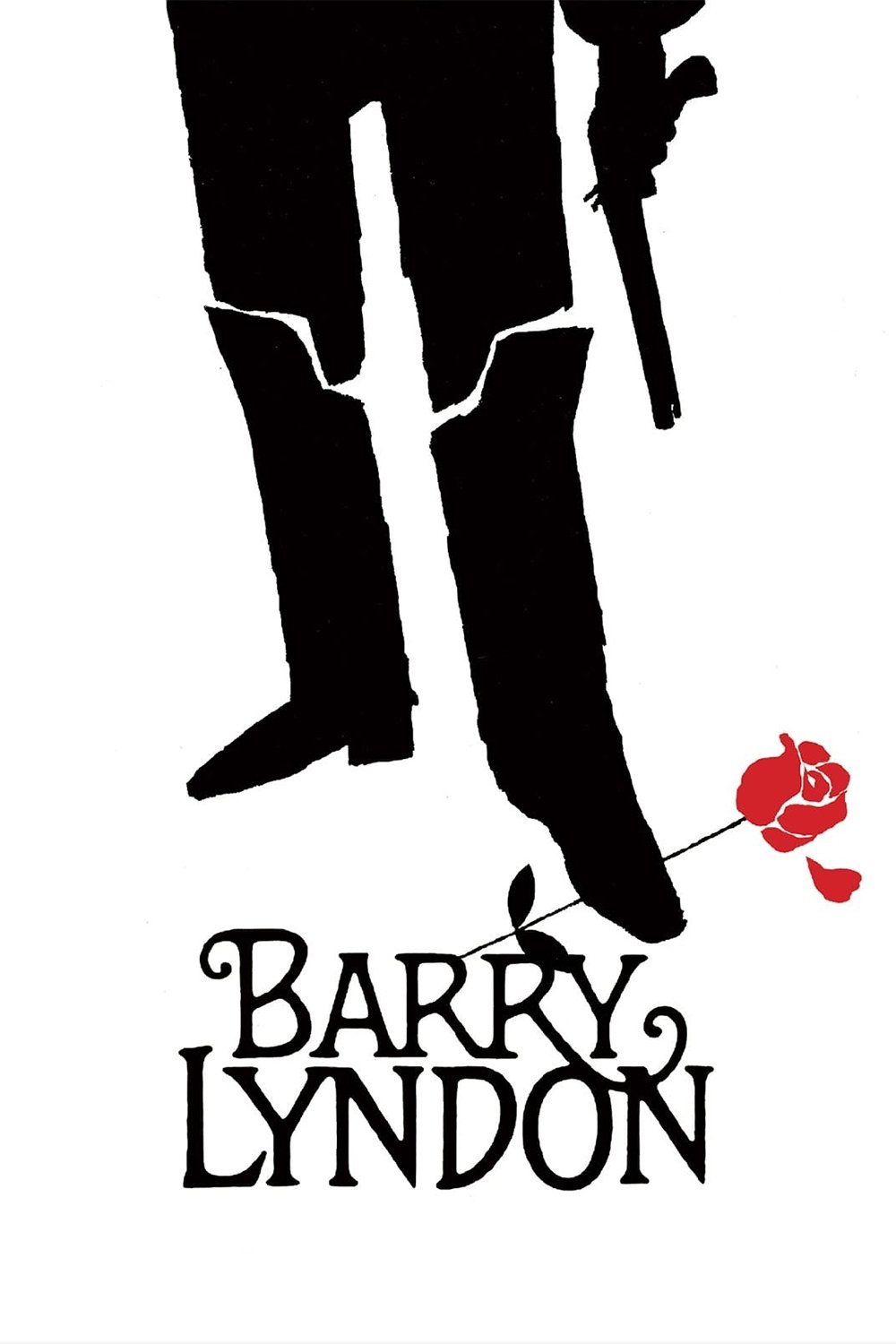
Every time I revisit “Barry Lyndon,” I’m reminded of my own frustrations with the notion of “fate.” Watching Kubrick’s sedate tableaux unfolds like freezing a moment from some old family portrait—noble, distant, yet teeming underneath with secrets and ambitions. What pulls me back isn’t just the technical splendor or Kubrick’s reputation for perfectionism; it’s how the film toys with the illusion of control and the heavy, sometimes suffocating weight of history. I remember the first time I saw it—the patience required, the way every shot seemed to settle and breathe—and, quite honestly, how I used to bristle against its cold detachment. But that detachment, I’ve realized, lets the film become a kind of cruel mirror, reflecting the futility of personal striving against the rules of a society where fate and decorum reign supreme.
What the Film Is About
What “Barry Lyndon” fundamentally traces is the emotional drift of an outsider, Redmond Barry, through the rigid hierarchies of 18th-century European aristocracy. It’s not a rousing adventure or even a cautionary tale in the classical sense—even though it borrows from both. Instead, the story is a meditation on ambition’s price and the seductive myth of self-invention within unforgiving social architecture. Ryan O’Neal’s Barry wants desperately, almost pathetically, to belong, to be someone of consequence. Each triumph, each gambit, brings only brief satisfaction before being suffocated by a greater emptiness, a sense that he’s not ascended but merely changed costumes.
For me, the core of the film is not about history or even class—it’s about identity being endlessly reshuffled by chance and caprice. Barry is tossed about by fortune and misfortune alike, never quite at the helm of his own existence. The narrative voice, often dry and even mocking, constantly reminds us that the outcome is predetermined, that the protagonist’s struggle is doomed. I always found this profoundly unsettling and moving—how the film denies the viewer satisfying emotional catharsis, replacing it with a quiet, inexorable resignation. That, I think, is the film daring me to look beyond surface beauty and to consider what all that effort at self-invention actually amounts to.
Core Themes
To my mind, the film’s most potent theme is the illusion of control—over fate, status, and even personal relationships. Barry’s journey is marked by an almost feverish yearning for inclusion: vengeance, romance, wealth, and parental pride all become tools in his grasping pursuit. The boundaries between authenticity and deception blur at every turn. What I find most contemporary about this is how, even now, ambition is often colored by society’s restrictive lenses—marks of class, lineage, and the judgments of others. Watching Barry’s rise and collapse through this lens feels particularly sharp amid our current obsessions with curated self-images and the social media theater of worth.
Closely entwined is the theme of social rigidity versus personal aspiration. In 1975, the world was roiling from the cultural revolutions of the previous decade—people were challenging rigid systems everywhere, from politics to art. Kubrick, notoriously distrustful of easy revolution, seems instead to present a world where “escape” is a masquerade; power structures persist, simply rearranged to suit their own continuity. To me, the film is less about the past and more an allegory for any age when dreams of social mobility are both cherished and mocked by institutional reality. Even today, this tension feels as fresh as ever—our society is still preoccupied with who gets to belong and who makes the rules.
Symbolism & Motifs
The visual motifs in “Barry Lyndon” are nothing short of hypnotic. For me, the most unforgettable are the candlelit interiors— those elongated evenings in grand drawing rooms, every figure rendered in painterly chiaroscuro. Kubrick’s use of natural lighting does more than give the film its celebrated aesthetic; it strains the distance between characters—emotionally and physically. The fragile flicker of candles becomes symbolic of both the transient nature of Barry’s success and the artificial glow of status. Everything in the frame seems beautiful yet brittle, on the verge of being snuffed out.
Repeatedly, Kubrick frames his characters in tableau-like compositions. I can’t help but read these static, almost suffocating images as visual metaphors for stasis—people trapped by their own roles and ambitions, unable to break free. The motif of mirrors and reflections—most pointedly in Lady Lyndon’s sorrowful, isolated routines—reinforces the film’s obsession with façades. They’re all watching themselves as much as each other, stuck in a game where true feeling is almost irrelevant.
And then there are the landscapes—sweeping, cold, indifferent. These are not settings for heroism, but arenas of fate. The restless movement of armies, duels, and carriages through mist-laden fields suggests that no matter how far Barry runs, the broader world—its rules, its cycles of violence and retribution—remains immovable. I think of these images long after the credits roll; they’re the landscape of aspiration and loss itself.
Key Scenes
The Relentless Duel: Ritual and Ruin
One moment that always lingers is the climactic final duel between Barry and Lord Bullingdon. Here, duel as ritual replaces personal rage with formalized, almost absurd, ceremony. The slow build, the agonizing silence, and the way fate hovers more heavily than any pistol—this scene distills the film’s argument that destiny is enacted through society’s arbitrary customs. Barry’s ruin feels inevitable; by this point, ceremony itself has more power than the individuals involved. The duel, to me, becomes a silent negotiation between pride, cruelty, and the ultimate impotence of violence.
The Candlelit Marriage: Conquest and Emptiness
Another essential sequence is Barry’s wedding to Lady Lyndon. The setting glows with opulence, but the joy is entirely performative. What stands out to me is Kubrick’s insistence on spectacles of formality—the wedding is meticulously composed, almost suffocating. Barry wins the hand of Lady Lyndon, but in doing so, he simply swaps one uniform for another. The glaring absence of intimacy—more a chess move than a union—underscores how achievements versus authenticity is the film’s bitter refrain.
The Departure of Lady Lyndon: Silent Suffering
A scene I return to is the tableau of Lady Lyndon signing the annual allowance for Barry after his downfall. The sheen of her opulent surroundings can’t mask the profound sorrow on her face. The absence of dialogue—only sorrowful, deliberate movement—makes it all the more poignant. Here, Kubrick allows the weight of regret and control to dissipate into silence. Lady Lyndon’s grief becomes the emotional center of the film’s cold world, a rare wound in its otherwise icy formality.
Common Interpretations
Many critics interpret “Barry Lyndon” as Kubrick’s grand meditation on historical determinism and the futility of personal striving. Some see it almost as a rebuke to the romanticized period dramas that came before it—a cold, ironic dismantling of the very myth of heroism. The visual style, too, is widely celebrated as a revolutionary act—emulating master paintings, redefining natural light in cinema, and insisting on an emotional detachment that is nearer to anthropology than empathy.
I frequently see readings that focus only on the technical mastery, as if the film’s beauty justifies its deliberate emotional distance. While I appreciate these views, I can’t help but focus on the aching emotional gaps between the film’s characters. The film’s pessimism isn’t purely intellectual for me—it’s deeply felt. Barry’s journey is not only a parable about class but about the heartbreak of realizing that belonging can be more punishing than outsider status. Where critics see coldness, I see an almost unbearable tension—a suppressed wail beneath the chamber music.
Films with Similar Themes
- Days of Heaven (1978) – Like “Barry Lyndon,” Malick’s masterpiece explores fate, class divisions, and the unreachable promise of a better life, bathing characters in natural light and quiet tragedy.
- Paths of Glory (1957) – Another Kubrick endeavor, this film scrutinizes how institutions crush the individual, pairing bureaucratic fatalism with keen formal rigor.
- The Age of Innocence (1993) – Scorsese’s take on passion and repression in a stratified society echoes Barry’s struggle with the traps of decorum and self-reinvention.
- The Leopard (1963) – Visconti’s sumptuous epic charts personal ambition against the tides of history, with stately visuals masking the vanishing power and inadequacy of its protagonist.
Conclusion
My experience with “Barry Lyndon” has evolved, much like the film’s protagonist—what began as bewildered admiration matured into a nuanced, sometimes painful appreciation. I think viewers today can gain most by resisting the urge to consume it as a plot-driven epic; instead, it’s best approached as a meditation on ambition, failure, and the silent violence of social norms. To unlock its deepest value, one must look for the meaning in the stillness, the beauty in the ache, and the complexity behind Kubrick’s immaculate surface. It’s an experience that rewards patience—and reflection on how we, too, are actors learning and unlearning the rules of our own age.
Related Reviews
If you found value in my perspective, you might also enjoy exploring my thoughts on other cinematic landmarks such as The Leopard and Days of Heaven.
To broaden this interpretation, you may also explore how critics and audiences responded over time.