
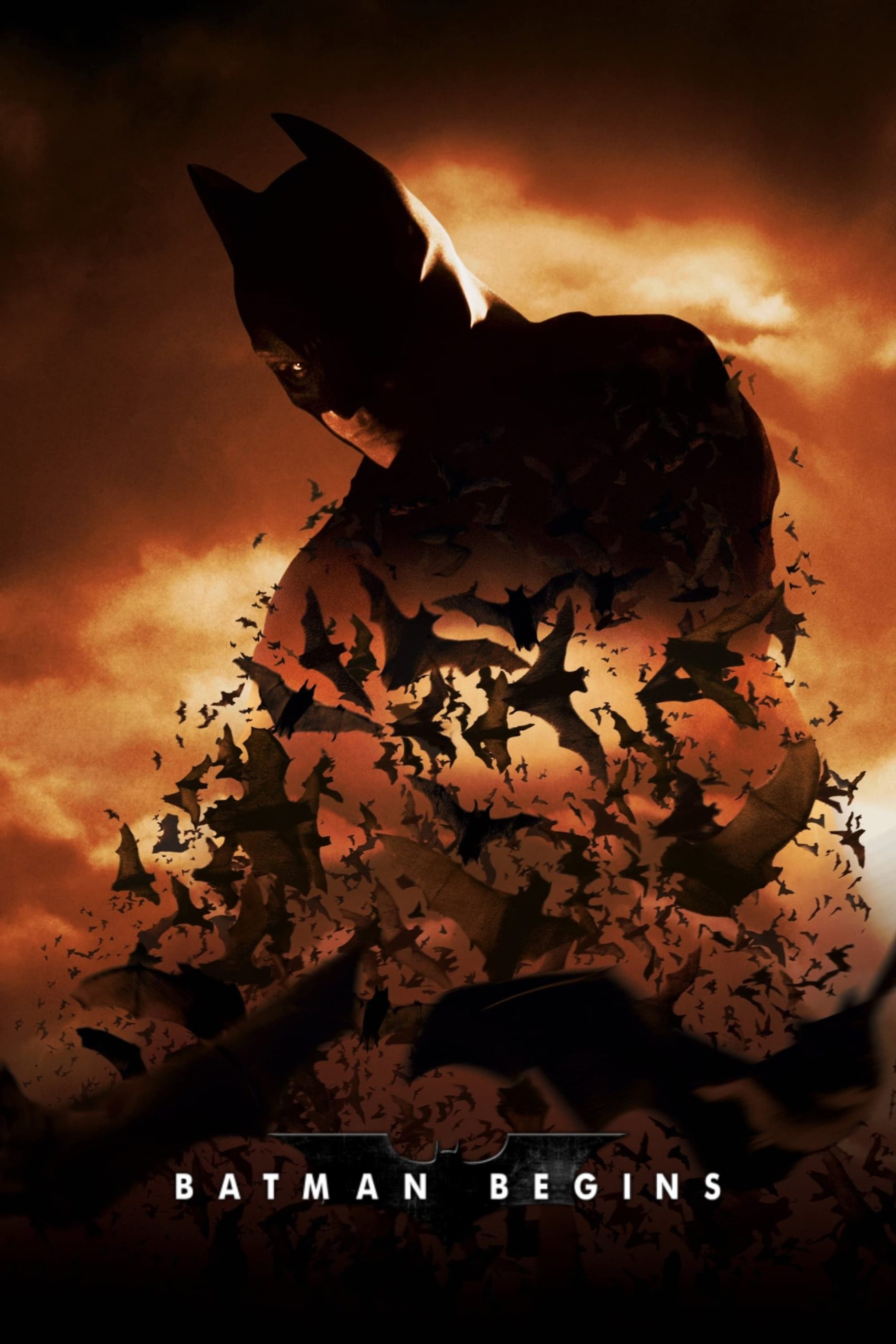
I remember the first time I watched “Batman Begins,” sitting in a shadowy theater as a grad student just a few blocks from a crumbling art deco spire—a real gothic presence that echoed Gotham’s own haunted skyline. Everything about that screening felt charged, punkish, and somehow more urgent than the superhero films I’d grown up with. Nolan’s vision wasn’t content to rehash capes and gadgets; he scraped away the camp, trading it for an existential reckoning with fear, identity, and the churning city below. For me, it wasn’t just Batman who was rebooted, but my entire sense of what modern myth could look like on screen.
What the Film Is About
At its beating heart, “Batman Begins” is the story of a fractured soul wrestling for meaning in a world poisoned by cynicism and decay. Bruce Wayne’s journey is not that of a man seeking revenge, or even justice, in the simplistic sense. Instead, I see an exploration of transformation via trauma—Nolan invites us into the shadows Bruce inhabits, not just physically, but psychologically. The film trades the larger-than-life bombast of its genre for an intimate study of guilt and the relentless pursuit of hope.
What fascinates me most is how the film strains against its own mythos. Rather than simply presenting Batman as a solution or a savior, it interrogates the cost of donning the mask—and the way healing can only begin when Bruce is willing to admit to weakness, not just wield strength. In this respect, the film becomes a meditation on how one can rebuild not only a city, but oneself, from the shattered remnants of childhood loss. Gotham itself is never just a backdrop; it’s a wound festering beneath all the privilege and corruption. In attempting to save his home, Bruce is trying desperately to stitch himself together.
Core Themes
“Batman Begins” thrives on the question of fear as both weapon and wound. Nolan infuses every frame with this motif—not just through Scarecrow’s literal manipulation of fear, but the way Bruce is orphaned by terror itself, left to confront (and ultimately own) the nightmarish imagery of bats. Fear becomes a transformative force; only by embracing it can Bruce claim agency, rather than remain its victim.
Identity, legacy, and responsibility are threads that pulsed through the post-9/11 landscape in 2005. The world, at the time, was searching for new definitions of heroism and security amid uncertainty. The film stands apart from its predecessors by asking whether strength can coexist with vulnerability, and whether changing the world means using force, or something more nuanced—symbol, myth, and the gritty work of restoration. There’s a fascinating tension here: Batman is not above Gotham, but of it, shaped by its decay as much as he seeks to remedy it.
Even nearly two decades later, these core themes feel pressingly relevant: What does it mean to heal a broken world? Must our masks empower us, or do they isolate? The existential urgency I felt in 2005 has only grown more pointed, as cities continue to struggle with injustice and individuals search for purpose in the rubble.
Symbolism & Motifs
One cannot watch “Batman Begins” without being haunted by the rich latticework of symbols Nolan deploys. Bats, naturally, are more than a visual signature; they stand for everything Bruce represses and eventually assimilates. I’m struck by how his phobia, inherited from childhood, is reclaimed as a source of power—turning what mutilates the spirit into a mantle one can wear. This sticks with me far more than the typical hero’s journey because the very thing that could destroy him becomes the engine of transcendence.
The crumbling architecture of Gotham—sewers, alleys, abandoned train lines—fortifies the idea that redemption arises from decay. Lucius Fox and Alfred aren’t just supporting players; they are anchors, reminders that healing is never solitary. I also find the use of water, particularly in the plot to poison Gotham’s supply, a compelling metaphor: fear infects, seeps in unseen, and spreads. The very veins of the city become conduits for corruption, mirrored in Bruce’s own internal struggle.
Finally, the mask and duality motif is omnipresent. When Bruce finally dons the cowl, it’s not simply a costume, but a means of “theatricality and deception”—a message that heroism itself is performance art, and that truth can be smuggled in under the guise of the monstrous.
Key Scenes
When the Bat Emerges: Claiming the Shadows
The first true appearance of Batman—perched in the shipping yard, indistinct and wraithlike—remains, for me, the film’s baptismal moment. The camera doesn’t dwell on his form; it stays with the terrified criminals, the myth being born in their eyes. This scene encapsulates the central message: power flows from what the world fears and cannot fully see or grasp. It is not just Bruce finding his footing, but the audience being seduced into believing in the idea of Batman—dangerous, theatrical, and utterly necessary.
Confronting the Father Figure: The League of Shadows’ Trial
Bruce’s trial high in the mountains with Ra’s al Ghul is, in my mind, the emotional pivot of the film. Faced with prophetic rhetoric about Gotham’s rot, Bruce is forced to choose between vengeance disguised as justice and genuine mercy. That he chooses to save rather than kill sets the tone for the Batman to come—a hero defined by his capacity for self-restraint, not just violence. This refusal crystallizes the film’s radical notion that revolution begins, paradoxically, with compassion.
The Train to Ruin: Gotham’s Line in the Sand
The climax atop the elevated train is more than a set-piece; it’s a confrontation between two visions of order. As the speeding carriage hurtles toward the heart of the city, Bruce is forced to test both his ideals and his pragmatism. Refusing to kill Ra’s al Ghul, but choosing not to save him either, Batman draws the boundary between justice and vigilantism. The moment is electric because it acknowledges the moral ambiguity at Batman’s core—his hands are never fully clean, yet he refuses the logic of no-holds-barred vengeance.
Common Interpretations
Many critics saw “Batman Begins” as a revitalization of the superhero genre, lauded for its return to seriousness and realism after years of cartoon excess. They highlighted Christopher Nolan’s psychological depth and the grounded, noirish feel as both daring and overdue. Yet, I find that some of these appraisals miss an essential irony: by trying so hard to make Batman “real,” the film also exposes the inherent artificiality of heroism itself—how much is performance, how much is self-delusion? Critics often read the film’s darkness as a simple rejection of camp, but for me, the film interrogates whether any symbol, no matter how well-intentioned, is ever enough to change a corrupt system.
Others emphasize the tragic dimension of Bruce Wayne, occasionally suggesting the Batman persona is merely a mask over trauma. I align with this, but I also see Batman as a response to trauma that is fundamentally creative—not escapist, but generative. Instead of just a man haunted by loss, he becomes an artist wielding fear and hope in equal measure. This duality is, I believe, more subversive than many contemporary readings allow.
Films with Similar Themes
- The Dark Knight – Nolan’s sequel expands the conversation about order, chaos, and how a symbol can be corrupted or elevated, deepening the question of justice explored in “Batman Begins.”
- Spider-Man 2 – This film grapples with duty, sacrifice, and the private cost of heroism, echoing Bruce Wayne’s internal dilemmas.
- Unbreakable – M. Night Shyamalan’s moody origin story explores ordinary people embracing painful destinies, twisting the superhero trope into a meditation on identity and trauma.
- V for Vendetta – A masked avenger uses fear as a tool for resistance while wrestling with personal pain, mirroring the interplay of symbol and revolution found in “Batman Begins.”
Conclusion
To approach “Batman Begins” today is, I think, to embark on a double journey: witness the dawn of a more nuanced superhero on film, and reflect on the cost of transformation, both personal and societal. Modern viewers will find resonance in its caution—that to change the world, one must first reckon with the darkness inside. Nolan’s film is not just an origin story, but a dialogue with every viewer wondering how to turn their own scars into strength. Understanding the film’s themes unlocks hidden intricacies—helping us see both the fragility and necessity of hope amid unrest.
Related Reviews
If you found value in my perspective, you might also enjoy exploring my thoughts on other cinematic landmarks such as The Dark Knight and V for Vendetta.
To broaden this interpretation, you may also explore how critics and audiences responded over time.