
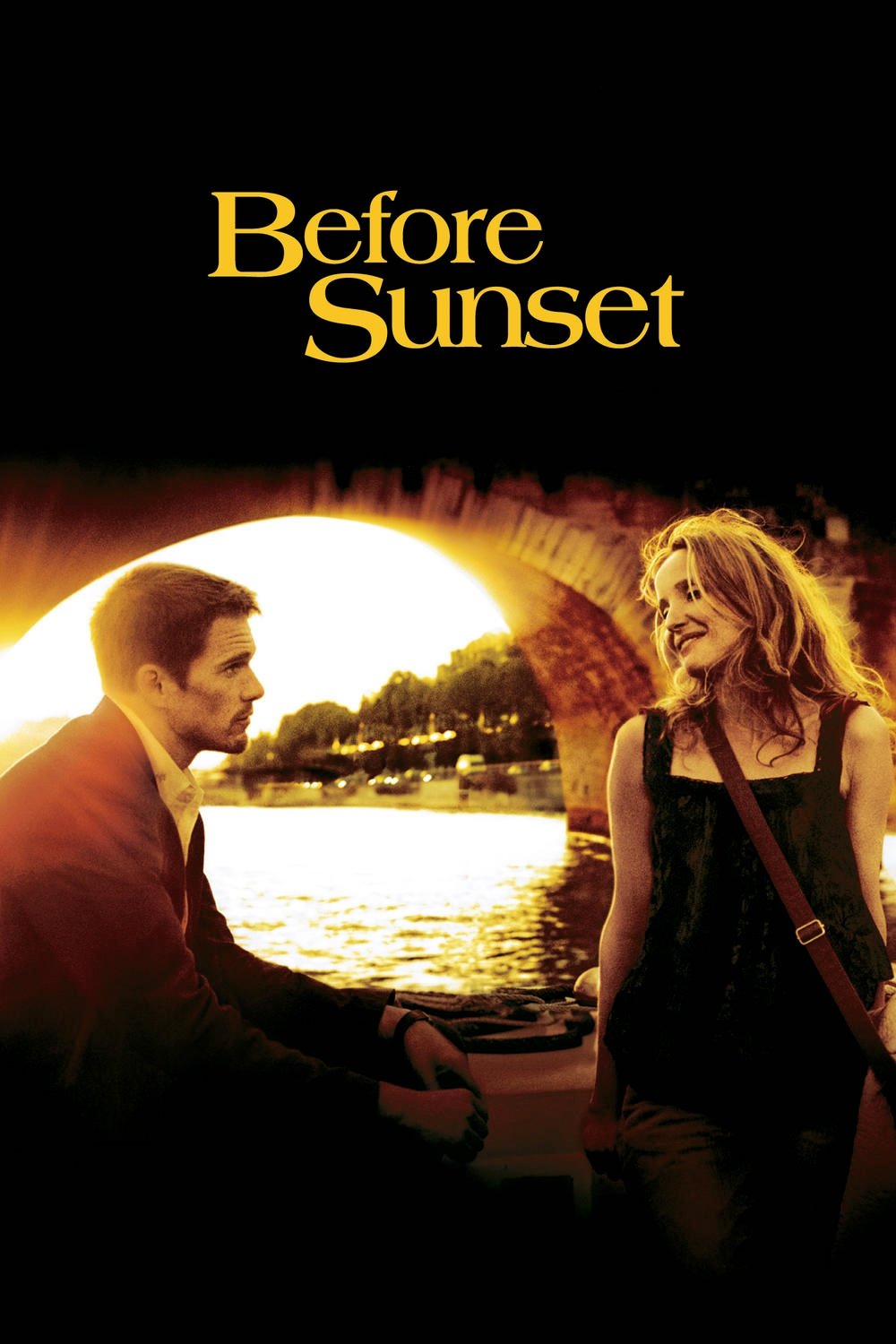
When I reflect on the films that occupy my thoughts weeks or even years after I’ve seen them, Before Sunset always rises to the surface in quiet, persistent ways. I remember the first time I watched Jesse and Celine wander the soft-lit streets of Paris, feeling the ache of time’s passage and the prickling anxiety of what-ifs. There was no fanfare, no swelling soundtrack. Instead, there was a sense of intimacy so real that I felt like I might accidentally intrude on their lingering silences. Unlike movies that try to dazzle or manipulate, this film enveloped me in honest uncertainty—a sensation both familiar and, for me, oddly comforting. It made me question the value of every decision I’d let slip away, while also reminding me of hope that flickers even in fleeting encounters.
What the Film Is About
At its core, Before Sunset is about unfinished conversations and the emotional scars of missed connections. Nearly a decade after their youthful night together in Vienna, Jesse and Celine find themselves in Paris for a brief, unscripted reunion. What strikes me each time I revisit their stroll is the enormous emotional weight packed into such a seemingly simple encounter. They both grapple with their own disappointments and the question of whether paths not taken could have changed everything. The urgency of their limited time in Paris becomes a metaphor for the unanswered questions still echoing between them.
The conflict isn’t grand or external; it’s the friction between their present selves and the ghosts of their younger idealism. Each moment—each word or glance—carries a dual sense of hope and regret. The film becomes, for me, not just about rekindling romance, but about negotiating who we were and who we have become. The crux of the journey is about whether, as adults, we can allow ourselves to chase the dreams we abandoned or if we are doomed to relive the same old patterns forever.
Core Themes
If I had to point to the strongest thematic undercurrent, it would be the merciless passage of time and how it shapes (and sometimes erodes) our romantic ideals. The film is obsessed with memory, regret, and the fragile hope for a second chance. Watching Jesse and Celine attempt to bridge the gulf of nine years brings the discomfort of lost opportunities and the question of whether life is shaped more by our choices or our indecision. At the time of its release in 2004, this meditation felt uniquely relevant: the world was coming to grips with a new kind of uncertainty, with old certainties fading after a turbulent decade. Today, the film’s heartbreak and yearning resonate even more fiercely in an era where we are constantly re-examining our past decisions, both personal and collective.
Authenticity is another theme that refuses to be ignored. Much of their dialogue pits idealism against cynicism, forcing me to consider how much of my own personality has been compromised or sharpened by disappointment. When Jesse and Celine talk about settling—for relationships, for careers, for dreams that feel just out of reach—I see a reflection of contemporary pressures to fit our lives into tidy narratives. The film’s honesty about the difficulty of living authentically still feels bracingly fresh.
Symbolism & Motifs
What draws me into Before Sunset again and again is its subtle but insistent use of motifs. The motif of time is everywhere: in ticking clocks, fleeting shadows, and the gradually shifting light of Paris at sunset. The entire film unfolds in essentially real time, ratcheting up the tension and making every exchanged glance feel urgent. Mirrors, reflections, and glass also recur, reminding me how easily our desires are distorted by memory or regret.
Even the recurring act of walking together through Parisian streets serves as a visual stand-in for their emotional attempts to find common ground. Paris itself transforms from mere backdrop to a living symbol: the city of romance, yes, but also a place where the past and present collide in every café or alleyway. That Celine and Jesse are constantly in motion, yet never really arriving anywhere, is not lost on me. It tells me that what matters is not the destination, but the honesty with which they travel—an idea that seeps into every crevice of the film.
Key Scenes
Revelations in the Bookshop
The scene inside Shakespeare and Company nearly brought me to tears the first time I watched it. Jesse’s public reading, subtle glances at Celine, and the way he halts mid-sentence—there’s a quiet earthquake in his posture. It’s here that the film introduces the stakes at play: both have built lives around the “what if” of that one night in Vienna. It is less about literature and more about exposing their rawest selves before the dance of evasions and recollections resumes.
Confessions in the Car
When the conversation moves into the cramped confines of the car, the emotional tension boils over. Celine’s speech, a torrent of resignation and sorrow about men, relationships, and the impossibility of real connection, stands as one of the most honest pieces of acting I’ve ever witnessed. Her pain is palpable; her longing transparent. I almost felt intrusive watching this confession. It’s a moment where the film finally allows its underlying sadness to break through the surface, making their near-misses even more tragic.
That Apartment Doorway
The arrival at Celine’s apartment is, for me, the film’s most delicate moment. Jesse’s hesitance at the threshold—unsure whether to go in—and Celine’s impromptu Nina Simone performance offers a bittersweet coda to their reunion. The decision is left unresolved, but the look between them says everything words cannot. It encapsulates the film’s refusal to deliver easy closure, instead urging the audience to sit with ambiguity just as the characters must.
Common Interpretations
Most critics interpret Before Sunset as a meditation on love’s persistence and on the power of unresolved feelings. There’s a common consensus that the film is a love letter to second chances, an ode to the erratic paths our hearts force us down. Some praise the film’s dialogue as a form of cinematic poetry, while others focus on its bravura real-time structure and the exquisite tension it creates.
While I agree in part, I find that these readings often miss the harsher undertows of the film. To me, this is not just a romantic fantasy but a confrontation with regret, compromise, and the way adulthood chips away at our ability to leap into the unknown. The romance is less an endpoint than a challenge to the self-deceptions both Jesse and Celine carry. If anything, my reading dwells on the pain of living with choices unmade—and the film’s power is that it neither condemns nor glorifies this condition, but simply inhabits it with startling honesty.
Films with Similar Themes
- Lost in Translation (2003): Another exploration of fleeting connections and emotional honesty in a foreign city, where two strangers find solace in their shared loneliness.
- In the Mood for Love (2000): A film about missed opportunities and the simmering pain of unfulfilled longing; both meditate on the bittersweet ache of unrealized relationships.
- Brief Encounter (1945): This classic looks at the consequences and quiet devastation of an emotional affair that remains, just like Jesse and Celine’s, suspended between fulfillment and renunciation.
- Her (2013): Though rooted in technology, it too investigates how memory, regret, and the need for authentic connection persist amid modern alienation.
Conclusion
Revisiting Before Sunset today, I’m struck by how much it demands of its viewer—the discomfort of empathy, the willingness to sit inside unresolved feelings, and the challenge of seeing oneself in a fleeting, unfinished story. For anyone willing to embrace its ambiguities, the film rewards with layers of emotional truth. Understanding its themes—regret, the passage of time, the courage to confront unspoken truths—offers not just cinematic pleasure, but also a kind of permission to examine our own crossroads with new eyes.
Related Reviews
If you found value in my perspective, you might also enjoy exploring my thoughts on other cinematic landmarks such as Lost in Translation and In the Mood for Love.
To broaden this interpretation, you may also explore how critics and audiences responded over time.