
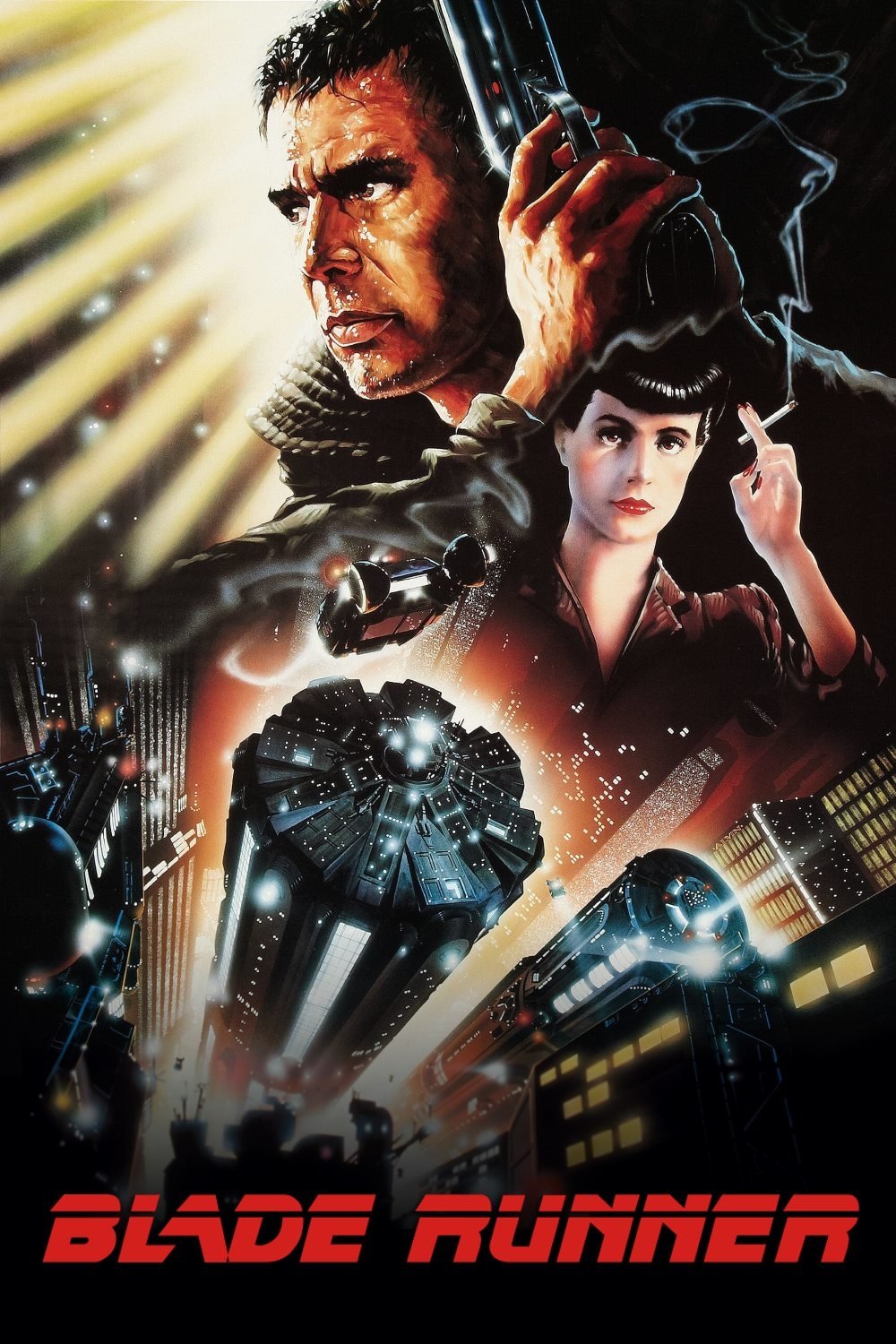
There’s a smell in my mind’s eye when I think about watching “Blade Runner” for the first time—a damp, electric musk that hangs over Ridley Scott’s rain-drenched Los Angeles. I remember feeling almost intimidated by its density, not just visually, but emotionally. What drew me in wasn’t only the dystopian grandeur or even the philosophical questions—it was the film’s refusal to give easy answers. I find myself returning to “Blade Runner” during moments of uncertainty, because every viewing forces me to measure myself against the edges of humanity. Experiencing it is like peering into an ambiguous future where identity is malleable, and morality dissolves under neon lights.
What the Film Is About
For me, “Blade Runner” is a meditation on the fragility of existence—an aching exploration of what it means to be human in a world where humanity itself is manufactured and commodified. Through Rick Deckard, a world-weary “blade runner” tasked with retiring (killing) rogue replicants, the film asks how we define sentience and compassion in a world stifled by technology and capitalist excess. It’s less interested in giving us a traditional hero’s journey and more invested in deconstructing what heroism and empathy look like under a system that erases difference.
The central conflict is not just between Deckard and the replicants. It’s a tension that radiates outward—from the characters to the oppressive cityscape and back into the viewer’s own conscience. The replicants’ desperate yearning for life, love, and more time is heartbreakingly universal. The film’s ultimate question lands not on what separates replicant from human, but what binds all sentient beings in the face of mortality, memory, and longing. I walk away feeling the power of that question gnawing at my certainty time and again.
Core Themes
Identity gnaws at the heart of “Blade Runner.” Every character—human and replicant alike—struggles with defining themselves against a system that denies them agency. This resonates for me because, even decades after the film’s release, we inhabit a world obsessed with authenticity, genre, and artificial boundaries. The film critiques the urge to categorize identity in binary terms (“real” vs. “artificial”) and shows how dangerous, even tragic, that impulse can become.
Memory, too, haunts this narrative. Rachael’s journey, discovering her implanted memories and questioning her own authenticity, serves as an unsettling mirror of our own fears about fabricated narratives. The film anticipated our contemporary anxieties about technology’s ability to rewrite personal histories. In 1982, as digital culture was just beginning, this was prophetic. Today, it’s damningly relevant. Power—especially the power to define and end another’s existence—is interrogated through every close-up and chase scene. That, to me, is what makes “Blade Runner” feel so persistently unsettling: its themes aren’t relics, they’re living dilemmas.
Symbolism & Motifs
Chaos, entropy, and rebirth are tangled up in “Blade Runner’s” recurring rain and darkness. The ceaseless rain is more than atmosphere—it wears down the boundaries between clean and dirty, human and machine, truth and illusion. The city’s oppressive weather almost washes the world away, and I cannot help but see it as a kind of baptism for every character searching for redemption or revelation.
Eyes are everywhere: from recurring close-ups to Tyrell’s thick glasses and the Voight-Kampff empathy test. The eye is a double symbol—it’s both a gateway to the soul and a manufactured product. We’re forced, over and over, to ask whether seeing is truly knowing, or whether every gaze in this world is ultimately a projection—an act of creation as much as of perception.
Origami, often left behind by Gaff, suggests that fragility and transformation run through every encounter. These little animals, rendered from trash, mimic the delicacy of replicant lives, while their existence marks moments of choice—where lethal intent, kindness, and possibility intersect.
Key Scenes
The Unfolding Tortoise: Voight-Kampff and Rachael
One of the most unsettling, essential exchanges involves Deckard’s testing of Rachael. She believes herself to be human; the test reveals otherwise. This moment cracks open the film’s philosophical core—forcing both character and viewer to confront the reality that identity can be erased or rewritten. I watch Rachael’s shock, and I see the terror of finding out that who you are is a story told by others, a commodity in the hands of the powerful.
Batty’s Redemption in the Rain
Roy Batty’s final confrontation with Deckard isn’t the brutal victory or hollow vengeance one might anticipate. Instead, Batty saves Deckard—from both physical death and spiritual emptiness—before unleashing his iconic monologue about memories “lost in time, like tears in rain.” This scene devastates and ennobles me on each viewing: it’s an act of grace, a transcendence of rage, and a rebuke to those who define life by expiration dates rather than lived experience.
The Origami Unicorn
At the film’s conclusion, Gaff’s origami unicorn—the symbolic echo of Deckard’s own dreams—waits silent and enigmatic. It’s an invitation to doubt the reliability of memory and the boundaries of personhood. To me, this final gesture underscores the uncertainty that defines “Blade Runner” and offers one last provocation: is Deckard himself a replicant, and if so, does that diminish or enhance his humanity?
Common Interpretations
Many critics over the decades have fixated on the film’s ambiguity: is Deckard a human, or is he a replicant? This debate can sometimes obscure what I consider the deeper impact of the film. While ambiguity is the texture of “Blade Runner,” I’m more compelled by its insistence that personhood and empathy exist outside easy definitions. The debate, to me, is less important than the existential trembling it creates—the uncertainty that makes compassion possible at all.
Others see the film as a cautionary tale about technology run amok and the decline of civilization. These readings are valid, but for me, “Blade Runner’s” most urgent warning is about the flattening effect of commodifying life and mining memory for profit. It asks us how easily we might become complicit in the systems that dehumanize us.
Films with Similar Themes
- Ghost in the Shell (1995) – This anime explores cybernetic identity and memory manipulation, echoing “Blade Runner’s” philosophical inquiries into what constitutes the self in a technological age.
- Her (2013) – Examines artificial intelligence and emotional intimacy, probing the same boundary between authentic human experience and manufactured connection.
- Children of Men (2006) – Like “Blade Runner,” it crafts a bleak, atmospheric vision of the future, foregrounding questions of hope, empathy, and what it means to protect life when meaning has unraveled.
- Ex Machina (2014) – This film interrogates creation, control, and the quest for freedom among sentient beings caught in power’s grip, paralleling the replicants’ struggle for agency.
Final Reflections: Timelessness in Neon Shadows
Watching “Blade Runner” today, I find that its questions have only grown sharper. The anxieties it stages—about surveillance, the commodification of life, the search for meaning—feel almost prophetic. Modern viewers can approach the film as both a time capsule and a mirror; the world of 2019 imagined in 1982 has bled into our own, making its lessons painfully urgent. I am always drawn to the way it encourages active interrogation, not passive consumption. Engaging thoughtfully with its themes, for me, enriches not only the film experience but my own understanding of what’s at stake in the age of technology and artificial life.
Related Reviews
If you found value in my perspective, you might also enjoy exploring my thoughts on other cinematic landmarks such as “Metropolis” and “Brazil”.
To broaden this interpretation, you may also explore how critics and audiences responded over time.