
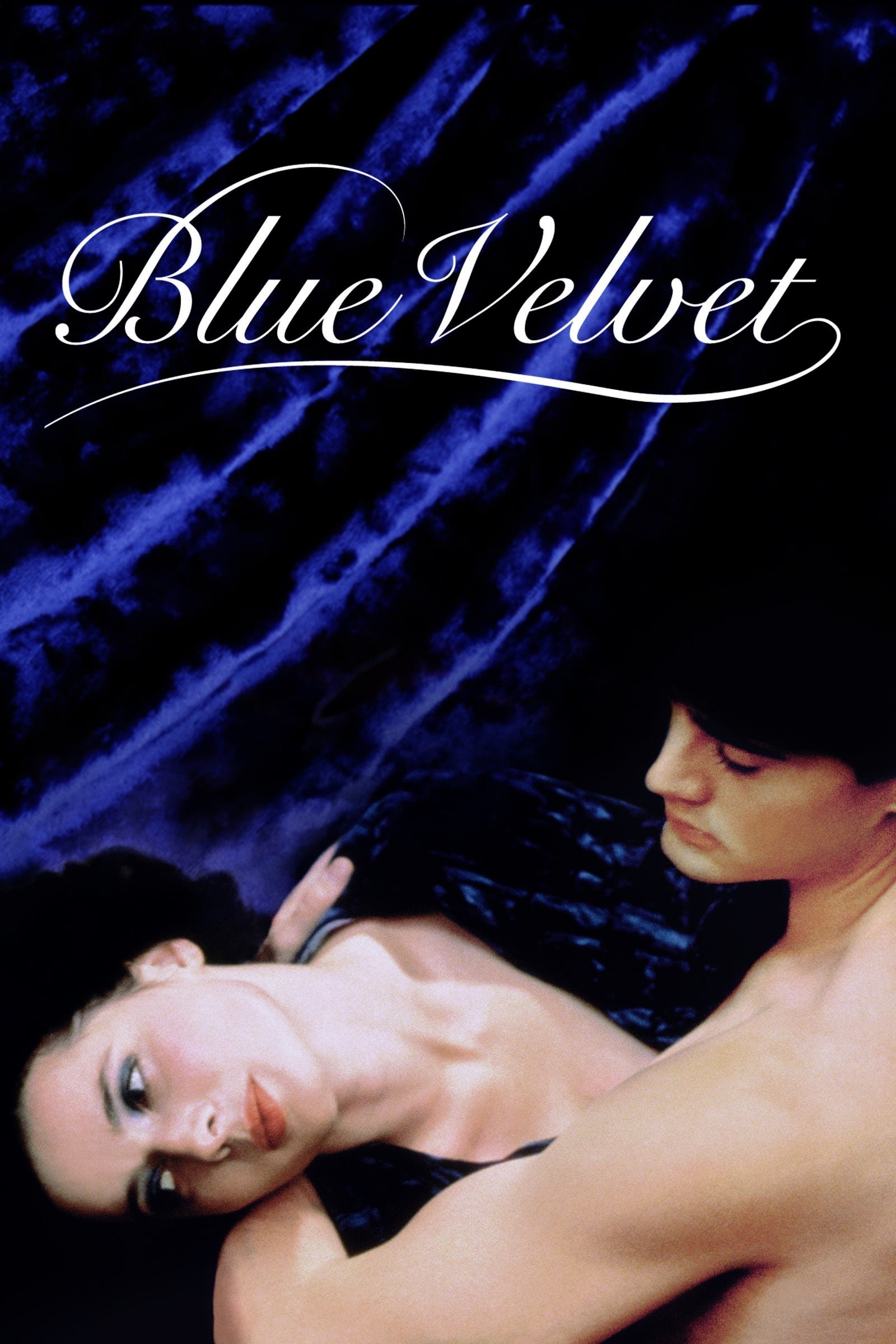
My first experience watching “Blue Velvet” was akin to being dropped into a fever dream—a world that should have been comforting, provincial, and safe, but instead teemed with menace under every lawn and behind every curtain. What struck me immediately was not just the surrealism or audacity, but how David Lynch’s vision seemed to tap directly into my own suspicions about the supposed purity of small-town America. As if confirming that, yes, the idyllic suburbia of my memories and anxieties could hide something unspeakable just out of view. The feeling was thrilling and terrifying—this was no mere whodunit or psychological thriller. It was an existential dare.
What the Film Is About
When I consider “Blue Velvet,” I don’t just see a neo-noir mystery—I encounter a dark rite of passage that thrusts innocence through the meat grinder of experience. At its core, the film follows Jeffrey Beaumont as he stumbles (almost literally) upon an ear buried in the grass, a grotesque totem that signals his entry into a shadowy world festering beneath the manicured lawns and white picket fences of Lumberton. His journey with Dorothy Vallens and Detective Williams’s daughter Sandy is more than investigative; it’s psychological excavation. The conflict between innocence and depravity, and the compulsion to stare into the abyss, form the emotional bedrock of the entire film.
What Lynch attempts—what I feel he achieves—is a simultaneous seduction and rebuke. The film seduces with the romantic trappings of a wholesome, 1950s-flavored Americana, but then whips away the tablecloth, revealing a grotesque spectacle of violence, fetishism, and trauma. Blue Velvet interrogates whether genuine innocence can survive within a system that is inherently corrupt, and wrenchingly suggests that recognizing darkness is a prerequisite for any meaningful form of maturity. I view the film as an almost perverse coming-of-age story—where discovery is tainted, and curiosity itself acts as both a key and a curse.
Core Themes
It’s hard to overstate how strongly the film’s preoccupation with duality and the grotesque underbelly of normalcy resonates with me. The consistent challenge to surface appearances—exposing how easily “normal” conceals rot—feels not just relevant but prophetic in today’s climate of curated digital personas and concealed anxieties. In 1986, this was a radical proposition; Reagan’s America was awash with nostalgia for postwar harmony, but Lynch punctured that fantasy with a scream.
Power relationships are also at the heart of the film’s moral fabric. Frank Booth, Dorothy Vallens, and Jeffrey are all caught in a nightmarish loop of victimhood and dominance, their dynamics constantly shifting. Lynch isn’t only interested in who wins—he asks at what cost, and whether innocence must inevitably become complicit to survive. The theme of voyeurism—literally peering through slats and keyholes—reflects our collective hunger to see and to know, even (or especially) when the knowledge will shatter our illusions. In a modern context, where surveillance, exposure, and the violation of privacy define so much of our world, this feels even more germane.
Symbolism & Motifs
There are few films so obsessed with the power of symbols and recurring visuals as “Blue Velvet.” The actual blue velvet fabric is more than a fetish object; it’s a key to the film’s entire psychology. It represents desire, secrecy, longing, and even comfort—a sensual object that gets reconfigured into something nightmarish. Every time it appears on screen, I sense the characters are crossing a threshold from the mundane into the forbidden.
The severed ear, for me, is a masterpiece of visual storytelling: it’s about listening, but also about the inability to hear the truth or the horror that surrounds us. That first close-up—ants swarming through the crevices—jolts me every time, as if reminding me that beneath all things familiar lies something alien and alive. Lynch’s use of color—oversaturated reds, blues, and greens—contributes to a visual dissonance that constantly undercuts reality with the language of dreams or nightmares.
Motifs of concealment and revelation echo throughout: slatted closet doors, half-closed blinds, and even the cheerful songbirds at the start and end. These recurring images reinforce the tension between the need to protect innocence and the self-destructive compulsion to unveil the forbidden. When I watch, I can’t help but notice how often Lynch invites me to linger on the threshold, never fully inside or outside, always at a liminal, unsettling edge.
Key Scenes
Discovery: The Field and the Ear
The film’s opening moments—Jeffrey uncovering the severed ear in a field—remain for me one of the most potent symbols of lost innocence. The shot lingers, almost lasciviously, on the grotesque detail as the camera burrows inside the ear canal. It’s as if the film is instructing me, from the outset, that to understand this world I must be willing to penetrate surface appearances no matter how horrifying the reality beneath may be. This moment launches the narrative into darker waters and challenges viewers—myself included—to become complicit in an act of looking that is never neutral.
The Closet: Voyeurism and Complicity
The scene where Jeffrey hides in Dorothy’s closet, witnessing her humiliation and Frank Booth’s violence, is an emotional crucible that forces me to examine my own desires as a viewer. The claustrophobic shot composition and the tense, trembling performances turn the closet itself into a kind of psychic womb—one that offers the illusion of protection even as it makes Jeffrey (and me) an unwilling spectator. The moral ambiguity here is heartbreakingly potent: Jeffrey’s desire to know, to see, slowly edges toward participation rather than mere observation. This is the moment when voyeurism curdles into guilt.
Frank’s Ritual: “In Dreams” and the Violent Surreal Refrain
It’s impossible to forget Dean Stockwell’s performance of Roy Orbison’s “In Dreams,” with Frank Booth enraptured and childlike, then suddenly volatile and cruel. The weird theatricality of the scene—the lip-sync, the glowing lamp—feels like the film’s uncanny heart. It encapsulates for me the way Lynch plays with tone, pivoting from kitsch to horror in a single beat, and demonstrates how disarmingly close ecstasy and agony can be. This is the tipping point where everything familiar becomes terrifying; what could have been comic is played as tragic, sinister, and hypnotic. The scene acts as a microcosm for the film’s whole argument: that pleasure and violence, beauty and corruption, are indivisibly entwined.
Common Interpretations
Over the years, I’ve noticed that many critics have settled on reading “Blue Velvet” as a subversive critique of American nostalgia: Lynch as the great American surrealist, puncturing the fantasy of the wholesome suburb with horror and sexual politics. Some see Jeffrey as an everyman corrupted by curiosity, or Dorothy as a tragic metaphor for all women silenced by patriarchy and violence. There’s the Freudian camp, of course, that treats the film as a text about repression and the return of the repressed.
Those readings, while insightful, have always struck me as a bit too clean, too eager to seal the text within a particular box. For me, the film isn’t just a satire or an allegory, but a sustained act of provocation—a demand that I reckon with my own complicity in structures of looking, desiring, and judging. I see the tragedy of Dorothy, yes, but also her steel and resistance; I see in Jeffrey not a cautionary tale, but a warning about the seductive power of forbidden knowledge. The beauty of “Blue Velvet,” in my view, lies in its refusal to offer catharsis or clear boundaries. It leaves me raw, suspended between horror and empathy, desperate for answers that will never come.
Films with Similar Themes
- Mulholland Drive – Lynch’s later masterwork also explores the violence and longing beneath Hollywood’s shiny exterior, with identity, dreams, and desire at its core.
- Rear Window – Hitchcock’s classic thriller uses voyeurism and hidden secrets to probe the ethics of watching and the darkness beneath seemingly normal neighbors.
- American Beauty – Sam Mendes’ film shatters the myth of suburban happiness, exposing sexual repression and the rot at the heart of outwardly pristine domestic lives.
- Donnie Darko – Richard Kelly’s cult film fuses suburbia with the surreal, diving into disconnection, existential dread, and the violent possibilities hiding beneath ordinary routines.
Final Reflections on Blue Velvet’s Enduring Strength
What astonishes me about “Blue Velvet” every time is how mercilessly it pulls me into complicity, urging me to recognize that the urge to look is also the urge to destroy. For contemporary viewers, the invitation is still open—to confront the seductive, contradictory impulses of our own desires, obsessions, and fears. Understanding its themes of duality, voyeurism, and moral ambiguity does not make the journey less nightmarish; it makes it richer and more necessary. If nothing else, the film demands that we stop pretending the monsters live only in other people’s closets, insisting that we look again—and deeper.
Related Reviews
If you found value in my perspective, you might also enjoy exploring my thoughts on other cinematic landmarks such as Mulholland Drive and Rear Window.
To broaden this interpretation, you may also explore how critics and audiences responded over time.