
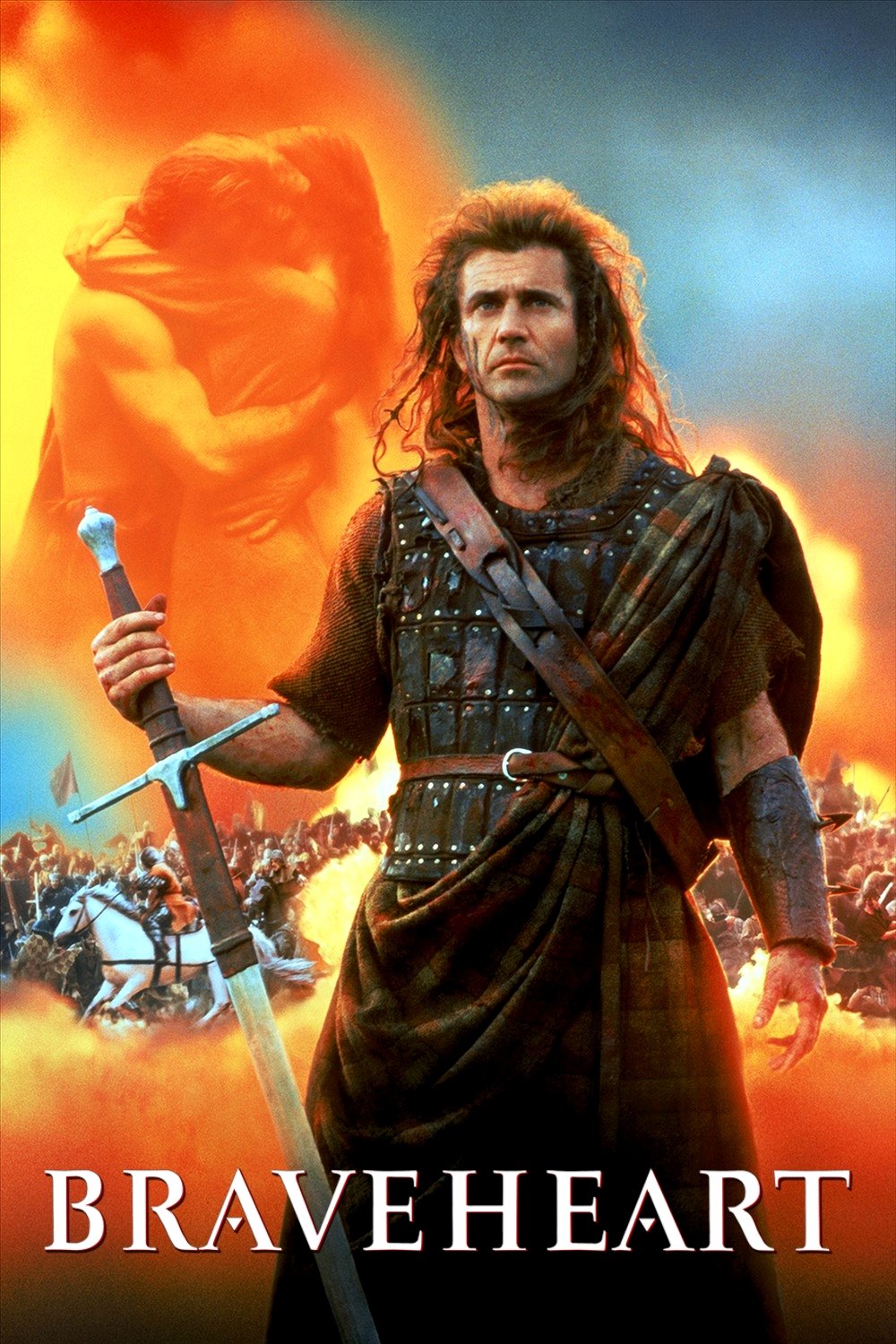
There are few films that have lodged themselves so viscerally in my memory as Braveheart. I remember stumbling upon it in my adolescence, late at night on a family television, the blue filter of the Scottish moors mirrored by the moonlight outside. What struck me on each viewing was not simply the spectacle, but the strange sense of longing it invoked—a clash between a yearning for freedom and the inevitable price such yearning exacts. Mel Gibson’s gruff intensity was my portal to a landscape of ideals marred by brutality, and I found myself haunted as much by the film’s quiet moments as by its thunderous battle scenes. It wasn’t just the story of a rebellion; in many ways, it echoed the very notion of what it means to fight and lose, and why we remember those who do.
What the Film Is About
At the heart of Braveheart lies not so much a chronicle of Scotland’s fight for independence, but what I see as an excruciating meditation on loss, hope, and the burden of heroism. The film follows William Wallace (Mel Gibson), a simple man hurled unwillingly into legend by English cruelty and the fragmentation of his homeland. Yet, as I watch Wallace’s transformation, I sense that his journey is less about personal vengeance or bloodlust than about a deeper reckoning with oppression—the transformation of private pain into collective defiance.
For me, the emotional thrust is the way Braveheart entwines personal grief (Wallace’s loss of his wife, Murron) with the fate of an entire nation. Gibson doesn’t paint a stoic hero; instead, Wallace vacillates between hope and despair, between fierce action and aching vulnerability. This mix of tenderness and savagery, which permeates every aspect of the film, is what makes the narrative linger—not just as an epic, but as a fragile, angry elegy for a world yearning to reshape itself. Ultimately, through Wallace’s eyes, I sense the eternal question: what are we truly willing to risk for an idea we can never fully possess?
Core Themes
On each revisit, the most resounding theme that speaks to me is freedom versus subjugation. Wallace’s cry—“They may take our lives, but they’ll never take our freedom!”—has become pop-culture shorthand, yet I find it still resonates because it touches something universal. In 1995, this was more than just a period piece; the world was emerging from the Cold War, witnessing genocides in the Balkans, and wrestling with postcolonial legacies. I see the film as a reflection of that moment’s yearning for self-determination—both for nations and individuals.
Another theme that I find both enduring and controversial is the myth of the lone, righteous man up against corrupt systems. Wallace is the catalyst for collective uprising, yet he stands as an outsider—first betrayed by the English, but ultimately, far more painfully, by his own Scottish nobility. In an era obsessed with antiheroes and gray morality, Braveheart remains oddly classical in its faith in moral clarity, even as it acknowledges the treacheries of politics and the cost of idealism.
Lastly, I see the price of legend itself as a theme mirrored in the storytelling structure: Wallace’s life becomes legend even before he dies, and the film is conscious of the chasm between who he was and what he becomes in the mouths of those who survive him. For me, this provides a meta-commentary on cinema’s power—the way stories must inevitably distort and amplify reality to inspire.
Symbolism & Motifs
For all its kinetic violence, Braveheart is a film built on recurring visual myths. The most obvious is the blue war paint, which for me is a defiant mask—a stripping away of individuality and a call to unity. It isn’t just a practical gesture; it calls to mind ritual, transformation, something half religious.
I am also drawn repeatedly to the motif of open landscapes versus castles. Whenever Wallace rides across the rolling highlands, there is a sense of promise and possibility. Conversely, interiors—especially the stone chambers of the English and Scottish lords—feel claustrophobic, even suffocating, underlining the soul-crushing force of political machination. This contrast, I find, visually encapsulates the freedom Wallace seeks versus the entrapment imposed by power.
Finally, I cannot ignore the way the thistle recurs—left on Wallace’s father’s grave then again as a token of memory and loss. To me, it stands for both suffering and perseverance, a simple, hardy resilience in the face of overwhelming violence. These repeated touches reinforce the film’s deeper message: that acts of love and memory counterbalance brutality, even if only for a moment.
Key Scenes
A Childhood Shattered by Violence
The initial scenes of young Wallace witnessing the deaths of his father and brother have always stayed with me. This is not just perfunctory backstory; it’s the crucible in which his entire worldview is forged. The rawness of his grief, standing beside corpses, is contrasted with the hopeful simplicity of his life before the English intervention. It’s in these formative moments that I see the film asserting the long reach of trauma, a theme as relevant to the personal as it is to the political.
The Unspoken Farewell
Wallace’s wedding to Murron in the forest, witnessed by only a priest and the gentle wind, is deceptively serene. What resonates for me is how this act of private devotion stands in radical opposition to the public violence that follows. Their stolen happiness—brief, wordless, honest—serves as both foundation and ghost throughout the rest of the film. When Murron is killed and Wallace is forced to mourn her with silent rage, the earlier scene becomes retrospectively tragic, lending every subsequent act of rebellion a furious tenderness.
Defiance on the Battlefield
The Battle of Stirling, with its infamous speech, is the heart of Braveheart’s legend. I am always struck by how Gibson directs the camera not just toward carnage, but toward faces. The speech itself—impossibly rousing, absurdly mythic—transcends cliché by the way it shoves together yearning, fear, and bravado. For me, this scene fuses personal stakes to communal action; watching Wallace galvanize his men, I am reminded that revolutions, however mythologized, are made up of trembling individuals.
Common Interpretations
Many critics, especially in the wake of the film’s release, read Braveheart as an exercise in patriotic bombast and historical wish fulfillment. Some condemned its factual inaccuracies and accused it of jingoism or masculine excess. I understand this lens—certainly, the film is hardly subtle, and its violence can become operatic.
Yet, my own sense is that these readings miss the film’s emotional undercurrent. For me, the narrative isn’t simply about the glorification of bloody rebellion or “us versus them”; it’s about the costs of heroism, the ache of lost love, and the ambivalence of victory. While the legend burns bright, the film is punctuated by quiet moments of doubt and failure that many critics overlook. Thus, while I acknowledge the criticisms—especially around the simplistic portrayal of Scots and English alike—I find that its myth-making is more self-aware than often credited. Its power lies not in realism, but in the emotional truth it evokes.
Films with Similar Themes
- Gladiator (2000): Another tale of a reluctant hero who rallies the masses against imperial corruption, pursuing both vengeance and a vision of a lost home.
- Spartacus (1960): Stanley Kubrick’s epic charts the journey from enslavement to rebellion, exploring the meaning and cost of freedom in the face of insurmountable odds.
- The Last of the Mohicans (1992): Michael Mann’s romantic war drama similarly delves into the personal costs of conflict and heroism amid larger historical forces.
- Aguirre, the Wrath of God (1972): Werner Herzog’s feverish portrait of obsession and delusion interrogates the dangers of mythic ambition and the boundaries of power.
In Retrospect: Why Braveheart Still Resonates
I believe that Braveheart’s relevance today emerges from its bravery not in accuracy but in feeling. Modern audiences—especially those living through waves of upheaval—can approach it as an unapologetic myth, a lament for lost innocence and pocket of hope amid cynicism. Engaging deeply with the film’s themes allows you to see beyond its blood-soaked spectacle, to the underlying compassion and yearning that drive its hero—and perhaps, all of us.
Related Reviews
If you found value in my perspective, you might also enjoy exploring my thoughts on other cinematic landmarks such as Gladiator and Spartacus.
To broaden this interpretation, you may also explore how critics and audiences responded over time.