
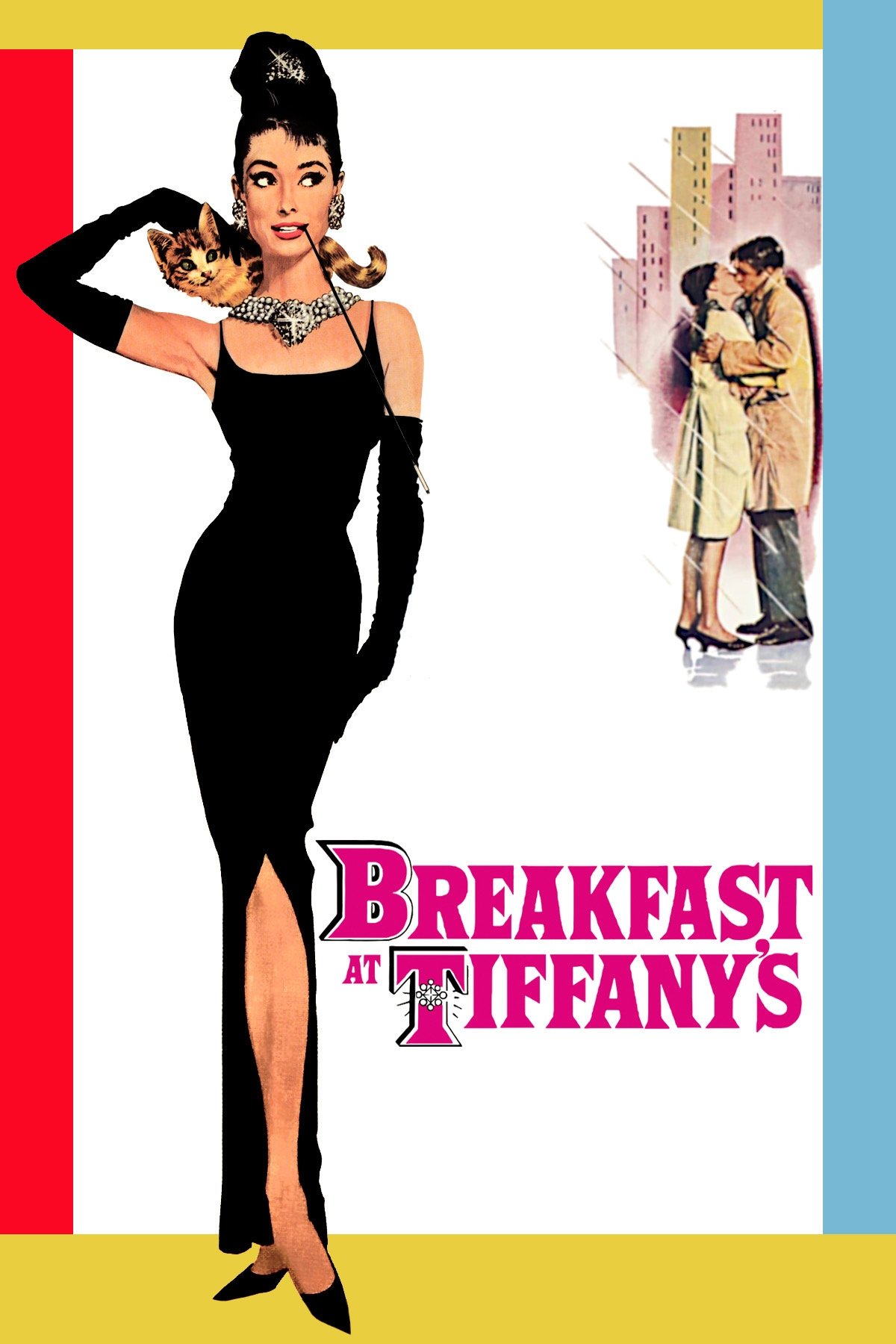
Stepping onto Fifth Avenue: My First Encounter with Holly Golightly
I remember the first time I watched “Breakfast at Tiffany’s,” feeling as if I’d been handed the keys to a private dream—one that sparkled with possibility but hid something haunting beneath the surface. Audrey Hepburn’s Holly Golightly stood before me, coffee cup in hand, pearls glimmering in the morning light, and I was immediately enchanted. Yet, even in my earliest impressions, I sensed that beneath Holly’s airy charm and the film’s glossy Manhattan fantasy lay a melancholy that refused to be tamed. The movie isn’t just a confectionary romance or breezy comedy; it’s an aching meditation on identity, longing, and the elusive quest for belonging.
Gilded Windows: Tiffany’s as a Symbol of Longing
Each time Holly gazes through Tiffany & Co.’s imposing windows, I’m struck by how the film transforms a luxury storefront into a cathedral of hope. Tiffany’s becomes more than a jewelry store—it’s a sanctuary where Holly believes nothing bad can happen, a place that promises safety and certainty in a world that continually slips through her fingers. I see Holly’s ritual as her attempt to draw boundaries around the chaos of her life. In her world of late-night escapades and shallow relationships, Tiffany’s stands for a fantasy of permanence—sparkling proof that stability might be attainable, even for someone as rootless as she is. The glass barriers separating Holly from the jewels are no accident; they echo the distance she maintains between herself and real connection. Tiffany’s, with its cold beauty, is a kind of emotional armor.
Inventing Oneself Anew: Holly and the Art of Self-Creation
What astonishes me about “Breakfast at Tiffany’s” every time I revisit it is how radically Holly reinvents herself. She is, in the purest sense, a self-made myth, a woman who has slipped free of her origins and stitched together a persona from scraps of glamour, Southern innocence, and learned nonchalance. For Holly, self-invention is an act of survival, not deception—her transformation is less about trickery than about desperately seeking a version of herself that feels safe and beautiful. When I watch her banter in the presence of wealthy suitors or dodge questions about her past, I’m reminded that her performance is as much for herself as for the world around her. The film understands that identity is fragile, that we’re often compelled to create stories about ourselves to endure the uncertainty of life. Every feathered hat and clever quip is both armor and aspiration.
The Price of Freedom: Loneliness in the Modern City
In the midst of bustling New York, Holly’s loneliness feels almost cinematic itself—amplified by the city’s anonymity and the ceaseless noise of parties and conversations. There’s a subtle cruelty to the film’s portrait of independence. Holly’s fierce insistence on freedom, her refusal to be “caged,” is painted as both heroic and deeply isolating. Unlike the fairy tale romances that Hollywood adored, “Breakfast at Tiffany’s” offers a far more complicated vision of female autonomy. I’m always moved by the way Holly’s freewheeling lifestyle becomes, paradoxically, a kind of prison. The more she rejects attachment, the more adrift and untethered she becomes, haunted by the “mean reds”—her term for a formless dread that creeps in when everything else is quiet. The film seems to ask: Is true freedom possible without intimacy, and at what cost?
Echoes of the Outsider: The Quiet Rebellion of Paul Varjak
While Holly commands the screen, I can’t help but be drawn to Paul Varjak’s quiet rebellion. Far from a traditional leading man, Paul—played by George Peppard—mirrors Holly’s longing and uncertainty. He, too, is performing a role: kept by a wealthy woman, struggling to write, yearning for authenticity in a world that rewards surface over substance. Their friendship and eventual romance are not the stuff of grand declarations but of bruised vulnerability, two outsiders recognizing a kindred spirit in the other. I see Paul’s journey as a counterpoint to Holly’s—where she flees from roots and attachments, he tentatively moves toward them, ready to risk himself for genuine connection. In this pairing, I find the film’s deepest wisdom: intimacy is terrifying precisely because it asks us to drop the masks and reveal our true selves, imperfections and all.
The Specter of the Past: Escape, Denial, and the Fear of Home
I’m always struck by how the film handles Holly’s past—her flight from rural Texas, her abandoned marriage, her refusal to claim any fixed identity. The narrative flirts with the painful truth that reinvention can’t fully erase the scars of what we’ve left behind. Holly’s refusal to acknowledge her history is both a coping strategy and a wound; she is constantly running, terrified that the “real” Holly will be unlovable or unworthy of the stability she craves. When her brother Fred’s death shatters her carefully maintained world, we glimpse the vulnerable child beneath the dazzling exterior, and it’s this moment—more than any declaration of love—that anchors the film’s emotional weight. The past lingers, no matter how skillfully we try to dodge it, and true freedom comes not from denial, but from the courage to face what haunts us.
The Myth of the Happy Ending: Rain-Soaked Redemption or Something More?
The final scene, with Holly and Paul in the rain searching for the lost cat, has lingered with me long after the credits roll. On the surface, it plays as the consummate romantic climax: love found at last, loneliness conquered. But each time I watch it, I’m left unsettled by its ambiguity. This ending isn’t about easy answers or perfect fulfillment; it’s about the possibility that love, messy and uncertain, might be enough to break through a lifetime of defenses. The cat, unnamed and free, is more than just a pet—it’s a stand-in for Holly’s own search for belonging, and by choosing to find and name him, she gestures toward accepting permanence and vulnerability. The embrace between Holly and Paul isn’t a neat bow on their relationship, but an open-ended leap of faith. The film dares to suggest that the real happy ending isn’t security or wealth, but the courage to stop running and finally let oneself be known.
Between Laughter and Sorrow: The Film’s Peculiar Alchemy
Every time I return to “Breakfast at Tiffany’s,” I’m newly aware of the film’s uncanny ability to blend lightness and melancholy. Its comedic touches—Holly’s wild parties, her irrepressible quips—mask a persistent sadness. The movie’s brilliance lies in its refusal to resolve this tension, instead allowing the two to exist side by side, much like Holly herself. Whether it’s Mancini’s bittersweet “Moon River” or the abrupt intrusion of heartbreak, the film refuses to settle for just one mood or message. That sense of contradiction is central to its power: the most charming moments are always shadowed by a sense that something precious is at risk of being lost. In Holly’s world, joy and sorrow are inseparable, and it’s this emotional complexity that gives “Breakfast at Tiffany’s” its enduring resonance.
For Those Who Crave Bittersweet Glamour
If, like me, you’re drawn to films that expose the glitter and ache of self-invention and longing, I recommend seeking out “The Apartment” and “Roman Holiday.” Each captures the fragile dance between appearance and longing, offering their own meditations on loneliness, hope, and the search for home.
If you’re curious about how this film was originally perceived or how it compares to similar works of its era, these resources may be helpful.