
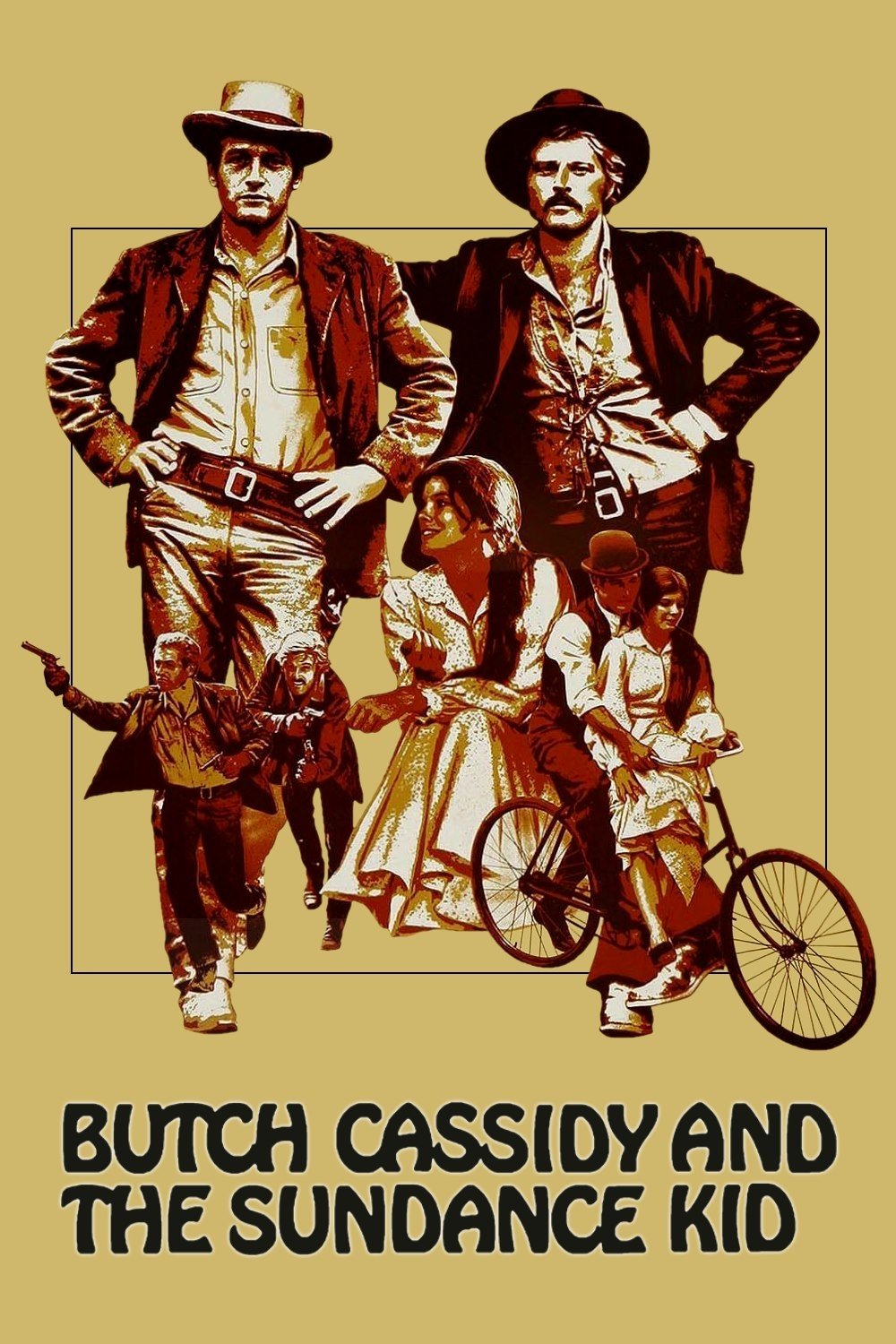
The first time I watched “Butch Cassidy and the Sundance Kid,” it was not in the hushed reverence of a repertory theater but on a battered VHS tape, lent by a friend whose father called it the last great Western. My own father preferred the John Ford epics—stoic, monolithic, all square jaws and manifest destiny. “Butch Cassidy,” with its effortless banter and a hangdog sense of fun, felt like something illicit: a Western that didn’t take its own mythology at face value. That sly subversion, married to real vulnerability, is what continues to draw me back.
What the Film Is About
Many see “Butch Cassidy and the Sundance Kid” as a clever fusion of action, Western, and buddy-comedy, but for me, beneath that buoyant surface, it is a film about change and obsolescence. The titular outlaws, played with effortless charisma by Paul Newman and Robert Redford, are not just running from the law; they are running from time itself, from the tide of modernity that is edging men like them out of the world.
What fascinates me most is the way the central conflict is framed—not as heist versus authority, but as freedom versus inevitability. The film poignantly chronicles two men clinging to a romantic ideal of themselves just as that ideal becomes impossible to sustain. The slow-motion collapse of their world—rendered with both humor and melancholy—gives the film its emotional charge. Their journey is less about escaping Pinkerton pursuers and more about confronting the futility of nostalgia in a changing landscape. I find the film’s reluctance to mourn their passing with too much sentimentality deeply honest.
Core Themes
If I had to isolate what endures in “Butch Cassidy and the Sundance Kid,” it’s the film’s urgent meditation on friendship as resistance. The easy, patter-filled camaraderie between Butch and Sundance is less a narrative device than a bulwark against a world turning unfriendly. Their banter—sharp, funny, sometimes heartbreaking—is how they stave off the fear that they’re relics. To me, this celebration of friendship in the face of uncertainty feels as necessary today as it was during the turbulent late ’60s, when the film debuted. As social norms were upended and ideas of heroism were reexamined, the film’s immense popularity was, I think, a symptom of—and a salve for—that larger societal unease.
The film is also haunted by the specter of inevitability and decline. Both men are keenly aware of their approaching irrelevance—the railroad, the motorbike, and superhuman pursuers signal a world that no longer needs (or romanticizes) men like them. In 1969—amid generational clashes and protests—this question of where, or if, old values fit into a new era resonated. Today, in a world still marked by rapid transition, I’m moved by its portrayal of people seeking dignity in the act of adaptation, however doomed.
Symbolism & Motifs
Motifs abound in “Butch Cassidy and the Sundance Kid,” and what strikes me most is how the landscape operates as both haven and adversary. The American West, luminous and vast in Conrad Hall’s photography, is both beautiful and merciless—a space where escape and entrapment coexist. The recurring motif of trains stands out: each heist is laced with both farce and violence, but the train itself becomes a symbol of unstoppable progress, ever-encroaching.
There’s also the motif of bicycles, which initially feels like comic relief when Butch borrows Etta’s for a lighthearted ride. But the bicycle, an icon of modernity, quietly signals their inability to keep up: technology will always outpace them. Likewise, the shifts between sepia-toned stills and color film act as visual reminders of memory and change—the story is as much about looking back as moving forward. And finally, the rain-drenched sequences remind me of a gentle, inescapable erosion: nature itself refusing to pause for these outlaws.
Key Scenes
“Raindrops Keep Fallin’ On My Head” – Innocence and Escape
I have always been ambivalent about the infamous bicycle sequence. At first blush, it feels almost incongruous—a pop song montage in the middle of an outlaw movie. Yet, the more I sit with it, the more I see its purpose. It is the one scene where Butch (and by extension, Sundance and Etta) seem truly free. For just a moment, the seriousness of pursuit is suspended; youth, play, and idle romance reign. Its fragility is the point—that kind of innocence cannot last, and all the more precious for its impermanence.
The Chase – The Relentless Pursuers
The long, nearly wordless chase sequence where the super-posse tracks Butch and Sundance is a masterclass in suspense and existential threat. What unnerves me is the almost supernatural persistence of their pursuers, whose faces are never clearly seen. The repetition of the phrase “Who are those guys?” is less a practical question and more an existential one: how does anyone outrun the future, or anonymous, relentless progress? For me, this scene shifts the film from comedy to a mode of real menace.
The Bolivian Standoff – Acceptance and Defiance
The final moments of the film, as Butch and Sundance huddle in hiding, wounded and cornered, resonate with me more than any shootout. The decision to freeze-frame their doomed charge as gunfire erupts is both devastating and poetic. It allows them a kind of immortality—a last act not of violence, but of courage and friendship. That ambiguity—do they die, or does their legend endure?—haunted me long after the credits rolled.
Common Interpretations
Most critical readings of “Butch Cassidy and the Sundance Kid” pivot on its status as a postmodern Western—a film that lampoons genre conventions while earnestly mourning their passing. Many interpret the constant banter, irreverent humor, and refusal to grant its heroes nobility as a sly deconstruction of myth. I certainly agree there is a knowing irony at play, but too often, I find these readings neglect the deep sincerity at the film’s core. There’s a warmth—especially in Newman and Redford’s performances—that resists pure subversion. While some critics see its playful tone as undercutting its stakes, I believe it enriches the tragedy: by making us genuinely care for these men, the ending lands all the harder.
Another common interpretation is that the film is an allegory for 1960s America, catching the end of an era as the hopefulness of the decade gave way to cynicism. I’m sympathetic to that view, though my own takeaway is less about grand metaphor and more about the personal: the film asks what happens to people who have more charm and wit than answers, who find themselves out of step with the times, and who carry on regardless. That, in its specificity, is what moves me.
Films with Similar Themes
- “The Wild Bunch” (1969): Like “Butch Cassidy,” Peckinpah’s film wrestles with outlaws facing extinction in a changing West, but with a far more nihilistic edge.
- “Bonnie and Clyde” (1967): This film’s doomed lovers/outlaws echo the interplay of romance, myth, and tragic inevitability—and, like “Butch Cassidy,” subvert the conventions of their genre.
- “Hud” (1963): Newman’s earlier turn as an anti-hero in a West that has lost its way thematically dovetails with “Butch Cassidy’s” elegiac mood.
- “No Country for Old Men” (2007): The Coen Brothers’ modern Western obsesses over the unstoppable forces dismantling the old world, much like the super-posse in “Butch Cassidy.”
In Closing: Finding the Present in the Past
For anyone encountering “Butch Cassidy and the Sundance Kid” today, I suggest approaching it as neither pure genre nor pure spoof. What lingers, decades on, is how much joy and sadness can inhabit the same story. Understanding its themes—friendship against oblivion, comedy edged with despair—allows us to see our own fleeting moments of grace. Above all, I recommend embracing the film’s contradictions, its refusal to offer neat solutions. In that refusal, it becomes unexpectedly timeless.
Related Reviews
If you found value in my perspective, you might also enjoy exploring my thoughts on other cinematic landmarks such as Bonnie and Clyde and The Wild Bunch.
To broaden this interpretation, you may also explore how critics and audiences responded over time.