
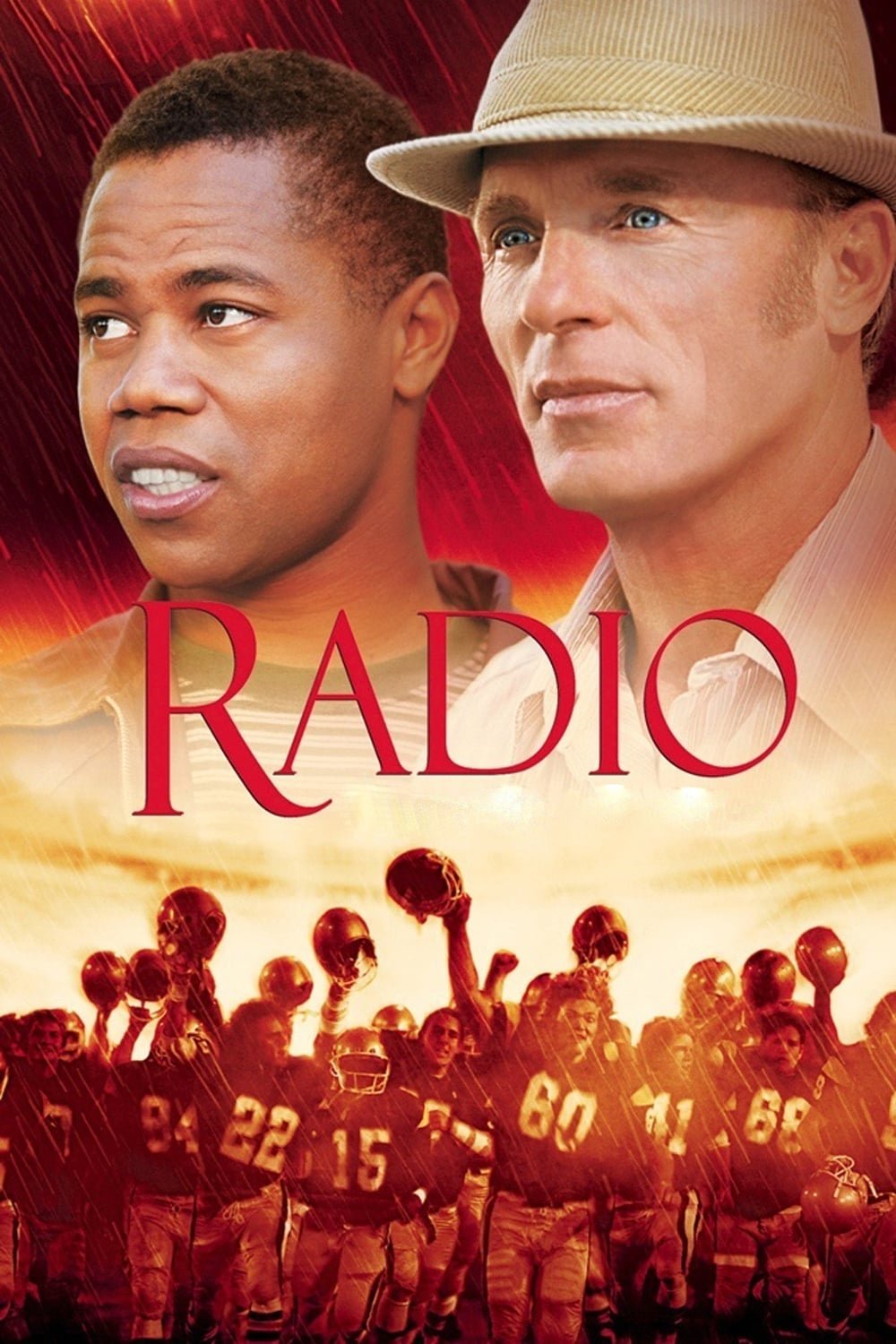
It’s impossible for me to recall my first encounter with “Radio” without conjuring up a swirl of embarrassment, tenderness, and skepticism. The film arrived at a moment in my life when I was just beginning to dig into the fault lines between genuine emotion and manipulation in cinema, and, candidly, “Radio” challenged my defenses. It’s one of those films that, as a viewer who prizes authenticity, I was predisposed to dismiss—yet, against all odds, found myself unexpectedly moved, even against my own cynicism. My conversation with “Radio” has always lived at this ambiguous intersection: how do I value its earnest heart and the gleam in Cuba Gooding Jr.’s performance, while facing my doubts about the way sentiment can sometimes steamroll complexity? The answers, slippery as ever, draw me back to the film: not for its triumphant storytelling, but for how it stubbornly insists that compassion, in itself, is worthy of cinema’s attention.
Small Town Reverberations: Echoes of Acceptance and Alienation
Plot summaries rarely capture the emotional undercurrent of a film like “Radio.” The narrative, outwardly, is deceptively simple—based on a true story, it follows James Robert “Radio” Kennedy (Cuba Gooding Jr.), a young Black man with an intellectual disability, who, after being bullied by high school jocks, is taken under the hesitant wing of football coach Harold Jones (Ed Harris) in the racially and socially charged town of Anderson, South Carolina, in the 1970s. Yet beneath the broad brushstrokes, what the film truly details is an emotional journey about belonging, transformation, and the incremental progress of empathy within a closed community.
I recall feeling a growing tension as the level-headed stoicism of Coach Jones collided with his own sense of responsibility. The push and pull—between well-meaning adults, skeptical parents, ambitious students, and the vulnerable, wide-eyed Radio—forms the movie’s central conflict. The film’s core heartbreak is not the bullying or even the marginalization Radio endures, but the quiet inertia of indifference. Watching this played out through glances, gossip, and institutional discomfort reminded me intensely of the battles for dignity that occur not in dramatic shouts, but in the whispers of everyday life. This, to me, is the true emotional battleground of “Radio”: the slow unraveling, in a conservative town, of fear and ignorance, triggered by one unwavering act of acceptance.
When Kindness Is Revolutionary: The Thematic Heartbeat
On the surface, “Radio” is all about inspiration—the sort of film, especially in the early 2000s, that would make audiences weep in union and maybe feel just a fraction better about their latent prejudices. But underneath, I find it fascinating how the story wrestles with the uneasy politics of inclusion, difference, and paternalism. In 2003, when conversations about representation and neurodiversity were not as advanced as today, “Radio” was pitched as a feel-good sports drama. Its thematic ambitions, however, cut deeper: it attempts to interrogate who is allowed to belong and on what terms.
The tension between charity and agency struck me, even on my first viewing. It’s one thing to extend a hand to someone marginalized; it’s another to question why that hand is needed to begin with. The film sits unsteadily on this divide, both critiquing and reinforcing a worldview in which acceptance for people like Radio is conditional—dependent on their conformity to the values of the majority, or on the vouching of a powerful ally like Coach Jones. Revisiting this decades later, I’m struck by how much the narrative still resonates, and how it now reads so differently in an era demanding authentic voice for every protagonist. In today’s context, we might rightly interrogate why Radio himself is often sidelined in his own story, centrally framed as a lesson for everyone else. Yet, I also cannot deny that the movie’s honest valorization of empathy still feels, if imperfectly, urgent.
Whistles, Walkmans, and Footballs: Visual Language in Radio’s World
What most strikes me about Michael Tollin’s direction is its reliance on recurring objects and visual tropes as symbols of connection and communication. To my eyes, the football is the most immediate motif—passed around, fumbled, or gifted in moments heavy with subtext. It represents belonging, inclusion in the social fabric; when Radio clutches a football, it’s everything he’s been denied and is now finally allowed to hold. Yet it’s the transistor radio itself—Radio’s treasured possession—that becomes the most potent symbol. It’s a stand-in for his name, his link to the outside world, and his means of both understanding and contributing to the buoyant, insular world of high school athletics, as he tunes in and out, receiving bits and pieces of the lives swirling around him.
The whistle is another subtly powerful emblem: both a tool of authority (in the hands of Coach Jones) and, slowly, a symbol of shared responsibility as Radio is entrusted with his own. There’s a memorable run of scenes where the sound of the whistle changes register—from a harsh, disciplinary note, to something almost playful and collaborative. These motifs make the film’s visuals accessible, never cryptic; the film wears its heart, and its symbols, openly on its sleeve. In the more understated language of color and costume, too, I noticed on repeat viewings how Radio’s outfits brighten and layer as his confidence grows, mirroring the gradual warmth seeping into the community around him. Every prop and palette choice works toward the film’s ultimate assertion: that dignity is built in incremental, tangible gestures.
Turning Points on the Field and in the Heart
Sidelined in Silence: The First Encounter
The opening act, wherein Radio is discovered silently trailing the football practices, is unforgettable in its discomfort. The camera lingers on his isolation, the background noise of laughter and orders underscoring his invisibility. What shattered me here is the palpable sense of unease among adults, who weigh the optics of doing nothing against the risk and cost of reaching out. The bullying incident becomes a crucible in which every character’s integrity is judged—and where, for the first time, Coach Jones chooses to act rather than simply witness. It is subtle, but for me, this scene is the movie’s true emotional origin, laying open the stakes of complicity versus intervention.
Christmas Gifts and Broken Trust: The Locker Room Betrayal
Far more than any climactic sports moment, one of the film’s most harrowing sequences for me occurs when Radio is cruelly locked in the equipment shed by those meant to have learned better. The betrayal—by peers but also, inadvertently, by the coaches—is compounded when Radio’s beloved Christmas presents, symbols of hard-won trust and budding self-worth, are destroyed. The gut punch for me is not in the act itself, but in the failure of the institution to protect him; the aftermath holds a quiet despair, a retreat into silence for Radio, and a crisis for Coach Jones as he recognizes his own complicity in a culture that always preserves itself first. This moment, wrenching in its understatedness, is when I realize the film is more interested in institutional failings than individual villains.
Announcement on the Field: Radical Recognition
Where most sports dramas might climax with a game-winning play, “Radio” instead peaks with a moment of communal reckoning. When Coach Jones makes the public announcement that Radio is now a part of the team, fully and officially, the air hums with a threat of backlash and a hope for transformation. I remember holding my breath—not because I doubted the outcome, but because the emotional wave rippling through the crowd felt raw and deserved. This is the rare sports film where the critical victory isn’t on the scoreboard but in the willingness of a crowd to bear witness to change. The applause feels earned, but the genuine triumph is bittersweet, marked by the knowledge that these sorts of integrations remain profoundly fragile.
Redemption or Sentimentality? Debating Radio’s Reception
Over the years I’ve heard “Radio” condemned as manipulative, its performances criticized as too broad or its politics too retrograde—”white savior” accusations abound, and Gooding’s portrayal is often cited as an example of Hollywood’s fraught relationship with disabled characters. There is validity to those critiques: the screenplay’s tendency to use Radio as a lesson rather than a character too often, or the narrative impulse to fixate on Coache Jones as the agent of change. When I watched as a younger viewer, I bristled at these simplifications—I wanted Radio’s world, not just those who orbit him.
And yet, over time, my reaction softened. The film’s earnestness, I now see, is both its weakness and its shield. While I would have wanted more agency and interiority for Radio, I cannot dismiss the relief that the film offers: a measured, often painstaking portrayal of a community learning to embrace difference. I now read the movie not as a parable of flawless transformation, but as a document of incremental progress—and, in that, there is value. The critical eye may parse its flaws, but the heart can still be moved by its aspirations.
On the Same Frequency: Films That Resonate with Radio
- Forrest Gump – A meditation on difference and social change through the journey of an outsider whose presence alters his community.
- The Blind Side – Another sports-anchored biography, wrestling with race, privilege, and unlikely kinship.
- Wonder – Exploring the struggles of a boy with facial differences and the impact of compassion in a resistant social setting.
- A Beautiful Mind – An intricate depiction of mental illness and societal acceptance, told through the struggles of a brilliant but troubled protagonist.
Still Worth Hearing: Radio’s Echo in the Present
I would never argue that “Radio” is flawless, but to dismiss it outright is, to me, to lose sight of how deeply our media shapes and challenges our capacity for connection. Its vision of incremental social change and radical kindness might feel naive or dated, but that same idealism is increasingly rare—and, paradoxically, all the more vital. If watched today, with a clear eye and an open heart, the film can still prompt difficult questions and inconvenient empathy. And that, perhaps, is what makes “Radio” persist for me: it prods, cajoles, and sometimes embarrasses us into caring, even when that kind of care feels unfashionable.
Suggested Viewing for Further Reflection
If you found value in my perspective on “Radio,” consider seeking out:
- October Sky
- Sling Blade
To broaden this interpretation, you may also explore how critics and audiences responded over time.
🎬 Check out today's best-selling movies on Amazon!
View Deals on Amazon