
An Alien Arrival That’s Really About Us
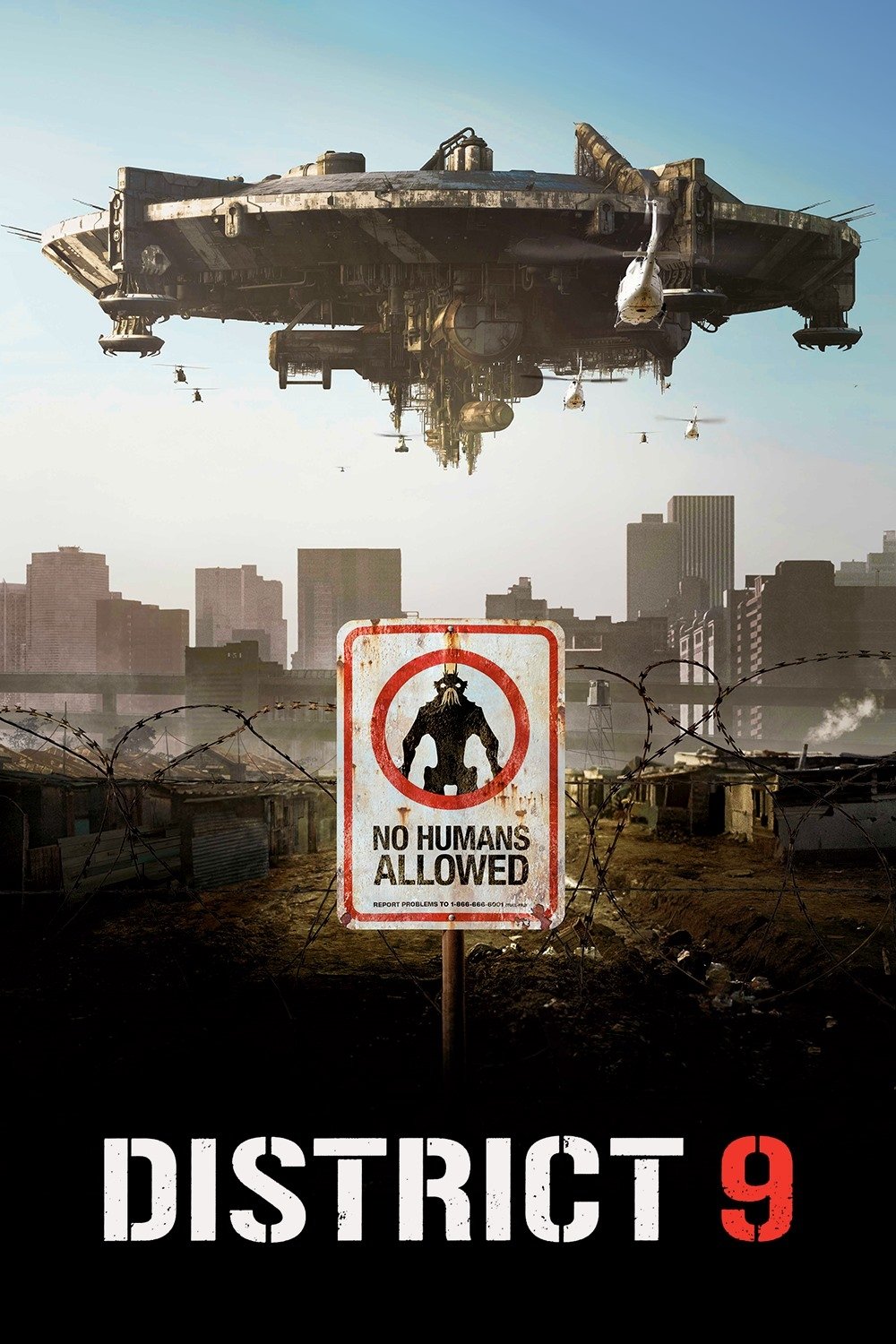
The first time I watched “District 9,” I wasn’t expecting to see myself so starkly reflected in the eyes of a prawn. That’s the hook the film caught me with—the profound discomfort not of science fiction spectacle, but of seeing an allegory for real-world prejudice writ large and raw across the screen. This isn’t just a movie about extraterrestrials stranded on Earth; it’s a confrontation with the ugliest corners of everyday humanity, exposing the subconscious divides that separate “us” from “them.”
Johannesburg’s Shadows: Where Science Fiction Bleeds Into Social Reality
Set in a barely exaggerated Johannesburg, the film’s documentary-style camera never lets me forget that these dirty, makeshift camps aren’t science fiction inventions. They echo real cities with real histories. District 9’s backdrop is a direct parallel to South Africa’s legacy of apartheid and forced removals, but I can’t help seeing the universal language of exclusion at play—every city with a fence, a border, a neighborhood “other” is implicated here.
Watching the South African officials and the private security contractors circle the aliens—nicknamed “prawns”—the line between bureaucratic indifference and outright cruelty blurs chillingly. I feel the film’s intent sharpen: the aliens are a mirror, not a metaphor, for how societies treat the marginalized when fear, profit, and ignorance take precedence over empathy.
Wikus: The Unlikely Mirror of Prejudice
Wikus van de Merwe, the film’s awkward, eager bureaucrat-turned-fugitive, is someone I didn’t want to recognize in myself. At first, his casual bigotry, his obliviousness to the suffering around him, made him easy to judge. But as I watched his transformation—body and soul—I realized he’s meant to implicate all of us who move through systems of oppression without questioning them too deeply. Wikus’s physical mutation into a prawn is an externalization of an inner journey: to understand the “other,” one must become the “other.” His pain, confusion, and slow empathy aren’t just plot points; they’re the point.
What I find so powerful about Wikus’s arc is its refusal to offer easy redemption. When he first discovers his infection, his primary concern is self-preservation, not the injustice he’s perpetuated. Only when he’s hunted and outcast does he start to see the prawns as individuals, not a faceless mass. The transformation isn’t instant or heroic—it’s messy, incomplete, and deeply human.
Borders, Fences, and the Architecture of Fear
The physical barriers in “District 9” are never just set dressing. The chain-link fences, the squalid shacks, the menacing security forces—they’re expressions of a society obsessed with control and terrified of contamination. I was struck by the way the film’s camera lingers on these divides, making it impossible to ignore how architecture and bureaucracy can be wielded as weapons.
The eviction notices delivered to the prawns, the legalese masking violence, the cold efficiency of the relocation—all of it reveals a world where compassion is subordinate to logistics. I read these scenes as a deliberate indictment of legal systems that thrive on dehumanization. The film asks, with every frame: At what point does order become oppression?
Language, Mistranslation, and the Limits of Understanding
I found myself listening closely to every exchange between humans and aliens, noting how communication falters even when everyone ostensibly speaks the same language. The prawns’ guttural speech, subtitled for the audience, is never truly understood by the humans around them. This gap in understanding isn’t just linguistic—it’s emotional, cultural, and existential.
Wikus’s inability to empathize until he literally shares DNA with the aliens is a damning commentary on the limits of sympathy. I realized the film isn’t optimistic about our ability to bridge divides. Instead, it suggests that true understanding requires more than words; it demands a willingness to see oneself in the enemy, the stranger, the abject.
The Cost of Humanity: Redemption Without Resolution
By the film’s end, I found myself haunted not by any one image, but by the lingering ambivalence of Wikus’s fate. Transformed into a prawn, he’s neither fully human nor fully alien—a liminal figure trapped between worlds. His final gesture, making a rose out of scrap metal for his wife, is heartbreaking in its ambiguity: a symbol of enduring love, yes, but also a token of his irreversible exile.
What resonates is the film’s refusal to offer a neat conclusion. The human authorities remain unchanged, the prawns still exploited, and Wikus’s own redemption comes at the price of everything he once was. The story’s bleakness isn’t nihilistic, though—it’s a challenge to the audience. What are we willing to risk, or lose, to do what’s right by those deemed undeserving?
Violence as Spectacle and Critique
The action sequences in “District 9” have a raw, visceral energy—the kind that gets under my skin. The weapons, scavenged and otherworldly, turn familiar gunfights into something alien and grotesque. But where many science fiction films revel in their violence, I read director Neill Blomkamp’s choices as intentionally uncomfortable. The savagery directed at the prawns is never sanitized; it’s filmed to make me recoil, not to thrill.
I can’t help but interpret this as a commentary on the entertainment industry’s own exploitation of suffering. The camera never lets me disengage or enjoy the spectacle for its own sake. When violence is inflicted on the “other,” the audience is implicated; the spectacle becomes self-critique.
The Power and Peril of Technology
From the prawns’ abandoned spacecraft to their bio-coded weaponry, technology in “District 9” is both a tool of hope and a trigger for exploitation. The human obsession with unlocking alien tech is a naked metaphor for colonial greed—technology as the ultimate resource to be mined, regardless of cost. Where I expected sleek, utopian gadgetry, I found a world where every innovation is a potential tool of subjugation or escape.
Christopher Johnson, the prawn scientist, emerges as a quietly subversive figure—a reminder that the “primitive” alien is often more humane and technologically advanced than his human captors. The real divide isn’t intelligence or capability, but the willingness to use power for liberation rather than domination.
Memory, Myth, and the Stories We Choose to Tell
I left “District 9” thinking about the ways stories are constructed—by governments, by media, by individuals desperate to justify their own positions. The film’s mockumentary style is more than an aesthetic; it’s a commentary on the malleability of truth in the hands of those who wield narrative power. The shifting perspectives, the unreliable news clips, the contradictory testimonies—all highlight how history is weaponized, whose suffering is remembered, and who gets to be the hero.
In the end, the real horror isn’t the alien invasion; it’s the realization that the greatest threat comes from within—the slow, incremental cruelty of ordinary people following orders, the compliance that allows suffering to go unnamed.
Two Echoes from Cinema’s Past
If “District 9” left you troubled and searching for more films that don’t flinch from society’s darkest truths, two classics come to mind. First, “The Battle of Algiers”—a film that confronts colonial violence and blurred moral lines with the same unblinking honesty. Second, “Invasion of the Body Snatchers”—not for its alien threats, but for its chilling meditation on conformity and the fear of those who are different.
If you’re curious about how this film was originally perceived or how it compares to similar works of its era, these resources may be helpful.
🎬 Check out today's best-selling movies on Amazon!
View Deals on Amazon