
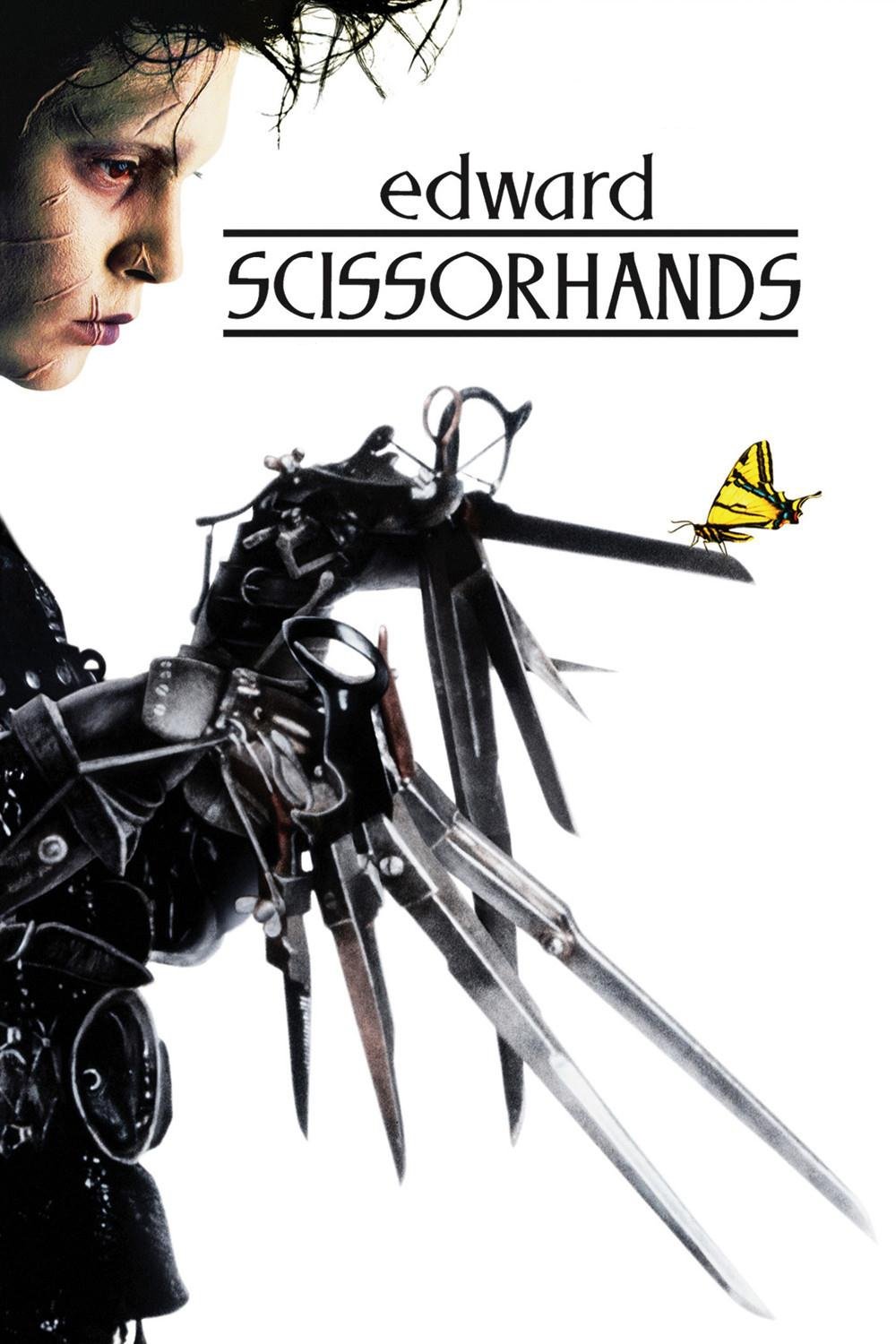
One afternoon in my early teens, I came across a strange, pastel-drenched film that felt utterly out of place among the usual Hollywood fare. It began with hedges sculpted into wild animal shapes and ended with snow drifting down into a sunless suburb. “Edward Scissorhands” lingered with me—not because of its fantasy, but because of its poignant ache of loneliness and the hope for acceptance. All these years later, whenever I revisit Tim Burton’s whimsical fairytale, it resonates as a haunting portrait of those who are told, one way or another, that they don’t belong.
What the Film Is About
On its surface, “Edward Scissorhands” is an outsider’s tale—a modern fable about isolation, kindness, and the sharp pang of being different. I see its narrative orbit not simply around Edward, the pale and gentle creation of an eccentric inventor, but around the entire pastel suburbia he is thrust into. Edward, with his hands forged from scissors, finds himself the subject of both fascination and fear. The emotional core isn’t just his struggle to fit in, but the subtle, excruciating ways in which the townspeople define, use, and ultimately discard him once he steps outside their unsophisticated comfort zones.
What makes the experience so powerful for me is how Burton crafts a world where monstrousness and beauty are matters of perspective. Edward is overwhelmingly gentle, an artist at heart, despite his violent appendages. It’s the community—gossipy, judgmental, and fickle—that emerges as something far more monstrous. I’m compelled by how the story quietly asks whether we can ever truly see someone, or if we’re always blinded by our own projections. The brilliance of the film isn’t in its fantasy, but in how that fantasy exposes small-town fears and desires we’d rather ignore.
Core Themes
Alienation pulses at the center of “Edward Scissorhands,” embodied in both its protagonist and the setting itself. The film is a brutal yet tender meditation on otherness—a boy constructed to be perfect, left unfinished, and thrust into a world both aching for novelty and terrified of true difference. The question of identity—who we are when stripped of society’s expectations—and the yearning for belonging are rendered even more potent by Edward’s childlike innocence. I see the film as an urgent call to recognize the ways conformity can quietly savage those who, by design or fate, cannot conform.
Released at the dawn of the 1990s, the film’s themes reverberated with a generation disillusioned by the superficial harmony of suburbia and increasingly aware of social exclusion. Beneath its whimsical exterior, the film explored issues of nonconformity, the destructive force of small-mindedness, and the price of authenticity. Even today, as our definitions of “normal” and “other” continue to evolve, the film’s central plea—for empathy and acceptance—remains as pressing as it was three decades ago.
Symbolism & Motifs
Burton’s world here is crammed with visual and narrative symbolism that echoes loudly across every frame. The scissorhands themselves—awkward, beautiful, and dangerous—strike me as the perfect emblem for what it means to possess gifts that are misunderstood, and to be judged for one’s difference before one’s intentions. The hands are not just tools or weapons, but prisons. They offer creative potential (topiaries, haircuts, ice sculptures), but also guarantee Edward will always be at arm’s length.
The pastel palette of the suburb is another recurring motif, and I find it almost oppressive in its cheerfulness. It’s a world that prizes neat lawns and matching houses, yet it’s emotionally arid—no one connects beyond their narrow interests. The contrast between Edward’s gothic, shadowed mansion and the antiseptic brightness of the suburb heightens his otherness and the artificiality of the so-called “normal” world. Snow plays a final symbolic role, with its gentle fall connecting the end to a bittersweet beginning—beauty made possible only by sorrow.
Key Scenes
The First Descent: Edward’s Introduction to Suburbia
The moment Peg Boggs discovers Edward in the attic is, for me, the genesis of everything the film wants to say about fear, hope, and vulnerability. Edward’s huge, searching eyes and ungainly hands telegraph both his capacity for harm and his desperation to be touched, to be known. When Peg insists on taking him home, she becomes the compassionate anomaly in her otherwise suspicious neighborhood—a small, luminous act of kindness that echoes through the film’s most pivotal choices.
Haircuts and Hedgetrimming: Artistry Amid Anxiety
With scissors for hands, Edward transforms the world around him, sculpting hedges into dinosaurs and gently snipping elaborate hairstyles for the town’s women. These scenes, soaked in pastel sunlight, shimmer with an odd joy, but the feeling is fragile. I see in these moments the fleeting possibility of authentic self-expression—a chance to be appreciated simply for one’s difference rather than feared for it. Still, the specter of the community’s judgment never truly disappears; the line between celebration and exploitation is razor-thin.
The Mob Turns: The Climax of Rejection
It’s the townspeople’s transformation—swiftly turning from adulation to violence—that crystallizes the film’s message. I’m most struck by the nearly wordless scenes as Edward flees, wounded and hunted, through maze-like streets now more prison than home. The mob’s blind fury, contrasted with Edward’s terror and confusion, makes the cost of “otherness” painfully explicit. This heartbreak, for me, is the crux: acceptance is conditional, and the wrong kind of difference can turn an entire community cruel.
Common Interpretations
Many critics read “Edward Scissorhands” as a parable about the pain of being an outsider—a story for all “misfits” forced to navigate societies that prize conformity above compassion. Some also see Burton’s film as autobiography, a meditation on his own creative alienation while growing up in Burbank. While I appreciate these readings, I think they sometimes miss how powerfully the film indicts the community, rather than simply sympathizing with the outsider.
Critics often focus on Edward’s inability to assimilate, emphasizing tragic inevitability. But where I depart is in my feeling that Burton’s satire of suburbia is more savage and necessary than sentimental. The town’s pastel exterior masks a kind of rot—a warning about what we lose when empathy is absent and novelty is consumed, then destroyed. Where others see fantasy, I see a cautionary tale with more bite than comfort.
Films with Comparable Resonance
- The Elephant Man (1980): Much like Edward, the protagonist faces dehumanization for his physical appearance, and the film is a searing commentary on empathy and society’s appetite for spectacle.
- Frankenstein (1931): Both films tell the story of a “created” figure shunned by those he longs to connect with, using gothic aesthetics to probe the consequences of curiosity and difference.
- Beetlejuice (1988): Another Tim Burton creation, it mocks suburban pretensions and revels in the macabre, while probing how society treats what it fears or cannot control.
- Let the Right One In (2008): The tale of a friendship between two outsiders, it explores loneliness, otherness, and different shades of innocence set against a deceptively mundane backdrop.
Final Thoughts – Why This Story Endures
“Edward Scissorhands” remains a singular viewing experience, not because of its gothic trappings or quirky humor, but because its exploration of loneliness, longing, and the tragic poetry of not fitting in never loses its sting. For a contemporary viewer, the film asks for more than nostalgia; it challenges us to examine the subtle ways we police difference, the cost of compassion, and the possibility of finding grace in unlikely places. Understanding these themes is, for me, the only way to unlock the film’s persistent, haunting beauty.
Related Reviews
If you found value in my perspective, you might also enjoy exploring my thoughts on other cinematic landmarks such as Pee-wee’s Big Adventure and Frankenstein.
To broaden this interpretation, you may also explore how critics and audiences responded over time.
🎬 Check out today's best-selling movies on Amazon!
View Deals on Amazon