
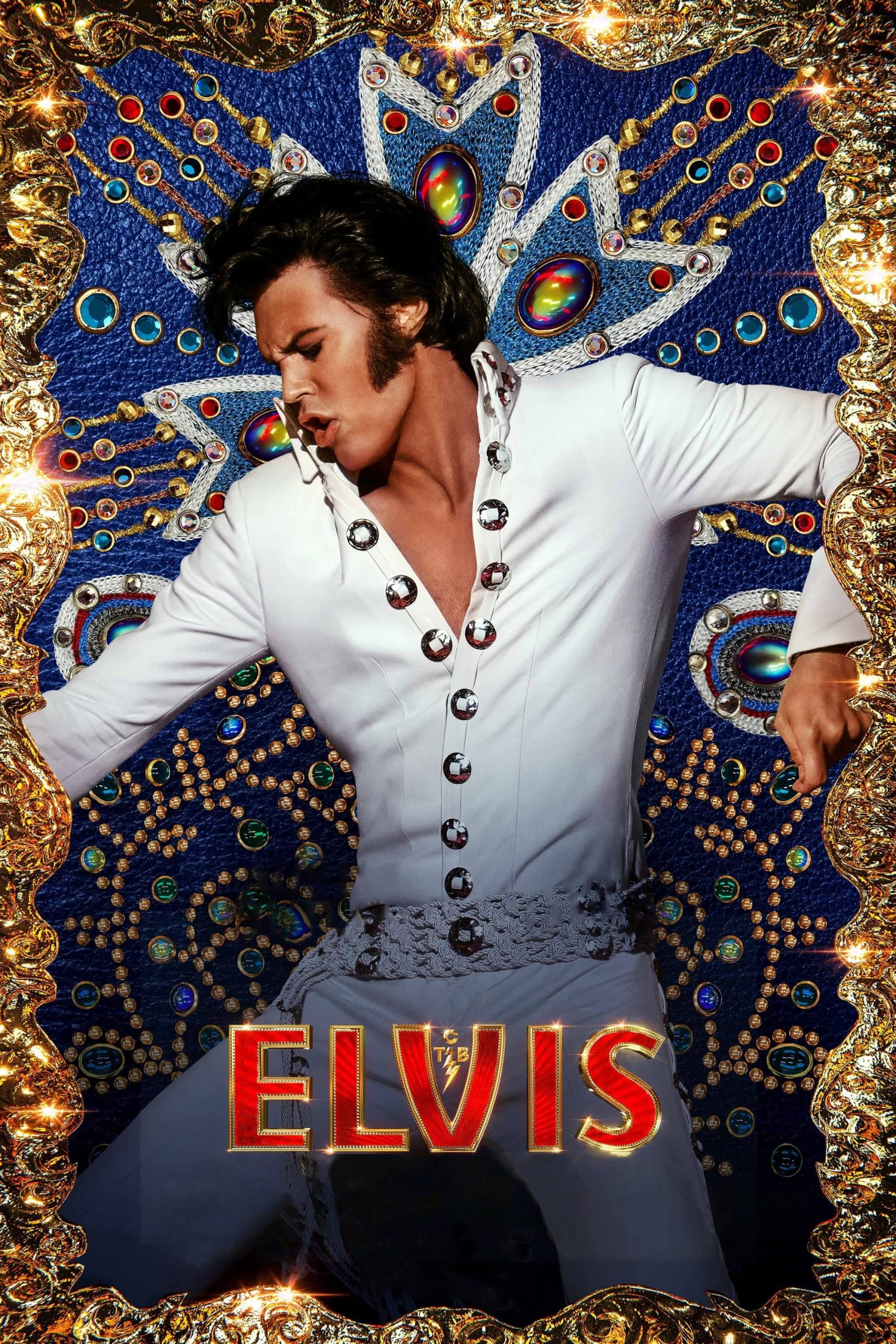
Long before I sat down to watch Baz Luhrmann’s Elvis, the cultural shadow of Elvis Presley already extended across my own childhood and adulthood—his voice, his posturing, all felt bigger than life, almost mythic, and yet elusive in their truth. What pulled me into this film was not just my curiosity about Elvis himself, but my fascination with the machinery of icons: Who invents them? Who feeds on their image? And at what cost? I expected spectacle, yes, but what startled me was how this film compelled me to confront the uneasy partnership between brilliance and exploitation—the collision between nostalgia and reality that defines myth-making in America.
The Emotional Collision at the Heart of Baz Luhrmann’s Vision
On surface, Elvis might dazzle as a biopic, but for me, it’s a story of struggle, seduction, and the diminishing of one man’s spirit in the face of voracious ambition. The film centers not only on Presley himself, but on his relationship with Colonel Tom Parker—a Svengali figure played with reptilian silkiness by Tom Hanks—who narrates the tale with a beguiling mixture of guilt and bravado. What fascinates me is how this narrative device tethers the viewer to Parker’s gaze, making Elvis’ emotional arc as much about what is withheld from us as what is revealed. I found the tragic arc less about the rise or fall of a man, but the erosion of his agency—his dreams methodically corralled for profit, his voice subsumed by those who promised him the world and delivered only a relentless spotlight.
Emotionally, the film tore at me most during its quieter interludes; these rare respites from the swirling camera and kaleidoscopic editing reveal a young man searching for his identity amid the roar of expectation. The core conflict is existential, not just professional. It is the battle to remain authentic while another voice—here, Parker’s—narrates your reality for you. Through Luhrmann’s feverish cinematic language, I felt the viscera of that conflict in every note, in every isolating wide shot that reduced Elvis to a solitary figure on stage, both adored and utterly alone.
Dissecting Power, Identity, and the Cost of Greatness
If there’s one element that sinews through every glittering fever dream of this film, it’s the exploration of power—who has it, who pretends to have it, and who inevitably pays for it. I see the Colonel as a personification of the machinery that consumes original talent and spits out market-ready product. Elvis’ own journey becomes a lens through which the film interrogates the cost of fame: Where is the self when the myth grows larger than its maker?
Another prevailing theme is that of cultural appropriation and American racial history. The film does not shy away from depicting how Elvis’ unique sound is deeply rooted in Black gospel and rhythm and blues, nor does it avoid the ethical thicket that comes with this inheritance. This touches a nerve still raw in 2022—at a time when ownership, originality, and the crediting of Black artistry remain pressing topics. Elvis is at once a transgressor and a victim, a man who loved but also benefited from what others risked their lives for. Luhrmann’s decision to keep this tension unresolved rings true to me; it mirrors today’s debates over cultural borrowing versus theft.
Visual Allegories and the Language of Repetition
Few directors revel in visual maximalism like Luhrmann. Repeated use of mirrors and split-screens reflects the fractured nature of Elvis’ identity; we rarely see him whole or at rest. In the beginning, the recurring use of carnival imagery (the Ferris wheel, the bright lights, the barkers’ calls) feels almost garish, but as the story unfolds, these motifs become emblems of constant spectacle and transactional entertainment. Every carousel spin signals another turn of the wheel that binds Elvis to his captor-manager, always moving but going nowhere new.
The costuming is another symbolic language in itself. The push from sharp-dressed rebel to over-ornamented Vegas showman is never just a surface transformation. Each rhinestone-studded jumpsuit feels like both armor and shackle, highlighting the push-pull between presentation and constraint. There’s a profound melancholy in seeing how stagecraft becomes a gilded cage—how the symbols of excess ultimately serve as metaphors for spiritual bankruptcy.
Pivotal Moments That Shaped My Interpretation
The Initial Discovery: Beale Street and the Roots of Sound
The early sequence where young Elvis wanders onto Beale Street stands out for me—not just for its kinetic editing, but because it vividly dramatizes the fusion of musical influences that forged Presley’s style. The moment isn’t presented as mere inspiration, but as a transformative experience, a spiritual awakening that’s as much about community as artistry. It is here that the tension between admiration and appropriation is first seeded—a motif that echoes into every subsequent scene.
The Comeback Special: Defiance in a Leather Suit
What I found most rousing was the recreation of Elvis’ 1968 Comeback Special. In this electric moment, Presley asserts his will, choosing authenticity over commercial obsequiousness. The leather suit is not just a costume, but a suit of armor against Parker’s brand-driven manipulations. The ferocity of the performance radiates palpable energy: sweat, nerves, rebellion. For me, this scene is the heartbeat of the film—unfiltered art struggling to breathe amid suffocating calculation.
The Final Curtains: Closing Las Vegas Performance
In the film’s depiction of Presley’s later years, culminating in the last Vegas show, I felt the tragedy most acutely. Physically diminished but emotionally exposed, Elvis performs with a rawness that transcends artifice. Luhrmann refuses to disengage the viewer from his decline, instead immersing us in its agony and grandeur. For me, it’s a scene that doesn’t beg for pity, but respect—a recognition that the very spectacle which made him king is what ultimately undid him.
Wider Interpretations and My Own Unsettled Reaction
The critical consensus around Elvis seems polarized, often orbiting the axis of form versus substance. Many reviewers are entranced by Luhrmann’s visual bravado—the kinetic editing, lush anachronisms, and bombastic soundscape, all delivering a cinematic sugar rush. Others are frustrated, seeing the film as a vivid but superficial collage that fails to dig deep into its protagonist’s psyche. Some critics insist that the Colonel’s narration distances us unhelpfully from Elvis himself, diffusing emotional engagement.
Where my reaction diverges is in welcoming this dissonance. I read the film’s frenetic, sometimes overwhelming aesthetic as a deliberate technique—a way to mirror the sensory overload that defined Elvis’ own tumultuous ride. The distance fostered by Parker’s narration amplifies the central tragedy: the impossibility of grasping the real person beneath the layers of mediation and performance. Rather than see this as a flaw, I see it as a pointed commentary on the nature of celebrity—a condition defined by distortion, not revelation.
Resonant Works: Parallels Across Cinema
- Walk the Line – Echoes of identity crisis and addiction mark Johnny Cash’s story as a kindred exploration of the price artists pay for authenticity.
- Amadeus – The destructive tension between prodigy and those who claim to love—and control—him feels deeply aligned; both films probe the dark heart of creative exploitation.
- Rocketman – The Elton John biopic takes a similarly kaleidoscopic approach to stardom, wrestling with reinvention, sexuality, and the collision between self and public image.
- The Great Gatsby (2013) – Also directed by Luhrmann, it shares Elvis’ fascination with excess, illusion, and the impossibility of recapturing lost innocence beneath a glittering veneer.
Final Thoughts for Contemporary Viewers
For those encountering Elvis today, I think the film succeeds as both cautionary tale and exuberant celebration—a reminder that the brightest icons are often the most fragile. To appreciate what Luhrmann has accomplished, viewers should prepare to be unsettled by both the beauty and brutality of the entertainment machine. Peeling back the layers of spectacle reveals hard truths about fame, cultural exchange, and the sacrifices demanded by a hungry public. For me, wrestling with these themes deepened my empathy—not just for Elvis the legend, but for anyone whose art is gradually alienated from their soul. That, ultimately, is where the film’s value endures.
Related Reviews
If you found value in my perspective, you might also enjoy exploring my thoughts on other cinematic landmarks such as Amadeus and Walk the Line.
To broaden this interpretation, you may also explore how critics and audiences responded over time.
🎬 Check out today's best-selling movies on Amazon!
View Deals on Amazon