
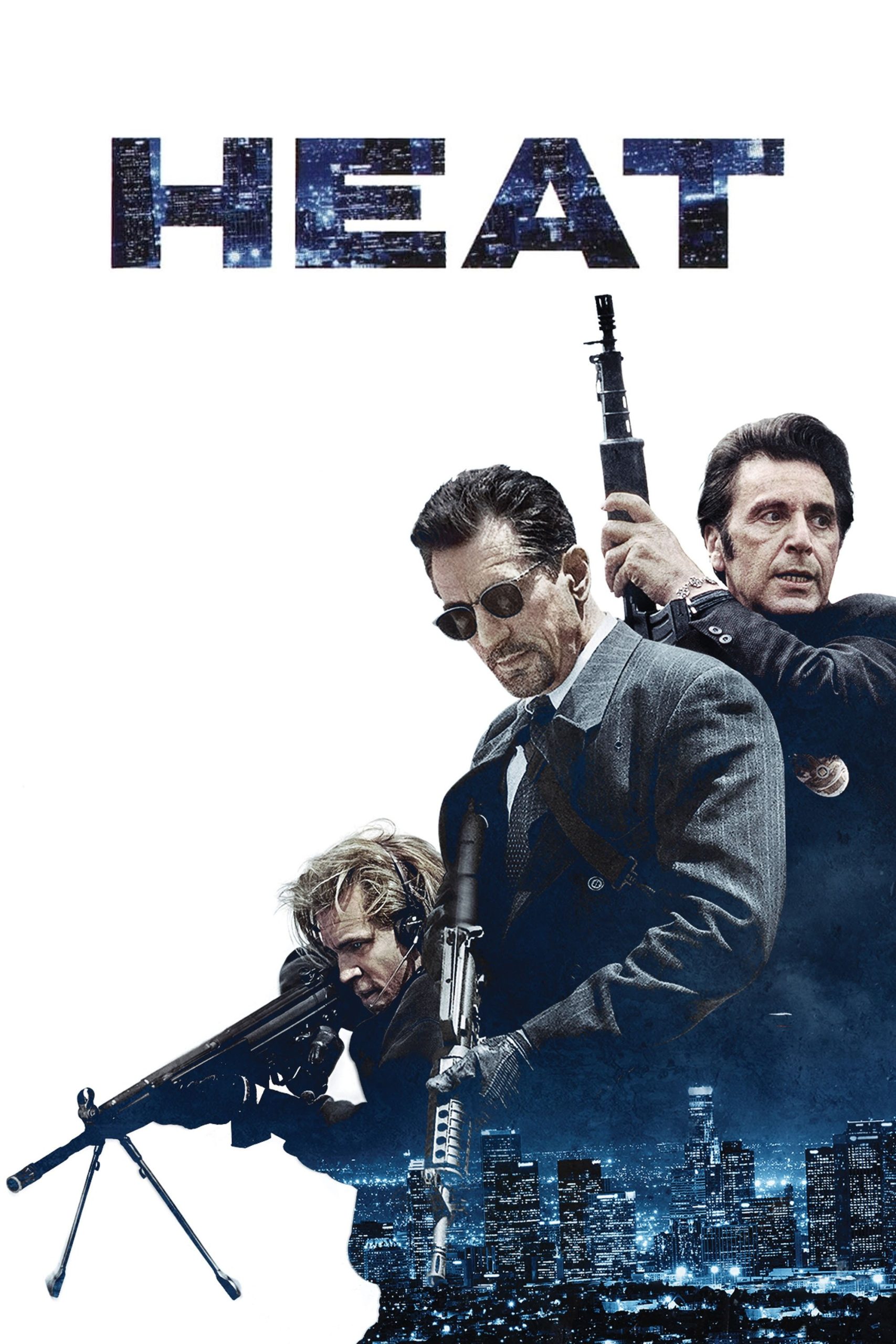
When I recall my first experience watching “Heat,” what comes back most vividly isn’t the firearm rattle or the scale of the heist—it’s the experience of sitting with a rare pulse of dread in the pit of my stomach. The city felt unbearably wide, its horizons coldly lit, and every time a character stared out into the endless Los Angeles night, I caught myself wondering what it would feel like to live your life on the edge of connection—desperate for another person to understand you, yet bound by obsessions you can’t put down. “Heat” fascinates me because, beneath its mythic cops-and-robbers duel, it captures the loneliness that laces through adulthood: the price of excellence, the weight of self-knowledge, and the ache of believing that intimacy is possible only if you pause who you really are. That’s what keeps me coming back—it’s less a crime film than a symphony of estrangement wearing a gunmetal suit.
What the Film Is About
“Heat” revolves around two men on a collision course—Neil McCauley (Robert De Niro), a professional thief governed by discipline and code, and Vincent Hanna (Al Pacino), a homicide detective driven by obsession and sacrifice. The core conflict isn’t simply the cat-and-mouse pursuit but rather two souls unable to unfasten themselves from their own design. Both are masters of their craft, but both pay for it with personal emptiness—a relentless pursuit that lays waste to marriages, friendship, and any semblance of a settled life. Watching their journeys, I sense less triumph or villainy and more the inexorable slide toward an end they both seem to accept, even before it arrives. The duality is heart-wrenching: Hanna’s dedication is indistinguishable from addiction; McCauley’s principles are indistinguishable from loneliness.
Underneath the surface, the film asks harder questions about what any of us choose to value. Is it possible to live by a personal code without also walling off empathy and love? Can you pursue excellence without losing sight of why you began the pursuit in the first place? The emotional journey, to me, is the recognition—painful and weary—that some commitments don’t coexist with happiness. By the end, I see “Heat” not as a story of winners and losers, but as a wounding meditation on the limitations we set for ourselves and the costs we can’t avoid paying for clarity of purpose.
Core Themes
The central theme that grips me is the conflict between personal codes and personal connection. Mann’s Los Angeles isn’t merely the city of angels—it is a city of isolation, where people move through one another’s lives like satellites, caught in their own gravity. Both McCauley and Hanna are men who live by principle; both are deeply alone.
This fixation on identity versus intimacy—the impossibility (or at least the near-impossibility) of true connection when your life is defined by single-minded dedication—feels startlingly relevant. In 1995, as the world grappled with the rise of technology and the erosion of traditional bonds, “Heat” offered an early vision of a reality where people struggle for meaning amid the splintering of the communal. Watching it today, I can’t help but think about our own era, when digital connection hasn’t entirely alleviated the loneliness of ambition or the silences in our homes. What “Heat” brings to the table, now as then, is a recognition that the pursuit of excellence—whether in law enforcement or criminal artistry—can hollow out the rest of your existence if you’re not careful.
Another theme that resonates is the idea of professionalism as both virtue and curse. The film’s characters have built their lives around being the best at what they do, but that excellence becomes a prison. The inability to walk away—to “drop everything in thirty seconds flat”—is both their asset and their undoing. Today, as burnout and work-life balance dominate public discourse, “Heat’s” relentless focus on craft and its consequences feels more prescient than ever.
Symbolism & Motifs
Michael Mann’s “Heat” is lush with visual metaphors and recurring motifs that reinforce its emotional landscape. The city of Los Angeles itself is a recurring symbol—a sprawling, indifferent grid that seems both limitless and entrapping. Iconic shots of the city at night, washed in blue tones, aren’t mere scene-setters. For me, these vistas evoke the unbridgeable distances between people, even when they share a bed or a dinner table. Every glassy skyscraper or wide freeway embodies the chasm between ambition and communion.
The motif of windows and transparent barriers repeatedly appears—McCauley looking out over the ocean, Hanna brooding behind glass walls in his apartment. These barriers function as both literal and metaphorical reminders that the characters are perpetually separated from others by forces both external (the law, physical distance) and internal (their own obsessions). Further, the use of reflective surfaces hints at the classic noir obsession with self-understanding and the impossibility of truly seeing oneself as others do.
I’m also struck by the persistent imagery of water and heat itself. Water—the ocean in particular—appears as a site of yearning, peace, and, in the end, unattainability. Heat, meanwhile, is less a physical element than the ever-present risk: the police are “the heat,” life itself is a crucible, and the pressure to escape or commit is always building. These motifs aren’t just adornments—they are the film’s emotional architecture, expressing in images what the characters cannot say aloud.
Key Scenes
The Diner Confrontation: Two Titans Talk Across the Divide
For me, the movie’s emotional apex is the café meeting between McCauley and Hanna. This is not an action set-piece but a living, breathing exchange between two men who see each other fully for the first time. There’s a mutual recognition that their similarities eclipse their differences. They talk not as enemies but as kindred spirits on opposite sides of a very thin line. This scene distills the film’s essence: that lives built on single-minded purpose may bring professional respect but also emotional isolation. I still recall the tension—not the threat of violence, but the vulnerability of two people confessing their respective curses.
The Armored Car Heist: Precision, Power, and Foreboding
The armored car robbery that opens the film is a master class in economy and precision. The violence is sudden, methodical, and entirely devoid of sentimentality. This moment sets the stage: McCauley and his crew are not thugs; they’re professionals whose expertise is both admirable and horrifying. The chilling efficiency of the job, and the toll it takes on civilian lives, underscores the film’s ambivalence toward its protagonists. I find myself appreciating their craft and recoiling from their coldness in equal measure, which is the genius of Mann’s construction.
The Airport Runway: The Price of Clarity
The climax—played out under harsh, flickering airport lights—is the film’s most haunting image. Here, the inevitability of consequence and the loneliness of final choices become manifest. McCauley’s decision to confront Waingro rather than escape, and the resulting fatal standoff with Hanna, brings the film’s themes into brutal relief. Both men have come too far to walk away; both are entirely alone in their final moment together. The touch that Hanna offers McCauley as he dies is perhaps the closest either man comes to connection—a gesture freighted with respect and regret. I always leave this scene unsettled, struck by how much is left unspoken.
Common Interpretations
Most critics view “Heat” as the apotheosis of the American crime thriller—a showcase of virtuosic craftsmanship, directorial poise, and the long-awaited De Niro-Pacino face-off. There’s an emphasis on Mann’s procedural rigor, the operatic scale of action sequences, and the study in contrasts between cop and criminal. Many read the film as an ode to professionalism, or as a Shakespearean battle played out against gunshots and urban glow.
I respect these readings, but I see the film as something more intimate and existential. While others celebrate the duel, I dwell on what the duel costs both men—their inability to break pattern, their doomed quest for control, their yearning for a way out that doesn’t betray who they are. For me, “Heat” isn’t about the question of who will survive or who’s right; it’s about the impossibility of shedding your skin once you’ve built your life around it. The tragedy isn’t just fatal; it’s emotional, psychological, and deeply solitary.
Films with Similar Themes
- “Collateral” (2004) – Mann’s own existential crime drama explores another collision of professional codes and personal isolation, set in a Los Angeles even more nocturnal and alienating.
- “The French Connection” (1971) – This classic also meditates on the obsessions of police work and the personal cost of relentless pursuit, echoing the tension between private code and human connection.
- “The Insider” (1999) – Here, Mann confronts another form of professionalism: whistleblowing. Like “Heat,” it’s about lonely men doing the right thing at tremendous personal cost.
- “Thief” (1981) – The spiritual prequel to “Heat” in Mann’s filmography, similarly exploring the intersection between identity, professionalism, and the impossibility of genuine escape from one’s chosen life.
Conclusion
For modern viewers, “Heat” offers much more than adrenaline and style: it’s a meditation on what it means to pursue purpose single-mindedly, and what’s lost when we mistake professionalism for wholeness. Watching now, I urge others not just to revel in the technical mastery but to listen for the quieter notes—the longing, the self-doubt, the brief glimpses of tenderness beneath the armored surfaces. Engaging with the film’s emotional wounds deepens its impact and renders every gunfight, every glance through glass, charged with new meaning. In the end, “Heat” remains urgent because it reminds us that the things we care about most can be both our salvation and our undoing.
Related Reviews
If you found value in my perspective, you might also enjoy exploring my thoughts on other cinematic landmarks such as “Taxi Driver” and “L.A. Confidential.”
To broaden this interpretation, you may also explore how critics and audiences responded over time.
🎬 Check out today's best-selling movies on Amazon!
View Deals on Amazon