
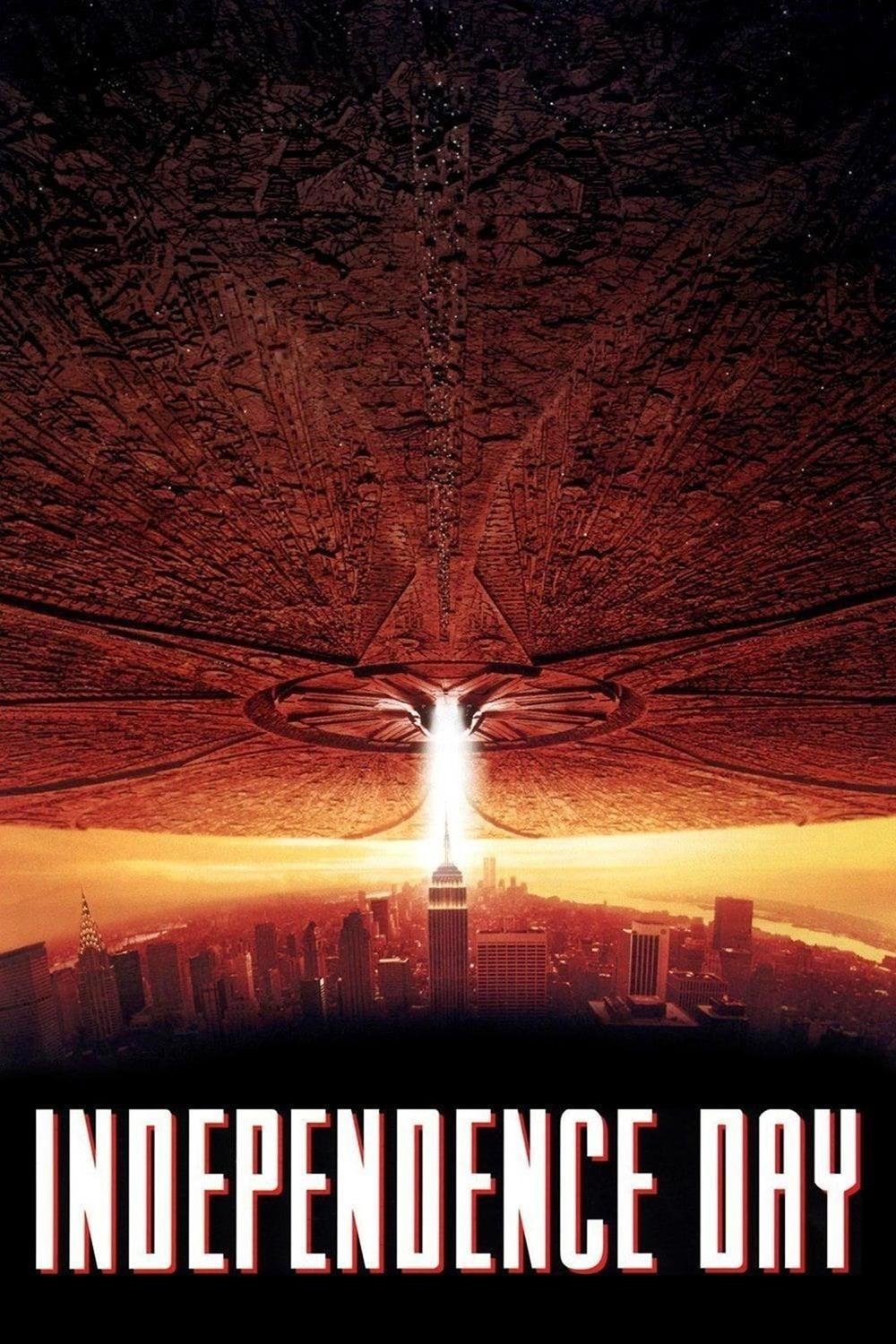
For some, the Fourth of July conjures childhood memories, fireworks, or the scent of grilled corn on the cob. In my own mind, though, that holiday is marked most deeply by the crackle of 1990s television—when, as a teenager, I watched “Independence Day” with my family. Despite its bombastic tone, it lured me into a world where the impossible felt persuasive, where the end of the world could somehow feel exhilarating, communal, and even humorous. I found myself captivated not only by the spectacle but by the way the film used destruction as a springboard for hope, camaraderie, and—however unlikely—moments of humility from the most grandstanding of characters. My love for this movie isn’t nostalgic; it’s rooted in how spectacularly and shamelessly “Independence Day” wears its heart (and its country) on its sleeve.
What the Film Is About
“Independence Day” is, at first blush, a popcorn spectacle about alien forces descending upon Earth, laying waste to landmarks, and herding humanity toward extinction. Yet to me, its real engine is the oscillation between devastation and unflagging determination. President Whitmore (Bill Pullman), the quietly charismatic scientist David Levinson (Jeff Goldblum), and the swaggering Captain Steven Hiller (Will Smith) provide the beating heart beneath the chaos. They embody distinct American archetypes—authority, intellect, brash fortitude—each brought low by loss before rising, changed, to face extraordinary odds together.
The emotional journey for these characters is not only one of survival but of transformation. In the face of annihilation, the heroes shed isolation, rivalry, and cynicism, finding their strength not by denying their vulnerabilities, but by embracing them. The film makes a case for humility in the face of cosmic arrogance and for unity as an almost mystical force. It’s this underlying optimism—both honest and naive—that strikes me on each revisit. “Independence Day” wields its clichés deliberately; it is not afraid to be sincere about sacrifice, reconciliation, and collective action. What lingers is the sense that, even as the world teeters toward apocalypse, the defenders of Earth are not simply fighting for survival—they are fighting to rediscover their humanity in each other’s presence.
Core Themes
I believe what sets “Independence Day” apart is its passionately blunt approach to its central themes: resilience in adversity, the necessity of unity, and a meditation on leadership under pressure. At its core, the film is a hymn to cooperation—not just among nations, but among people, classes, and personalities. In 1996, with the Cold War freshly ended but new global uncertainties rising, this message of transnational solidarity carried a particular resonance. The threat here isn’t ideological, it’s existential, and so national borders dissolve with a tidy Hollywood flourish. The president’s rousing speech, cheesy as it may be, is a product of its time—asserting that human identity supersedes all other forms of identification. When the world is burning, the only meaningful division left is between those who stand together and those who fall alone.
Yet, I also see “Independence Day” as implicitly satirical about American hubris and exceptionalism. The destruction of Washington, D.C., the White House, and New York is impossibly grand, and the entire world seems to hinge on the resolve and ingenuity of a handful of Americans. The film recognizes this, almost winking at the audience—but rather than tearing down its own image, it seeks a moment where national pride and global unity do not appear contradictory. Today, that hopeful confluence feels even more elusive—making the film’s optimism simultaneously dated and oddly moving. Perhaps that is why I keep returning to it: “Independence Day” proposes that heroism is born not of extraordinary ability, but ordinary people thrust together in extraordinary times.
Symbolism & Motifs
If one motif stands out most, it is the recurring image of obliterated American icons. The sight of the White House—which, in my younger years, represented distant, untouchable authority—blown away as if made of tissue paper is more than spectacle. It’s a demonstration of sudden, unyielding vulnerability. When I first saw it, I felt a peculiar thrill: the icon destroyed, then reclaimed by the survivors. This use of destruction as both an endpoint and a beginning is a constant throughout the movie.
Another potent symbol is the battered American flag and, later, the makeshift bands of refugees and soldiers. Flags all over the world become ragged but they are never truly discarded, signaling that national identity is battered but not erased. Meanwhile, the recurring motif of alien ships mirrored in reflections or looming above landmarks underscores the smallness of human achievement against the cosmic scale of threat, and yet, the film frames those same achievements as distinctly worth fighting for. The dogfights, the coded countdowns, the flickering televisions—these motifs reinforce the fragility of civilization and the stubborn hope for restoration.
Key Scenes
The Day the White House Fell
If forced to choose a single moment that defines “Independence Day,” I would point to the infamous destruction of the White House. It is a moment burned into the cultural retina—used in trailers, parodied endlessly, and yet, every time I watch it, it still unsettles me. This is not just technical wizardry; it’s the collapse of a symbol, signaling that no structure, however mighty, is immune to catastrophe. The childlike glee with which it is filmed is undercut by a real sense of loss and awe.
President Whitmore’s Speech: The Birth of a New Day
The iconic rallying speech on the airfield is, for me, the pivotal emotional fulcrum. It’s astonishingly earnest, bordering on corny, and yet I can’t help but be swept up by its aspiration: “We will not vanish without a fight! We’re going to live on. We’re going to survive. Today we celebrate our Independence
🎬 Check out today's best-selling movies on Amazon!
View Deals on Amazon