
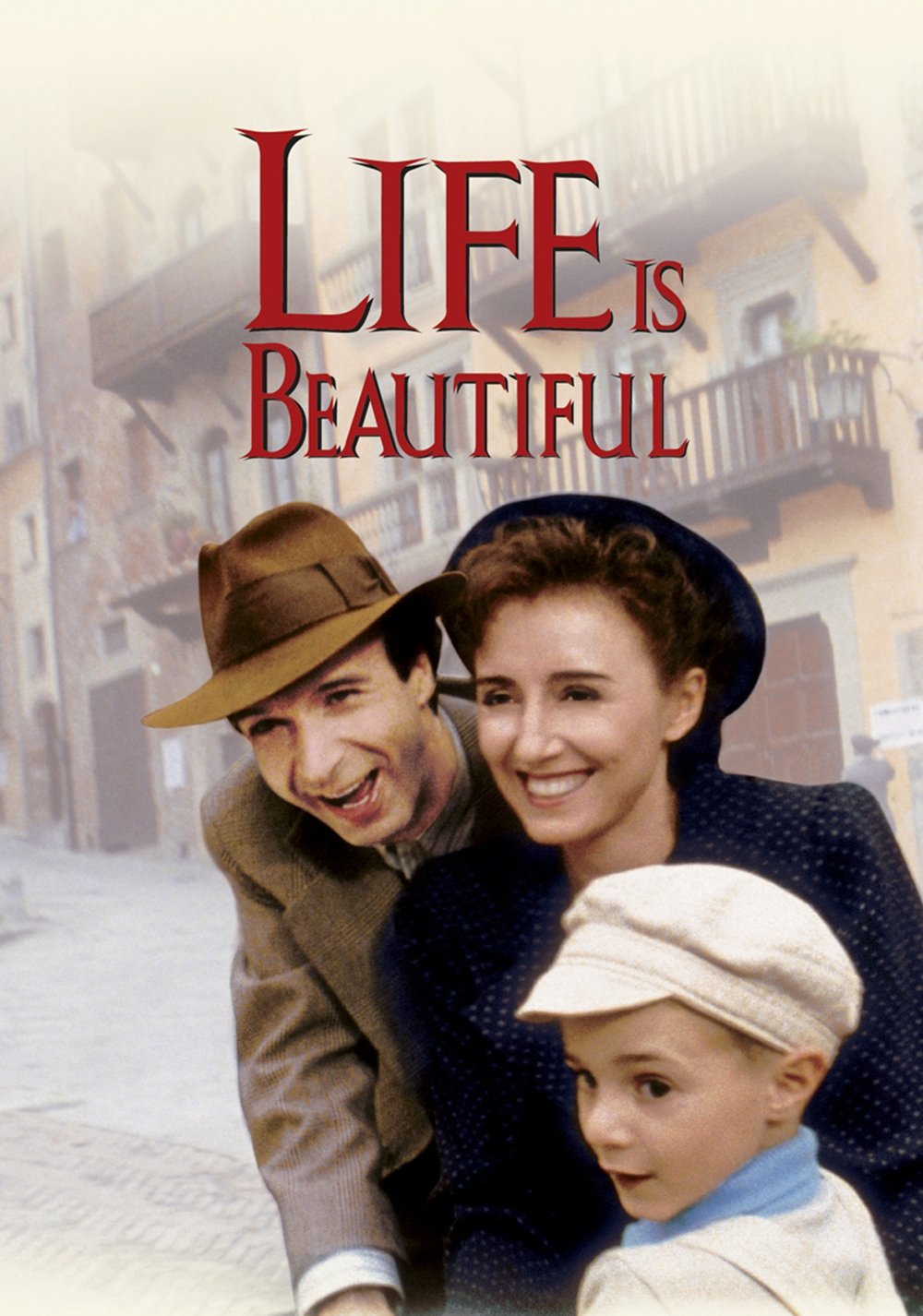
It’s rare that I can recall the moment I first encountered a film, but with “Life is Beautiful,” that discovery stays vivid in my memory. I remember being swept into a small, overflowing art house theater with friends who had insisted I would be moved in a way no other film could manage. At that time, I was skeptical; comedies set against the Holocaust had always struck me as impossible or even disrespectful. Yet, as I watched Roberto Benigni’s feverish optimism unfold, I found myself silently captivated, my preconceptions gently unraveled scene by scene. The film didn’t just move me—it fundamentally challenged the boundary between hope and denial, laughter and tragedy. This delicate balancing act is why I find “Life is Beautiful” not just fascinating, but indispensable for anyone willing to confront the contradictions of the human spirit.
What the Film Is About
“Life is Beautiful” is, at its heart, a profound expression of how love and imagination become a means of survival in the darkest circumstances. The story arcs across two worlds: pre-war Italian gentility and the harrowing reality of Nazi occupation. In the first act, Guido’s exuberant courtship of Dora is equal parts charming and improbable, radiating a playfulness that defies both class and prejudice. But when the narrative plunges into the raw certainty of the concentration camp, the film’s emotional stakes intensify beyond mere romance or familial affection.
What truly emerges for me is a tale of emotional subterfuge—a father’s determined effort to shield his son from unspeakable horror by transforming the Holocaust into a child’s elaborate game. I see this not as escapism, but rather as a courageous act of resistance against meaninglessness. The film insists, sometimes with almost unbearable optimism, that the human capacity for invention can carve out islands of hope inside a chaos engineered to destroy both body and spirit. In doing so, “Life is Beautiful” asks us a bold question: when stripped of everything, what are we truly capable of giving to those we love?
Core Themes
The most resonant theme that emerges for me is the idea that love is an act of defiance. Guido’s humor and improvisation don’t belong to a tradition of denial; instead, they function as a personal revolution in the face of systemic annihilation. This is essentially a film about the preservation of dignity, but told through the subversive language of jokes and fairy tales. At the time of its release in 1997, audiences were still grappling with how to represent the Holocaust ethically on screen—Benigni’s approach was both radical and controversial. Today, these questions still ring true. When darkness threatens to overwhelm, what moral responsibility do we have to protect innocence—whether our own, a child’s, or a stranger’s?
Another motif that I personally find enduring is the film’s meditation on the power—and, at times, the limits—of optimism. “Life is Beautiful” doesn’t claim naively that hope conquers all; rather, it suggests that imagination and humor can act as both sword and shield against despair. In our current age, with cynicism sometimes masquerading as wisdom, I am constantly reminded why stories that champion resilience have a necessary place in the canon. The innocence of childhood is at risk in every generation, and the film’s urgent belief in its preservation is what makes it perpetually relevant for me.
Symbolism & Motifs
One of the most powerful leitmotifs for me is the recurring visual of the game. Throughout the second half, Guido reframes the unspeakable reality of the camp through a fictional contest with fantastical rules and imaginary points. This is not just a clever device to comfort his son, but a broader metaphor for the act of re-narrating suffering. Every time Guido shrugs off horror by framing it as another twist in the game, we see the desperate resourcefulness of the oppressed—how language and invention themselves become tools of survival.
I’m also drawn to the persistent presence of mirrors and windows throughout the film, most memorably in the first act. These are spaces of both reflection and separation—Guido sees Dora through a restaurant window, and later, he waves to her from a narrow camp window. For me, these images reinforce the theme of longing, the separation between innocence and brutality, and the fragile barrier between illusion and reality. It’s as if Benigni uses these visual cues to remind us that happiness and horror are always divided by the thinnest of panes.
Another understated yet powerful motif is the larkish use of language and wordplay. Guido’s puns and improvisations aren’t just comic relief—they point toward the preservation of culture, identity, and individuality even as external forces try to erase them. In the cacophony of camp orders and propaganda, Guido’s refusal to speak plainly is a subtle form of sabotage; he lets meaning slip through the cracks of the oppressor’s language. For me, this reminds us that resistance can often be an act of quiet cunning rather than open revolt.
Key Scenes
The Grand Banquet: The Art of Disguise
One pivotal moment for me happens during the “banquet” scene, when Guido hilariously impersonates a school inspector to shield his son from racist laws. This scene isn’t just slapstick; it’s a demonstration of how wit can neutralize humiliation and delay the advance of cruelty, even if only briefly. The laughter in that moment is bittersweet—an averted disaster, but no real escape.
The Tank Game: Delusion as Sanctuary
I still feel a catch in my throat when I recall the infamous “tank game” scene. Guido’s pretense that the camp is a competition for a real-life tank reframes terror into excitement for his son. Here, storytelling becomes both barrier and bridge, allowing Joshua to remain unscathed by surrounding atrocities. Watching as an adult, I no longer see this simply as comic relief—it’s a heartbreaking performance, with Benigni’s eyes betraying the anguish beneath the smile.
Final March: Contradiction of Hope and Despair
The final march, when Guido sends his son into hiding and parades around the camp in exaggerated goose-step, still devastates me. There’s a physical comedy to his movement, but it’s ghosted by the knowledge of what’s to come. In this moment, the absurdity of humor collides with unyielding fate, crystallizing the film’s core paradox: that love might not save us, but the attempt is what gives our lives meaning.
Common Interpretations
Critics have long interpreted “Life is Beautiful” as either a triumph of the human spirit or, conversely, an oversimplification of historical tragedy. Many find Benigni’s approach daring, a necessary antidote to more somber treatments, while others worry that the film risks trivializing suffering through whimsy. I find myself resisting both extremes. To me, the comedy isn’t a distraction from horror; it’s a lens that sharpens it. The laughter heightens the stakes, illuminating just how much is at risk when innocence is under siege.
Some claim the narrative is too sentimental or even manipulative, using a child’s point of view to avoid grappling directly with atrocity. Yet, for me, this indirectness makes the horror all the more unbearable. We witness what is at stake not through graphic images, but through the careful construction—and eventual unraveling—of a fantasy. I’m less interested in whether the film “sugarcoats” suffering, and more intrigued by how it demonstrates that hope itself can carry a terrible cost, yet still be worth the risk.
Films with Similar Themes
- Jakob the Liar: Both deal with uses of imagination and deception as a shield against the Holocaust’s brutalities, but differ in tone—the tragicomic in “Life is Beautiful” versus the melancholy in “Jakob the Liar”.
- Au Revoir, Les Enfants: Malle’s film also explores childhood innocence colliding with Nazi occupation, offering a quieter but equally devastating meditation on loss.
- Jojo Rabbit: Taika Waititi’s comedy takes similar risks, blending dark humor with historical trauma, challenging viewers to find empathy in unlikely places.
- The Boy in the Striped Pajamas: Both films use a child’s perspective to expose the hollowness of hatred and the tragic absurdities of bigotry.
Looking Through a Contemporary Lens
Years later, I find there’s still something subversive about risking hope where defeat seems certain. “Life is Beautiful” risks sentimentality and, in my eyes, wins a more complicated authenticity because of it. Watching it today, contemporary audiences might approach the film with skepticism, doubting that humor has a place in tragedy. But I believe that wrestling with this contradiction is exactly what the film asks of us: to accept that beauty and horror often intertwine, and that acknowledging both is a mark of depth, not denial.
Ultimately, understanding what this film is saying—and how it’s saying it—demands a willingness to sit with discomfort, to let conflicting truths coexist. That’s what gives “Life is Beautiful” its power and enduring value in my personal pantheon of cinema.
Related Reviews
If you found value in my perspective, you might also enjoy exploring my thoughts on other cinematic landmarks such as Schindler’s List and Au Revoir, Les Enfants.
To broaden this interpretation, you may also explore how critics and audiences responded over time.
🎬 Check out today's best-selling movies on Amazon!
View Deals on Amazon