
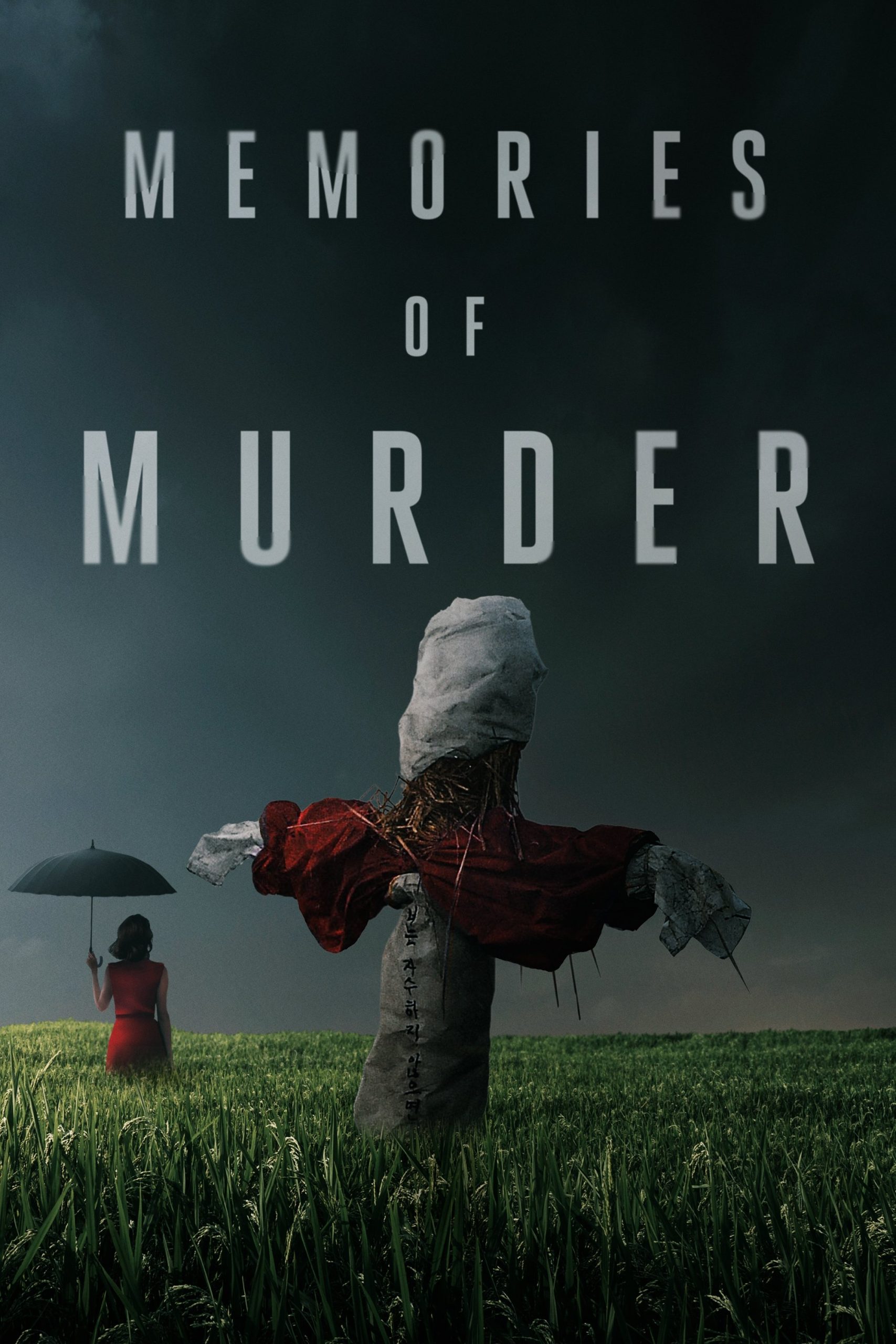
When I recall my first viewing of Bong Joon-ho’s Memories of Murder, what lingers is not simply the film’s depiction of a series of unsolved killings, but how it unsettled my entire notion of closure and justice. Years later, I still remember the uneasy silence that settled in the room as the credits rolled—a silence that seemed to echo the film’s own haunting ambiguity. I had stumbled into the movie expecting a procedural thriller; instead, it offered something much more personal and harrowing: a portrait of obsession, futility, and the perpetual yearning for answers that may never come. There’s something about how the film refuses neat resolutions that continues to draw me back—it’s as if Bong Joon-ho holds a mirror up to my own curiosities and anxieties about the unknowable darkness that creeps just out of sight.
What the Film Is About
On its surface, this film traces the dogged investigation by two Korean detectives into the country’s first confirmed serial murders, set in the rural precinct of Hwaseong in the 1980s. What I find most gripping is not the investigative mechanics, but the emotional unraveling of the men at the film’s center—Park Doo-man, rough-edged and superstitious, and Seo Tae-yoon, a transplant from Seoul whose methodology betrays a desperate need for rationality in the face of chaos. Their convergence becomes less about solving a case and more about how sorrow and futility change a person.
Bong’s film, to my mind, is wrestling with questions far thornier than “Who did it?” It’s obsessed with the impossibility of certainty in a world warped by violence, bureaucracy, and human error. The agonizing pursuit of answers—whether through Park’s brute intuition or Seo’s methodical logic—leads them to dead ends, false leads, and ultimately to moral exhaustion. Over time, the boundaries between hunter and haunted erode. The detectives’ growing desperation becomes the real journey; the killer is always just out of frame, a void that challenges audiences to confront their own discomfort with ambiguity.
Core Themes
For me, the film’s relentless meditation on uncertainty and the failure of systems strikes at the heart of contemporary anxieties—especially in an era where we place so much faith in institutions to bring order to chaos. The forced confessions, the practical limitations of forensic science, and the undercurrent of political unrest speak to a society struggling to reconcile its desire for truth with its institutional inadequacy. Released in 2003, the film reflected South Korea’s ongoing grappling with its authoritarian past; today, its skepticism toward the machinery of justice feels eerily prescient and globally resonant.
I also find the film’s examination of masculinity and vulnerability deeply poignant. Park and Seo’s unraveling is as much about the fragility of male pride and the dangers of dogmatic certainty as it is about their inability to solve the crime. Their journey reveals how obsession corrodes the soul, straining not just professional relationships, but their very sense of self. These are not noble heroes—just fallible, wounded men, stripped of illusions.
Symbolism & Motifs
The recurring motifs in Memories of Murder are both chilling and poetic in execution. Rain becomes an omen, signaling each new murder—transforming from life-giving force to harbinger of violence. Every time the storms descend, the tension and dread in the village thickens, impressing upon me how nature itself becomes complicit in these horrors.
Perhaps most evocative to me is the final image of the killer’s face obscured in a ditch, mirrored years later by Park revisiting the scene and gazing directly into the camera. It’s a potent refusal of closure, a demand that the viewer confronts their need for resolution. The repeated motif of eyes—suspects’ darting glances, the detectives’ haunted stare—underscores the unnerving assertion that truth, like a face in the shadows, can be glimpsed but never fully grasped.
Finally, Bong’s use of claustrophobic, dimly lit interiors and wide, barren landscapes serves as a dual metaphor: the stifling limits of institutional thinking and the vertiginous freedom of the unknown. Each motif is woven masterfully, creating a cinematic pattern that unsettles as much as it enlightens.
Key Scenes
The Railroad Embankment: A Study in Hopelessness
One moment that remains seared in my mind occurs on the railroad embankment at twilight. Seo, convinced he has found the real killer, corners the suspect as a train roars past. The confrontation is brutal, culminating in Seo’s breakdown—a man who once championed evidence reduced to wild accusation. The train’s thunder almost drowns out Seo’s anguish, underlining just how small and powerless the investigators have become. In this scene, the futility of their crusade becomes heartbreakingly clear.
The Rice Field Discovery: Violence in the Ordinary
Another pivotal scene for me is the moment when a body is discovered in a seemingly peaceful rice field. The juxtaposition of tranquil rural life with sudden, incomprehensible violence is devastating. The men’s grim determination is visible on their faces, but so is their growing despair, as if the countryside itself is complicit in its secrets. It’s here that the film’s atmosphere of dread and melancholy achieves its peak.
The Final Confrontation: Gazing Into the Abyss
Years after the case has gone cold, Park Doo-man revisits the murder scene. His gaze into the camera—the direct appeal to the audience—suggests that the real mystery is not the killer, but our own uneasy complicity as spectators hungry for answers. This breaking of the fourth wall is not merely a stylistic flourish; it’s Bong’s challenge to the viewer, a call to discomfort that resonates deeply with me each time I watch.
Common Interpretations
Many critics interpret Memories of Murder as a searing indictment of policing incompetence and bureaucracy—an allegory for South Korea’s post-authoritarian growing pains. They often focus on the film’s indictment of state violence and its critique of forensic impotence. While I acknowledge these readings, I see the film’s real potency in something more existential: the confrontation with a void that refuses catharsis or neat moral reckoning.
Where others see a political thriller with a biting social conscience, I find a film about living with uncertainty—how unhealed wounds can define an entire generation. The unresolved ending is not a narrative gimmick for me, but a deliberate reflection on human limitations. Critics are right to flag the film’s historical setting, but for me, the emotional terrain it charts reaches well beyond its Korean context.
Films with Similar Themes
- Se7en – Like Bong’s film, Fincher’s thriller explores obsession, the quest for meaning, and the corruptive effect of violence in a world that resists closure.
- Zodiac – Another procedural haunted by the unknowable, where the investigation becomes a meditation on futility and obsession.
- Mother (Bong Joon-ho) – Examines justice, moral ambiguity, and the capacity for violence in ordinary people, set against a similar rural backdrop.
- The Chaser – This Korean thriller also probes institutional failure, blurred morality, and the agony of searching for truths that might never come.
Conclusion
Tackling Memories of Murder today offers more than historical insight—it’s a chance to experience a uniquely unsettling meditation on justice, truth, and the yearning for certainty that defines the human experience. Modern viewers willing to sit with its ambiguities will find that grappling with the film’s themes isn’t just an act of interpretation, but a challenge to reflect on one’s own expectations about closure, justice, and what it means to truly confront evil. For me, every revisit is an invitation to gaze into the void, and—just as the film’s final shot compels—to stare into my own need for resolution, however uncomfortable that might be.
Related Reviews
If you found value in my perspective, you might also enjoy exploring my thoughts on other cinematic landmarks such as Zodiac and Se7en.
To broaden this interpretation, you may also explore how critics and audiences responded over time.
🎬 Check out today's best-selling movies on Amazon!
View Deals on Amazon