
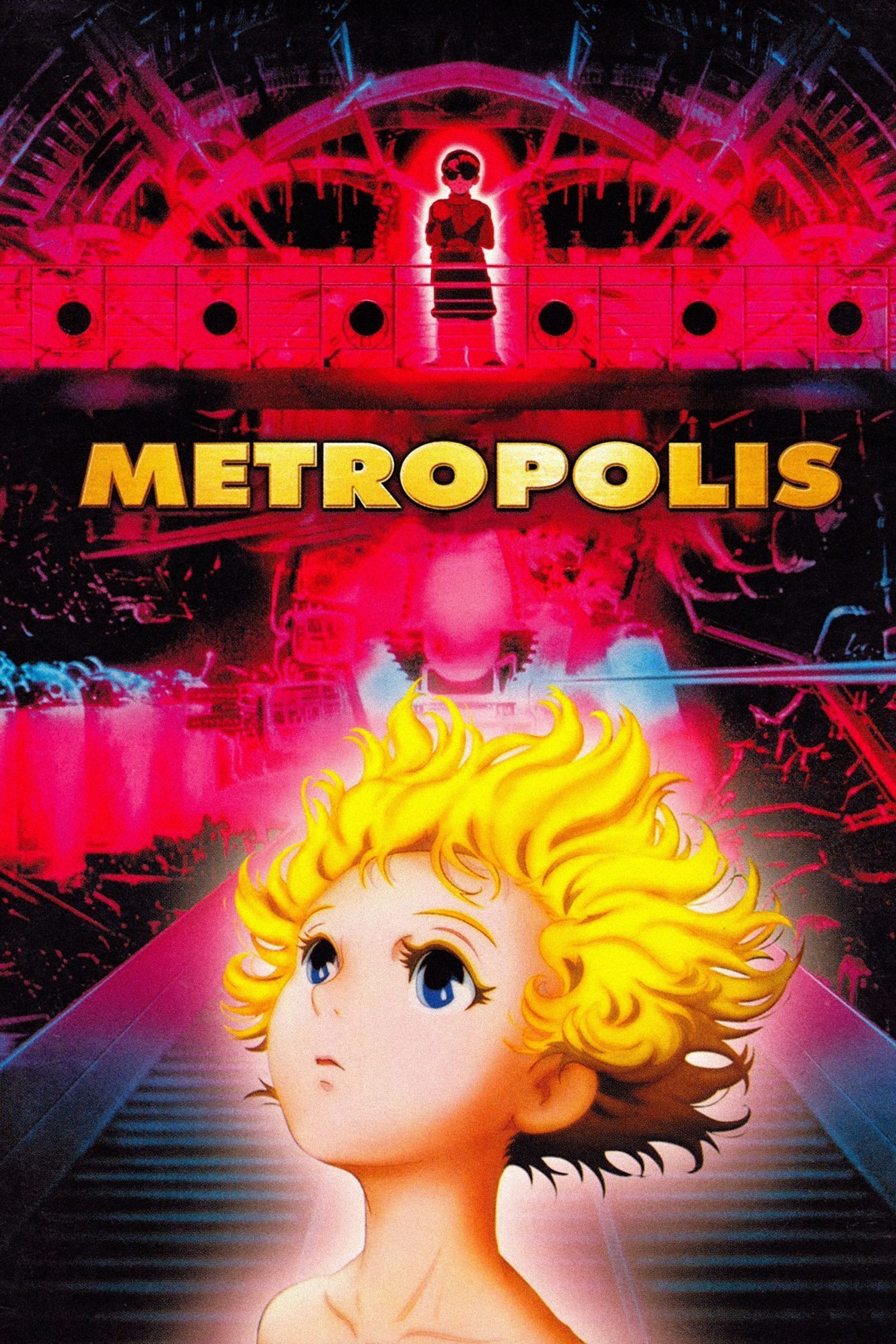
My fascination with “Metropolis” began years ago, not in a plush theater with orchestral accompaniment, but in a dim living room with a battered DVD, the image flickering like a hallucination. Even through the scratches and missing reels, the vision of a city stacked in vertical layers—in which the privileged glide above while the oppressed toil in darkness—felt disturbingly immediate. It wasn’t just the story that gripped me; it was how the film seemed not to describe a remote future, but to illuminate the unspeakable truths hanging beneath nearly every industrial society. “Metropolis” lingers with me as a perpetual challenge: to witness not only its technical achievements but its uncanny moral clarity.
What the Film Is About
For me, “Metropolis” is less about the machinery of its science-fiction cityscape and more about the machinery within its people—their emotional exhaustion, their flashes of hope, their impulses toward rebellion or resignation. The film stages a melodrama between Freder, the son of the city’s master, and Maria, a saintly figure among the workers, but at its heart, it enacts the collision between love and systemic cruelty. As Freder descends from the gleaming upper world to discover the suffering beneath, his consciousness splits—torn between complicity and outrage, privilege and empathy.
What seduces me most about the emotional journey is the way the film embodies its central conflict as an almost religious allegory: heart versus mind, mediator versus tyrant. Lang refuses to offer easy answers. The mere existence of the mediator is presented as hopeful, but also naive—and perhaps even dangerous, if the forces of resentment and power are left unchecked. In my view, “Metropolis” insists that the struggle for justice will always be turbulent, sacred, and fraught with betrayal. The revolution here is not simply mechanical; it’s deeply, agonizingly human.
Core Themes
The most unforgettable aspect of “Metropolis,” in my eyes, is its audacious grappling with power, class division, and autonomy. These aren’t simply backdrops—they are foregrounded in astonishingly literal and metaphorical ways. The city’s upper echelons, floating serenely in art-deco splendor, exist wholly because of the sweat and blood of the masses below. To me, Lang’s vision is not merely a prophecy but a diagnosis: modernity’s grandeur is always haunted by what it conceals.
I am consistently drawn to how “Metropolis” confronts the search for identity—not just personal, but collective. When I watch, I see a population yearning to know who they are apart from their function as cogs in a machine. Maria, as the voice of patience and faith, and the Machine-Man, her mechanical doppelganger, dramatize the dangers of both blind trust and unchecked technological progress. In 1927, these themes pulsed with anxiety over industrialization and social revolution; today, they resound just as urgently given our own simmering questions about AI, social inequality, and the consequences of unchecked automation.
Symbolism & Motifs
Every time I return to “Metropolis,” I find new layers in its visual tapestry of recurring images: the ceaseless churning of gears, the iconic Tower of Babel, and the dazzling outlines of Maria’s transformation scene. The clock-faced machine, with workers crucified upon its relentless cycles, burns with sacrificial power: it is an altar to productivity, swallowing those who serve it. This symbol, for me, renders the cost of technological advancement chillingly personal.
The Tower of Babel motif resonates particularly strongly in my reading. The attempt to build upward—physically, socially, spiritually—leads not only to achievement but to fragmentation, as language and intent are fractured. I often interpret the film’s lavish, animalistic crowds, as well as the automaton Maria’s feverish dance, as depictions of mass hysteria and the volatility of collective will. “Metropolis” uses these motifs to warn us, not against progress, but against progress without empathy or vision.
Key Scenes
The Machine Swallows Its Servants
This is the moment that always startles me: Freder’s nightmarish vision of the Moloch machine feasting on workers. Their bodies are tossed into flames, transformed into sacrifices for an insatiable god of industry. It is a brutally literal depiction of what economic systems can do to the faceless many. The scene’s impact comes from its raw, silent terror—a warning, in my view, that dehumanization remains civilization’s original sin.
Maria’s Automaton Unleashed
When the robotic Maria is unveiled, surrounded by a halo of mystical rings, I am both mesmerized and unsettled. The Machine-Man, programmed to seduce and destroy, captures the film’s ambivalence toward technology and charisma. Is this a liberation, or a perversion? The city descends into chaos, and in that fever, I see Lang’s anxious meditation on how easily movements are manipulated—not only by machines, but by those who can harness the crowd’s yearning for hope.
The Flood and Reconciliation
The climactic sequence—water surging through the heart of the workers’ city—never fails to move me. As children are rescued in a swirl of panic and Maria’s voice finally rises above the din, I sense the cost of change. It’s not only the rich who must be delivered from blindness, but the poor who must be rescued from vengeance. The final moment, with Freder as the “mediator,” reads less as a tidy solution than a hesitant gesture: a handshake across a chasm, trembling with both promise and uncertainty.
Common Interpretations
Over the decades, many critics have read “Metropolis” as a simplistic plea for reconciliation between management and labor—a model of “head and hands” joined by the “heart,” illustrated most literally by the film’s closing intertitle. While I see the appeal of this reading, I can’t help but find it dangerously naive. The handshake at the film’s end feels provisional at best, a resolution that emerges more from exhaustion than conviction.
Others have emphasized the film’s technological prophecy, its anticipation of a world dominated by screens and robots. For me, these readings underplay the film’s moral ambiguity: the robot Maria is not merely an automaton, but an embodiment of fear, desire, and violence. “Metropolis” is less interested in offering blueprints for utopia than in exposing the psychological fissures that technological society fails to suture. In my perspective, the film’s genius lies in its refusal to resolve—its insistence that the mediator is only ever as strong as the society he tries to bind.
Films with Similar Themes
- Blade Runner (1982) – Ridley Scott’s dystopian cityscapes and questions of humanity’s soul echo “Metropolis”’s anxiety about technology and identity.
- Brazil (1985) – Terry Gilliam’s vision of bureaucratic hell channels Lang’s critique of dehumanizing social systems and the individual’s struggle for meaning.
- THX 1138 (1971) – George Lucas’s stark world of surveillance and obedience shares the motif of mechanized oppression and the desperate longing for personal freedom.
- The Matrix (1999) – Like “Metropolis,” this film visualizes an underworld enslaved to machines, centering the hope for awakening and rebellion.
Conclusion
Watching “Metropolis” today, I am reminded that the search for justice and genuine connection remains never-ending in any society shaped by hierarchy and technology. There is no single way to “solve” the film—the value lies in wrestling with its ambiguities and haunting visions. Modern viewers can approach it not just as a relic, but as a living warning and invitation. To understand its themes is to confront our own dreams and nightmares about the future we are still building.
Related Reviews
If you found value in my perspective, you might also enjoy exploring my thoughts on other cinematic landmarks such as “Modern Times” and “2001: A Space Odyssey”.
To broaden this interpretation, you may also explore how critics and audiences responded over time.
🎬 Check out today's best-selling movies on Amazon!
View Deals on Amazon