
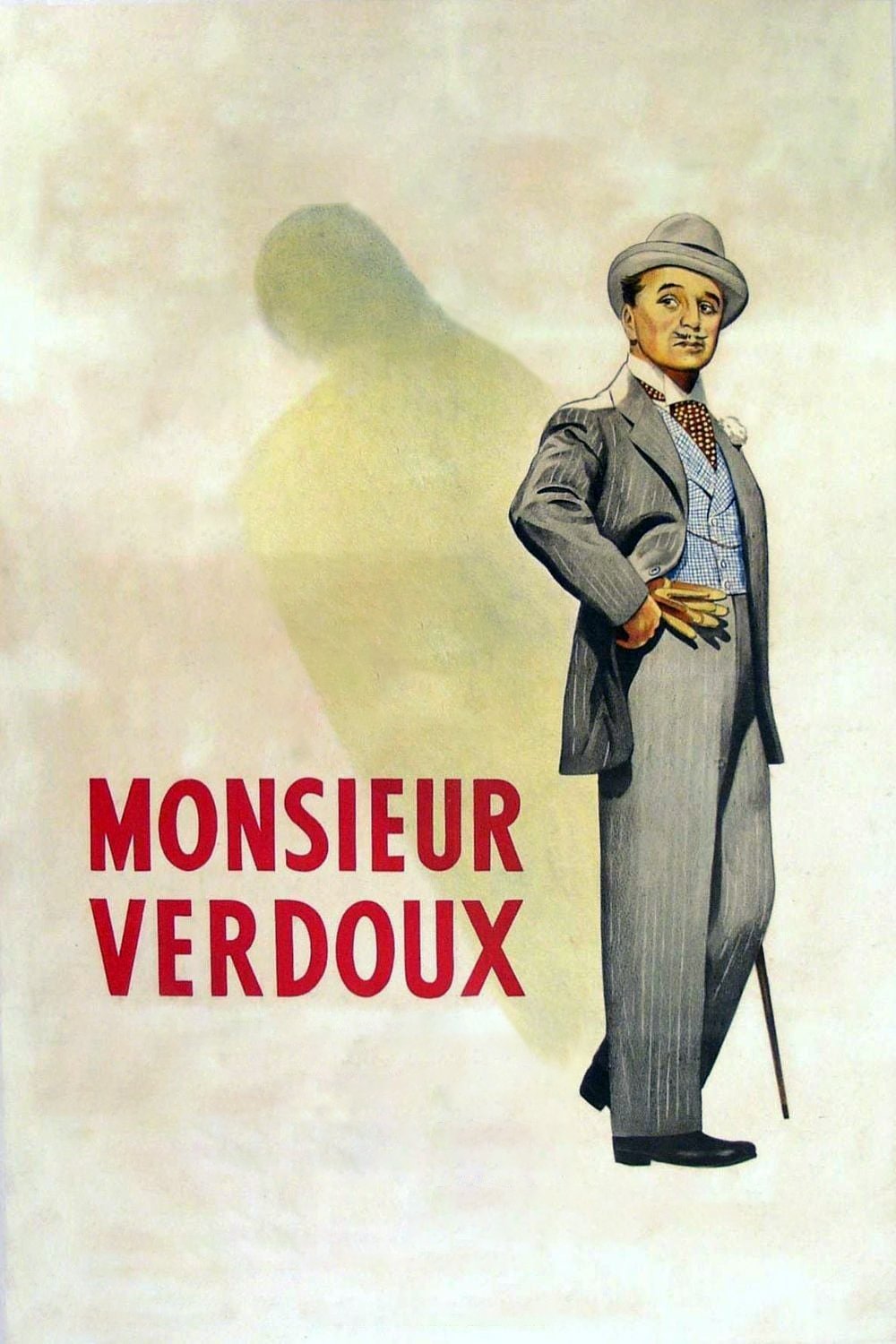
On a restless evening years ago, after watching Chaplin’s more familiar works, I stumbled across Monsieur Verdoux. I remember having a quiet laugh at the idea of Charlie Chaplin—the world’s most beloved tramp—attempting something so dark, so cruelly elegant. But within minutes, my preconceptions crumbled. The film struck a raw nerve, one that has haunted me ever since. There is something unnerving about seeing a face synonymous with innocence and pathos transformed into a vehicle for black comedy and existential dread. Chaplin’s subversion of his own iconic screen presence in Monsieur Verdoux continues to fascinate me, forcing me to question how easily morality is reframed in the face of necessity and charm.
The Underbelly of Domestic Life: Verdoux’s Emotional Odyssey
Far beyond the surface-level story of a “bluebeard,” Monsieur Verdoux contains an emotional journey that is at once chilling and poignant. Chaplin introduces us to Henri Verdoux, an elegant and methodical gentleman who seduces and murders wealthy widows, all to support his own fragile family. What has always haunted me about Verdoux is not his monstrousness, but the feeling that he is a logical—if terrifying—reaction to a world obsessed with survival at any cost. Early in the film, his calm reasoning clashes with our instincts. Is he truly evil, or simply responding to a cruel economic reality?
With each new “business venture,” Verdoux becomes both more sympathetic and more abhorrent. I found myself uneasily teetering between disgust and reluctant understanding. There is a sentiment buried beneath the black humor: the unresolvable tension between personal responsibility and societal expectation. This is not a murderer spun from melodrama. Chaplin, through his subtle construction, dares the audience to find a fragment of themselves in Verdoux’s careful rationalizations. For me, the real horror lies in how plausible those rationalizations feel—especially in an era marked by upheaval and deprivation. The emotional conflict is not just between Verdoux and his victims, but also between the audience and their own judgments.
Reckoning with Society: The Enduring Themes at Play
Monsieur Verdoux bristles with themes that seemed radical in 1947 and feel eerily prescient today. What I find most enduring is its meditation on the casual brutality underlying so-called civilized society. Verdoux defends his actions with cold logic, arguing that personal murder is insignificant compared to state-sanctioned slaughter or the economic systems that push people into poverty. Through this provocative stance, Chaplin calls attention to the moral hypocrisy embedded in the world order—a motif only gaining steam in the postwar moment when the film was released.
There is also a deep undercurrent of alienation and existential angst. Verdoux is essentially a man displaced and discarded by a system he once served. His desperate reinvention speaks volumes about the fragility of identity. For me, the film is a psalm to the restless adaptability of the human spirit, for better or worse. In a society obsessed with appearances and survival, is there any room for authentic morality? The boldness of these themes—linking individual crime to institutionalized violence—was almost incendiary for audiences in 1947, and they remain hauntingly relevant in today’s world of economic uncertainty and shifting value systems.
Visual Wit & Recurrent Motifs: The Language of Irony
The visual style of Monsieur Verdoux is deceptively refined, almost classical, masking the savagery of its subject with a glossy veneer. I cannot help but see this as a metaphor for bourgeois respectability itself—a surface disguising rot. Verdoux’s impeccable attire, manicured gardens, and genteel mannerisms are recurring motifs. Every act of violence takes place within charmingly domestic tableaux: flower beds, parlor rooms, kitchen stoves. For me, Chaplin’s insistence on setting horror amidst serenity heightens the madness of his protagonist and sharpens the critique of polite society.
Recurring objects carry unmistakable symbolic weight. The recurring motif of flowers—often gifted by Verdoux, sometimes growing just outside his victims’ windows—serves as a simultaneous marker of courtship and impending death. Those flowers, beautiful and perishable, echo the double lives both Verdoux and his world are forced to lead. Another key device is Verdoux’s beloved piano, which, in its rare appearances, stands as a fragile sanctuary—a place of nostalgia and peace that will be inevitably, irrevocably broken. These motifs create a chilling dissonance, reminding me that beneath the surface of every well-mannered gesture may lurk something unspeakable.
Moments That Refuse to Fade: Three Pivotal Scenes
“The Garden of Death”
To me, one scene that lingers most is the delicate poisoning in the sunlit garden. Here, Chaplin composes a tableau of domestic bliss that conceals absolute malice. The gentle sound of garden birds, the dappled light, the graceful hand-off of the fatal wine—it’s a scene dripping with irony. This moment is the razor’s edge where charm becomes menace and civility is weaponized, encapsulating the film’s central thesis: that evil most often arrives with a smile.
“The Magdalene: A Mirror of Mercy”
A second indelible moment arrives between Verdoux and the young woman he calls “the Girl”—a destitute stranger he unexpectedly spares. Their encounter brims with philosophies of fate and survival. In showing mercy, Verdoux exposes his own humanity and, paradoxically, his deepest wounds. The Girl becomes a symbol of innocence, or perhaps a reflection of his unreachable former self. I find this scene compelling because it briefly disrupts the tightly-wound machinery of Verdoux’s duplicity, hinting at the tragedy beneath his monstrousness.
“Verdoux’s Final Address: Society on Trial”
The film climaxes in the courtroom, where Verdoux tells society, and by extension the audience, that he is but a product of their own callousness. This is, for me, the most shocking and honest moment—one in which the line between condemnation and justification blurs entirely. Chaplin delivers the speech with chilling calm, dismantling the illusion of moral superiority we so desperately cling to. The scene is not so much a defense as an accusation directed outward, and it demands that I, as a viewer, reckon with my own complicity in the structures that birth such monsters.
Critical Consensus and Where I Stand
Upon its release, Monsieur Verdoux unsettled critics and audiences alike. Many read it as Chaplin’s bitter satire against bourgeois values and postwar societal malaise. Some saw it as a direct indictment of capitalism and the culture of war. It is often interpreted as Chaplin’s personal protest—a shift from pathos to acrid social commentary. The mainstream response at the time was deeply divided: some praised its courage, others recoiled from its dark wit and moral ambiguity.
While I understand these viewpoints, my own reading diverges slightly. Whereas critics often focus on Verdoux’s “message,” I see the film’s true genius in its refusal to let anyone—least of all the audience—off the hook. There is satisfaction in intellectualizing Verdoux’s defense, but it’s the visceral discomfort, the sickening realization of moral relativity, that lingers in my memory. For me, Chaplin’s film is less a polemic and more a probing question, one the viewer can never answer with certainty.
Echoes and Reflections: Movies in the Same Dark Mirror
- Dr. Strangelove or: How I Learned to Stop Worrying and Love the Bomb (1964): Both films wield black comedy to interrogate the madness and hypocrisy of civilized society, especially regarding mass violence and rationalized evil.
- Kind Hearts and Coronets (1949): Like Verdoux, this British dark comedy focuses on a charming antihero’s calculated murders, exploring class, ambition, and the absurd veneer of respectability.
- The Third Man (1949): Set in postwar Europe, it confronts the morality of profiteering and the normalization of villainy in a world shaken by upheaval—a spiritual cousin to Verdoux’s existential quandary.
- American Psycho (2000): Although more modern and savage, this film shares themes of dual identity, moral disintegration, and the predatory nature of affluent society.
Why This Dark Satire Still Resonates
I believe modern viewers can approach Monsieur Verdoux as more than a historical curiosity. Its boldness and honesty—its refusal to soothe or exonerate—give it a pressing modernity. By grappling with the uncomfortable questions it poses about morality, complicity, and the cost of survival, viewers can access a deeper understanding of both the film and themselves. For me, that makes Verdoux not only a daring work of art, but an essential, if troubling, act of cinematic introspection.
Related Reviews
If you found value in my perspective, you might also enjoy exploring my thoughts on other cinematic landmarks such as Kind Hearts and Coronets and Dr. Strangelove or: How I Learned to Stop Worrying and Love the Bomb.
To broaden this interpretation, you may also explore how critics and audiences responded over time.
🎬 Check out today's best-selling movies on Amazon!
View Deals on Amazon