
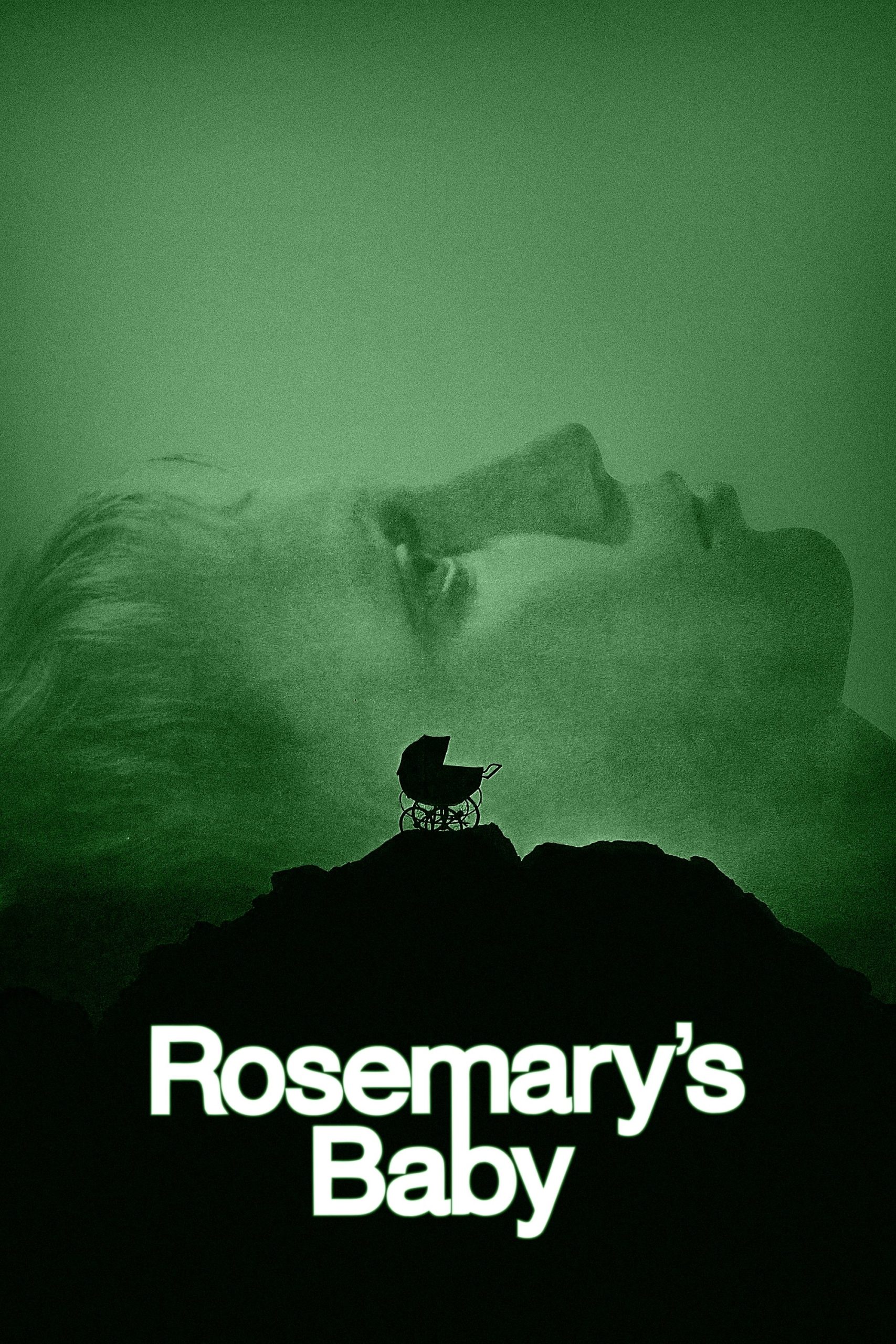
The first time I saw “Rosemary’s Baby,” I felt a sense of violation I could not immediately name. It was not the simple fear of demonic horror, nor the discomfort of watching a vulnerable woman gaslit by her community. Instead, it was the creeping sense that evil had crept in not through grand gestures but the mundane passageways of marriage, trust, and the yearning for family. Roman Polanski’s direction left me with the kind of dread that endures long after the credits roll: the terror of realizing that the seemingly ordinary architecture of our lives—the home, the spouse, the neighbor—might secretly harbor our worst nightmares. Over time, each rewatch has only deepened my sense of unease, as if the film’s apartment walls have grown thinner and its whispered secrets more intimate.
Behind Closed Doors: A Descent into Quiet Horror
At its core, “Rosemary’s Baby” follows Rosemary Woodhouse’s descent from hopeful newlywed into a world where every intimate space is infiltrated by others’ designs. What moves me most is not simply her gradual unravelling under external pressures, but the way the film so deftly charts the shifting boundaries between private hope and public intrusion. I’m continually struck by how the film seduces us with the banality of Rosemary’s journey: moving into a charming old building, dreaming of starting a family, choosing wallpaper, mingling with pushy neighbors. On one level, the story is achingly familiar. On another, it’s an unfolding tragedy where Rosemary rarely owns her own narrative or body.
Throughout the film, Rosemary’s emotional journey is one of increasing isolation and disbelief; as she grows more convinced that something is wrong, the people surrounding her—her husband, her doctor, even her closest friends—systematically fail her. Her burgeoning fear is met not with support, but ridicule and condescension, culminating in psychological and, ultimately, bodily betrayal. I feel the film’s genius lies in its ability to fracture the viewer’s own sense of whom to trust and what to believe, so that Rosemary’s experiences—her confusion, her terror, her hope for deliverance—become our own emotional map.
Fears That Outlast the Sixties: Power, Agency, and Social Paranoia
Watching the film through the lens of its time, I am reminded that 1968 was a crucible for cultural paranoia and social upheaval. “Rosemary’s Baby” radiates with anxieties about gender, control, and the fragility of personal autonomy. Rosemary is, in many ways, emblematic of the era’s shifting power dynamics—caught between burgeoning women’s liberation and deeply entrenched patriarchal authority. Her suffering is not only physical but existential. She embodies the era’s (and in many ways, America’s ongoing) struggle to claim one’s story against overwhelming external pressure to conform, to obey, to submit.
Nearly six decades later, I find these themes as resonant as ever. The film’s exploration of gaslighting, reproductive rights, and institutional complicity echoes with disturbing relevance. The subjugation of Rosemary’s agency at the hands of her husband, the patronizing medical establishment, and the supposedly benign community foreshadows ongoing debates over bodily autonomy and the politics of trust. “Rosemary’s Baby” uncannily prefigures contemporary discussions around women’s health advocacy, the invisibility of trauma, and the insidious nature of social control. What was once shocking in its demon-centric plot now feels chillingly prescient as allegory—a reminder that the true horror often dwells not in the supernatural, but in the everyday exertion of unchecked power.
Wombs, Wallpaper, and the Devil in the Details
No film in my viewing life has deployed symbolism quite as cunningly as “Rosemary’s Baby.” I’m fascinated by how Polanski and cinematographer William A. Fraker craft a tapestry of visual and conceptual motifs that deepen the film’s emotional texture beyond straightforward narration. The iconic Bramford apartment building functions almost as a character in its own right. Its wallpaper, corridors, and fixtures intertwine with the story’s sense of claustrophobia and violation. I see it as both a womb and a prison—signifying shelter, fertility, and entrapment all at once.
The repeated motif of doors and locks—so often seen being opened, closed, or surreptitiously handled by neighbors—serves as a subtle register of Rosemary’s agency or lack thereof. The act of shutting a door is loaded with ominous meaning in this film. Similarly, the film’s recurring use of lullabies—most hauntingly Mia Farrow’s hummed theme—set against the backdrop of disturbing events turns innocence itself into something suspect and menacing.
Beyond the obvious occult imagery (black candles, talismans, ritualistic herbs), the most insidious symbol is the body itself. Rosemary’s body is contested space, at once vessel and battleground, subjected to the projections and plans of nearly everyone around her. The visual language Polanski employs—tight framing, intrusive close-ups, ambiguous reflections—renders her simultaneously intimate and untouchably distant. That contradiction lies at the heart of the film’s most effective horror: we are invited in close, only to discover just how profoundly alone Rosemary—and by extension, we—truly are.
Moments That Haunt: Scenes Burned Into Memory
“This is no dream, this is really happening!”
Of all the movie’s many indelible images, none have struck me as viscerally as the sequence in which Rosemary, drugged and drifting between nightmare and reality, is raped by the Devil himself while her husband and neighbors look on. The film’s refusal to offer easy visual answers—cutting between expressionist, shifting imagery and glimpses of the real world—left me reeling with the force of its ambiguity. I have never seen horror rendered so powerfully by what you do not see, and by the implications of collusion among those closest to the victim. This moment is cinematic violation writ large—an intersection of sexual violence, ritual, and the collapse of the self.
The Doctor’s Office: Authority as a Weapon
Later, when Rosemary seeks help from Dr. Sapirstein and ultimately from Dr. Hill, I’m always pained by her quiet desperation. The moment Dr. Hill betrays her by handing her back to Guy and the Castevets is, to me, the film’s most quietly horrifying betrayal. In these sterile professional environments—spaces meant to safeguard the body—Rosemary is instead systematically dismissed and returned to her tormentors. This is horror at its most nuanced: a commentary on the abdication of professional responsibility in the face of social conformity. It’s a reminder of how institutions can be complicit in the harm they are meant to prevent.
The Cradle Scene: Ambiguous Motherhood
The film’s eerie denouement, in which Rosemary discovers her child surrounded by the cult, reorients the film’s horror into something more existential. Rather than react with the expected terror or violence, Rosemary is overcome by maternal instinct. As she rocks the child’s black bassinet and coos, “What have you done to its eyes?” she is swept up in a maternal bond that, for me, transforms the entire narrative. The final shot—Rosemary gently rocking her demonic infant—blurres the line between victimhood and complicity, horror and acceptance. Here, the question is not what evil has been done to Rosemary, but what she is now willing—or forced—to love as her own. It’s one of the most ambiguous and unsettling endings I’ve ever witnessed, and I can’t stop thinking about it.
Beyond the Devil: Layers of Meaning and Personal Resonance
It’s nearly impossible to discuss this film without addressing its status in the horror canon, but I’ve always struggled with readings that flatten the film into a pure story of satanic conspiracy. Certainly, many critics have focused on the occult aspect, viewing the film as a cautionary tale about the perverting influences of countercultural experimentation. Others take a psychoanalytic approach, parsing the imagery as a kind of nightmare echo of pregnancy anxiety. Some have even cast Rosemary as a modern-day Marian figure—her child an anti-Christ alternative to religious immaculate conception narratives.
While these readings are not without merit, my own view is that the strength of “Rosemary’s Baby” does not reside primarily in its supernatural trappings. For me, the film’s power is in its nuanced exploration of trust, betrayal, and the cost of personal agency. I am more haunted by the silence and complicity of the so-called normal world than by the horns and hooves of its villain. What chills me most is the realization that evil can thrive within the architecture of family, medicine, and community precisely because those are the very institutions we are taught to trust most deeply. In that way, Rosemary’s ordeal strikes at something as old as civilization itself: the cost of belonging, the dangers of obedience, and the slippery divide between protection and imprisonment.
If You Want More Paranoia at the Dinner Table…
- Don’t Look Now (1973): Another atmospheric descent into grief, secrets, and supernatural suggestion set against a labyrinthine European city.
- The Stepford Wives (1975): A chilling, allegorical look at gender roles, conformity, and identity in suburban America.
- The Omen (1976): A thematically resonant exploration of the anxieties of parenthood and the horrors that can lurk within the family unit.
- Hereditary (2018): A modern meditation on inherited trauma, domestic chaos, and occult horror with unmistakable echoes of Rosemary’s journey.
Final Words: Why I Still Come Back to Rosemary
The value of “Rosemary’s Baby” is not in how expertly it frightens, but in how it forces us to confront discomforts too familiar for easy escape. Each viewing demands I ask myself anew: What does it mean to trust, to be vulnerable, to seek safety in others? The film’s brilliance is in refusing easy answers, entwining the supernatural and the everyday so tightly that, long after, I struggle to exorcise its hold. For those willing to surrender to its quiet dread, it remains essential—an ever-relevant meditation on the perils and possibilities of intimacy, agency, and the unseen forces at play within the walls we call home.
Related Reviews: Expand Your Nightmares
If you found value in my perspective on “Rosemary’s Baby,” consider revisiting “The Stepford Wives” or “Don’t Look Now” for further explorations of domestic dread and subversive horror.
To broaden this interpretation, you may also explore how critics and audiences responded over time.
🎬 Check out today's best-selling movies on Amazon!
View Deals on Amazon