
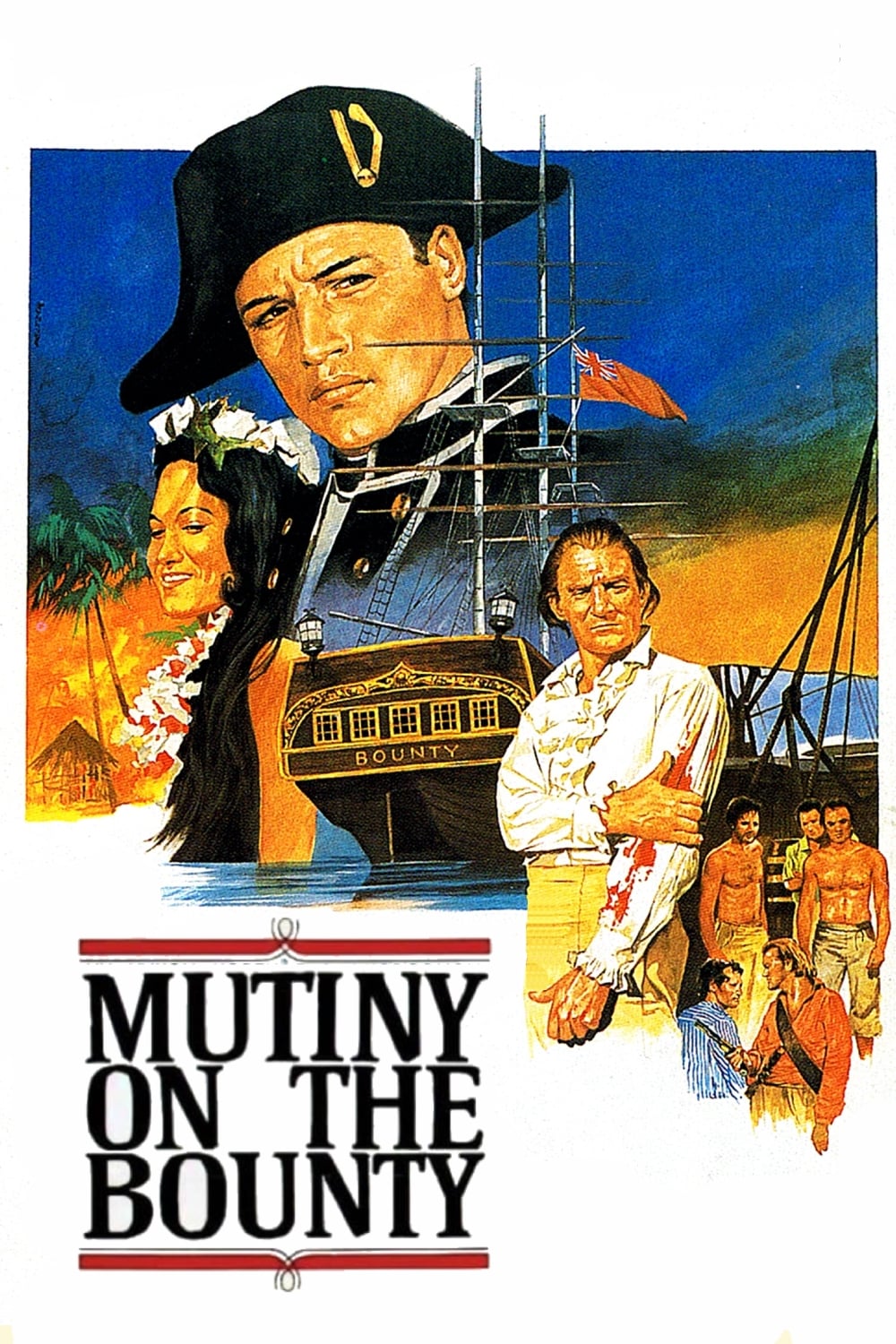
Moral Storms at Sea: My First Encounter with “Mutiny on the Bounty”
Every time I recall the first time I watched “Mutiny on the Bounty” (1935), I’m awash in a swirling tide of questions. I remember the sensation, not of watching a straightforward adventure on the high seas, but of being caught up in a kind of ethical tempest—a film that drew me in with its grandeur only to deliver a heady meditation on authority, conscience, and the cost of rebellion. I braced myself for spectacle, but found myself grappling with profound and unsettling questions about the price of dignity and the limits of obedience.
The Unforgiving Ship: Authority Carved in Wood
What struck me early on was how the HMS Bounty itself becomes more than mere vessel; it’s something akin to a floating doctrine, carved in wood and canvas, adrift in a world where rules are absolute. The Bounty, in my mind, represents not just the ship of state but a microcosm of society itself—cramped, hierarchical, and unforgiving of dissent. Captain Bligh’s rule, so chillingly portrayed by Charles Laughton, turns the decks into a crucible where obedience isn’t just expected—it’s demanded at the cost of humanity. The cloying claustrophobia the film conjures isn’t just physical; it is moral, enclosing the men within rigid expectations where kindness is weakness and authority is gospel.
Bligh as the Shadow of Empire
What keeps echoing through my mind is how Bligh is not simply a villain. He emerges as the living embodiment of imperial order—a man so convinced of his right to absolute rule that cruelty becomes not just justified, but necessary for the preservation of discipline. Watching Bligh’s cold, relentless enforcement of power, I found myself unsettled by the realization: the film isn’t offering a simple dichotomy between good and evil, but inviting me to witness the seduction and dangers of power unchecked. Bligh’s logic is chilling because it’s so recognizably institutional; his brutality feels less like personal sadism, more like the monstrous offspring of a system built on fear and submission.
The Weight of Conscience: Fletcher Christian’s Torment
Clark Gable’s Fletcher Christian is not the dashing, one-dimensional hero I half-expected. Instead, every gesture—every tension in his jaw—seems to register the slow, grinding agony of moral conflict. I saw Christian as a man forced to shoulder the burden of conscience when surrounded by men who have learned to numb themselves to cruelty. The most haunting thing is how the film uses his struggle to interrogate the very nature of rebellion: is it born of noble idealism or desperate self-preservation? Christian’s decision to defy Bligh is neither simple nor triumphant. Rather, it becomes a slow, painful tearing away from the codes that have defined his life. In “Mutiny on the Bounty,” mutiny isn’t a rousing act—it’s a last resort, born of wounds that run too deep for passive endurance.
Humanity vs. Order: The Mutiny’s Moral Complexity
So often in adventure cinema, the dividing lines are neat and reassuring. Here, I was left with no such comfort. The film’s most disturbing insight is that the quest for order—taken to extremes—requires the suppression of empathy, and that rebellion, even when justified, is never free of violence and guilt. I found myself mulling over the moment when Christian hesitates before seizing the ship: the mutiny is messy, fueled by righteous anger but also by fear, personal grievance, and the loss of faith in the entire system. The Bounty becomes a stage where the search for personal dignity collides, brutally, with the needs of collective survival. The question that lingers: can justice ever truly be achieved by those forced into the position of rebels?
Paradise and Exile: The Tahiti Interlude
There’s a sequence that almost feels like another film—a dream of paradise on Tahiti, where the crew encounters a world unburdened by Bligh’s tyranny. I remember the intoxicating sense of escape, the sunlight and warmth contrasted so sharply with the ship’s suffocating order. Yet, the film never lets this idyll feel wholly real; even here, a sense of temporary reprieve hangs in the air, as if paradise is a place that can only be visited, never inhabited without consequence. I came to realize that Tahiti embodies the fantasy of innocence—a world before the fall. For the mutineers, this interlude is both a balm and a curse, a glimpse of what freedom could be, but also a reminder that any escape from tyranny is always shadowed by the knowledge of what it took to get there. The choice to remain or return to civilization is less about geography than about the impossibility of erasing the past.
Obedience, Rebellion, and the Tragedy of Idealism
While the title trumpets mutiny, the film’s heart aches with the tragedy of impossible choices. To me, “Mutiny on the Bounty” is really about the tragic dialectic between obedience and rebellion—the way both are tainted by their own kind of violence. The men’s loyalty is battered not just by Bligh’s cruelty, but by the shattering realization that the structures designed to protect them have instead become engines of suffering. Christian isn’t the hero who solves the riddle; he’s the one who realizes, too late, that the very act of defiance brings its own wounds. The film’s power lies in the way it refuses to sanctify either authority or revolt, suggesting that idealism, in such a world, is always endangered—always vulnerable to compromise, corruption, or destruction.
Masculinity and Brotherhood on the Brink
One aspect that I keep returning to is the film’s treatment of masculinity and brotherhood. The rituals of shipboard life—public floggings, shared suffering, and whispered camaraderie—reveal a vision of masculinity founded on endurance and complicity. The bond between the men is forged in adversity, yet always fragile, always threatened by the pressures of power. I saw that true brotherhood, in the film’s bleakest moments, is less about unity than about the fleeting, desperate acts of solidarity that arise when oppression becomes unbearable. The mutiny itself is less a triumphant collective action than a devastating break, a sign that sometimes the only way to preserve one’s humanity is by risking everything—including the fellowship that once meant survival.
Spectacle with a Bitter Aftertaste
The grand scale of the production—the pounding surf, the heaving decks, the sense of a world in motion—never let me forget that we are meant to feel both the awe and the cost of this adventure. Every moment of spectacle is shadowed by a sense of loss; every triumph arrives freighted with questions about what has been lost, or broken, along the way. The film’s visual grandeur isn’t just there to dazzle, but to remind me of the vastness of the world through which these men struggle, and how small—even doomed—their ideals are against such immensity. I left the film feeling less exhilarated than chastened, compelled to reckon with the price of every act of courage or defiance.
After the Storm: Films That Echo This Turmoil
If “Mutiny on the Bounty” left me reeling with questions about power, conscience, and the costs of revolt, there are other classic works that continue this interrogation with equally haunting force. For anyone stirred by the film’s moral complexity and tragic grandeur, I strongly recommend seeking out “Paths of Glory”—Stanley Kubrick’s searing vision of military authority and ethical rebellion—and “The Bridge on the River Kwai”, which similarly confronts the thin line between discipline and madness, loyalty and self-betrayal.
If you’re curious about how this film was originally perceived or how it compares to similar works of its era, these resources may be helpful.
🎬 Check out today's best-selling movies on Amazon!
View Deals on Amazon