
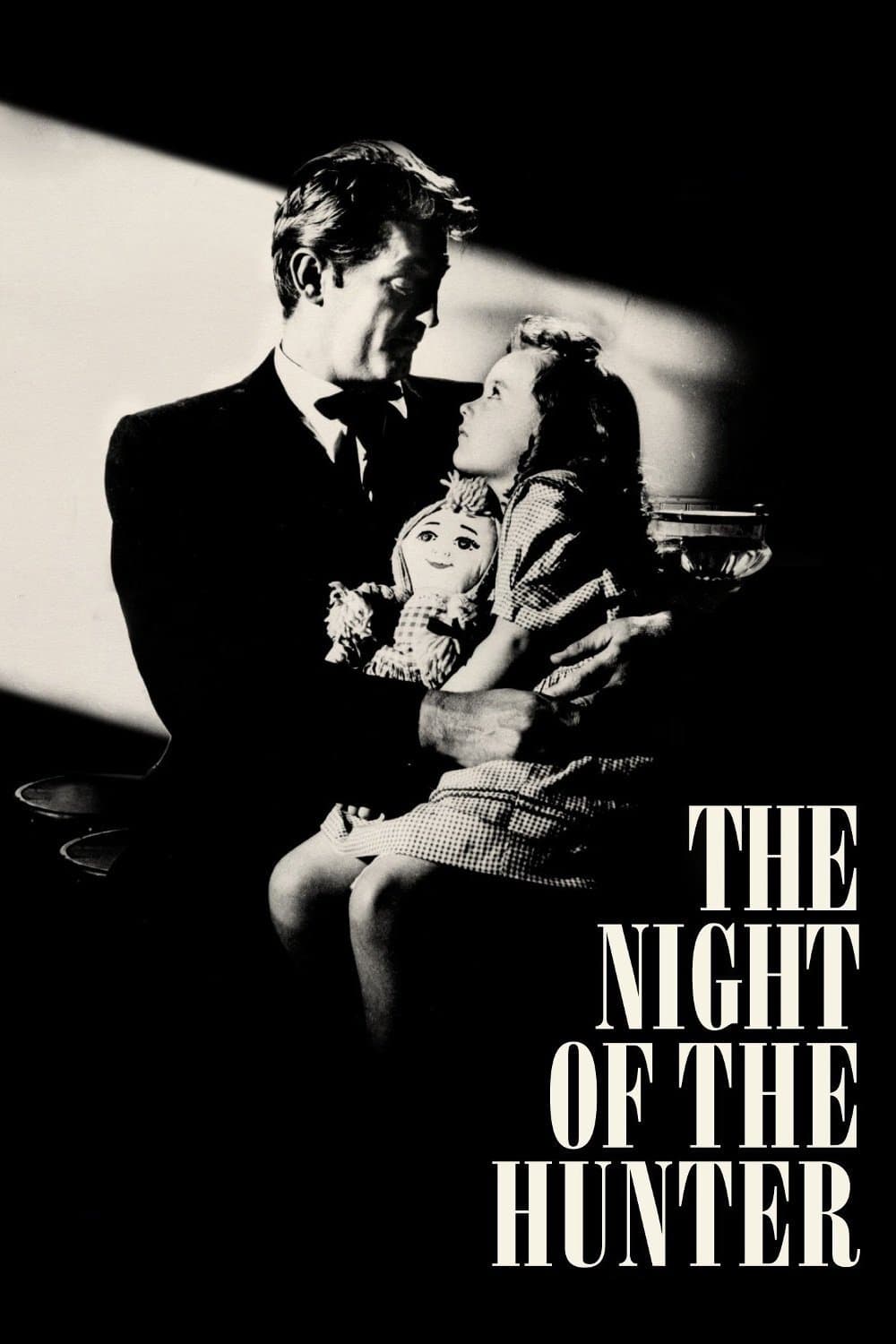
The Preacher’s Shadow: My First Encounter with Fear
I remember the first time I watched Night of the Hunter, I felt as if the air around me had thickened. It’s not just a movie about a villain chasing children—it’s a fever dream stitched together with childhood nightmares and the half-remembered rules of fairy tales. Early on, I realized this film wasn’t just interested in telling a suspense story; it wanted to crawl beneath my skin and whisper about the nature of good and evil, about innocence and corruption, about how we trust and why we fear.
The Gospel According to Harry Powell
It’s tempting to talk about Robert Mitchum’s Reverend Harry Powell as simply a memorable movie villain, but that’s missing the point. As I watched Powell move through the town—his preacher’s collar tight, the words “LOVE” and “HATE” tattooed on his knuckles—I found myself drawn to how the film uses religious iconography to ask what faith really means. Powell’s sermons and songs are twisted, weaponized. He shouts scripture as a mask for predation, turning the language of salvation into a tool of terror. It’s not just that Powell is evil—it’s that he manipulates the very symbols of righteousness to do harm. That inversion made me question what is truly holy and what is hollow performance, a theme that ripples through every frame.
Every Frame a Childhood Memory
The children, John and Pearl, are the eyes through which I experience most of the story. What strikes me now is how the world bends and shifts as they move through it: doorways loom large, the river winds endlessly, shadows seem to swallow the walls. The film’s visual style—the expressionistic lighting, the painterly compositions—feels less like realism and more like a child’s recollection of danger. When I revisit these scenes, I see how Charles Laughton, the director, is reaching past the adult mind and into something more primal. In this world, menace isn’t just a person—it’s everywhere, in the wind, in the water, in the way a house creaks at night.
Faith, Fragility, and the Small-Town Mind
I find myself unsettled by the townspeople in Night of the Hunter—not just by Powell’s malice, but by the way almost everyone around him fails to see it. Their faith seems surface-level, easily manipulated by the right phrases and gestures. The film critiques the vulnerability of communities that mistake performance for genuine morality. This isn’t just about one town or era—it’s a warning about any society that outsources its conscience, that lets authority substitute for truth. Each time I watch, I notice how quickly the townsfolk turn, how eager they are to believe in Powell’s piety, how abrupt their change when the mob forms at the film’s end. Laughton seems to say: faith without discernment is just another kind of blindness.
The River as Escape and Judgment
One of the most haunting stretches of the movie is the children’s escape by river. For me, this sequence is pure poetry—floating past barn animals, silhouetted trees, all beneath a sky wide with stars. The river isn’t just a setting; it becomes a symbol of fate and renewal. As John and Pearl drift downstream, they leave behind the corrupted adults and enter a realm where nature itself offers a kind of sanctuary. The journey by boat feels biblical, a passage through darkness toward uncertain hope. I think the film is whispering about innocence as something fragile, something that must sometimes be carried—like Moses in his basket—through waters full of unseen threats. In these quiet moments, the film suggests that sometimes only a return to nature, to the simplest truths, can offer salvation.
The Lullaby and the Lynching: Sound as Subtext
Sound in Night of the Hunter is never just background. When Pearl hums her lullaby, or when Powell’s hymn drifts through the night, the music functions as a connective tissue between innocence and threat, comfort and violence. There’s a moment when Powell serenades beneath the children’s window—half prayer, half curse—and I realized the film is blurring the lines between lullaby and warning. This duality is at the heart of the film’s meaning: even the sweetest sounds can mask danger; even comfort can be a prelude to fear.
Rachel Cooper: A Counterpoint to Cruelty
When Rachel Cooper enters the film, everything changes. She’s maternal but fierce, someone whose faith is tested by the world but not broken by it. Rachel stands in opposition to Powell, embodying a kind of practical goodness rooted in action, not just words. Her home becomes a sanctuary for lost children, and her willingness to confront evil—shotgun in hand—feels as symbolic as anything the preacher ever intones. Through Rachel, the film argues that true virtue is neither naive nor passive; it’s a matter of choice and courage, not just belief. Watching her, I’m reminded that goodness isn’t something you declare; it’s something you do, often in the face of darkness.
Surrealism and Fairy Tale Logic
Some films work by realism, others by dream. Night of the Hunter takes the logic of fairy tales—children pursued by a wolf disguised as a man of God—and overlays it on the American South. For me, this creates a sense of surreality, as if the story is taking place both in the real world and inside the collective unconscious of childhood. Every exaggerated angle, every looming silhouette, every whisper in the night seems to echo not only the children’s fears but my own. The film is less interested in resolving the world’s evils than in showing how they work, how they seduce, and—perhaps most chillingly—how they survive through the generations.
Monsters, Masks, and the American Heartland
The more I sit with Night of the Hunter, the more I see it as a story about the monsters who hide behind the masks of decency, and the dangers of trusting appearances. The preacher’s pose is so convincing that he fools almost everyone—except the wounded, the marginalized, and the innocent. The film asks: What does it mean that evil can be so plausible, so ordinary, so much a part of the landscape? I think the film is deeply skeptical about the American fascination with virtue as something visible or performative. Underneath, it’s a warning about the necessity of vigilance—and the moral cost of complacency.
For Those Still Haunted: Where to Look Next
If the dreamlike terror and moral ambiguity of Night of the Hunter linger with you as they do with me, I recommend seeking out The Bad Seed and The Innocents. Both films circle the themes of corrupted innocence, ambiguous evil, and the unknowable depths of the human heart. They don’t offer easy answers, but like Night of the Hunter, they dare to ask the most uncomfortable questions.
If you’re curious about how this film was originally perceived or how it compares to similar works of its era, these resources may be helpful.
🎬 Check out today's best-selling movies on Amazon!
View Deals on Amazon