
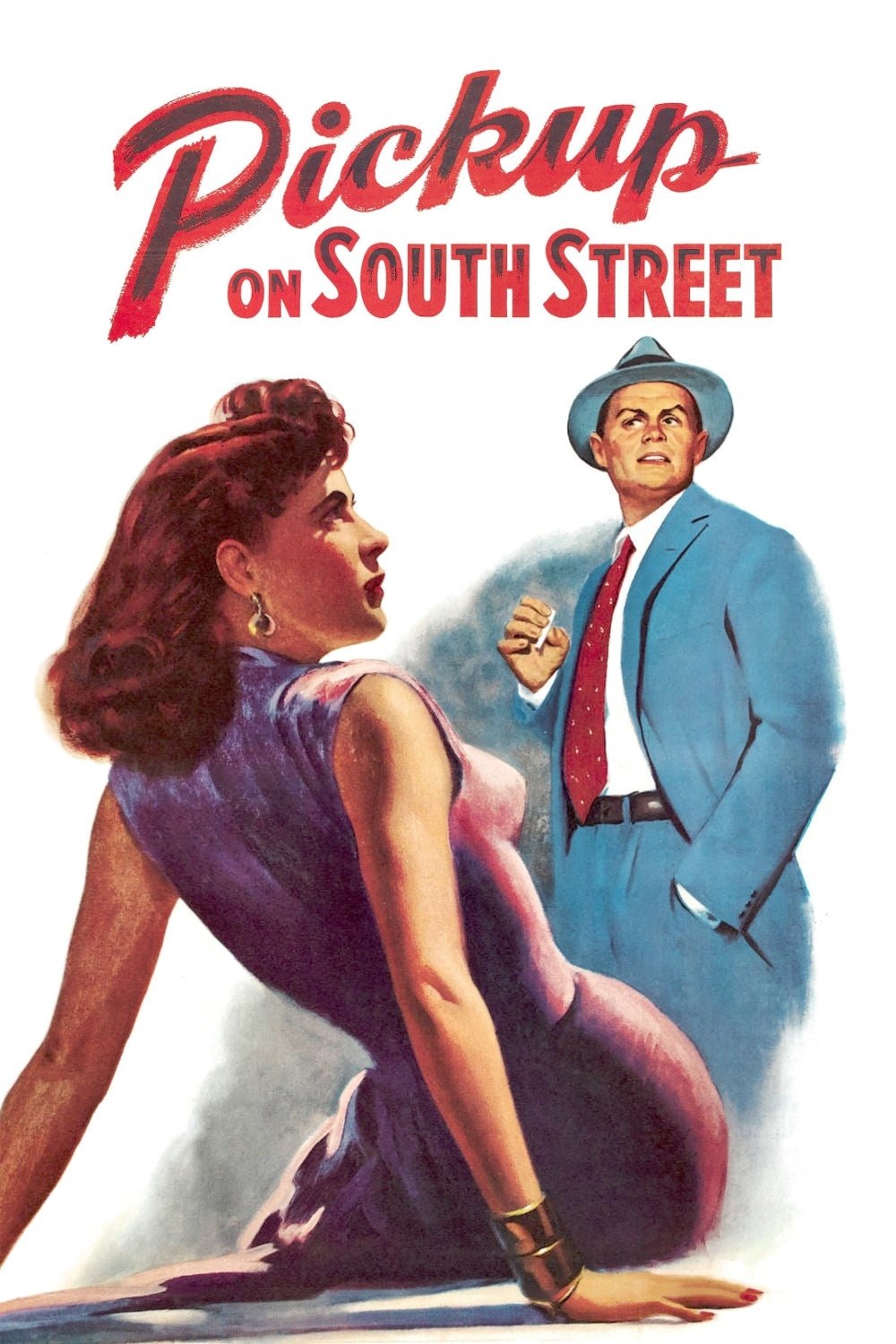
The first time I encountered “Pickup on South Street,” I remember being captivated not by its premise, but by the unflinching cynicism that smoldered in every frame. The city felt sticky and close, the sweat seemingly clung to my skin as much as it did to the desperate characters playing their games in the shadows. I was drawn deep, not by the intricacies of espionage, but by the prickly, almost tactile sense of raw survival playing out without pretense of heroics. In a landscape where empathy and trust are rare commodities, witnessing these characters barter scraps of loyalty and dignity made me question my own notions of morality in desperate times. This wasn’t a story that coddled its audience. It demanded—almost dared—me to look at the hard truths behind the American dream.
The Pulse of Desperation and Betrayal
At its core, “Pickup on South Street” barrels forward on the anxious energy of people cornered by fate and circumstance. The tension is less about a stolen microfilm and more about the corrosive mistrust that infects every relationship on screen. What drew me in deeply was not the mechanics of crime, but the way the characters—Skip McCoy, Candy, and Moe—constantly recalibrate their own sense of worth against a backdrop of suspicion.
The film turns the notion of patriotism and moral duty inside out. For Skip, the pickpocket, the microfilm is nothing more than a potential payday—ideology is a luxury he cannot afford. Candy’s emotional journey, oscillating between self-preservation and a yearning for connection, epitomizes the film’s real struggle: how to hold onto fragments of humanity when survival feels like war. Even the supposed agents of justice seem compromised, leaving no character unscathed by doubt. To me, this is a film that strips away the simple binaries of good and evil, leaving us tangled in uncomfortable questions about complicity and motivation.
Dissecting the Movie’s Beating Heart
Perhaps what most compels me about this film are its themes—loyalty, opportunism, and moral ambiguity—and the ways they still rumble dangerously relevant today. In the ashes of postwar America, as Cold War paranoia seeps into every corner of daily life, “Pickup on South Street” exposes the failings of systems that would divide friends and lovers for the illusion of security. The film’s insistence that no one acts for purely political reasons feels bracingly honest in a genre usually allergic to such truths.
In 1953, the film functioned as a thinly veiled critique of the Red Scare, yet it resists propaganda at every turn. People betray each other for money, not country. This philosophical gray zone gnaws at me—how easily can principles be twisted or sold? The desperation to survive breeds adaptability but also isolation, exposing how societies weaponize fear to exert control. Today, when anxieties over surveillance and loyalty are once again at fever pitch, such a perspective feels as urgent as ever. “Pickup on South Street” is a reminder that the personal and political are never truly separate, but always entwined in our smallest choices.
Streetcars, Shadows, and the Weight of Trinkets
The stark imagery of the film has always felt like an extension of its moral bleakness. Fuller’s camera is relentless in its proximity—sweaty faces, grimy collars, cluttered rooms—so you can never escape the claustrophobia. Metro subway cars rattle by, not merely as settings but as vital arteries through which secrets flow silently, echoing the unpredictable currents of loyalty.
The recurring image of Moe’s cheap trinkets—useless but desperately sentimental—has haunted me ever since my first viewing. Their presence becomes a painful motif for human dignity, bartered piece by piece. Moe’s suitcase, filled with the detritus of others’ lives, stands as a symbol of her own fragile place in a world that refuses to memorialize its losers. Shadows, too, are omnipresent, reclaiming every attempt at clarity or safety. When Skip hides from his pursuers, he’s more than just in physical danger; he’s metaphorically vanishing from the very world he’s trying to navigate.
Moments That Reshaped My Understanding
The Subway Pickup: A Catalyst in Motion
The opening scene, in which Skip lifts Candy’s wallet on the subway, establishes the universe of the film with a singular, wordless efficiency. The crowded, indifferent city presses in on all sides, and yet this brief act—almost invisible—sets off a string of consequences none of the characters can control. For me, the randomness of this encounter says everything about the role of fate in lives already running on borrowed time. That sequence is not just a demonstration of Skip’s skill, but a sleek illustration of how invisible moments can cage us all.
Moe’s Final Bargain: A Tragic Resignation
No analysis of this film would be complete without lingering on Moe’s grim negotiation with Joey. Her pleas for dignity ring out as some of the most haunting lines in noir: she is not just bargaining for money, but begging for remembrance. “Look, mister, I got no use for glory. Just get me the five hundred bucks…” That moment encapsulates the entire film’s spirit—where every small act of self-preservation is tinged with defeat. The world may forget Moe, but her longing for meaning in obscurity is the film’s indelible heartbreak.
Candy’s Revelation: Defiance and Desperation
The scene that most upends my expectations comes when Candy turns on her handlers to protect Skip. Her battered face, filmed in agonizing close-up, transforms what might have been a perfunctory love interest into a vessel for furious agency. Her decision is not some sweeping patriotic gesture but rather a desperate reclamation of selfhood. Candy’s betrayal of her former allies is intensely, almost painfully, personal. In her defiance, I see not the triumph of good over evil, but the salvaging of pride amid ruins—the true cost of participation in a world where the wrong choice is always fatal.
Rethinking Established Perspectives
It’s nearly impossible to approach “Pickup on South Street” outside the context of its historical moment. Common interpretations focus on its status as anti-Communist pulp or a grungy distillation of noir cynicism. Critics often categorize the film as a critique of American paranoia or as a pulp melodrama with hard edges and little else. I certainly see those readings reflected in its sharp dialogue and in the abrasive realism for which Samuel Fuller is often lionized.
Yet, my personal interpretation refuses to grant the film such neatness. To me, it is not simply a broad takedown of ideology or a celebration of antiheroes; its deepest ache resides in how everyday people are crushed beneath the weight of conflicts they barely comprehend. Moe’s lonely self-sacrifice, Skip’s self-sabotage, Candy’s blurred allegiances—these are not statements about nations or politics so much as fugitive prayers for connection and survival. Where others see only tough-guy bravado or a stinging slap at McCarthyism, I see a collective cry from the margins, pleading not to disappear unread and unloved.
Cinematic Cousins in Paranoia and Redemption
- The Asphalt Jungle – Both films immerse us in the criminal underworld, focusing on the fraught loyalties of desperate people, making clear that survival and betrayal are often two sides of the same coin.
- Double Indemnity – Like “Pickup on South Street,” this classic interrogates personal motivation, guilt, and the dangerous pull of self-interest that exists outside simple notions of good and evil.
- On the Waterfront – Deals with the crushing conflict between personal loyalty, conscience, and the machinery of power, especially as individuals are coaxed to serve purposes larger—and more ambiguous—than themselves.
- Night and the City – Closely related in its exploration of urban desperation, it follows a doomed protagonist’s quest for meaning and significance as he is pulled under by forces beyond his control.
Connections That Endure
I believe “Pickup on South Street” demands a more careful, curious approach from today’s viewers. Its uncomfortable honesty, the way it lays bare the mechanisms of fear and self-preservation, remains a bracing counterpoint to more simplistic moral fables. By understanding the emotional currents and ethical minefields embedded in this film, we not only appreciate its artistry but also deepen our capacity for empathy in troubled times. No one escapes untouched—least of all the audience, who are left holding the uncomfortable knowledge that, in the end, we are all pickpockets of our own brief moments of grace.
Related Reviews
If you found value in my perspective, you might also enjoy exploring my thoughts on other cinematic landmarks such as Sweet Smell of Success and Kiss Me Deadly.
To broaden this interpretation, you may also explore how critics and audiences responded over time.
🎬 Check out today's best-selling movies on Amazon!
View Deals on Amazon