
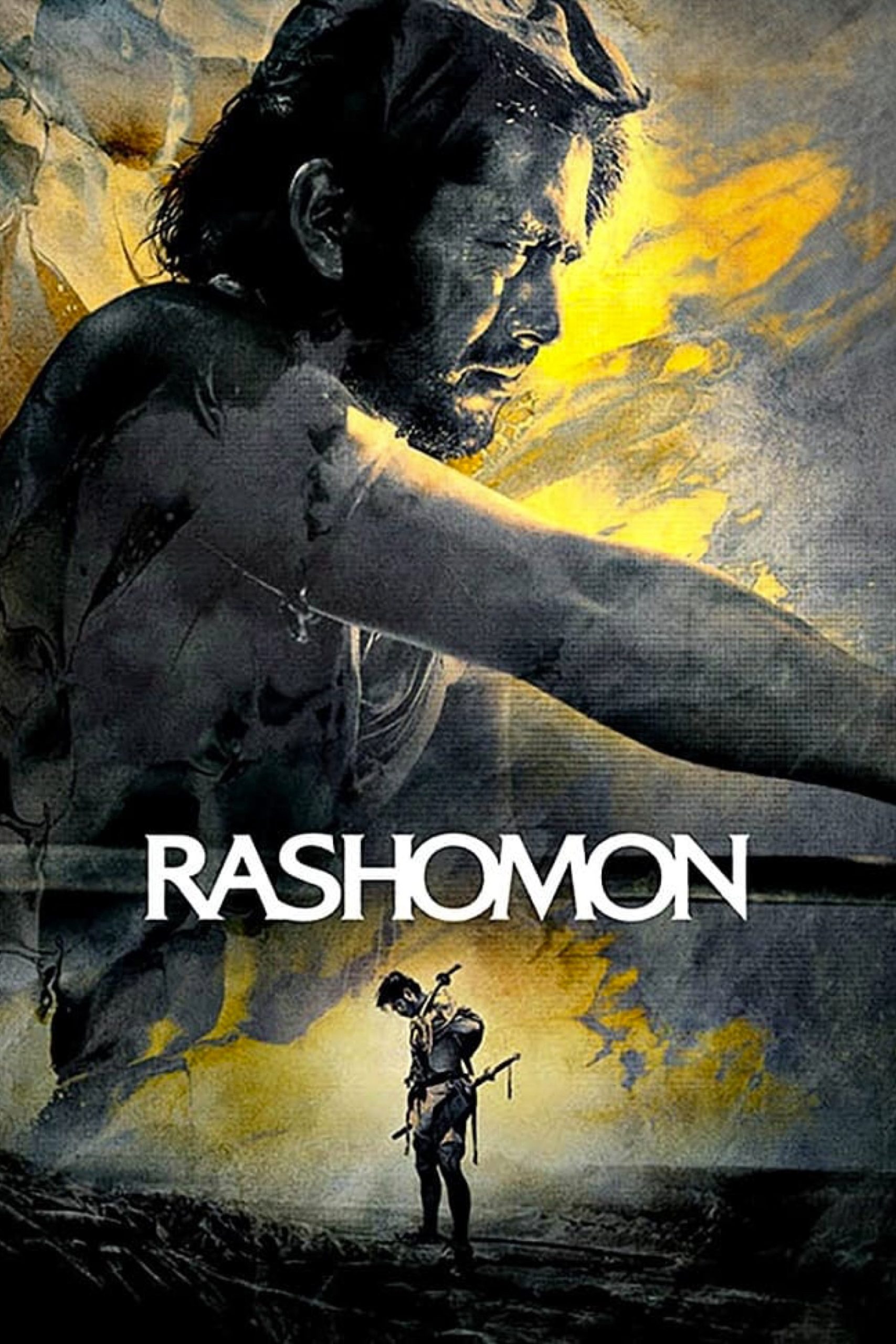
The first time I experienced “Rashomon,” I felt as though I were thrust into a hall of mirrors—none of which gave me a full reflection. From that moment, I understood that Akira Kurosawa’s masterpiece was not just a film; it was a labyrinth of the human mind, a probing meditation on the impossibility of absolute truth. My journey with “Rashomon” has always been deeply personal, as I find myself confronting my own uncertainties and biases within the shifting realities the film presents.
Shadows in the Grove: The Subjectivity of Truth
As I watch the sunlight filter through the tangled branches of the forest in “Rashomon,” I realize how powerfully Kurosawa uses nature as a metaphor for the haziness of truth. Each retelling of the central incident—the murder and the rape—emerges as a beam of sunlight cutting through the foliage, momentarily illuminating, but never giving the full picture. The film’s structure, with its four contradictory testimonies, foregrounds the treacherous subjectivity of memory and perspective. I am fascinated by how every character, whether they are the bandit, the samurai, the wife, or the woodcutter, asserts their own motives and morality, transforming the same set of events into radically different stories.
Kurosawa compels me to ask—can truth ever be objective, or is it always a negotiation between competing narratives? This ambiguity is not just an artistic device; it’s a profound meditation on how we construct our own realities based on fear, shame, or self-preservation. By weaving a web of unreliable narrators, the film exposes the fragility of facts and the malleability of personal history.
The Ruins of Certainty: The Rashomon Gate as Moral Wasteland
I often find myself haunted by the dilapidated Rashomon gate, where the woodcutter, priest, and commoner shelter from the rain. The gate is not merely a setting; it is a symbol of postwar disillusionment and the breakdown of social order. The ruined structure, battered by time and neglect, mirrors the erosion of faith in human decency and justice. Within these crumbling walls, the three listeners represent diverging responses to a world where moral certainty has dissolved.
As I watch the priest cling to the hope that good still exists, while the commoner sneers at the notion, I see my own inner conflict reflected in them. The woodcutter, silent and guilt-ridden, seems to embody my own doubts about whether anyone—including myself—can claim moral authority. Kurosawa’s staging of the Rashomon gate as a physical and allegorical threshold underscores the film’s relentless interrogation of ethical ambiguity.
Fragments of Identity: Performance and Self-Delusion
Each witness in “Rashomon” performs their version of the truth not only for the tribunal but for themselves. I am struck by how the characters’ testimonies reveal as much about their identities as they do about the event itself. The bandit Tajomaru, for example, frames his story as one of cunning and honor, seeking to justify his actions and inflate his reputation. The samurai, through the medium, casts himself as a wronged and dignified victim, elevating his suffering to the level of tragic nobility.
Yet the wife’s version, raw in its vulnerability, speaks to the desperation of a woman trapped by the violence and pride of men. In each account, I see the human urge to reshape reality to fit self-image, to escape guilt, and to salvage dignity. The result is not just a contested incident, but a kaleidoscopic portrait of yearning, fear, and self-deception. I am reminded, uncomfortably, of the times I have shaded my own memories to suit the person I wanted to be.
The Labyrinth of Cinematic Perspective
Stylistically, Kurosawa achieves something miraculous by drawing me into the disorienting spiral of unreliable narration. The camera moves fluidly from one witness to another, sometimes following characters along serpentine paths in the forest or lingering on their faces as they construct their own versions of the past. The use of light and shadow, the repetition of scenes from new angles, and the shifting intensity of the actors’ performances all conspire to make me question what I am actually seeing.
By refusing to anchor me in a single, authoritative viewpoint, the film opens up a space for doubt that is both exhilarating and unnerving. I find myself complicit in the process, longing for resolution but denied closure. The very language of cinema—editing, composition, and point-of-view—becomes a tool for exploring the instability of perception. This meta-cinematic gesture feels like a challenge to me: can I ever trust what is in front of my eyes, on screen or in life?
Rain as Remorse: Nature’s Indifference to Human Strife
The relentless rain at the Rashomon gate seeps into my consciousness as more than just atmospheric detail. It is a relentless, neutral force, indifferent to the petty quarrels and tragedies of the people beneath it. The rain washes over guilty and innocent alike, eroding the narratives the characters so desperately cling to. It’s as if Kurosawa is reminding me that nature itself neither judges nor redeems—it simply is.
This motif contrasts sharply with the heated, subjective passions of the testimonies. As the rain falls, the characters become smaller, swallowed by a world that neither cares for their suffering nor resolves their conflicts. In this context, the act of storytelling itself becomes a kind of shelter, a way to assert meaning in the face of cosmic indifference. I am left to ponder whether the stories we tell are shields against chaos, or simply more rain—fleeting, unreliable, and ultimately washed away.
The Child and Redemption: Glimmers of Hope Amid Cynicism
Despite the film’s pervasive skepticism, I always return to the final act with a sense of cautious hope. When the woodcutter decides to care for the abandoned infant left at the Rashomon gate, his act cuts through the pervasive cynicism of the preceding stories. This gesture, small but profound, suggests the possibility of goodness even in a world where truth is murky and motives are suspect.
For me, the woodcutter’s choice is a kind of defiance against the entropy of moral uncertainty. It is a reclamation of agency, a willingness to act with compassion even when certainty is impossible. Through this closing image, Kurosawa allows me to glimpse the fragile possibility of ethical action—a reminder that what we do may matter more than what we say or remember.
Cinematic Legacies: Memory, Modernity, and the Human Condition
Rashomon’s influence extends far beyond its innovative structure or evocative imagery. For me, its true power lies in how it has shaped the way we think about memory and the human condition. By dramatizing the limitations of perception and the unreliability of testimony, Kurosawa addresses the anxieties of a modern world fractured by war, social upheaval, and skepticism. The postwar Japanese context—a society grappling with defeat, occupation, and shifting values—gives the film’s existential questions a particular urgency.
Yet the film feels just as resonant today, in an era of competing truths and echo chambers. My own encounters with Rashomon have made me more conscious of the stories I accept and the ones I construct, whether about the world or myself. The film lingers as a perennial reminder that our search for truth is as much about self-examination as it is about external events.
Recommending Similar Journeys: Two Films of Uncertainty and Morality
- Wild Strawberries (1957)
- The Seventh Seal (1957)
If you’re curious about how this film was originally perceived or how it compares to similar works of its era, these resources may be helpful.
🎬 Check out today's best-selling movies on Amazon!
View Deals on Amazon