
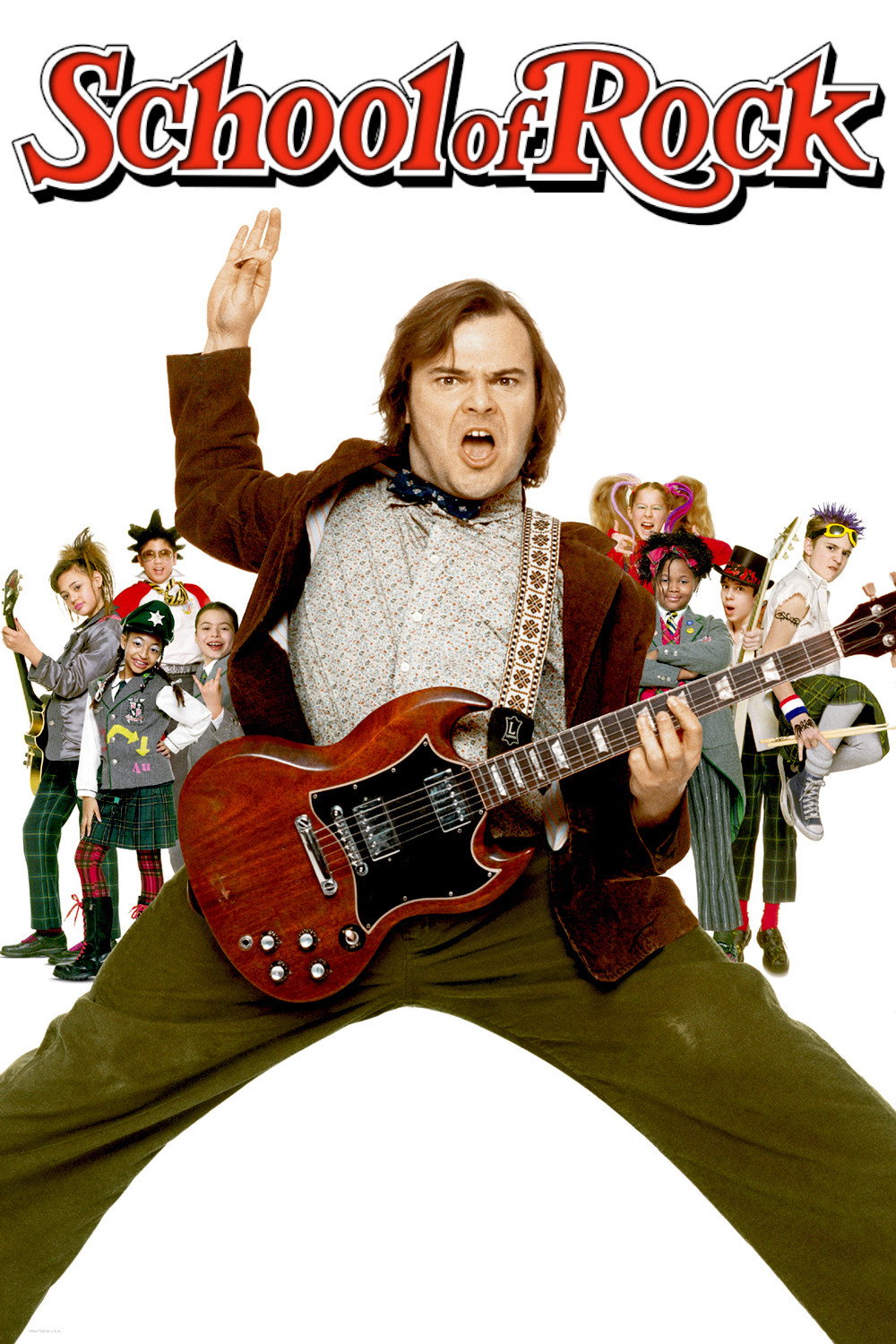
There’s a certain alchemy that happens the moment a film moves from being mere entertainment to becoming, as I experienced with “School of Rock,” an enduring point of personal resonance. I remember the first time I saw it—nursing the quiet anxiety of early adulthood, stifled by obligations and self-doubt. As Jack Black’s Dewey Finn tumbled ill-prepared into a stuffy classroom and began to disrupt its staid order with raucous guitars, I felt a sudden, liberating kinship. The film’s irreverence didn’t just amuse me; it articulated my own desire, buried under years of doing what’s expected, to find life’s joy and rebellious edge. “School of Rock” didn’t teach me to play power chords—it instructed me on the unexpected forms personal agency can take, and just how radical it can be to honor your innate weirdness, especially in the face of conformity.
Unlikely Revolution in a Classroom: The Emotional Heartbeat
From my vantage, the story at its core is a deeply emotional, anarchic journey. “School of Rock” isn’t about music in the reductive sense—it’s about awakening. Dewey Finn, a failed rocker masquerading as a substitute teacher, storms into a prep school with nothing but a guitar and a bruised ego. Yet as the film progresses, what might have been just a collection of gags evolves into something far more affecting and intimate.
What grips me each viewing is the way Dewey transforms the punitive walls of Horace Green into a creative citadel. Every child in that room is, like I often felt, hemmed in by expectation—by parents, by silent rules, by a world too quick to judge what matters. Dewey isn’t just fighting for music; he’s battling for the right to self-express and to be heard on your own terms. The film’s true emotional arc, I believe, lies in how these kids gradually claim their voices, not just musically but personally. Dewey may be the avatar of adolescent rebellion, but it’s the children who ultimately experience the greatest liberation. In this way, their emotional journeys echo the universal struggle for authenticity, a chord that has only become more poignant to me with age.
Riffs of Belonging: The Core Messages and Their Timelessness
I can’t examine “School of Rock” without tracing its intricate interplay of themes—conformity versus individualism, communal creativity, and the transformative power of mentorship. The world of the film is dominated by institutions—Horace Green with its rigid codes, the “Battle of the Bands” with its preconceptions, and even familial expectations. The script, penned by Mike White, delivers a nuanced yet accessible critique of systems that prize obedience over curiosity.
In 2003, watching children break free of upper-crust decorum felt celebratory and quietly subversive. Two decades on, as I reflect on ever-tightening social pressures—school ratings, social media metrics, and the surveillance of childhood—the film’s spirit of resistance feels even more vital. Dewey’s mantra is not just to play loud, but to play true, and to invite others to shape that truth together. This insistence on finding one’s unique voice within a collective is, to me, the human element that continues to thrive. The message ripples outward in our era: authenticity is not only about privilege but also a form of survival when uniformity feels safest.
Amplifiers and Blackboards: Symbols in a Riot of Color
Visually, “School of Rock” is more layered than its comedic veneer suggests. I’m always struck by the recurring motifs director Richard Linklater embeds, which speak volumes about control, liberation, and transformation. The blackboard, so often the symbol of rigid pedagogy, is here subverted: Dewey’s chalk diagrams, wildly energetic and thoroughly un-academic, transform rules into riffs, turning structure into creative launchpads.
I see the instruments themselves—guitars, keyboards, drums—as avatars of potential rather than props. The classroom’s transition from silent desks to a thumping rehearsal space is a metaphor for personal awakening. Costumes, too, serve as understated symbols: the children’s uniforms morph, piece by piece, into the worn T-shirts and accessories of outcasts and rockers. This careful costuming reflects not mere playacting but internal transformation. I find myself particularly taken with the moment each child personalizes their outfit; it’s not just rebellious attire, but armor against a world reluctant to see their real selves.
The Crescendo of Change: Scenes That Define the Narrative
From Detention to Destiny: Dewey Inspires Creation
The scene where Dewey first introduces the class to music is a turning point I always view with anticipation. Initially hesitant, these children are accustomed to a world delineated by straight-A’s and sheet music—there’s an awkwardness, an uncertainty that feels painfully real. Dewey’s frenetic energy propels them, but the transformation belongs to the class. When Zack first crafts an original riff and Lawrence tentatively finds confidence at the keyboard, we witness the emergence of a creative community out of a culture of compliance. The scene’s energy lies in its juxtaposition of chaos and order and its clear message: art is not about mastery, but about discovery.
“You’re Not Hardcore”: The Power Ballad of Affirmation
Few moments resonate with me on such an emotional frequency as the band’s rehearsal of “The Legend of the Rent.” Dewey attempts to explain the punk rock ethos, improvising lyrics that are comic but also layered with meaning. The children, especially the shy and the sidelined, begin to realize that their vulnerabilities can be channeled into music. The refrain “You’re not hardcore unless you live hardcore”—played for laughs—reveals itself as a coded assertion of self-worth. I see this scene as a rare cinematic validation of emotional intensity; it tells us that it’s okay, even necessary, to be too much, to feel strongly, to risk ridicule for the sake of expression.
The Final Showdown: Triumph with No Trophy
The climactic Battle of the Bands is, on its face, a typical underdog finale, but my appreciation deepens with every viewing. The kids rock their hearts out—and lose. What lingers isn’t the result, but the aftermath: parents who had demanded obedience begin to applaud, children who once shrank from the spotlight now revel in it. The film subverts the expectation of victory by redefining success itself. It’s not about winning, but about self-realization and collective effort. I leave this scene not with a sense of defeat, but with triumph far richer than any trophy.
Seeing Past the Laughs: Reading Between the Lines
There’s a tendency to read “School of Rock” as a simple feel-good comedy—a genre exercise about misfit triumphs. I see this interpretation everywhere and understand its appeal; the film is breezy, funny, and seemingly straightforward. But this widespread reading, I believe, risks flattening its daring sincerity. For me, the heart of “School of Rock” lies not just in its humor, but its subversive tenderness. Dewey Finn is no typical protagonist. He’s selfish, bumbling, and dishonest, but he’s saved not by redemption in the traditional sense, but by the unpredictable, compassionate exchange with his students.
Some critics focus on Dewey’s irresponsibility and the film’s implausibility, questioning its place in the pantheon of inspiring teacher narratives. My own interpretation is broader: the irresponsibility is the point. Dewey disrupts, but he also listens, adapts, and accepts the children as they are. Unlike most cinematic educators, he’s both a mentor and deeply in need of mentorship himself. The resulting mutualism is to me, the film’s genius stroke—a rare, reciprocal coming-of-age.
For Those Who March to Their Own Beat: Kindred Films
- Dead Poets Society – A stricter institution, a rebellious teacher, and the lyrical fire of selfhood—this 1989 drama remains a classic for anyone finding solace in non-conformity.
- Mister Holland’s Opus – For a subtler, melancholic meditation on teaching and music, Holland’s journey of hesitant mentorship overlaps with Dewey’s, if from a more elegiac angle.
- The Bad News Bears – The 1976 original is rougher and more cynical, but its ragtag team, jaded coach, and countercultural streak make it a scruffy sibling of “School of Rock.”
- Sing Street – Set in 1980s Dublin, this film’s youthful musicians and their quest for self-expression feel like spiritual descendants of Dewey’s class, remixed with romantic idealism and pop sensibility.
Encore: The Value of Watching Today
Whenever I revisit “School of Rock,” I’m struck by how truly rare this kind of film has become. In a cinematic world ever more obsessed with superhero spectacle or bitter irony, its mix of earnestness, laughter, and rebellion feels not just refreshing, but necessary. It’s an argument for imperfection, for community, and for daring to care—loudly. The world may change, but the challenge of honoring your singularity in the cacophony of rules and roles does not. For anyone feeling muted in their own life, “School of Rock” is a reminder that sometimes, you need someone to hand you a guitar and say, simply: go.
Related Reviews
If you found value in my perspective, you may also enjoy my analyses of “Dead Poets Society” and “Sing Street.”
To broaden this interpretation, you may also explore how critics and audiences responded over time.
🎬 Check out today's best-selling movies on Amazon!
View Deals on Amazon