
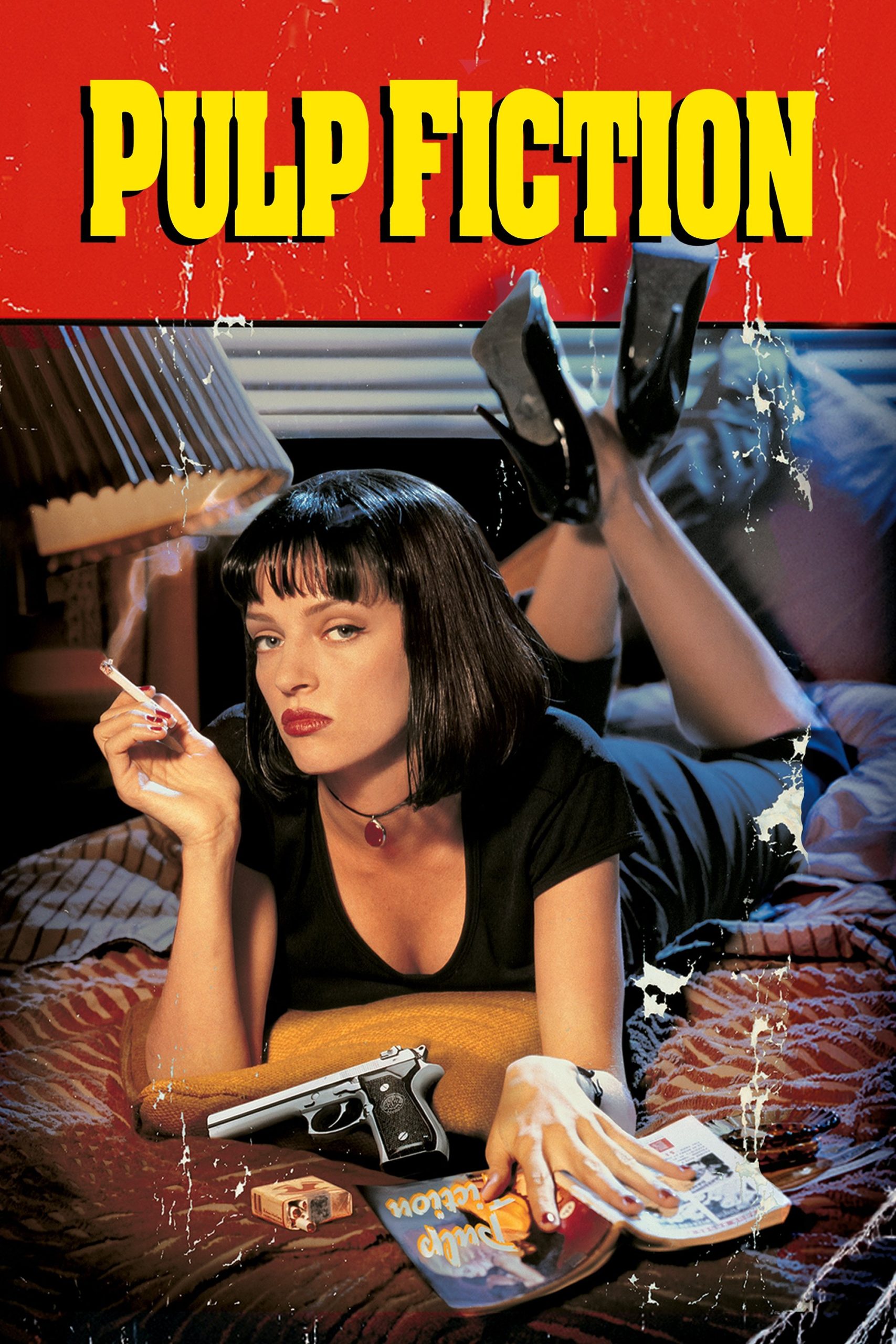
Every so often, I find myself chasing the same chemical thrill I felt slipping into Quentin Tarantino’s “Pulp Fiction” for the first time. Watching it wasn’t simply entertainment—it was like stepping into a disjointed, neon-soaked fever dream where time runs in circles and each conversation flirts with either transcendence or nihilism. It hit me just as hard on a fourth, fifth, or twelfth viewing. The film loops in my mind, not as a linear story, but as a whirlwind of dark humor, sudden violence, and fleeting moments of grace. My lasting memory is not of any single character, but of that peculiar sensation of being in a universe that both seduces and repels, breaks taboos and then dares me to care about its denizens. “Pulp Fiction” wasn’t just a movie for me; it was a challenge to what I thought cinema could be.
Winding Through Chaos: The Twisted Emotional Heartbeat
Emotional attachment in “Pulp Fiction” is a paradox. The film operates as a mosaic of intersecting stories, each one spiraling into a new level of moral ambiguity and existential crisis. I never watch it expecting catharsis or moral clarity. Instead, I feel as if I’m eavesdropping on fate’s most capricious machinations—where a hamburger can trigger a gunfight, and a dance can signal impending doom. The real emotional journey for me lies not in empathy with any single character, but in the sheer audacity of the film’s structure. Here’s a world where the end loops back to the beginning, and redemption might be just a well-timed miracle or a story told out of order.
I’m struck by how the emotional stakes oscillate between life-or-death urgency and casual absurdity. A hitman’s crisis of faith collides with a boxer’s desperate attempt at escape. Mia Wallace’s near-death experience, rendered in shocking, almost comic slow-motion, pinballs against Vincent’s stoned apathy and Butch’s violent past. What binds these threads is not empathy, but a kind of voyeuristic tension—I care because Tarantino places me inside the unhinged momentum of fate. For me, “Pulp Fiction” is less about the people than it is about the emotional vertigo of choices spiraling out of control.
Refractions of Fate: Tracing Moral Collapse and Irony
To try and pin down the main themes of “Pulp Fiction” is like holding onto water, yet that’s the allure. I see this film as a kaleidoscopic meditation on free will, consequence, and the strange allure of violence. In 1994, coming off the polished cynicism of late ‘80s action films, “Pulp Fiction” felt like a provocation. It didn’t preach; it wallowed in moral confusion. My generation wanted a shot of adrenaline, and Tarantino obliged—delivering a story where no one is innocent and yet moments of honesty flicker amidst the carnage.
Today, what resonates just as strongly is how the film mocks the idea of narrative neatness. The violence is shocking, but it’s also absurd—a dance contest has the gravity of a death sentence, and philosophical digressions sit alongside gunshots. Tarantino weaponizes irony: Jules quotes scripture before executing a man and then, by sheer coincidence or divine intervention, survives a point-blank shooting. I see this as a reflection of how life thwarts our efforts at coherence. The film’s anarchic structure mirrors a world where fate, luck, and random chance dominate, undercutting any grand narrative of heroism or justice. This open-endedness is arguably more relevant now than ever; in an era of fractured attention and social flux, the refusal to simplify feels prescient and, oddly, comforting.
Fast-Food Icons and Glowing Mysteries: Symbols in Saturation
Watching “Pulp Fiction” through a symbolic lens, I notice how objects and images acquire mythic resonance. The briefcase is the most notorious example—a glowing MacGuffin whose contents remain forever out of reach. For me, its meaning is not in what it contains, but in what it prompts from those who covet it: greed, desperation, reverence. The contents could be diamonds, a soul, or nothing at all. That blankness turns it into a symbol for the emptiness of material pursuit, a joke on all the characters who think a suitcase will save or define them.
Food, too, becomes loaded with significance. Big Kahuna Burger, the five-dollar milkshake, even a humble pop tart—they’re more than props. I read them as motifs of American consumerism, banality, and the rituals that punctuate violence. To me, the repeated meals are reminders of life’s ordinariness amidst chaos; Vincent and Mia’s diner sequence is laced with impending doom, and yet it’s all about comfort food and easy chatter. Even after a botched robbery, order is restored with breakfast. It’s as if Tarantino is daring me to find meaning in the mundane, right alongside the carnage.
Another crucial motif is the use of retro style—vinyl records, dated signage, vintage cars. It signals a nostalgia for an America that never was, a kind of stylized unreality. I interpret this as Tarantino’s way of both honoring and subverting genre conventions. He builds a world where time collapses, holding up a cracked mirror to the present—a place where the past feels both comforting and caustic.
Shock, Laughter, Redemption: Moments That Define the Experience
The Diner Bookends: Starting and Ending with Chance
I always return to the film’s opening and closing—two mismatched lovers, Pumpkin and Honey Bunny, plotting a holdup in a sunlit diner. The scene’s apparent triviality is its real weapon. When the film circles back in the finale, with Jules facing them, the explosion of tension is electric. Here, Jules’s speech about change and the path of righteousness hits harder because it comes not from triumph but from a brush with mortality. Tarantino makes redemption not a climactic triumph but a weary act of surrender, and it is deeply affecting. For me, this moment is an argument for mercy in a nihilistic universe.
The Adrenaline Overdose: Death’s Doorstep and Comic Relief
Mia Wallace’s overdose sequence has always unsettled me in its contrast of horror and slapstick. One frame, she’s languorous and invincible; the next, blue-lipped and convulsing. Vincent’s panic, the mayhem at Lance’s house, and the frantic race to administer the needle all unfold in a blur of dark physical comedy and genuine fear. What’s genius for me is how the film makes the most grotesque moment both hilarious and excruciating. It’s impossible to look away—it’s a microcosm of Tarantino’s method.
The Pawn Shop: Violence and a Glimpse of Grace
The basement scene between Butch and Marsellus sickens me every time. The switch from cartoonish violence to graphic violation is jarring. Tarantino isn’t content to indulge in pulp fantasy—he reminds me of real suffering, then forces both Butch and the viewer to make a choice. Butch’s moment of decision, armed with a samurai sword, isn’t simple revenge; it’s an assertion of shared humanity, a refusal to be complicit. This rare act of deliverance, shocking for its context, lands as the film’s most unexpectedly humane moment.
Between Sacred and Profane: Wrestling with Critical Consensus
The consensus among critics has often painted “Pulp Fiction” as a postmodern masterpiece—a dazzling collage of pop culture, nihilism, and genre subversion. I can’t disagree with the craft, the wit, or the technical bravado, especially its non-linear structure, rapid-fire dialogue, and atmosphere thick with ironic detachment. But personally, I find the label “postmodern irony” both apt and too restrictive. It misses the genuine, awkward tenderness in moments like Butch’s goodbye to Fabienne, or Jules’s conversion in the diner. There is a kind of bruised hopefulness at the margin of every violent act that, to me, keeps the film from collapsing into mere style.
The violence, so often discussed as stylized and sensational, feels to me like a litmus test: Tarantino asks how much empathy the audience will bring to a world where morality is liquid and every action can be undone by blind luck. Popular interpretations see the film as celebration of hip nihilism, but I sense a yearning for purpose underneath. Jules’s attempt to interpret his life as more than random chance—a hunger for redemption—midway interrupts the gleeful cruelty elsewhere. If “Pulp Fiction” endures, it’s because it balances on this razor’s edge between emptiness and spiritual possibility, refusing to finally resolve. For me, it’s this unfulfilled longing that gives the film its charge, not just its quotability or innovative form.
Celluloid Cousins: Other Films in the Same Orbit
- Reservoir Dogs – Tarantino’s earlier plunge into crime, loyalty, and nonlinear mayhem, setting the stage for his later work’s self-awareness and tension.
- Trainspotting – Dives into the seductive chaos and playful storytelling of criminal underworlds, with dark comic energy.
- Snatch – Interlocking stories, criminals speaking in code, and dialogue-fueled action channeled through Guy Ritchie’s British lens.
- Lock, Stock and Two Smoking Barrels – Another ensemble caper spinning coincidence, violence, and black humor into a tightly wound tapestry.
Rewinding the Soul: The Film’s Value Here and Now
Watching “Pulp Fiction” now, after all these years, feels no less subversive or electric. Its violence—and its moments of grace—still catch me off guard. I return because every rewatch reveals fresh patterns in the chaos, new emotional pulses behind the pungent style. The film’s ambiguity, its refusal to resolve into simple meanings, remains its great gift and challenge. If I am ever jaded by cinematic excess or empty spectacle, this film still reminds me that movies can surprise and unsettle, refusing to be tamed.
If you found value in my perspective, consider exploring:
- “Reservoir Dogs”
- “Trainspotting”
To broaden this interpretation, you may also explore how critics and audiences responded over time.
🎬 Check out today's best-selling movies on Amazon!
View Deals on Amazon