
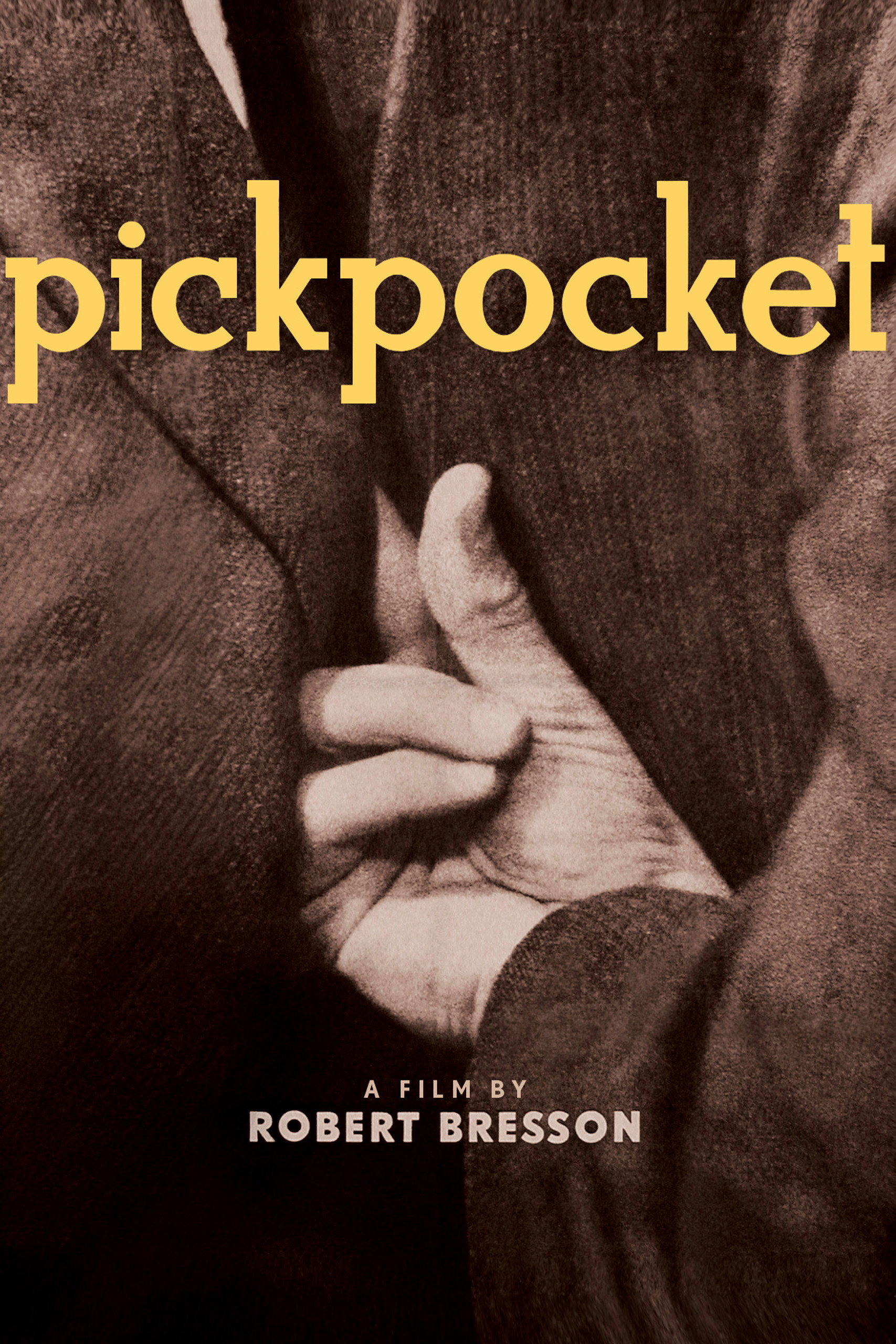
Invisible Hands and Restless Souls
I remember the first time I watched “Pickpocket,” it felt as if I was peering through a keyhole into someone else’s moral crisis—too intimate, almost illicit. This is not a film that merely asks us to observe a life of crime; it pushes us to question our own complicity, our sympathies, and the sly temptations that live just beneath the surface of daily life. Bresson has created a world where the gestures say more than the words, and where the absence of judgment is its own form of inquiry.
The Art of Theft as the Architecture of Despair
What strikes me most about “Pickpocket” is the deliberate way Bresson choreographs theft like a kind of private ballet. These scenes don’t just serve as plot mechanics; they’re the film’s beating heart, a silent language that reveals Michel’s existential alienation. Every stolen wallet becomes a metaphor for his attempts to extract meaning from a world that refuses to offer any guarantees. I see Michel’s hands moving with a precision that feels almost spiritual, as if each lift is an act of communion with something greater—or an abyss from which he cannot escape. In these moments, crime feels less about the money and more about the search for agency in a life marked by inertia and disconnection.
Emptiness in Every Glance
I can’t shake the way Bresson’s camera lingers on faces, especially Michel’s. There’s an emptiness in his eyes, a soft vacancy that speaks louder than dialogue ever could. The emotional reserve and pared-down performances serve to underscore just how starved Michel is for authentic connection. When I watch him interact with Jeanne, there is a chasm between them, even in their moments of proximity. The film doesn’t fill these silences with traditional music cues or over-explained psychology; it leaves us adrift with Michel, inviting us to sense his yearning for redemption even as he sabotages his chances at it.
A City of Ghosts
“Pickpocket” is set in Paris, but not the Paris of lovers, poets, or tourists—it’s a city of shadowy railway stations, indifferent crowds, and anonymous rooms. I always feel a kind of chill in these settings, as if the spaces themselves are complicit in Michel’s alienation. Bresson drains the city of glamour, insisting instead on a world stripped to essentials where every surface, every corridor, becomes both a hiding place and a prison. In this Paris, there’s no room for sentimentality, only the relentless passage of time and the quiet ache of missed opportunities.
Alien Morality and the Search for Meaning
There’s a scene where Michel tries to explain his personal theory of exceptional people—a rationale for wrongdoing that sounds more like a desperate self-justification than a genuine worldview. I find myself unsettled by how persuasive he seems, even as the film quietly dismantles his arguments. Bresson isn’t interested in moralizing, but he relentlessly interrogates Michel’s motivations, forcing us to weigh the price of a life spent dancing around the rules that bind ordinary people. I come away feeling that Michel’s true crime is not theft, but his stubborn refusal to participate in the world’s imperfect order.
Redemption in Restraint
The ending of “Pickpocket” is often cited as one of Bresson’s most transcendent moments, but for me, its power lies in its restraint. I see Michel finally confronting the consequences of his solitude, and for the first time, he allows himself to reach for another person not as a means to an end, but as an act of grace. The jail cell becomes a paradoxical space—a place where freedom is lost, yet the possibility of love and redemption emerges. There’s no swelling music or melodramatic embrace; Bresson trusts us to recognize the seismic shift that comes from this quiet surrender.
Hands as the Language of the Unspoken
I am always compelled by the way Bresson films hands—caressing, reaching, lifting, trembling. In “Pickpocket,” hands become the most eloquent characters in the film, translating Michel’s ineffable longings into tactile reality. The meticulous focus on these physical gestures elevates petty crime to ritual, suggesting that human frailty is most honestly revealed in what we do when no one is watching. I sense that for Bresson, the hand is both instrument and symbol: a conduit for transgression, but also a bridge to understanding and perhaps, ultimately, compassion.
The Silence Between Notes
Dialogue in “Pickpocket” is sparse, almost ascetic. I’m struck by how much Bresson allows silence to do the heavy lifting. In that silence, I hear the questions that torment Michel—questions of worth, isolation, and spiritual hunger. The absence of explicit explanation means every pause is charged with possibility, compelling us to listen more closely to the soft rhythms of human doubt and longing. I find myself leaning in, searching for meaning not in what is said, but in what is withheld.
A Reflection of Our Own Vulnerabilities
Every time I revisit “Pickpocket,” I’m drawn into a confrontation with my own vulnerabilities. Michel’s alienation, his clumsy justifications, his desperate search for connection—all of these echo with uncomfortable familiarity. The film’s true power, I believe, is its insistence that the boundary between transgressor and innocent is more porous than we care to admit. In Michel’s furtive glances, I catch a reflection of the ways I too sometimes evade, rationalize, or reach out in misguided hope. “Pickpocket” is not about the mechanics of crime, but about the quiet, persistent ache of being human.
If These Shadows Have Echoes: Two Kindred Films
For those who find themselves haunted by “Pickpocket,” I recommend seeking out “Diary of a Country Priest” for its similar spiritual austerity, and “Le Trou,” which explores another world of moral ambiguity through the lens of confinement and camaraderie.
If you’re curious about how this film was originally perceived or how it compares to similar works of its era, these resources may be helpful.
🎬 Check out today's best-selling movies on Amazon!
View Deals on Amazon