
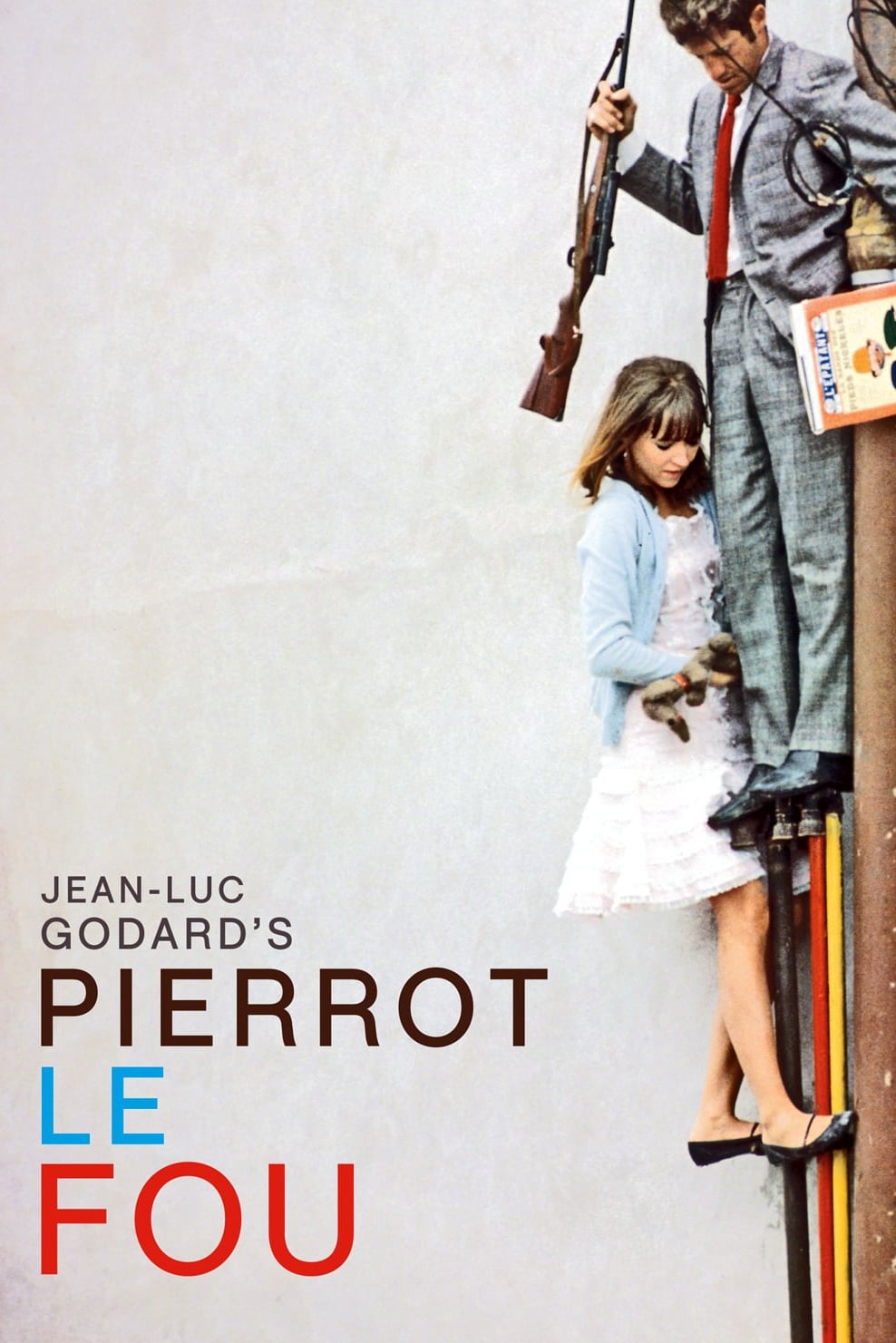
The Color of Escapism: My First Collision With Pierrot le Fou
Sometimes a film finds you not as art, but as a sudden jolt—something that tosses you outside the familiar guardrails of cinema. Pierrot le Fou did exactly that to me. From the moment Jean-Paul Belmondo’s Ferdinand throws himself into a world of luminous colors, pop imagery, and enigmatic violence, I felt like I was watching someone dream with their eyes wide open. This wasn’t a story in the traditional sense, but a jump-cut mosaic of longing and absurdity. My initial confusion gave way to a kind of exhilaration. I realized very quickly that Godard wasn’t interested in narrative comfort—he was exposing the raw nerve of desire itself, all the chaos and beauty that comes with wanting to escape one’s own life.
Words, Paint, and Gunshots: The Cinematic Language of Discontent
The language of Pierrot le Fou is not just French; it’s the swirling dialect of poetry, advertising, and pop art. I couldn’t help but notice how every conversation between Ferdinand and Marianne seems both trivial and charged with existential weight. Godard isn’t content to let dialogue simply move the plot—he weaponizes it, layering every exchange with irony, alienation, and yearning for meaning. The film’s use of color and image struck me as more than just style; it’s Ferdinand’s internal world spilling out in blue filters, comic book panels, and sudden bursts of violence. For me, the startling visual juxtapositions create a tension that underscores the characters’ desperate search for authenticity in a world drowning in cliché and consumerism.
Running From the World, Running Into Ourselves
Every time I return to Pierrot le Fou, I’m swept up by its restless energy—the feeling that Ferdinand and Marianne are at once fleeing the world and tumbling deeper into it. Their flight from Paris is never just an escape from the law or society; it’s a symbolic journey away from the deadening routines of adulthood, marriage, and “normal” life, straight into the unpredictable wilds of freedom and self-invention. Yet, as the days bleed into each other, and as fantasy turns to violence, I’m always struck by how ephemeral their happiness seems. The film insists that escape is always haunted by the self we carry with us, and no amount of rebellion can smother our own emptiness.
Marianne as a Mirror: The Elusiveness of Love and Identity
I find myself both fascinated and frustrated by Anna Karina’s Marianne—she embodies the very contradictions that animate the film. She is muse and mystery, lover and betrayer, free spirit and agent of chaos all at once. Whenever I try to pin her down as a character, she slips away, like a reflection in a shattered mirror. Godard seems to be telling me that romantic love, especially as filtered through the lens of pop culture, is a beautiful illusion that can never quite be grasped. Ferdinand’s obsession with Marianne isn’t just about her, but about his own hunger for possibility—the desire to become somebody else. Marianne is less a person than the embodiment of a longing for another life, another world.
America in the Rearview: Pop Culture as Language and Prison
I always find it impossible to watch Pierrot le Fou without noticing how Godard saturates the film with the detritus of American pop culture—cartoons, pulp novels, war movies, advertisements. There’s something both playful and despairing in the way the film re-purposes the fragments of global pop culture, recycling their energy and then exposing their spiritual bankruptcy. For me, Godard’s use of these images is not just ironic, but deeply mournful. It’s as if the characters are trying to find meaning in a world where language and images have lost their power to truly connect. Every time I watch Ferdinand flip through a comic or parrot lines from Hollywood films, I see a man trapped in a hall of mirrors, endlessly reflecting empty dreams back at himself.
The Violence of Freedom: Beauty, Death, and the End of the Road
One of the most shattering aspects of Pierrot le Fou is the way it ties together freedom and destruction. The longing to break free, to live authentically, always carries with it the threat of annihilation—of self, of others, of meaning itself. Godard’s violence is never gratuitous; it always lands with the weight of existential dread. Each gunshot, each moment of brutality, feels like an eruption of the psychic cost of modern alienation. When I watch Ferdinand paint his face blue and prepare for his final act, I see both a defiant gesture against the world and a surrender to its absurdity. The film quietly but insistently asks: What do we destroy in ourselves when we chase absolute freedom? Is it possible to escape the world without erasing our own identity?
Memory, Repetition, and the Impossible Return
There’s a sense of déjà vu in every jump cut and repeated motif in Pierrot le Fou. I’m always struck by how Godard uses repetition—not just as a stylistic flourish, but as a way of exploring the impossibility of returning to innocence or authenticity. The characters don’t just flee the past; they’re endlessly haunted by it, condemned to replay their own mistakes in new guises. Even the sun-drenched beaches and neon-lit roadways feel like stages for a ritual that’s already played out countless times before. Watching Ferdinand try to reinvent himself, I’m reminded that every act of self-reinvention is shadowed by the memories we can’t quite outrun. In the end, the film’s relentless circularity feels like a lament for the dreams we can never quite leave behind.
My Takeaway: Pierrot le Fou as a Love Letter to Lost Dreams
Every time the credits roll, I find myself a little haunted by Pierrot le Fou. To me, the film is less a story about doomed lovers and more a meditation on the unbearable lightness of being—how desire for freedom, authenticity, and connection is always undercut by the absurdity of the world around us. Godard isn’t just telling us about two people on the run; he’s capturing the feeling of chasing a dream you know you can never quite catch. The film’s colors, sounds, and fractured narrative are all part of a love letter to lost possibilities—the worlds we build in our minds and the heartbreak that comes from knowing they’ll never be real. I leave the film every time with a strange combination of hope and melancholy, as if I’ve glimpsed a fleeting utopia that dissolves the moment I reach for it.
If You’re Chasing the Same Feeling: Two Films to Seek Out
If you found yourself moved or unsettled by Pierrot le Fou, you might want to consider these other classics that echo its themes of longing, freedom, and the tragic lure of escape:
- Breathless (1960) – Another Godard masterpiece, equally obsessed with the romance and peril of living outside the rules.
- La Dolce Vita (1960) – Fellini’s exploration of decadence, ennui, and the search for meaning in a world of surfaces.
If you’re curious about how this film was originally perceived or how it compares to similar works of its era, these resources may be helpful.
🎬 Check out today's best-selling movies on Amazon!
View Deals on Amazon