
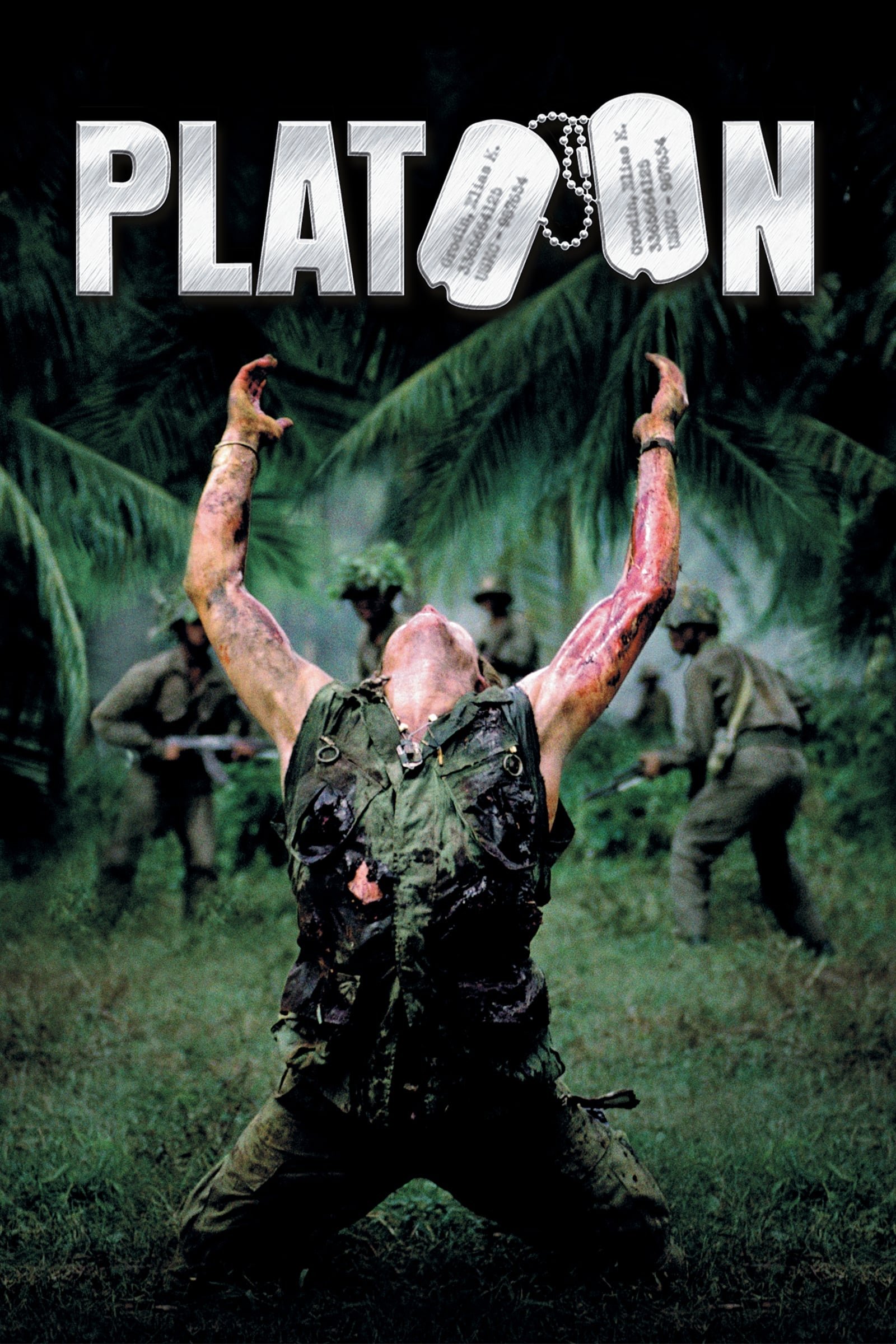
Landing in the Mud: My Heart’s First Shock
There’s a moment in “Platoon” where I could almost feel the weight of the jungle pressing in on me, as if the humid air and oppressive dread were flooding through the screen. No other film about combat had ever made me feel so filthy—morally, emotionally, spiritually. I was unprepared for the way Oliver Stone’s Vietnam shattered the familiar war-movie paradigm and demanded I surrender my certainties. From the opening frame, “Platoon” seems determined to make me confront the chaos of a world where clarity and heroism dissolve in mud, sweat, and confusion.
War as a Personal Purgatory
What struck me first about “Platoon” wasn’t its depiction of battle or its historical accuracy, but the sense that I was watching a man’s soul being tested in real time. Charlie Sheen’s Chris Taylor arrives, idealistic and naive, but the jungle eats away at him, gnaws at the edges of his identity, and forces me to grapple with the very idea of who I would become under such pressure. Stone isn’t just showing the Vietnam War—he’s using it as a crucible, burning away easy answers to expose the raw nerves of morality. The film seems almost hostile to the idea of certainty; the more Taylor strives to do the right thing, the more the ground shifts beneath his feet. Watching him, I realized that the jungle itself is the perfect metaphor for moral ambiguity: beautiful, alive, and utterly indifferent to human suffering.
The Fractured Father Figures
In a film so dense with conflict, the battle lines drawn between Sergeant Elias (Willem Dafoe) and Sergeant Barnes (Tom Berenger) fascinated me the most. Here, Stone isn’t just giving us a basic good-versus-evil scenario—he’s tearing open the duality of human nature. I found myself drawn to Elias’s wounded nobility, his almost Christlike compassion, but I could never dismiss Barnes’s brutal pragmatism. Their struggle becomes a violent argument about the nature of masculinity, leadership, and survival. It’s as if Elias and Barnes are dueling for the soul of Taylor, and by extension, for my understanding of how a person should behave when every value and instinct is at war inside them. The tragedy is that neither man quite fits the role of a savior. Both are broken by the world they inhabit, and both seem doomed by the very traits that make them compelling.
The Jungle’s Indifference
Every time the camera lingers on the thick, suffocating foliage, I’m reminded that the real antagonist in “Platoon” isn’t the Viet Cong. It’s the jungle itself, sprawling and unforgiving, a space where order collapses and men become unrecognizable to themselves. Stone’s genius is in the way he makes the environment an active participant in the moral unraveling—soldiers are gnawed by bugs and exhaustion, haunted by unseen enemies, stripped of their humanity by a landscape that doesn’t care if they live or die. The rain and darkness are invasive, almost corrosive. In this world, even time seems suspended, every moment stretched to breaking by anxiety and anticipation. I could almost feel the mud caking around my own heart, making every step heavier, every choice costlier.
The Impossible Weight of Guilt
Some of the scenes that linger with me most—the burning village, the senseless acts of violence, the moments of numbed complicity—don’t just depict atrocity; they implicate me. I’m forced to ask myself what I might do with a rifle in my hands, sleep-starved and terrified. The film’s harshest lesson is that virtue itself can decay under pressure, and even the best intentions are no shield against the seduction of power or the paralysis of fear. When Taylor and his platoon cross the line into cruelty, I felt a knot of shame, as if I had been asked to confess my own capacity for darkness. The film is merciless in this way: it never lets me believe that evil is the property of monsters. Instead, it exposes evil as a communal infection, born out of exhaustion, confusion, and the desperate need to survive.
Brotherhood and Isolation: The Paradox of Platoon Life
One of the most poignant aspects of “Platoon” is the way it crafts intimacy out of chaos. The bonds between the soldiers are palpable, yet always tinged with alienation. Even at their most vulnerable—passing around a joint, seeking comfort in a laugh—the men seem impossibly distant from each other. I found myself longing for genuine connection on their behalf, yet aware that war poisons every relationship, making trust both vital and dangerous. There’s a haunted quality to their brotherhood, as if each man knows that he could be abandoned or betrayed at any moment. The platoon is a family only in the sense that it is inescapable—each man is both a comrade and a potential threat. That tension, hovering in every exchange, made me ache with a kind of empathy I hadn’t expected to feel from a war film.
Assault on Innocence: Taylor’s Transformation
Watching Chris Taylor change over the course of the film, I felt both protective and helpless. He arrives in Vietnam believing, perhaps foolishly, that he can make a difference—that he can stand apart from the cynicism and violence swirling around him. But “Platoon” is relentless in stripping away his illusions. The real tragedy, for me, is not just the horrors he witnesses, but the incremental erosion of his hope. Each loss, each betrayal, each atrocity witnessed or committed drives a wedge between the man Taylor wanted to be and the man he is forced to become. In the film’s final moments, as Taylor stares into the blasted landscape, I saw not victory or defeat, but a kind of survivor’s grief—a recognition that innocence is a luxury paid for in blood, and that the true cost of war is borne in the souls of those who survive it.
Visceral Memory: The Sound of War
Much has been made of the realism in “Platoon,” but what haunts me most is the sound design—the thud of helicopters, the crackle of gunfire, the suffocating stillness between battles. These are not just atmospheric details; they function as a kind of psychological assault, driving home the idea that war is an experience that stains the senses as much as the conscience. Samuel Barber’s “Adagio for Strings” provides a thread of mournful beauty, a reminder that somewhere outside this chaos, there is a world capable of tenderness and regret. But within the universe of “Platoon,” beauty is fleeting and always threatened by violence. The soundtrack, both musical and environmental, becomes a kind of wound—reopening every time I revisit the film, reminding me that trauma is never entirely past tense.
What Stone Holds in the Flames
After every viewing, I find myself turning over the same question: What does “Platoon” want from me? It isn’t content to accuse or to absolve, to indict the war’s architects or sanctify its victims. Instead, the film demands I live with discomfort, to accept that war has no neat moral boundaries and that the hardest fights are waged in the private theater of conscience. The Vietnam War, in Stone’s hands, becomes a nightmare dreamscape where meaning itself seems up for grabs—where every act of mercy is undermined by suspicion, and every act of violence is a kind of surrender. The point, I think, is not to offer answers, but to force me to look into the fire and see what survives. If “Platoon” has a message, it is that war is less about the destruction of bodies than the devastation of certainty.
For Those Who Want More: Echoes in Classic Cinema
As I reflect on “Platoon,” I’m drawn to other films that confront the dissolving of innocence and the corrosive effect of violence on the spirit. Two titles come immediately to mind. “The Bridge on the River Kwai” interrogates the seductions and ruin of honor under impossible circumstances. “Paths of Glory” is an unflinching study of leadership, morality, and the futility of combat. Both films, like “Platoon,” force me to reckon with the costs no one sees—and the wars we carry inside us long after the battle is over.
If you’re curious about how this film was originally perceived or how it compares to similar works of its era, these resources may be helpful.
🎬 Check out today's best-selling movies on Amazon!
View Deals on Amazon