
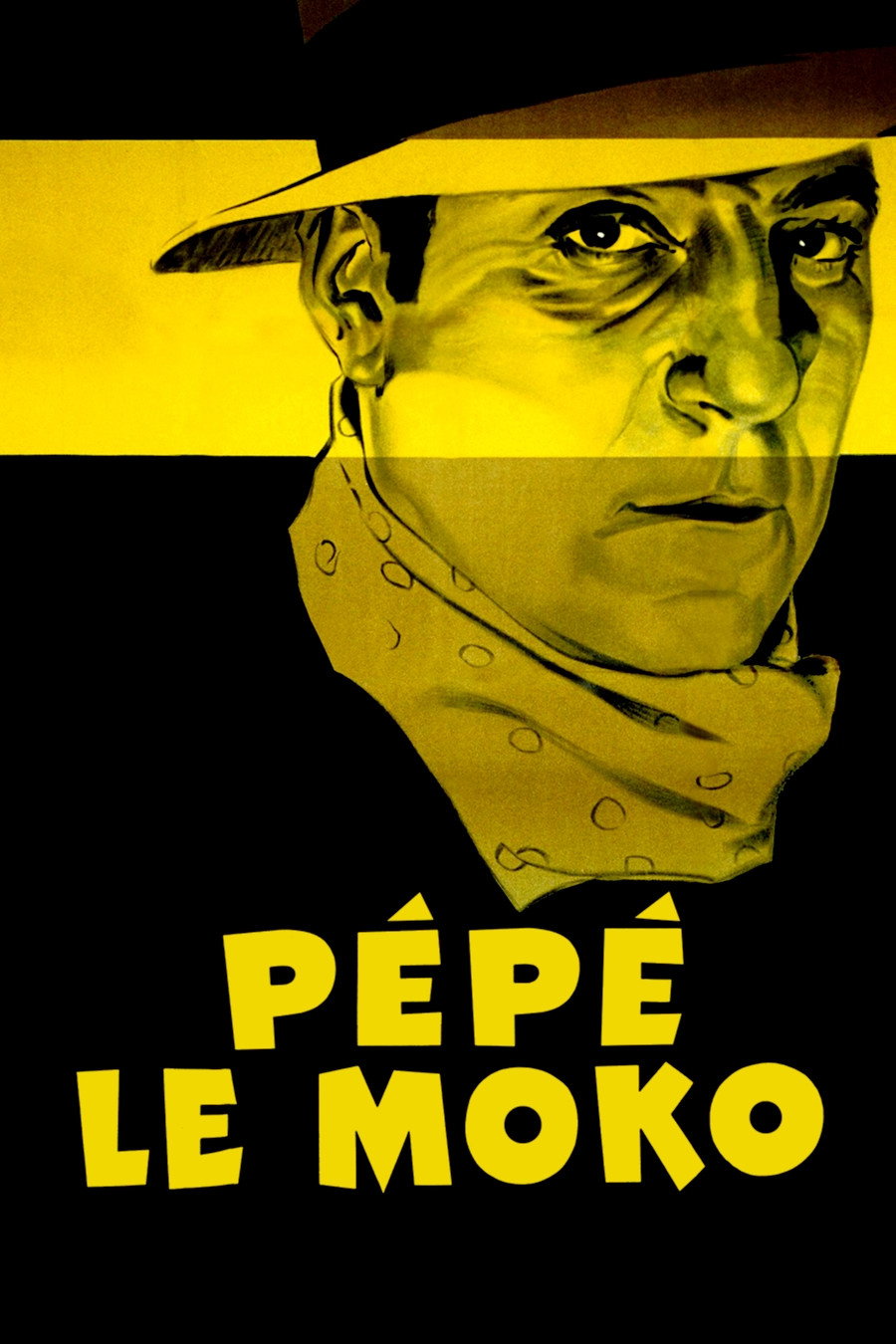
Slipping into the shadowed world of “Pépé le Moko” is, for me, like falling into a fatal, sensuous dream—one where desire and doom spiral together in perpetual dusk. The film’s atmosphere is intoxicating from the first minute: the labyrinthine alleys of the Casbah hum with both danger and forbidden romance. Watching Jean Gabin’s brooding eyes in those smoky rooms, I feel the inescapable weight of longing and loss not just for the characters, but as if I, too, am wandering that maze, breathless and alive. What still surprises me is how every time I revisit this film, its sense of entrapment becomes even more visceral, its emotional edges sharper and more raw. Pépé’s dilemma is not just his own—it’s an allegory for the self-imposed exiles we all carry, the loves and lives from which we are perpetually estranged. “Pépé le Moko” doesn’t just belong to its era; it invades mine, and perhaps yours, with a magnetic sorrow that feels both foreign and intimate.
Into the Maze: Desire and Doom in the Casbah
The first sensation that seeps in while watching “Pépé le Moko” is constriction—by streets, by fate, by memory. On the surface, this is the story of a French gangster hiding from justice in colonial Algiers, but almost immediately, the film sheds its trappings of genre comfort. It is not action or crime that rules the narrative, but the ever-present ache of longing and the suffocation of isolation. Watching Gabin as Pépé, I am swept into his daily procession of ennui—his charisma hiding fatal cracks—his face flickering between hope and despair with every tilted glance or casual shrug.
What Pépé desires most isn’t freedom from the law but reprieve from psychological captivity. The city itself transforms into a living, breathing organism that envelops him. Every alley and stairwell seems to pulse with his frustration—the Casbah is both a sanctuary and a cell. Whenever Pépé interacts with his loyal companions or the scheming police, I sense that all dialogues are undercut by a deeper conversation with the self—one where survival and surrender blur. The arrival of Gaby, shimmering with the unreachable promise of Paris, reveals the true conflict: the struggle between love and self-preservation, between memory and movement.
The emotional journey here is less an arc than a spiral; we witness hope flickering, only to be extinguished by the inexorable return of reality. “Pépé le Moko” pulls me in because it never settles for easy answers or sentimental triumph. Instead, it wallows—deliberately—in ambiguity, contradiction, and suspended passions. Pépé’s final flight toward what he most dearly wants, only to find it already lost, lands like a punch every time I watch the film. It feels like a cruel inevitability: desire is the very trap that keeps him from ever being free.
Walls Within Walls: Alienation, Fate, and Colonial Shadows
The themes of “Pépé le Moko”—exile, fatalism, and the construction of identity—are as resonant now as they were in 1937, if not more so. Setting the story within the colonial context of Algiers enriches these motifs. The Casbah becomes a dense symbol: a space ruled by neither France nor Algeria, where power shifts, cultures clash, and every resident seems to pine for another life just beyond reach. Pépé’s entrapment isn’t simply the predicament of a criminal; it’s a metaphor for colonial existence—of lives suspended between worlds, belonging fully to neither.
The motif of fate runs thick throughout the film; from the outset, the dialogue between Pépé and the detective Slimane seems less a contest of wits than an existential dance of inevitability. The forces hemming Pépé in aren’t just police but the very structure of his world—friends who turn informant, lovers who lie, streets that lead nowhere but back to his starting point. Every gesture and word is tinged with the sense that his destiny is preordained, that escape would mean erasing not just his pursuers, but his own identity.
Yet, what strikes me most is the tenderness of the film’s exploration of longing for a lost home. Pépé is haunted by memories of France and by the image of Gaby—the physical embodiment of everything forever lost to him. In every stolen glance and every melancholic song, the film conjures the ache of missing not just a place, but a self. These are yearnings that echo across generations, far transcending the specifics of 1930s North Africa. Watching amid today’s relentless waves of migration, displacement, and cultural tension, I can’t help but feel the film’s depiction of alienation reverberating more painfully than ever.
The Invisible Bars: Visual Codes of Loss and Desire
Though “Pépé le Moko” is drenched in dialogue and performance, much of its power radiates from its visual composition—from those expressionist shadows to the caged latticework of windows and alleyways. I am always struck by the recurring motif of barriers and thresholds. Nearly every significant scene plays out behind grates, in doorways, or encircled by the sinuous passageways of the Casbah. These frames within frames serve as constant reminders that freedom is always out of sight, always obstructed by layers of stone, metal, and mistrust.
The film’s claustrophobic cinematography—shot by Jules Kruger—makes Algiers both a shimmering mirage and a labyrinthine prison. Every composition is loaded with meaning. Pépé’s silhouette, separated from the warmth and bustle of the city, often appears carved out from crowds, visually marking his isolation. On the rare occasions he glimpses the wider world—especially in scenes with Gaby—the light shifts, the camera lingers, as if to underscore the fleeting possibility of escape.
The jewelry Gaby wears, the ever-present bars on windows, maps, letter fragments—all these are expressions of what is desired but unattainable. Even the Casbah itself becomes a symbol, its enigmatic topography embodying the tangled state of Pépé’s inner life. The interplay of shadow and light, of entrapment and imagined freedom, crafts an emotional landscape that is as oppressive as it is mesmerizing. It’s a film that teaches me to watch carefully—not just for the movement of plot, but for the slow unveiling of visual metaphors that say more than words ever could.
Crucibles of Fate: Three Moments That Define Pépé’s World
The Opening Descent: Becoming a Prisoner of the Casbah
The first extended sequence introduces us to Pépé via the nervous, shifting alliances of his companions. The tour through the Casbah’s interior architecture feels like a descent into another reality, a place pulsing with secrets and petty betrayals. Here, I am introduced not merely to Pépé’s notoriety but to his fundamental isolation—even as he is surrounded by loyalists, the laughter and bravado cannot mask the fear that hovers over every interaction. It is in these subtle, almost wordless exchanges—nervous sideways glances, a flash of a cigarette, the echo of footsteps—that the film’s paranoia and entrapment take root. This opening is not simply an introduction to a setting; it is an immersion into an emotional climate from which, I realize, the protagonist will never fully emerge.
The Encounter With Gaby: Suddenly, Paris Is Possible
The first true meeting between Pépé and Gaby is, to me, the film’s emotional heartbeat. Their chemistry crackles—Gabin’s resigned stoicism meeting Mireille Balin’s poised yearning. It’s an encounter staged with restraint, but when their eyes meet, the world outside the Casbah briefly disappears. Gaby becomes more than just an object of desire; she is the living memory of a different existence. The dialogue takes on a spectral, haunted quality. In this moment, the film crystallizes the core tragedy—not simply that they are separated by geography, but by circumstance, memory, and promise. It’s a profound meditation, in miniature, on how a single moment can make or break the possibility of escape—for the self and for love itself.
The Final Flight: Doom in Plain Sight
The film’s conclusion is an act of excruciating inevitability. When Pépé, believing Gaby has left forever, is finally lured out of the Casbah by Slimane’s cunning, it’s as if I am watching a man walking into his own funeral. There is a balletic fatalism to the way the sequence unfolds—the tension mounting with every step, the camera following Gabin’s trembling hands, the songs from the departing ship echoing like a requiem in the background. The arrival on the dock, the sight of Gaby behind the rails, and Pépé’s subsequent act of self-destruction—all these play out not as shocking plot twists, but with the cold logic of a Greek tragedy. I am always devastated, feeling the full weight of desire’s paradox: it is the very longing for freedom and connection that completes his destruction.
Reading the Labyrinth: Personal Versus Public Interpretations
Among critics, “Pépé le Moko” is often discussed as a prototype of poetic realism, a formative text for film noir, and a political parable about life in the colonial margins. I don’t dispute these readings—certainly the film’s visual flair, its doomed antihero, and its atmosphere of relentless pessimism set the stage for countless successors. Many reference the elegance of Gabin’s performance, the ingenuity of the set design, and the film’s influential role in shaping cinematic representations of urban exile and romantic despair.
I find, however, that these interpretations sometimes flatten what is, for me, an extraordinarily sensual and existentially immediate experience. The brilliance of “Pépé le Moko” isn’t simply in its sociopolitical allegory or its technical merit, but in the way it draws me into a trance of longing—a feeling so unmistakably physical that it almost hurts to watch. Where some see a thinker’s film about fate, I see a deeply emotional work about presence and absence—about the ways we construct prisons in our own minds, and how love awakens us to everything we have lost. This film’s legacy is not just intellectual but bodily: it lingers in my bones, coloring the moods of my days with the shadow of the labyrinth.
Echoes in Celluloid: Four Films in Conversation With Pépé
- Casablanca (1942): Another story of exile, forbidden love, and longing set against the backdrop of a colonial outpost. Here, as in “Pépé le Moko,” personal and political escape intertwine.
- The Third Man (1949): With its postwar Vienna and labyrinthine cityscape, Carol Reed’s film resonates with similar themes of entrapment, betrayal, and the seductive danger of the outsider.
- Le Samouraï (1967): Jean-Pierre Melville’s lone assassin navigates a modern urban labyrinth with silence and fatalism, echoing Pépé’s isolation and uncertain identity.
- Black Orpheus (1959): Set in another vibrant yet oppressive city, this tragic romance layers myth on modernity, with desire and loss radiating from every crowded street.
Fugitive Hearts: Why Pépé Still Haunts Me
Even today, “Pépé le Moko” feels uncannily alive, more relevant than many films produced a generation or two later. Its power isn’t just historical or cinematic, but vital: it reminds me—perhaps all of us—how desire and despair are entwined, and how the human search for identity can lead both to shelter and ruin. The tragic beauty of Pépé’s fate, the lush melancholy of the Casbah, and the unwavering gaze of Jean Gabin endure because they reflect struggles that are inescapably current. When I watch, I do not simply observe another time and place; I am compelled to confront the exile and longing at the heart of my own experience. That’s the acid beauty of “Pépé le Moko”: it is as much a modern parable as a relic of classic cinema.
If You Want More: Films That Echo This Experience
- “Le Quai des brumes”
- “Touchez pas au grisbi”
To broaden this interpretation, you may also explore how critics and audiences responded over time.
🎬 Check out today's best-selling movies on Amazon!
View Deals on Amazon