
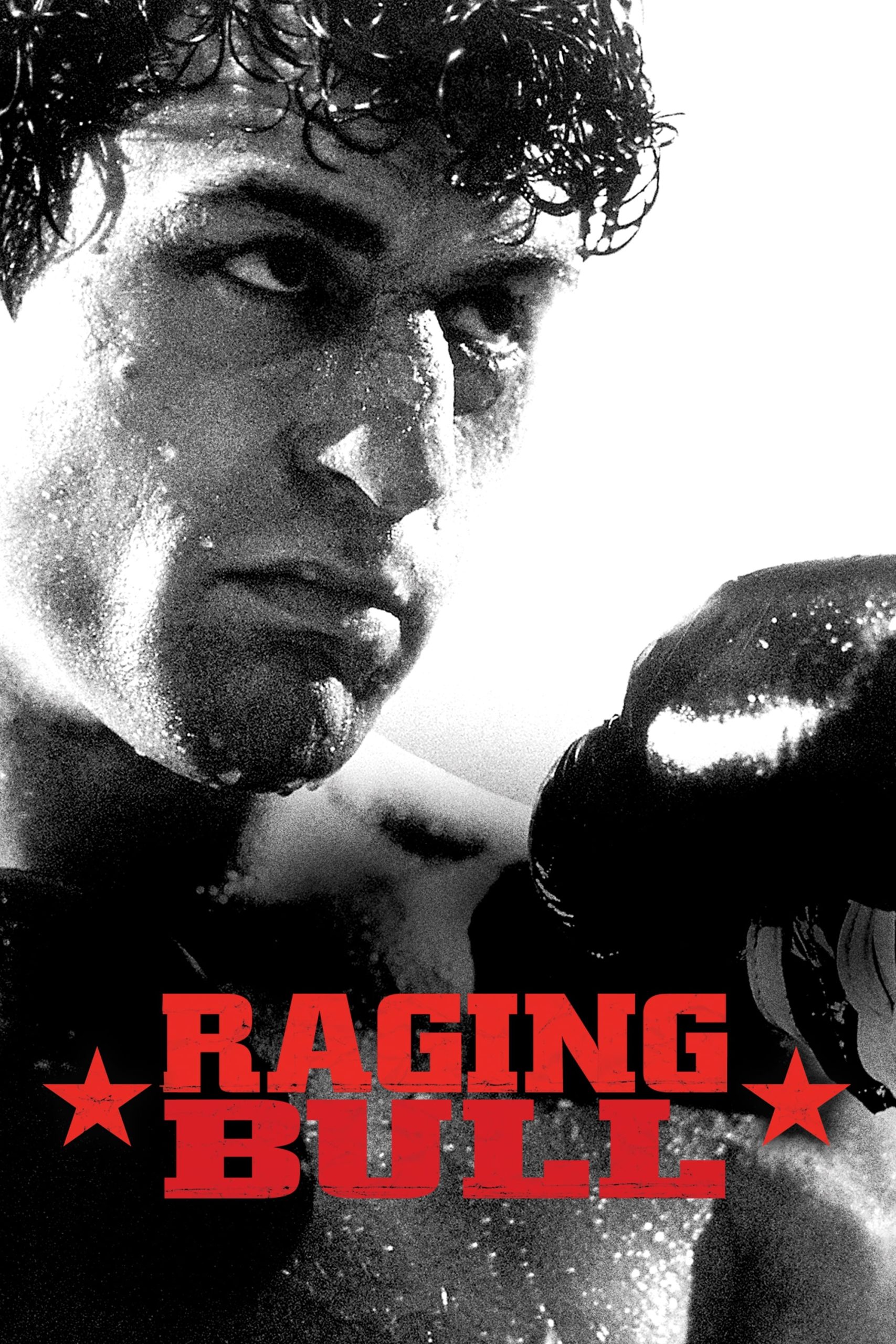
From the first thunderous bell to the last, I found myself staring into the abyss of masculinity, pride, and regret that “Raging Bull” hurls at its audience with such brute force that it’s impossible not to flinch. There’s a cruelty to Martin Scorsese’s lens, a mercilessness I felt deep in my chest, as if I were not just watching but enduring the life of Jake LaMotta—a man both built by and broken by his own hands. Few films demand this kind of introspection or provoke such discomfort at the spectacle of raw, unfiltered humanity.
The Ring as a Cage: Battling Demons in Confined Spaces
I’ve always been fascinated by the physical space a film chooses to occupy, and nowhere is this more pronounced than in “Raging Bull.” Scorsese’s decision to shoot the boxing matches in tight, claustrophobic frames transforms the ring from a place of sport to an existential prison. The ring is not freedom for LaMotta—it’s confinement, an arena where his rage and self-loathing consume him. The audience is denied the comfort of distance; every blow reverberates as though it were aimed at me, blurring the separation between spectator and participant. The suffocating black-and-white cinematography intensifies this sensation, draining the world of its distractions, leaving only the violence and pain in stark relief.
What strikes me most is how these sequences mirror Jake’s inner turmoil. The ropes are not merely boundaries for a bout—they are the limits of Jake’s emotional reach, the narrow confines of a man trapped by his own inability to trust, love, or forgive. Every time LaMotta steps into the ring, he becomes both the aggressor and the victim, lashing out at imagined enemies, yet always ending up bloodied, gasping, and alone.
Masculinity Unraveled: The Fragility Behind the Fury
For me, “Raging Bull” is less about boxing than about the performance—and unraveling—of masculinity. Jake LaMotta embodies a particular vision of manhood, one forged in the fires of competition, paranoia, and pride. His violence is not strength, but insecurity metastasized into action. The film exposes the underbelly of masculine posturing, showing how supposed toughness frequently masks a profound terror of vulnerability.
I’m haunted by the scenes in which Jake’s fits of jealousy and possessiveness over his wife Vickie surge uncontrollably. These moments are not outbursts directed at her so much as eruptions of fear: fear of being unworthy, fear of losing control, fear that love, once given, must be policed and punished. Scorsese and De Niro refuse to let me look away from the corrosiveness of unchecked masculinity, inviting me to question where strength ends and self-destruction begins.
Self-Sabotage as a Vicious Cycle
It’s easy to dismiss Jake LaMotta as a brute, but as I sat with the film, I realized his violence is as much inwardly directed as it is outward. The pattern of self-sabotage—destroying relationships, undermining his own career, inviting pain—suggests a man who believes, on some deep level, that he is undeserving of happiness. Watching Jake implode time and again, I felt an almost unbearable sense of pity, for he is at war not just with the world, but with himself.
I see his repeated attempts to provoke those around him, especially his brother Joey, as desperate challenges to fate or love: “Prove to me you care enough to stay.” The inability to accept affection, the compulsion to test loyalty through betrayal, is a form of punishment for sins he cannot even name. Jake’s failures are not simply the result of circumstance, but a tragic manifestation of self-loathing that renders all victories hollow.
Black-and-White Brutality: The Aesthetic of Memory and Guilt
The visual style of “Raging Bull” is one of its most powerful instruments. The decision to film in black and white, I think, does more than evoke the period or mimic old newsreels—it becomes an emotional filter, stripping away the distractions of color to focus on the raw essence of suffering. The world Jake inhabits is drained of warmth, defined by extremes of light and darkness, echoing his own inability to find nuance or balance in his relationships.
I felt as if I were watching an old home movie, a faded recollection colored by guilt and regret. The grainy shadows are like scars etched into celluloid, each frame recalling a memory Jake cannot escape. The sparing use of slow motion and close-ups during the most violent exchanges turns the ring into a theater of psychological torment, where time dilates and the brutality becomes almost abstract. Every punch becomes a symbol, every drop of blood a reminder of wounds that never heal.
Mirrors, Doubles, and the Fear of the Self
No image recurs more persistently in “Raging Bull” than that of the mirror. For me, these moments are the film’s quietest yet most devastating: Jake, alone, confronting his own reflection. The mirror is both judge and executioner, forcing him to reckon with the man he has become. The final scenes, in which Jake rehearses lines from “On the Waterfront,” staring at himself with broken bravado, are almost unbearable in their intimacy.
I’m struck by the idea that Jake’s true opponent was never any rival in the ring, but himself. The dance with his own image is the final bout, and the saddest one. He can throw punches at the world, but there is no defense against the truth his reflection offers: the recognition of wasted potential, lost love, and the hollow victory of survival without redemption.
Family Bonds and Betrayal: Blood as Both Anchor and Chain
While much has been written about the relationship between Jake and his wife, I find the dynamics with his brother Joey even more poignant. Family, in “Raging Bull,” is both sanctuary and battleground. Joey is the only person who endures Jake’s violence with stubborn loyalty, yet this bond is inevitably poisoned by suspicion and resentment. The scenes of brotherly intimacy—grooming, joking, strategizing—are laced with the knowledge that no trust is unbreakable under relentless assault.
I see in Joey a tragic echo of Jake’s own self-hatred. He tries to save his brother, to be the voice of reason, only to be battered by the very man he’s trying to protect. The inevitable rupture between them is perhaps the film’s most painful loss, a testament to how unchecked rage and paranoia can obliterate the most sacred ties. The tragedy is not just Jake’s isolation, but the collateral damage inflicted on those who dare to love him.
The Paradox of Redemption: Can the Damaged Be Saved?
What lingers with me after “Raging Bull” ends is not the violence or the sport, but the ambiguous nature of redemption. Scorsese offers no easy grace, no neat resolutions. Jake’s final moments in front of the mirror are not catharsis, but confrontation—an admission of failure, yet also a glimmer of understanding. He may never shed the weight of his choices, but by facing himself, even in defeat, he claims a measure of dignity that eluded him in victory.
I’m left questioning the very nature of transformation. Is recognition of guilt enough to redeem a life of harm? Or is the act of self-awareness, no matter how late, the only grace available to those who cannot undo their past? Scorsese’s refusal to dispense forgiveness is, perhaps, the film’s most honest gesture: some wounds do not heal, but must be borne as the cost of living with oneself.
Resonant Echoes: Films Wrestling With Inner Demons
If the emotional terrain of “Raging Bull” left you shaken as it did me, I recommend these classic films that similarly probe the dark corners of ambition and identity:
- “On the Waterfront” (1954)
- “Requiem for a Heavyweight” (1962)
If you’re curious about how this film was originally perceived or how it compares to similar works of its era, these resources may be helpful.
🎬 Check out today's best-selling movies on Amazon!
View Deals on Amazon