
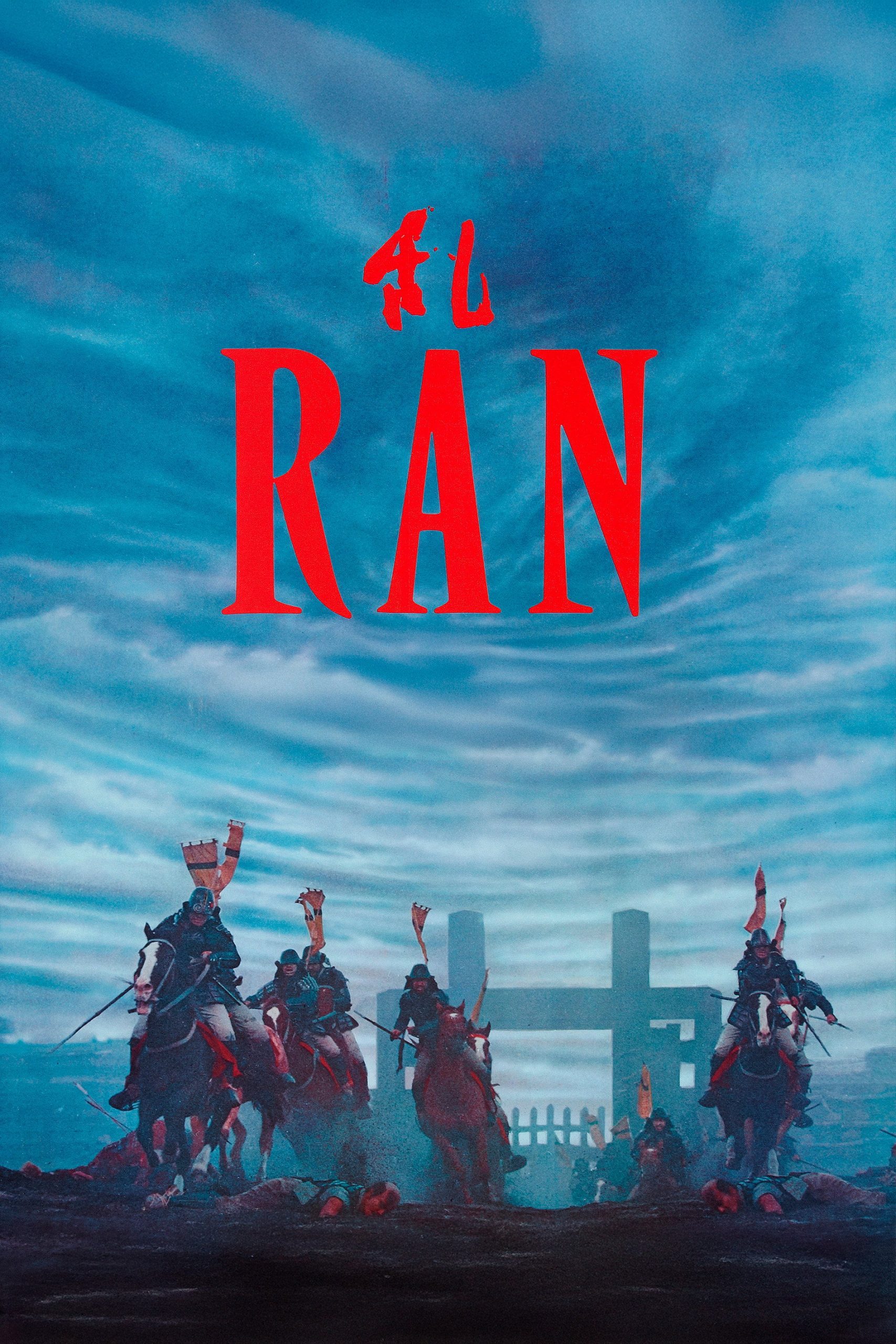
The first time I watched “Ran,” I felt the familiar chill that settles when art captures the unraveling of the human soul with such precision that it becomes uncomfortable to bear. Akira Kurosawa’s late masterpiece didn’t just move me—it unsettled me. I found myself reflecting on my own flawed ideas of legacy, control, family, and how easily the worlds we construct can be consumed by forces both external and internal. Encountering “Ran” is less like watching a film and more like being swept into a storm: inescapable, tumultuous, and awe-inspiring in its scope. Its images continued to play in my mind long after the screen faded to black, their starkness a persistent reminder of the chaos humans so often unleash upon themselves.
The Tempest of Inheritance and Ruin
To me, “Ran” is an intimate and harrowing exploration of a man’s attempt to orchestrate order on a world that, at its core, resists all efforts at control. The emotional journey at the film’s heart isn’t just Lord Hidetora Ichimonji’s tragic decline—it is the savage collision of generational ambition, betrayal, and the absolute futility of expecting gratitude from those who inherit power. What strikes me every viewing is Kurosawa’s relentless subversion of the idea that wisdom comes with age. Hidetora spirals from feared warlord to a frail, lost figure wandering the ashen ruins of his domain, undone not only by his sons’ machinations but also by his own pride and blindness.
The film’s human conflict stands out through its resonance: Hidetora’s desperate need for control, for respect, and for permanence is so achingly recognizable. I saw in him, as perhaps Kurosawa intended, the same overreach and self-delusion at the core of so many tragedies, both personal and historical. In “Ran,” emotional pain is rendered with an operatic grandeur—every betrayal and moment of compassion is writ large across the vibrant yet brutal landscape the film conjures. The mood swings from moments of breathtaking beauty to devastating violence, ensuring that the audience is never given the reprieve of comfort or certainty.
Lessons of Power and Fragility: Then and Now
The central themes of “Ran”—the perishability of power, the cycle of violence, and the consequences of human folly—felt urgent in 1985 and have only grown more potent in today’s fraught world. At the time of its release, Japan and the world grappled with Cold War anxieties and changing ideas about authority and tradition. Kurosawa, aged and marginalized by the film industry that once lauded him, poured his anxieties about personal and collective dissolution into every frame. I can’t help but see “Ran” as an anxious meditation on the disintegration not just of a family, but of cultural and political systems themselves.
Betrayal is constant in “Ran,” not because the sons are uniquely evil, but because the machinery of power corrupts every participant. Watching in an age defined by distrust of institutions and the fragility of democracies, the allegory feels explicitly contemporary. The film reminds me that humans, left unchecked, will often repeat cycles of violence even when warned by the scars of the past. While the trappings of samurai armor and feudal castles provide historical distance, the emotional reality of the film—mistrust, ambition, and the search for meaning as ruin encroaches—is distressingly modern.
Another theme that felt especially raw to me was the cost of pride. Hidetora’s pride is less a personal fault than a generational curse, poisoning relationships and rendering reconciliation impossible. The film dares me to examine the stories I tell myself about strength and leadership, and to recognize the inevitable limitations that age and exhaustion impose on everyone. In a modern context, where generational divides and struggles for succession are ever-present, I see in “Ran” a stark warning about the cost of refusing to step aside, to truly listen, and to let go.
Brushstrokes of Apocalypse: Visual Motifs and Recurrent Symbols
Kurosawa’s hallucinatory use of color, movement, and landscape saturates “Ran” with symbolism that amplifies its central tragedies. I’ve always been struck by the film’s unsettling juxtaposition of beauty and carnage—a battlefield rendered in brilliant reds and yellows, the wind trembling through endless fields, a mountain fortress engulfed in flame. Every image is charged not only with narrative purpose but with a painter’s understanding of composition and emotion.
The motif of blindness—most obviously referenced in the character of Tsurumaru, the blind jester, but also echoed in Hidetora’s increasingly hallucinatory vision—serves as a pitiless metaphor for the willful ignorance that destroys the Ichimonji clan. Hidetora, who refuses to see the consequences of his violence, ends up literally unable to perceive the world around him. Even the framing of characters in the vast, empty landscapes reinforces the sense of overwhelming isolation, the literal and figurative blindness to connection, mercy, and reality.
Color works as a dynamic language all its own in “Ran.” The three sons are visually defined by the banners and uniforms of their rival armies—red, yellow, and blue—each standing for a different approach to power and betrayal. These bold fields of color clash in the most violent scenes, underlining the inescapable nature of conflict once order collapses. The wind is another persistent symbol, rustling through scorched grasslands, seemingly indifferent to the fates of men. For me, the ever-present wind emphasizes the insignificance of the characters’ dramas when measured against the vast, uncaring sweep of nature.
Three Earthquakes: Moments That Shatter the Viewer
Castles in Ashes: The Siege and Hidetora’s Fall
The pivotal siege of the Third Castle is one of the most searing sequences I have ever watched. The silence—broken only by the thunder of horses, the drumbeats of chaos—transforms the battlefield into a nightmarish tableau. I found myself almost breathless, pulled into the intensity and horror of the massacre, as if Kurosawa had drawn me into a painting where I could feel the heat of the flames and the terror of the characters. When Hidetora stumbles from the inferno, his mind fractured, it is a moment of operatic devastation—the climax not only of violence but of existential collapse.
The Rain of Blood: The Betrayal Unfolds
One of the film’s most shocking images for me occurs during Saburo’s exile, when Hidetora’s rage unleashes the disastrous chain of betrayals. The stark, sunlit landscape as the brothers’ final unity splinters is hard to shake—the calm before an inevitable torrent. It’s a quiet moment that masks the violence to come. Saburo’s outburst, raw and uncomfortably intimate, made me think about the price of honesty in a world built on hierarchy and silence. This scene distills the emotional logic of the film: truth does not save, but curses those who speak it.
Blind Grief: The Jester on the Cliff
The haunting final scene—Tsurumaru, the blind jester, stranded atop the ruins, the family’s crest falling from the ledge—lands like a punch every time I see it. The image is loaded with bitter irony and sorrow. For all Hidetora’s obsession with legacy, it is the most powerless character who survives alone, untouched by redemption. This ending leaves me with an ache, a sense that no lesson has been learned, that suffering persists, unnoticed and unresolved. The abandoned character’s isolation becomes a symbol of human helplessness in the face of cosmic indifference.
Debating the Meaning: Shared Interpretations versus Personal Reckonings
Over the years, critics have rightly lauded “Ran” as an Eastern adaptation of “King Lear,” and praised its visual virtuosity and Shakespearean depths. Many readings focus on the futility of ambition, on the inexorability of fate, or on the double-edged sword of family affection. I agree with these foundations, but I find myself resisting the idea that “Ran” is just Kurosawa’s meditation on age and regret.
For me, the film is far more damning: it is an indictment of the hubris at the root of all generational wealth, violence, and inheritance. Watching as a member of my own anxious era, I interpret the story as a warning about structural rather than personal failure. Hidetora is undeniably monstrous—a relic of slaughter and conquest, rendered suddenly sympathetic only by his own powerlessness. I see “Ran” urging us not to pity fallen kings, but to recognize how easily our own systems generate tragedy when built on repression and empty authority. The possibility of redemption or catharsis is deliberately denied; what remains is a brutal clarity about the world’s indifference to our schemes and desires.
Echoes of Chaos: Films That Walk Similar Roads
- Kagemusha – Another Kurosawa exploration of identity, power, and the burdens of leadership, set against the tumult of warring clans.
- Throne of Blood – Kurosawa’s earlier, indelible adaptation of “Macbeth,” and a spiritual cousin to “Ran” in its portrait of ambition consuming order.
- The Godfather – Coppola’s tragedy of generational violence and the destruction of families through power and betrayal, echoing many of “Ran’s” themes in a very different setting.
- There Will Be Blood – Paul Thomas Anderson’s modern American epic, where the corrosive pursuit of legacy leads to spiritual and literal ruin.
The Lasting Storm: Why Ran Still Matters
Watching “Ran” today, I am left with a sense of awe at how unflinching, complex, and visually audacious the film remains. It is not an easy watch, nor should it be. In a world where stories about the ends of eras and the specters of uncertainty feel especially timely, Kurosawa’s bleak vision is as necessary as ever. “Ran” compels me to face the human cost of power, the blindness that breeds suffering, and the beauty that can still emerge amidst devastation. There is no catharsis in its conclusion—only the enduring challenge to confront the chaos within and without.
If you found value in my perspective, you might also want to explore:
- Throne of Blood
- There Will Be Blood
To broaden this interpretation, you may also explore how critics and audiences responded over time.
🎬 Check out today's best-selling movies on Amazon!
View Deals on Amazon