
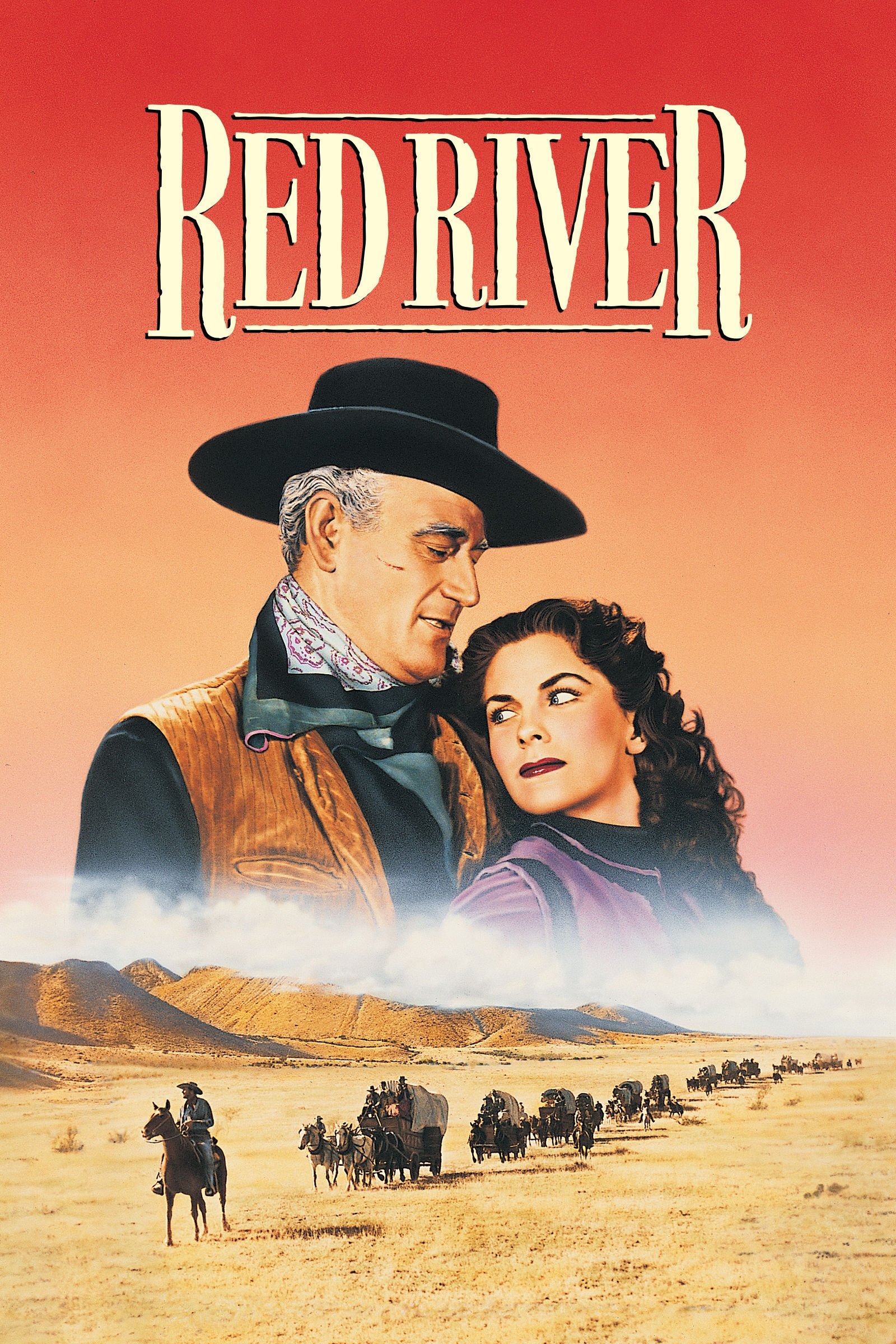
Every time I watch “Red River,” I find myself torn between awe and discomfort—caught in the psychological undertow that simmers beneath its iconic cattle drive. For a film that helped define the American Western, it is, above all, a meditation on control, belonging, and the cost of ambition.
The Frontier as a Battleground for the Self
What strikes me most powerfully in “Red River” is how the film transforms the mythic frontier into a crucible for personal identity. As the endless plains stretch toward the horizon, I sense an almost existential tension, as though every character is tested by the vastness itself. Howard Hawks does not simply use the landscape as background; the land is a relentless adversary, a blank slate onto which characters project their fears, ambitions, and doubts. John Wayne’s Thomas Dunson, in particular, is not just fighting to establish a cattle empire—he is fighting for a sense of legacy, to mark the land with his name as proof of his existence.
For me, the way Hawks frames the cattle drive, with its dust clouds and raw physicality, expresses an inner restlessness. The labor of crossing Texas to Missouri is more than a literal journey—it is a primal testing ground. The open range becomes both possibility and threat—a space where moral boundaries blur and the past is as inescapable as the horizon.
Authority and Revolt: The Father-Son Collision
At the film’s emotional core is the clash between Dunson and his adopted son, Matt Garth (Montgomery Clift). On the surface, this is a classic generational struggle, but Hawks imbues it with volcanic psychological energy. Each man embodies a different philosophy of leadership: Dunson, the hard, unyielding patriarch whose authority is absolute; Matt, the empathetic challenger who values community as much as success.
I find myself drawn to how the film maps the evolution of violence, not just as a physical act but as an inheritance. Dunson’s harsh methods are at once necessary for survival and corrosive, a legacy that Matt is compelled to accept or reject. The mutiny against Dunson is not only a plot point but an existential revolt—a refusal to perpetuate the sins of the father. In these moments, “Red River” transforms from a Western into a modern tragedy, where the cattle drive becomes a metaphor for the struggle to break free from inherited trauma.
Masculinity and the Burden of Myth
“Red River” is steeped in archetypes of rugged individualism and stoic masculinity, but I read a persistent undercurrent of doubt and frailty beneath the surface. The film interrogates the very myths it helped establish—asking, at what cost does a man become a legend? Dunson is formidable and charismatic, yet haunted by loss and the impossibility of controlling the world around him. In one of the film’s most evocative early sequences, his refusal to let go of the land he’s claimed leads to tragedy, a wound that festers through every brutal decision he makes.
Matt, by contrast, is more open, almost tender—a new kind of hero who seeks connection rather than domination. The scenes where Clift’s vulnerability unsettles Wayne’s stoicism are some of the most electric in all of classic Hollywood. Hawks uses their contrast to break open the myth of the lone cowboy, suggesting that strength can come from mercy as well as violence.
Legacy, Land, and the Illusion of Ownership
I am fascinated by the film’s relentless questioning of what it means to own land, cattle, or even one’s own fate. Dunson’s obsession with branding cattle as his own is far more than a business strategy—it is an act of self-assertion, a way to shape an indifferent world. But the film asks: can anything truly be possessed in a world of shifting alliances and uncontrollable nature?
The cattle drive, with its constant threat of stampede or disaster, becomes a vivid symbol of the futility of control. Even as Dunson tries to inscribe his will upon the landscape, he is repeatedly humbled by forces beyond his reach. The land resists ownership; the men resist absolute rule; history resists tidy endings. Hawks seems to be suggesting that the search for permanence is both noble and doomed—a tension that gives “Red River” its tragic edge.
Violence as Inheritance and Pathology
Watching “Red River,” I am unsettled by how violence is framed as both necessity and contagion. From the brutal lynchings to the discipline Dunson enforces among his men, there is a disturbing sense that violence is less a tool than a tradition, passed down and internalized. The cattle drive becomes a crucible where violence is both a means of survival and a pathology that threatens to destroy the very community it is meant to protect.
Matt’s eventual opposition to Dunson is thus more than a personal rebellion—it is an ethical revolt, a refusal to accept that brutality is the price of leadership. Yet even as the film sides with Matt, it refuses to provide easy absolution. The final confrontation, with gunfire and fists, is both cathartic and tragic, echoing the ancient cycles of fathers and sons locked in struggle.
The Women of Red River: Margins and Interventions
For all its masculine energy, “Red River” does not entirely ignore the presence of women, though it places them at the margins. Tess Millay (Joanne Dru), in particular, is a figure I find intriguing—neither passive nor fully integrated into the man’s world. Her interventions at key moments, especially in the film’s climax, are both disruptive and redemptive.
Tess’s willingness to risk her life to halt the violence between Dunson and Matt suggests a different model of courage and love. Her actions serve as a rebuke to the destructive cycles she witnesses—she becomes a catalyst for reconciliation where the men see only escalation. Yet, I am mindful of how her role is ultimately defined by the men around her, a reminder of the limitations placed on women in both the story and its era.
Cinematic Language: Monumentality and Intimacy
I am always awed by Russell Harlan’s cinematography, which gives “Red River” its mythic scale while retaining an intimacy that keeps the human drama front and center. The wide shots of cattle churning the earth are both beautiful and terrifying—they evoke the American imagination, restless and hungry. But the film’s true artistry lies in its close-ups: the flicker of doubt in Dunson’s eyes, the tension etched into Matt’s face, the silent negotiations of power and fear.
Hawks’s direction is spare and unsentimental, letting the rhythms of movement and labor convey the characters’ inner lives. Dialogue is used with discipline, often functioning as a mask for deeper wounds. In this, the film anticipates later, more psychologically complex Westerns—”Red River” is not just an epic, but an x-ray of the American project, exposing the fractures beneath the legend.
The Melancholy of Achievement
For all the triumph suggested by the film’s final scenes, I am most haunted by their melancholy. The cattle reach Abilene, Dunson and Matt reconcile, but the victory is shadowed by all that has been lost. The film refuses to let success serve as redemption for past violence and ambition gone awry.
There is a sense that even the greatest achievements are fleeting, that the land will eventually reclaim its scars and memories. Dunson’s dream is realized, but the journey has left him changed, less certain, and more alone. “Red River” evokes not only the grandeur of the West, but the loneliness that lies at the heart of its mythology.
Two Classic Films for Those Drawn to “Red River”
- The Searchers (1956)
- Shane (1953)
If you’re curious about how this film was originally perceived or how it compares to similar works of its era, these resources may be helpful.
🎬 Check out today's best-selling movies on Amazon!
View Deals on Amazon