
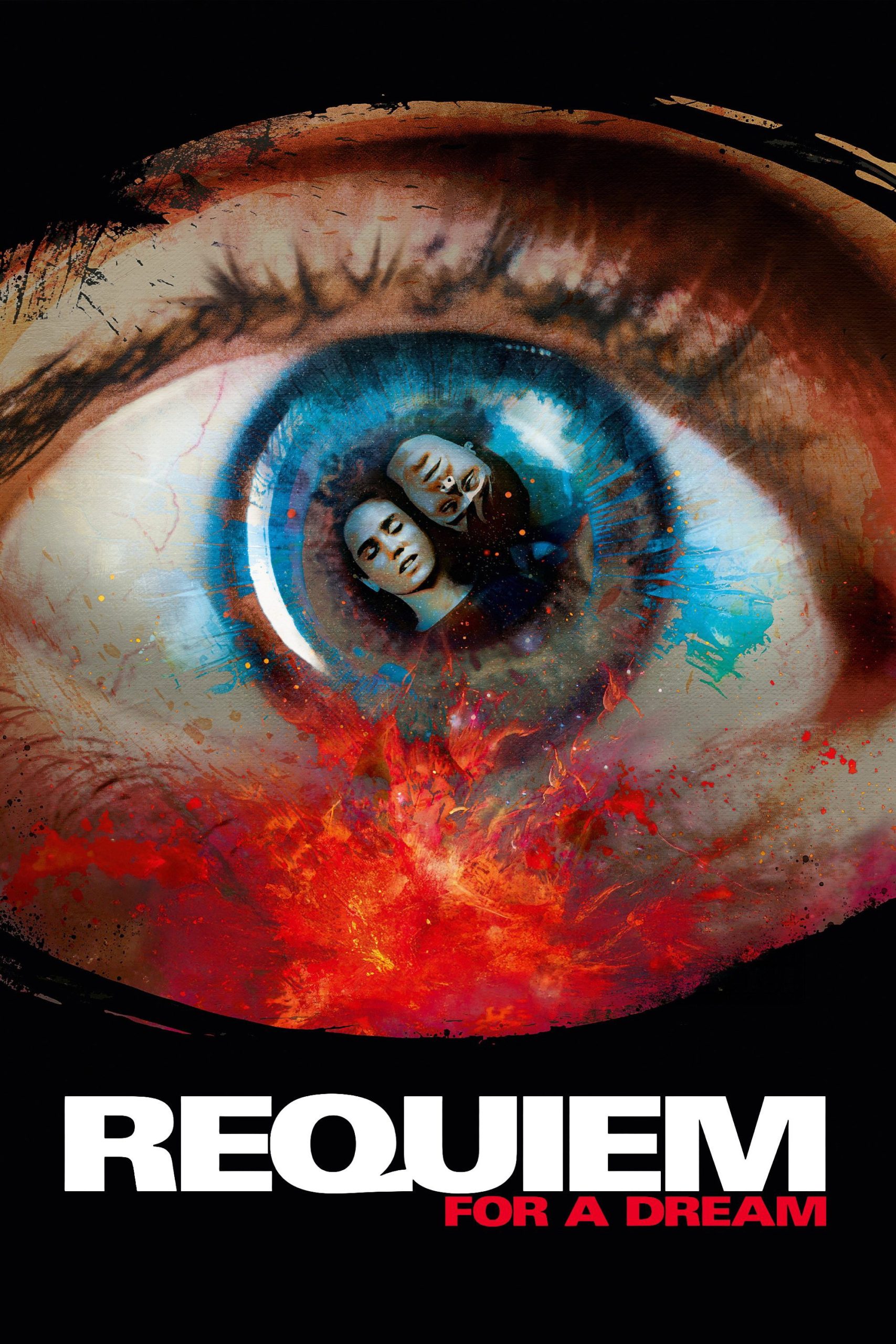
It has been many years since I first encountered “Requiem for a Dream,” but every time I press play, the film’s feverish energy seems to reach out and threaten to engulf me anew. This isn’t a comfortable movie; no matter how many times I revisit it, my body viscerally recoils at certain images, my mind races, and my heart aches for characters who feel more real in their pain than most. The first viewing floored me: it was as close to a panic attack as cinema had ever conjured for me. Yet, it’s more than shock tactics and unforgettable style. When I think of Darren Aronofsky’s film, what lingers is not just the horror but a kind of grim empathy—the way the world constricts around these characters, and how desire itself transforms into a prison. Watching it is like staring into a mirror that keeps distorting until I no longer recognize myself, and yet I understand, on a raw level, how these people got here.
The Anatomy of an Unraveling: Emotion at the Edge
“Requiem for a Dream” is not merely a chronicle of addiction; it is a journey into the fervid dreams that propel each of us and the nightmares that inevitably result when those dreams calcify into obsession. Harry Goldfarb, his girlfriend Marion Silver, his friend Tyrone C. Love, and his mother Sara each pursue happiness in a way that feels so heartbreakingly human. What stuns me is not their naivete but the crushing inevitability of their downfalls. Aronofsky orchestrates their stories as tragic variations on a single theme: the suffocating grip of hope turned pathological.
Emotionally, I find myself squirming, wanting to scream out warnings to the characters, though I know they’re fated to ignore any voice of reason. Sara’s desire to return to the spotlight as a television guest eclipses all else, and her son’s need to finance his dream with Marion sends him into the spiral of heroin abuse. The film’s central emotional conflict is not simply addiction, but the poignancy of yearning—how hope, nurtured in lonely rooms and whispered conversations, can blossom into delusion when fed a steady diet of disappointment and fear. For me, it’s impossible not to feel complicit as the camera careens through these tight, speeding montages of drug use and fantasy, mimicking the highs before crashing, just as the characters do, into a familiar darkness.
Dreams in Ruin: Core Themes Under the Microscope
At its core, “Requiem for a Dream” is about the corrosive nature of addiction, but its definition of addiction stretches far beyond substances. What reverberates for me most is the film’s focus on the American Dream, as embodied by each character’s fixations: the television stardom for Sara, love made real and permanent for Harry and Marion, and self-worth reclaimed for Tyrone. Aronofsky makes it undeniable—every character is caught up in the myth that happiness is just within reach, if only they can cling tighter to their hope or their pills. Addiction, here, is the mechanism by which they attempt to bridge the chasm between their harsh realities and the lives they covet.
Upon its release in 2000, the film felt directly plugged into millennial anxieties. It confronted a generation raised on instant gratification and the cult of self-improvement, fixating mercilessly on the moments where ambition curdles into self-destruction. Today, these themes feel even more urgent: our hunger for validation is now met by social media’s endless scrolling, our fantasies algorithmically fed. Sara’s hallucinated TV appearances eerily prefigure the world of viral stardom and curated digital selves. The more I return to the film, the more I see the universality of that hunger for something more, and the ease with which it can tip into need, compulsion, and despair. Its merciless honesty about the delusions underpinning everyday desire makes “Requiem for a Dream” even more relevant now—maybe even prescient.
Visual Echoes: Recurring Images and Their Meanings
Symbolism courses through every frame of the film, underpinning the story’s emotional chaos with a carefully constructed visual code. Aronofsky deploys visual motifs not merely as decoration but as traumatic signifiers, each recurrence pulling the viewer deeper into the characters’ ruptured realities.
Most notorious are the “hip-hop montages”: rapid-fire sequences of repetitive actions, close-ups of pupils dilating, pills popping, syringes plunging, and hearts thumping. These become an addiction in themselves, a heartbeat for the film’s merciless energy. The repetition is symbolic—an endless cycle of pursuit and reprieve, of problems addressed through the same rituals, each hit promising relief and each cutaway snapping us back to reality with renewed anxiety.
Sara’s television serves as a portal and a prison, glowing blue in her darkened apartment, representing both connection and isolation. The red dress, which Sara buys in anticipation of her triumphant television appearance, becomes a symbol of faded glory and decaying hope, its bright color withering as her body and mind deteriorate. The motif of the refrigerator—lurking, monstrous, expanding as Sara’s hunger and paranoia grow—appears almost as an antagonist, a constant threat on the edge of her madness.
Even the architecture of the film acts symbolically; the Coney Island pier offers a fantasy escape for Harry and Marion, a place of sunlit possibility. Its transformation into a site of memory and loss mirrors the characters’ psychological journey: what begins as a symbol of hope decays into one of tragedy and impossibility. Every image, I find, is freighted with the gravity of what the characters want but can never quite touch.
Moments That Haunt: A Close Look at Three Pivotal Scenes
The Descent Begins: Sara’s Diet Pill Spiral
I’ve rarely seen a more distressing depiction of the slow slide into dependency than the early scenes where Sara, desperate to lose weight, begins her prescribed diet pills. At first, there’s relief and almost comic buoyancy—she cleans, she celebrates, the world seems brighter. But Aronofsky is relentless: the day-by-day montages accelerate with Sara jittering in front of the television, plagued by insomnia, the colors intensifying and warping. The horror is in how quickly euphoria gives way to paranoia, and how Sara’s landscape shrinks to just the TV, the fridge, and the mirror—each now a source of terror. For me, these scenes make clear that the drug itself is not the core villain; it’s the need for control in a world that constantly denies her agency.
Splintering Love: Harry and Marion’s Broken Promises
One of the most excruciating moments comes halfway through the film, as Harry and Marion lie in bed, speaking in hushed tones about their shared future. They promise each other salvation—Harry will fix everything, Marion will wait. What’s devastating is how tender these scenes are, set against the increasingly frantic montage of their heroin use. The intimacy feels real, a safe harbor for both, and yet every viewer senses the impossibility of their plans. Their love, so passionately declared, is itself another drug—offering momentary warmth that is, inevitably, consumed by everything else. The sequence is edited with devastating precision, cross-cut with the practical realities closing in on them. The collapse of genuine connection into transaction and need is, for me, the true heartbreak at the film’s center.
Winter’s End: The Orchestration of Ruin
No single scene in “Requiem for a Dream” has burned itself into my memory as violently as the film’s final act, structured as a nightmarish crescendo. Each character’s story is cut, faster and faster, into the harrowing montage: Harry writhing in pain as his arm is amputated, Marion enduring her own exploitative degradation, Tyrone suffering withdrawal and racial humiliation in prison, and Sara’s mind shattering in psychiatric horror. The use of Clint Mansell’s score, with its now-iconic string motif, propels the sequence into operatic tragedy. The montage, for me, is the purest cinematic expression of despair—a symphony of ruined dreams, clenched in permanent winter. Every time I see it, I feel shattered.
Through a Glass, Darkly: How We Read the Film
Critical interpretation of “Requiem for a Dream” often centers on its unsparing depiction of addiction. Many see it as a cautionary tale, a warning meant to shock viewers into sobriety or at least aversion. Some critics have accused the film of nihilism, arguing that its relentless negativity leaves little room for empathy or hope. I understand these readings, but for me, they miss a crucial dimension: the fierce compassion that runs beneath the surface suffering.
What I see most clearly on repeated viewings is not a simple lecture on drugs but a bruising investigation of loneliness in all its forms. Sara’s arc, in particular, devastates me because it is ultimately about alienation—the way modern life strips us of community, of purpose, and of the sense that we are visible to others. Harry and Marion, too, seem less drawn to their high than to the way it erases their emptiness, even if only for a while. Tyrone’s backstory, glimpsed in fragments, evokes a yearning for family and for identity denied by circumstance.
To me, the ultimate power of “Requiem for a Dream” is its refusal to offer easy scapegoats. Its gaze is unsparing, even brutal, but never quite slips into judgment or condescension. Aronofsky doesn’t preach; he implicates all of us, inviting us to recognize parts of ourselves—our needs, our delusions, our hungers—that might one day tip from manageable to fatal. That is why, as wrenching as it is to watch, I find something redemptive in the way the film asks, again and again, for our empathy.
Kindred Nightmares: Films With Shared DNA
- Trainspotting (1996) – Another razor-sharp meditation on addiction, with a punk edge and a dark sense of humor that highlights the cyclical nature of dependency.
- Clean, Shaven (1993) – A harrowing, visually disorienting journey into mental illness and alienation, its subjectivity rivaling Aronofsky’s stylizations.
- Pi (1998) – Aronofsky’s own debut, exploring obsession, mathematical order, and the boundary between genius and madness through avant-garde techniques.
- Enter the Void (2009) – Gaspar Noé’s psychedelic, consciousness-bending odyssey into drug culture and existential loss, as radical in form as theme.
Reflections on the Modern Eye: Requiem Today
Watching “Requiem for a Dream” now, more than two decades after its release, I am struck by how undiminished its impact remains. The film’s technical audacity—the editing, the sound design, the haunting score—has been widely influential, but it is the emotional honesty, the refusal to look away from pain, that stays relevant. In an age when so much is crafted for comfort and reassurance, Aronofsky’s work still feels daringly alive, a challenge and a warning.
For viewers willing to engage with its agony, the film offers rewards that go beyond catharsis. It is a mirror for our era’s deepest vulnerabilities, a meditation on all the ways hope and fantasy can curdle into torment. Despite—or because of—its harrowingly bleak vision, I consider “Requiem for a Dream” essential viewing: a film that does not let us look away from the cost of our desires.
If you found value in my perspective, consider reading my analyses of “Trainspotting” and “Clean, Shaven.” Both films probe the intersection of addiction, alienation, and perception with an intensity that complements Aronofsky’s vision.
To broaden this interpretation, you may also explore how critics and audiences responded over time.
🎬 Check out today's best-selling movies on Amazon!
View Deals on Amazon