
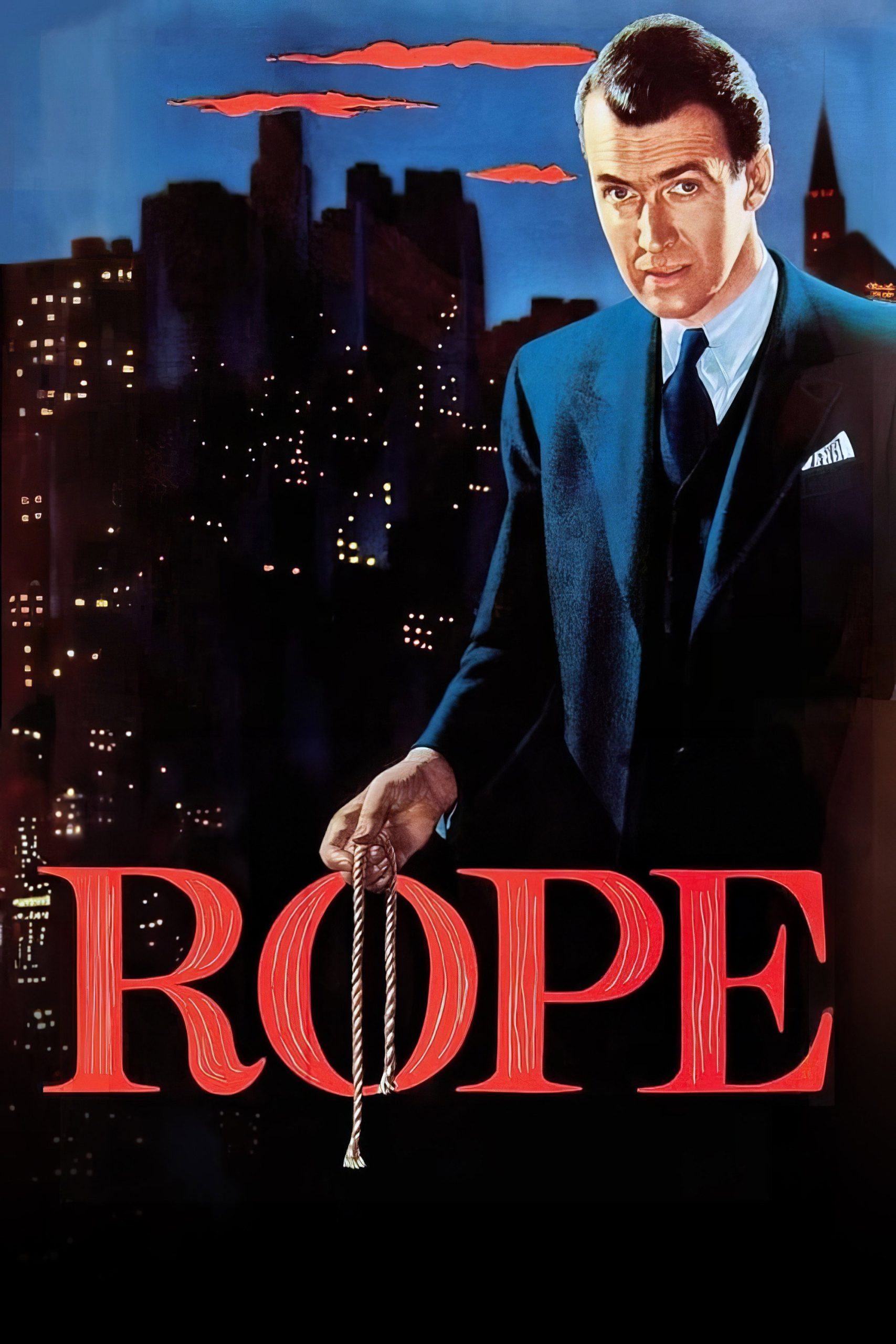
From the first moment I watched “Rope,” I felt the skin-prickling tension of a world held together by nothing but pretense and sheer will. Hitchcock’s 1948 experiment in unbroken time is more than a technical curiosity; it’s an examination of what happens when intellectual arrogance meets the fragility of conscience, all staged within the elegant suffocation of a Manhattan penthouse. The film’s power lies not just in its premise but in how it weaponizes artifice—cinematic and social—to dissect the boundaries between theory and action, morality and performance.
The Illusion of Seamlessness: Hitchcock’s Camera as Co-Conspirator
Every time I revisit “Rope,” I am struck by the way Hitchcock’s camera refuses to let me breathe. There are no traditional cuts—just long, serpentine takes, gliding from one end of Brandon and Philip’s apartment to the other, trapping me inside the action as surely as the characters are trapped by their own crimes. This stylistic choice is not mere bravado; it’s a psychological device that makes me complicit, a silent guest at a macabre dinner party. The camera’s unblinking eye mirrors the unbroken timeline of the story and the suffocating inevitability of consequences.
The use of cleverly disguised edits—hidden in the back of a dark jacket as a character crosses the frame, or as the camera lingers on an inanimate object—reminds me of the ways people conceal transgressions in everyday life. Hitchcock’s technical audacity becomes a metaphor for the façade the murderers maintain, forcing me to consider how easily appearances can be manipulated, and how reality can be constructed to fit monstrous intentions.
Philosophy in Practice: The Nietzschean Abyss
What fascinates me most about “Rope” is its direct confrontation with the dangers of intellectual detachment. The killers, Brandon and Philip, are more than villains; they are disciples of a perverted philosophy—one that echoes the misinterpreted teachings of Nietzsche. To them, murder is an art, an assertion of superiority. The film interrogates what happens when abstract ideas about morality are wrenched from ethical context and applied with chilling literalness.
Watching their confidence unravel as their former teacher, Rupert Cadell, begins to suspect, I’m forced to ask myself: At what point does theoretical posturing become a real-world atrocity? The film’s dialogue vibrates with tension between thought and action, and I see in Brandon’s smugness and Philip’s guilt the eternal struggle between ego and empathy, intellect and conscience.
Stages, Masks, and the Theater of Cruelty
Hitchcock sets the entire film in a single, meticulously dressed apartment, transforming it into an intimate stage. The apartment itself is theatrical—a place for performance, deception, and the observance of social rituals. The characters wear masks, both literal and figurative, as they host their dinner party atop a hidden corpse.
I find the use of the chest as centerpiece—serving sandwiches from the very place where David’s body lies—almost unbearably perverse. Every time a guest approaches the chest, my heart beats faster. This prop serves as a symbol of the darkness lurking beneath the surface of polite society, an indictment of how easily evil can be hidden behind charm and sophistication.
Class, Privilege, and the Cult of Supremacy
“Rope” is not merely a murder mystery; it’s an autopsy of privilege. Brandon and Philip’s arrogance is born of entitlement—the belief that their social status and intelligence exempt them from the rules that bind ordinary people. The dinner party becomes a microcosm of elite society, where ideas about superiority and the value of life are debated over cocktails and canapés.
Listening to the guests—especially Rupert, the philosophical mentor—I feel the unease of proximity to danger, the way intellectual games can spiral into catastrophe. Hitchcock uses the setting to critique the insulated world of the educated upper class, suggesting that moral decay often hides in the most refined settings.
Anxiety as Architecture: Lighting, Windows, and Imprisonment
I’m always drawn to the film’s use of space and light. As night falls over Manhattan outside those panoramic windows, the city lights begin to twinkle, indifferent to the horror unfolding inside. The apartment, with its chic furniture and enormous windows, becomes both a fortress and a prison—simultaneously open to the world and fatally closed off from salvation.
The shifting light mirrors the emotional journey of the characters: cool and inviting at first, then gradually darkening and closing in as suspicion mounts. Every shadow lengthens the tension, every change in the Manhattan skyline marks another step toward inevitable exposure. Hitchcock transforms the room into a psychological landscape, one where the characters’ internal panic is projected onto the walls and windows themselves.
Rupert Cadell: Conscience Awakened
Rupert, played by James Stewart, is the film’s troubled heart. I always find myself clinging to his arc, as he shifts from urbane guest and witty skeptic to horrified moralist. Rupert’s gradual realization that his teachings have been weaponized by his former pupils is among the most haunting elements of “Rope.” His horror is not just at the murder but at his own complicity—the careless, clever discussions that, once repeated without irony, have become justification for atrocity.
His confrontation with Brandon and Philip is wrenching because it is as much an act of self-reckoning as it is of moral condemnation. Rupert’s final speech is not a triumph, but a lament—a recognition that intellectual games can have deadly consequences when separated from empathy and responsibility.
Homoerotic Tension and the Unspoken
The relationship between Brandon and Philip is laced with a subtext that can’t be ignored. During my first viewing, I felt an unmistakable intimacy in their physical proximity, their shared secrets, and the way they navigate the apartment together. The film’s subversive homoerotic undertones reflect not only the coded constraints of 1940s Hollywood but also the charges of secrecy, transgression, and forbidden desire that run parallel to the murder plot itself.
These coded interactions add another layer of repression and anxiety to the film, infusing every glance and touch with meaning. Their partnership is simultaneously creative and destructive, bound less by affection than by mutual complicity in crime—a dark intimacy that mirrors the film’s fascination with the dangerous allure of taboo.
The Unraveling: Guilt and the Limits of Control
By the film’s climax, what I remember most is not Brandon’s brittle bravado but Philip’s unraveling. The psychological toll of their crime becomes unbearable, manifesting in shaky hands and strained nerves. Hitchcock is less interested in whodunit than in what guilt feels like: a growing, inescapable pressure that no amount of intellectual justification can dispel.
The apartment, once a safe haven, becomes an arena for confession and collapse. Every gesture is loaded, every silence deafening. I’m reminded that true suspense is not about revelation but about waiting for the inevitable—the moment when control breaks down, and the truth comes flooding in.
Recommending Two Kindred Classics
If the psychological tension and philosophical questions of “Rope” linger with you as they do with me, you may also find resonance in these two masterpieces:
- Compulsion (1959)
- Sleuth (1972)
If you’re curious about how this film was originally perceived or how it compares to similar works of its era, these resources may be helpful.
🎬 Check out today's best-selling movies on Amazon!
View Deals on Amazon