
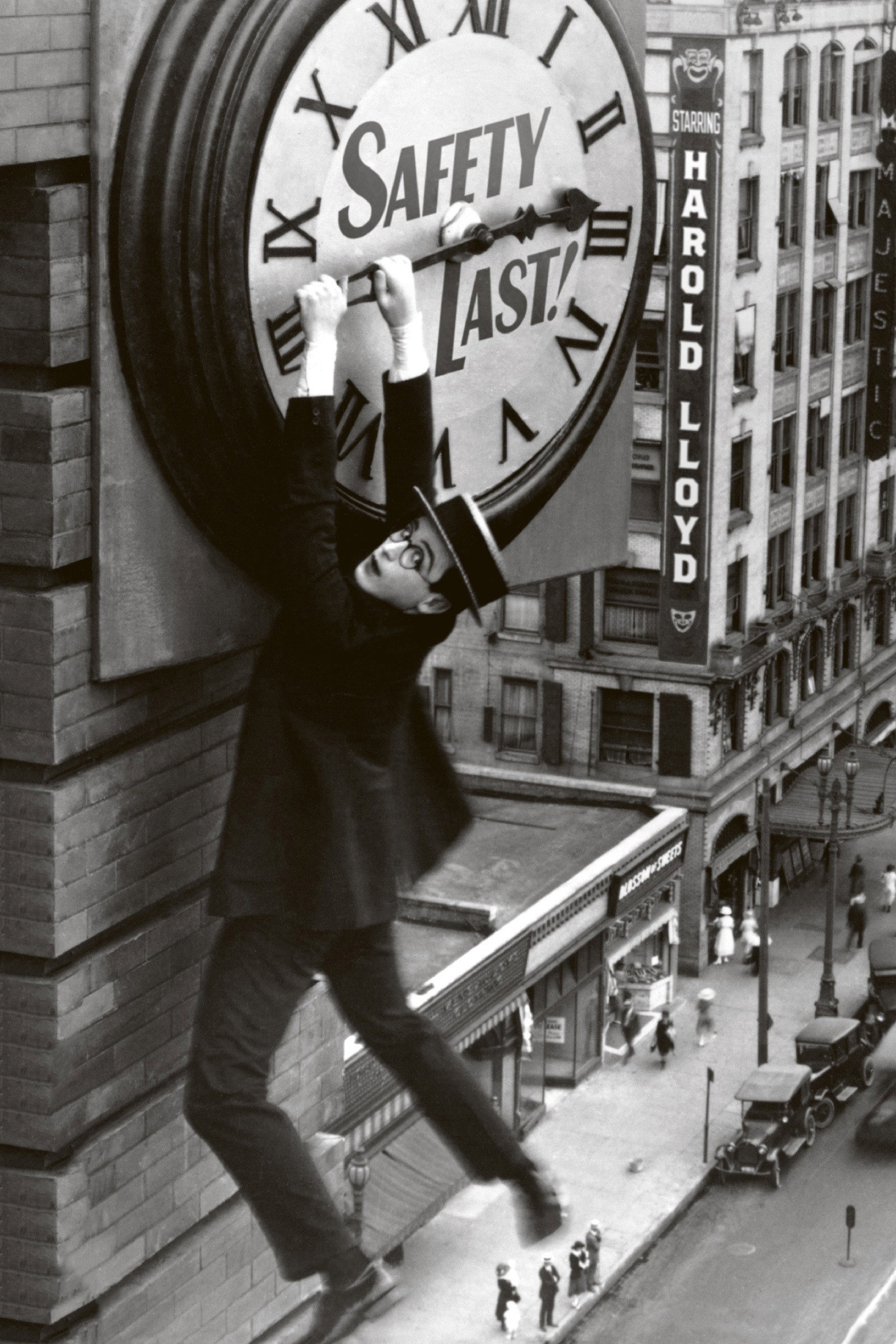
When I first watched “Safety Last!” I expected a relic of slapstick—a historical curiosity I’d academically appreciate but not viscerally feel. Yet, from its opening moments, I found myself drawn into a personal memory-laden space between laughter and anxiety. The sight of Harold Lloyd, dangling absurdly off a skyscraper’s clock face, fused something inside me that I couldn’t anticipate: a connection between the bone-deep, universal fear of failing and the aspiration, sometimes reckless, to rise above one’s lot. In what world, I asked myself, had a 1923 silent comedy come to embody such a profound sense of modern striving, spectacle, and existential risk?
The Vertical Dance: Ambition, Love, and Urban Anxiety
At its core, “Safety Last!” is not simply about a bespectacled young man scaling an improbable height for laughs—it’s a journey encapsulating the tension between aspiration and inadequacy. From the densely packed city scenes, I felt an undercurrent of desperation as Harold’s character—an everyman with glasses and an unwavering smile—pursues upward mobility, both socially and literally. He’s a small-town dreamer in the big city, promising his beloved that he’s more successful than reality allows. That conflict between who we are and who we pretend to be is simultaneously hilarious and poignant.
The emotional journey, for me, isn’t simply the threat of physical calamity (though that’s palpably suspenseful). It’s the dread of being found out, of losing face, and the relentless pressure to perform. Lloyd’s comic timing is so precise that even as I laugh, I am complicit in his terror. The distance between the comedic surface—timed slapstick—and the deeper emotional truth—the anxiety of social failure—makes “Safety Last!” a uniquely affecting experience. Lloyd’s smile becomes a mask, barely concealing the rising panic that anyone who has ever lied to save face will instantly recognize. In that, the film is less about heroism, more about survival on the social ladder.
By the film’s midpoint, as the stakes rise and Harold’s predicament spirals, I found myself entirely invested—not just in whether he could climb that department store, but whether he could sustain his fragile double life long enough to win the love and recognition he so desperately seeks. The film’s emotional engine, I realized, was not the physical daredevilry but the all-too-relatable struggle to overcome personal limitations within an uncaring, competitive metropolis.
Scaling Towers: Social Climbing and the Roaring Twenties
One cannot talk about “Safety Last!” without addressing its central thematic obsession with upward mobility. In 1923, America was flush with opportunity and possibility, but also beset by pronounced social divides and economic uncertainty. The skyward reach of buildings mirrored the ambitions of countless ordinary citizens newly arrived in cities—a resonance that intensifies when viewed today. Lloyd’s climb is a literalization of the American Dream: external success at all costs, regardless of internal fear or external danger.
The thematic brilliance of the film emerges most strikingly in its interrogation of appearances versus reality. In the bustling department store, Harold pretends to be a successful manager, desperately hiding his true status from his visiting girlfriend. Impostor syndrome is alive and well in this silent era, and the film skewers the period’s obsession with hustle, spectacle, and the relentless performance of self. These are concerns that feel, uncannily, ripped from today’s social media-driven world, where success is as much an act as an achievement.
The comedy, in my view, is not a harmless escapism but a mechanism revealing the precariousness of social mobility. Each gag—every shirt pulled over the head, every near-miss with a swinging window—drives home the sense that the very infrastructure of progress is unsafe, demanding constant, exhausting improvisation. The fact that the most memorable scene is one of existential peril on a city’s face underlines the profound anxiety baked into both the 1920s and now. Lloyd’s journey up the building is a parody of meritocracy: upward movement is possible, but only if you risk everything, including your life.
Objects in Peril: Symbols of Risk and Aspiration
Watching “Safety Last!” through a symbolic lens, I am struck by the recurring motif of the clock. The clockface is, first, a comically literalized deadline—as Lloyd dangles and scrambles, time is quite literally running out above the city’s bustling crowds. For me, the ticking clock is much more than a physical hazard. It becomes a symbol of modernity’s unrelenting demands, the pressure to synchronize personal ambition with societal expectation. Every second counts, and every slip is both a joke and an existential threat. I find this image as haunting as it is iconic, a silent-era cousin to the digital anxieties of our present.
The city itself is another central symbol—an obstacle and object of desire all at once. It is both Lloyd’s adversary and his opportunity, the kind of gleaming, impersonal landscape where a nobody can, with enough pluck and peril, become a somebody. The vertical lines of the building’s architecture serve as a recurring visual motif: ladders, ropes, window ledges, and jutting bricks reinforce the sense of relentless ascent (and imminent fall). These images reinforce the film’s subtext: that urban progress, for all its promise, is a gauntlet rather than a gift.
I am also fascinated by the symbolism of Lloyd’s glasses. Unlike Chaplin’s Tramp or Keaton’s stone-faced clown, Lloyd’s recurring persona is marked by his spectacles—a marker, oddly, of both intellectual aspiration and physical vulnerability. The glasses are never commented upon, but they stand in for the modern individual: educated, hopeful, and a little bit out of his depth in the world of physical risk and cutthroat competition. In contemporary terms, he is a knowledge worker in a bruising, industrial city.
Moments Between Heartbeats: The Anatomy of Suspense and Laughter
First Day on the Job: Illusions of Success
The film’s early department store scenes radiate precisely the kind of everyday stress I’ve experienced in my own ill-fated attempts to appear more competent than I felt. Lloyd’s efforts to balance petty tasks and stiff upper-lip politeness become a masterclass in comic escalation. Every failed display, every upended hat, and every run-in with the tyrannical floorwalker amplifies the sense of stakes not with words, but through choreography and expression. Here, I feel a kinship to Harold’s attempt to construct confidence through sheer willpower—a kinship that, even nearly a century later, retains its uncomfortable truth.
The Climb Begins: Anxiety in Every Muscle
The much-referenced climb, commencing just past the film’s halfway mark, transforms abstract themes into immediate, embodied peril. This is no mere stunt, but rather a narrative crescendo. The way Lloyd’s limbs flail, his face flickering rapidly between determination and panic, conjures in me both a deep physical empathy and a slightly embarrassed recognition of my own private crises. I’ve faced my own metaphorical skyscrapers, braced precariously as unpredictable obstacles (pigeons, netting, police officers) appeared out of nowhere. This scene’s brilliance lies not only in its technical execution but in how perfectly it embodies the unpredictability of urban life.
Time Suspended: Gripping the Clockface
There’s no escaping the film’s most indelible image: Harold hanging from the clock, both slapstick victim and romantic hero. The audience’s collective gasp, immortalized in cinema history, is well-earned. The pull of gravity is a literal threat, but also a metaphor for the inexorable flow of time and the impossibility of fully controlling one’s fate. As I rewatch this scene, I can’t help but find it a meditation on mortality and performance. We are all, in a sense, dangling by our fingertips, desperate to maintain our composure in the face of indifference and uncertainty. Lloyd’s smile is both defiance and desperation, and the moment lingers in the mind long after laughter subsides.
Reading Between the Laughs: Fresh Perspectives on Lloyd’s Masterpiece
Common critical interpretations of “Safety Last!” tend to emphasize its technical ingenuity and its role as prototypical slapstick spectacle. While I agree that Lloyd’s physical courage and the film’s breathtaking set pieces are foundational to cinema itself, I find many readings stop short of the emotional truths at play. Where some see a simple tale of American optimism, I see a more ambivalent statement: the American Dream’s price is relentless anxiety, perpetual hustle, and the constant threat of humiliation.
Others situate the film as an artifact of 1920s prosperity—a piece of popular wish-fulfillment. But in each viewing, I return to the sense of vulnerability and doubt that haunts Lloyd’s performance. I recall moments in my own life, trying (and failing) to keep up with shifting demands or pretending that my minor victories sufficed while a greater challenge loomed. The film, for me, is not just prescient—it’s prophetic: a reflection of doomed balancing acts and the deeply contemporary dissonance between image and reality.
I diverge from readings that treat the ending—where Harold reaches the top and wins both love and applause—as uncomplicated triumph. To my eyes, the film knows that stories seldom end so tidily in real life, and its frenzied crescendo is as much a nervous tic as a declaration of success. The aftershocks of that clock-hanging moment linger in the body, a reminder that social and personal mounting pressure never truly dissipates.
Ascending in Good Company: Silent Era Fellow Travelers
- “The Kid Brother” (1927) – Lloyd channels a similar blend of vulnerability and ingenuity in a rural context, examining familial expectation through comedy.
- “The General” (1926) – Buster Keaton’s own masterpiece of physical risk and industrial-age aspiration, with a focus on courage amid chaos.
- “Modern Times” (1936) – Charlie Chaplin’s meditation on the machine age, alienation, and the unending hustle to survive.
- “Metropolis” (1927) – Fritz Lang’s towering vision of urban aspiration and class anxiety, this time with science fiction spectacle rather than slapstick risk.
Holding On Tight: Enduring Lessons from the Ledge
There are few comedies that tighten the knot between anxiety and exhilaration as exhilaratingly as “Safety Last!”. Its blend of physical brilliance, emotional resonance, and social commentary renders it timeless, as relevant in today’s climate of social anxiety and hustle culture as it was amid the roaring twenties. Watching Harold Lloyd cling to a city’s edge is watching anyone who’s ever tried—despite odds, fear, or impostor syndrome—to rise above their station and demand to be seen.
For modern viewers, “Safety Last!” is not just a comic thrill ride or a technical landmark but a mirror—sometimes gentle, often unnerving—held up to our ascendant ambitions and persistent self-doubts. In the silent flutter of Lloyd’s climb, I witness not just cinematic history, but the pulse of striving humanity itself.
If You Connected With This Analysis…
If you found value in my perspective on “Safety Last!”, you might also enjoy my thoughts on the following classics:
- City Lights
- The Freshman
To broaden this interpretation, you may also explore how critics and audiences responded over time.
🎬 Check out today's best-selling movies on Amazon!
View Deals on Amazon