
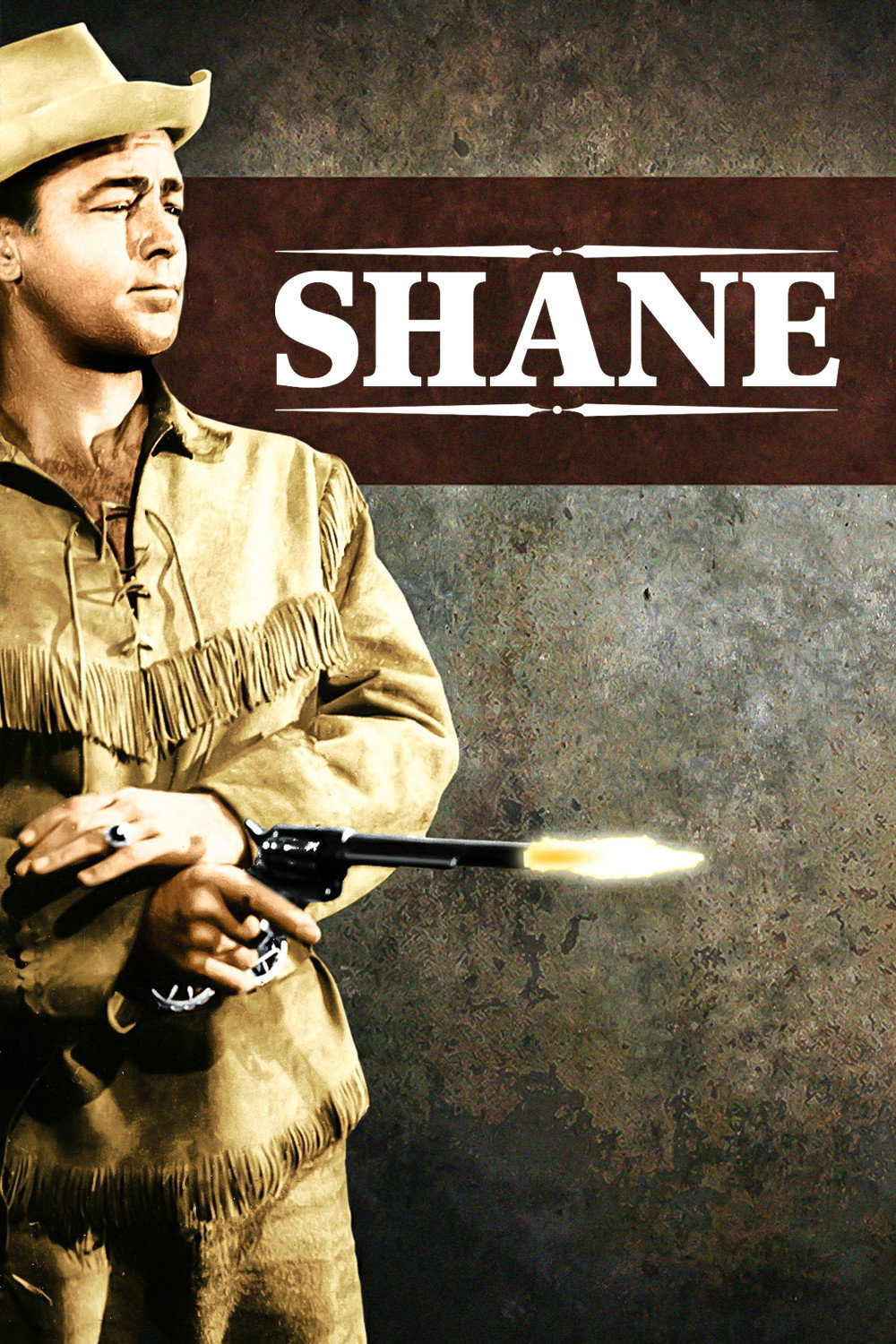
Long before I ever set foot in Wyoming, the windblown loneliness of “Shane” made me feel what it means to belong nowhere and everywhere at once. George Stevens’ masterpiece lingers in my imagination less as a Western than as a haunting meditation on the price of virtue, the ache of impermanence, and the American longing for a just world that never quite arrives.
The Arrival of Shane: An Outsider’s Unbearable Gravitas
I’ve always found Shane’s introduction deeply unsettling in its simplicity. The way Alan Ladd rides out of the valley haze—quiet, alert, almost spectral—immediately signals that his presence will disrupt what little peace this world can claim. Shane is both real and mythic, a figure sculpted by the land as much as by his past. His silence, his gentleness with Joey, and the wary distance he maintains with the Starretts hint not merely at a man running from violence but at a soul exiled by the very skills that define him.
There’s something extraordinary in how Stevens frames Shane’s first moments among the homesteaders. The camera lingers on the smallness of the Starrett homestead, the fragility of their fences and crops, and the way Shane seems to shrink, almost apologetically, when forced to draw his gun. It’s as though the film itself wants me to feel the way the outsider’s identity is a threat even when it arrives with open hands.
The Edenic Valley: Home as Both Yearning and Illusion
What strikes me in every viewing is Stevens’ vision of the Wyoming valley—a paradise poised perpetually on the brink of loss. The sweeping vistas, lit with a painter’s care, echo not just the beauty but the vulnerability of the homesteaders’ dream. The valley is less a setting than an Eden teetering on the edge of biblical exile, a place where everyone knows the snake is coming but dares hope it will pass them by.
Stevens’ camera lingers lovingly on domestic moments: Marian tending the garden, Joey’s laughter, Joe Starrett building fences. Each scene pulses with a tenderness that feels inseparable from its transience. The film suggests that home is always a project, always unfinished, and always at risk. Shane’s very presence—gentle though it is—brings the threat and promise of change. The valley, for all its beauty, is an arena for struggle—a crucible where innocence cannot last.
Violence as Original Sin: The Ghosts in Shane’s Eyes
Every time Alan Ladd looks into the distance or quietly refuses to speak of his past, I sense the film’s central ache: violence is both the tool by which order is imposed and the original sin that stains any paradise. Shane is haunted not simply by what he’s done, but by what doing it has made of him. His eyes, so gentle with Joey, darken with memories he cannot voice. I see in his silences a sorrow that runs deeper than lawlessness—a sorrow for the cycle of violence that marks the West, and which follows him like a shadow.
What I find most powerful is Stevens’ refusal to glamorize violence, even as he crafts some of the genre’s most iconic gunfights. When Shane finally confronts Jack Wilson, it’s not a moment of triumph but of tragic necessity. Every pull of the trigger is laced with loss. The film’s gunplay is quick, brutal, and disorienting, the violence never cathartic but instead a reminder that even heroes are stained by blood.
Masculinity and the Tragic Cost of Virtue
I’m often struck by how “Shane” interrogates American ideals of masculinity, not in the brash swagger of its protagonist but in the quietly tormented hearts of its men. Joe Starrett is the archetype of the honest man—loyal, strong, and gentle with his wife and son. Yet, the film makes clear that this goodness is defenseless in a world where brute force still sets the terms. Starrett needs Shane, not because he’s weak, but because his virtue lacks the violence needed to survive the frontier.
Shane himself is caught in a bind. He’s a man whose very ability to do violence isolates him. The film mourns the chasm between the hero’s sacrifice and the ordinary happiness he can never reclaim. The ultimate cost of Shane’s virtue is alienation—he can protect the family, but never join it. His love for Marian and Joey is selfless, yet it ensures his departure, confirming that the hero is always an outsider in the world he saves.
Marian Starrett: The Heartbeat of Longing
Jean Arthur’s Marian Starrett is the soul of the film. I return again and again to her scenes, watching for the tremors of longing and restraint that pass between her and Shane. Marian embodies the ache at the center of the story: the desire for safety, love, and a peace that seems always just out of reach. Her connection with Shane is never spoken, yet the yearning laces every glance, every half-finished sentence.
The film’s moral center rests on Marian’s refusal to surrender to fantasy. She sees Shane as both savior and threat, a promise of something more and a reminder of everything she cannot have. The kitchen table, the garden, the shared labor—these are the sites of her quiet strength, and yet they are also the battlegrounds for her own dreams. The cost of survival in “Shane” is the sublimation of desire to duty, the bittersweet sainthood of those who stay behind.
Joey’s Gaze: Innocence Watching the Fall
Brandon De Wilde’s Joey is not just a child but the audience’s surrogate—a pair of wide eyes bearing witness to the world’s harshness. Through Joey, I feel the mythic weight of Shane’s presence, the allure and danger of hero worship, and the shattering moment when innocence collides with mortality. The film’s most iconic line, “Shane, come back!”, rings in my ears as a plea not just for the man but for the lost hope of a world where violence can be outgrown.
What haunts me is the knowledge that Joey’s awe contains within it the seeds of adulthood’s disillusionment. The valley will be safe for a season, but Joey now knows what lies beneath the surface—he’s seen the price paid for peace. Stevens’ genius lies in letting this moment of loss hang unresolved, the camera refusing any easy redemption. Joey’s final cry is a benediction and a lament, echoing across the empty land like the last sigh of a passing dream.
The Tattered Banner of the American Myth
I cannot watch “Shane” without feeling the weight of America’s founding myths pressed into every frame—the lone gunman, the innocent frontier, the belief that violence can be redemptive. And yet, Stevens interrogates these myths with a gentle but relentless skepticism. The film both mourns and dismantles the fantasy that heroes can save us without destroying themselves. The West, as “Shane” reveals it, is less a place than an idea, and that idea is forever compromised by the realities of blood and loss.
In every windswept shot, in every gunfight filmed with mournful distance, Stevens asks us to reckon with the costs of our myths. The dream of the West is inseparable from exile. Even as the film lights its valley with the glow of hope, it shrouds its hero in the dusk of solitude. “Shane” lingers because it refuses false comfort; it dares to let the legend ride away alone, forever out of reach.
Visual Poetry: Stevens’ Chiaroscuro of Hope and Despair
I am continually astonished by George Stevens’ visual language in “Shane”. The interplay of light and shadow, the way figures are dwarfed by towering mountains, and the delicate focus on simple gestures—every frame is a meditation on fragility and resilience. The use of color, rare for Westerns of the era, infuses the landscape with both warmth and threat. Stevens paints the West not as an empty promise but as a living, breathing place—one capable of both nurturing and destroying those who seek to claim it.
The film’s editing punctuates stillness with violence, amplifying the shock of each eruption. Yet, even in moments of brutality, there is an abiding grace—the soft fall of dust, the trembling of a hand, the long walk away from the camera. “Shane” teaches me that true heroism is measured by what remains unsaid, by the shadows that lengthen as the sun goes down.
The Enduring Ache: Shane’s Legacy and Emotional Afterlife
Each time “Shane” ends, I am left with a sensation not of closure, but of aching absence. The hero rides away, not triumphant but spent, his sacrifice unrecognized by all but a child. The valley is safe, for now, yet the cost is irretrievable. “Shane” endures because it refuses to resolve the contradictions at its core: the necessity of violence, the impossibility of innocence, and the loneliness of virtue.
I return to this film not for answers, but for the way it frames questions—about justice, belonging, and the limits of the self. Its melancholy beauty is inseparable from its realism, and its mythic resonance grows deeper with each passing year. In the final shot, as Shane recedes into the twilight, I feel the lingering ache of all our American stories: the longing for a world where goodness alone is enough, and the knowledge, whispered on the wind, that such a world will always be just out of reach.
A Pair of Kindred Journeys
- “The Searchers” (1956)
- “High Noon” (1952)
If you’re curious about how this film was originally perceived or how it compares to similar works of its era, these resources may be helpful.
🎬 Check out today's best-selling movies on Amazon!
View Deals on Amazon