
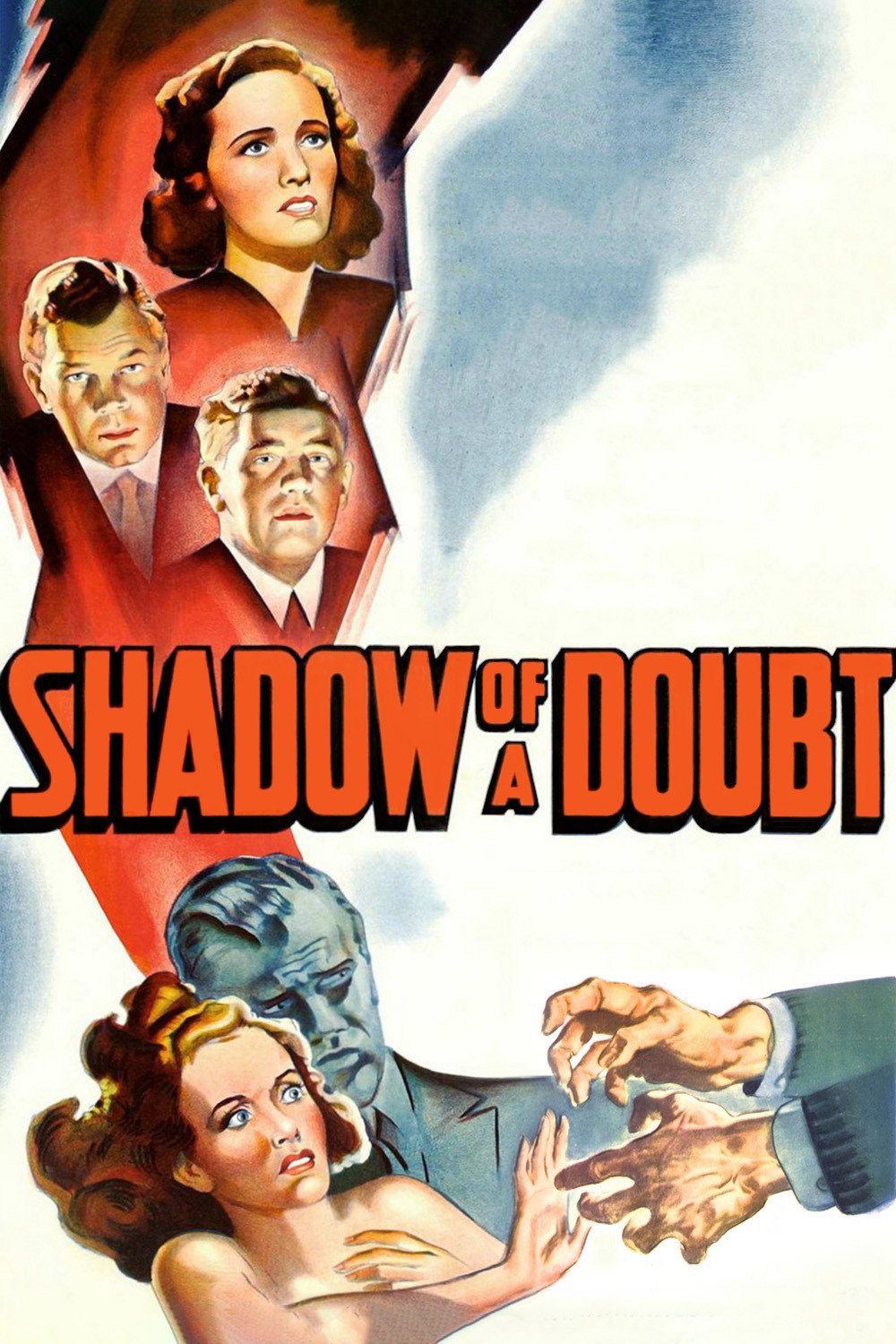
It was on a restless evening—one where I needed the comfort of classic cinema and the edge of a psychological mystery—that I found myself drawn back into the shadow-choked world of “Shadow of a Doubt.” Decades after its 1943 release, the film continues to grip me with its unwavering tension, unsettling ambiguity, and the haunting ambiguity of its characters’ moral lives. Each revisit feels freshly unnerving; Hitchcock’s small-town America now seems less like an archetype of safety and more like a crucible of hidden menace. What fascinates me most isn’t just the film’s technical grandeur, nor its celebrated suspense sequences—but the way it turns a cozy home into a nest of poison, and familial devotion into an existential trial. In large part, this personal connection is why “Shadow of a Doubt” remains one of Hitchcock’s most psychologically wrenching works in my eyes: it mirrors the corrosive effects of doubt not just on the mind, but on the very fabric of relationships I hold dear.
Unraveling the Cozy Quilt: When Family Becomes a Battleground
At its core, “Shadow of a Doubt” is about the emotional tightrope walked by young Charlie Newton—her journey from wide-eyed innocence toward a shattering, adult knowledge, all under the chilling gaze of her beloved Uncle Charlie. The film opens on a note of domestic tranquility and immediately sows a subtle unease: young Charlie almost wills her enigmatic uncle into her family’s home, desperate to disrupt the monotony of provincial life. This naive longing is quietly profound. As I watch, I’m reminded of my own restless hungers, the times I yearned to shake up my existence, only to discover that change comes with unforeseen cost.
Hitchcock exploits this personal territory ruthlessly. The centerpiece of the emotional conflict is young Charlie’s gradual realization that her uncle—the family’s charming anchor—may be a murderer. This betrayal is less about criminality and more about existential horror: if our own flesh and blood can harbor such secrets, what does that say about the strength of our connections or the reality of evil? The emotional torment wrought by this discovery is palpable. I identify with her paralyzed disbelief, her desperate clinging to denial, and finally, her reluctant courage. The film is as much a lamentation for lost innocence as it is a masterpiece of suspense.
The Poison Beneath the Curtains: Reflections on Evil, Innocence, and Gender
Each time I revisit “Shadow of a Doubt,” I’m struck by its ongoing relevance—and its deft navigation of themes about evil’s mask of normalcy. Hitchcock was working in wartime America, a moment when anxieties about unseen threats were woven into every headline. Uncle Charlie’s presence in tranquil Santa Rosa is an allegory for the toxicity lying dormant beneath the surface of everyday life. In 1943, these ideas resonated with an audience trying desperately to reconcile the horrors of war with their trust in neighbors and kin. For me, the film endures because that dread never truly dissipates; our contemporary world is equally rife with hidden menace, whether literal or psychological.
I have always seen the film’s gender politics as subtly radical. The journey belongs not to a bumbling detective, but to a young woman whose moral clarity outpaces the men around her. Young Charlie’s confrontation of her uncle is not just a familial reckoning, but a challenge to patriarchal authority and blind trust. Even today, when women’s warnings about danger are still too often dismissed, her journey reads as a searing, contemporary parable. That Hitchcock does this without ever exploiting his heroine’s trauma—favoring ambiguity and psychological realism over sensationalism—is one of the film’s greatest strengths.
Through Lace and Light: Visual Echoes of Corruption
Perhaps more than any other Hitchcock film, “Shadow of a Doubt” invites me to dwell on its visual language as a conduit for unease and foreboding. Even from the first scene, the motif of darkness spreading across the sunlit town sets the tone. Santa Rosa is a world of clean, open spaces, yet Hitchcock inserts shadows—sometimes literally, as with the inky rooms and dimmed parlors, and sometimes figuratively, in the twitch of a curtain or the way Uncle Charlie clutches a keepsake too tightly.
Recurring symbols abound. The “Merry Widow Waltz,” played on loop, both serenades domestic life and underscores its potential for horror. The train that brings Uncle Charlie into town is a phallic avatar of violence and intrusion, billowing smoke over the clapboard houses. I catch myself shivering at the recurring shots of staircases—how they function both as divides between generations, and as thresholds between safety and vulnerability. Each time, the film reminds me that terror doesn’t swoop—it seeps, infecting the routines of home, family, and memory.
Moments That Shattered My Composure: An Anatomization
Breakfast of Disquiet
The morning after Uncle Charlie’s arrival—ostensibly a scene of familial warmth—transforms under Hitchcock’s lens into a master class in psychological tension. Here, Charlie’s mother fawns over her favorite brother, oblivious to the brittle undercurrents passing between young Charlie and her uncle. The camera lingers on the innocent-seeming gift of a ring—a token whose sinister provenance gnaws at Charlie’s conscience. Watching this, I feel a distinctly personal discomfort: how many times have I witnessed a table where every gesture hides a secret?
Carousel of Confessions
Midway through the film, Hitchcock stages an unforgettable scene in a local bar—the one place where Uncle Charlie allows his mask to slip. In a rare moment alone, he regales his niece with his venomous worldview: a misanthropic screed against “useless women” that shocks for its candor and cruelty. This is where the magnitude of his darkness is most naked, and the bubble of home truly bursts. I recall the first time I saw it—how the dialogue’s venom felt like a direct assault. It’s a reminder that evil, for Hitchcock, isn’t always eloquent; sometimes it’s just brutally banal.
The Last Dance on the Train
The culminating struggle, staged on a moving train, is a marvel of Hitchcockian clarity. As young Charlie battles Uncle Charlie, the tension feels both mechanical and mythic: two halves of a broken soul wrestling for supremacy. The train’s forward motion, the strobing lights, the desperate grasp for survival—for me, this is not just a suspense climax but a dramatization of moral awakening. The violence is almost matter-of-fact, but the consequences are seismic. Afterward, when young Charlie stands in the sunlight, I am left mourning her loss of innocence and marveling at her resolve—a closing note that stings with ambiguity rather than triumph.
Between Consensus and Unease: Rethinking Classic Readings
Much of the critical discourse around “Shadow of a Doubt” crowns it as the moment Hitchcock perfected the art of “the threat from within,” a departure from villains lurking outside to those seated across from us at dinner. I agree with this assessment, but I’ve always felt that mainstream readings often overlook the film’s psychological generosity. Critics, so enraptured by Hitchcock’s formalism, sometimes ignore the depth and compassion with which he draws his female lead. Young Charlie isn’t merely a stand-in for the audience’s horror; she becomes, for me, a figure of real moral bravery and emotional complexity.
Another prevailing interpretation frames the film as a commentary on American denial—the tendency to overlook signs of rot in favor of preserving communal peace. While this resonates, I’m consistently more moved by the film’s portrait of kinship as both sustenance and threat. There’s an emotional honesty—an admission that love itself can become corrosive when corrupted by secrets. To me, this felt more searing than any social allegory Hitchcock may have intended.
Other Portraits of Innocence Frayed
- Blue Velvet: David Lynch’s vision of suburban evil mirrors Hitchcock’s sense of dread-infused normalcy.
- Stoker: Park Chan-wook’s psychological thriller is a clear descendant, centering on a young woman and her sinister uncle.
- Night of the Hunter: Charles Laughton’s poetic horror dives into the terror lurking within trusted figures.
- Picnic at Hanging Rock: Peter Weir’s dreamy masterpiece explores innocence lost and the chasms beneath idyllic facades.
Carrying the Shadow Forward
Watching “Shadow of a Doubt” in the present is an act of submitting to discomfort—a test of how much unease I can bear in a world where threats rarely announce themselves. But it also rewards me with the pleasure of seeing suspense shaped by elegance rather than excess, and of encountering a heroine whose journey feels endlessly contemporary. There remains, for me, a kind of strange comfort in Hitchcock’s refusal to banish ambiguity. The shadow lingers not only over Santa Rosa, but over any gathering of people who believe they truly know one another.
If you found value in my perspective on Hitchcock’s domestic nightmare, consider exploring similarly rich studies of secrecy and suspense in “Rebecca” or “The Third Man.”
To broaden this interpretation, you may also explore how critics and audiences responded over time.
🎬 Check out today's best-selling movies on Amazon!
View Deals on Amazon