
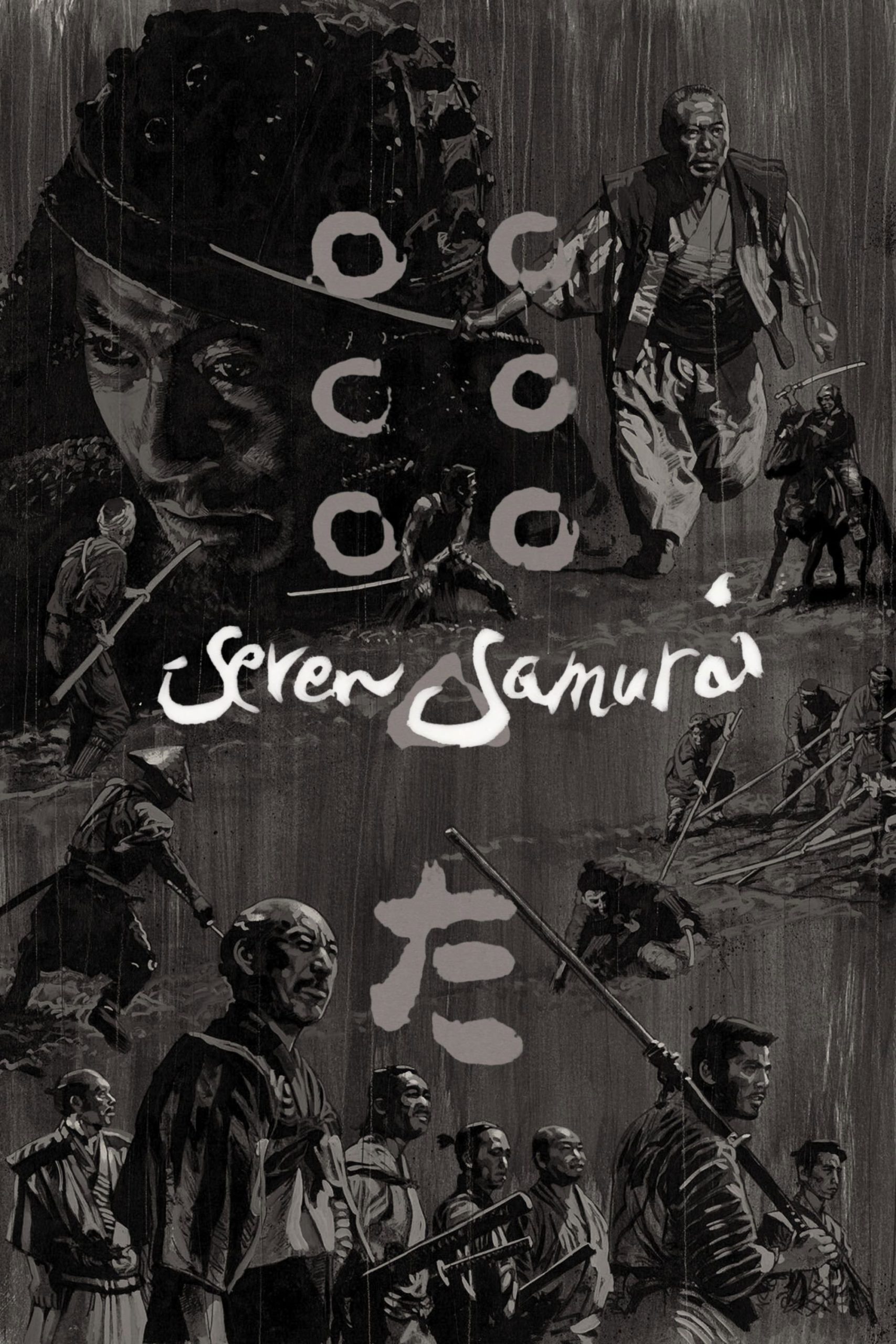
From the first drumbeats echoing across impoverished farmlands, I found myself swept into a world where honor, desperation, and survival entwine in endlessly moving cycles. As I watched Seven Samurai, I felt every frame pulse with the kind of urgency that transcends genre, warping the feudal Japanese setting into a timeless meditation on the essence of duty and the cost of hope.
The Fields as Battlegrounds of the Human Spirit
The battered rice paddies in Seven Samurai are much more than backdrops for bloodshed; to me, they serve as living metaphors for the lives of the villagers and the samurai alike. The land itself becomes a stage for existential struggle, with every furrow in the earth echoing the scars on the souls of those who choose to defend it. I see in these fields a reflection of the collective trauma and resilience of humankind—where sowing and reaping are as fraught with uncertainty as life and death.
Kurosawa lingers on shots of peasants hunched over, toiling in silent unity, and the samurai navigating the muddy terrain with a mix of pride and weariness. Here, the distinction between “warrior” and “farmer” blurs: both are defined by toil, sacrifice, and the shadow of mortality. The storms that sweep over the village aren’t just meteorological—they’re emotional, marking moments where hope seems as fleeting as a clear sky. I can’t help but feel that the earth absorbs not just blood and sweat but also the collective longing for a better tomorrow.
The Unwritten Code: Honor Reimagined
Watching Kambei, the wise and world-weary leader, shave his hair and don a monk’s appearance to save a child early in the film, I see an act that both subverts and elevates the samurai code. Kurosawa unravels the mythology of the samurai, stripping away the armor of legend to expose men grappling with doubt, empathy, and the crushing weight of their choices.
The film’s approach to bushido is neither reverent nor dismissive; instead, it interrogates what it truly means to wield power on behalf of the powerless. I am struck by the way the samurai debate, hesitate, and ultimately decide to fight not for glory or riches—since their only payment is rice—but for the sake of righteousness. Honor here is rewritten as something visceral and deeply personal, a matter of conscience rather than class or clan. This subversion is what lends the sacrifice of the samurai such poignancy: their heroism is born of choice, not obligation.
The Ensemble: Quiet Revolutions in Individual Souls
Seven distinct personalities, each with their own scars and desires, create a living tapestry of heroism and vulnerability. I find Katsushiro, the idealistic and naïve youth, particularly moving in his journey toward maturity and heartbreak. Kikuchiyo, played with kinetic brilliance by Toshiro Mifune, is the soul of contradiction—part clown, part tragic figure.
Kikuchiyo’s secret—that he is not a samurai by birth but by will—cracks open the film’s central question: Who gets to claim dignity in a world defined by hierarchy and suffering? His rage, humor, and drunken outbursts are not merely comic relief but desperate pleas for recognition from both samurai and peasants, whose worlds he straddles. I can’t help but see his final stand as an act of defiance against the very structures that should exclude him.
Each samurai is rendered with such psychological complexity—no one is a mere archetype. Gorobei’s pragmatism, Kyuzo’s silent mastery, Heihachi’s gentle optimism: these traits are not just narrative flavors but essential components of the group’s unity and tension. The film’s power lies in its ability to make the heroism of these men feel both extraordinary and achingly ordinary.
Cycles of Violence and the Price of Salvation
Throughout the film, I find myself haunted by the cyclical nature of violence. The bandits return year after year, as inevitable as drought or famine. The villagers’ desperation to break the cycle leads to their alliance with the samurai, but even victory is laced with sorrow.
Kurosawa refuses to offer easy triumph—every victory is paid for in blood, and every sacrifice is tinged with ambiguity. The deaths of several samurai, each marked with quiet dignity, reinforce the profound truth that meaningful change always demands loss. The rain-soaked final battle, with bodies falling in mud and chaos, stands as one of the most visceral depictions of war I’ve ever witnessed. The cost of salvation, Kurosawa suggests, is often borne by those who can never truly share in its rewards.
I sense in these cycles a comment on the human tendency to revert to violence even in pursuit of justice. The villagers, initially terrified and passive, become warriors by necessity, and I see in this transformation both empowerment and tragedy. The line between victim and perpetrator blurs, exposing the troubling reality that violence, once unleashed, reshapes all who wield it.
Artistry Forged in Weather and Movement
I’m continually struck by Kurosawa’s mastery of compositional movement and elemental spectacle. The battles unfold not just between men but also against wind, rain, and earth itself. The camera rarely stands still, tracking the relentless energy of conflict and the fleeting moments of camaraderie.
Rain becomes a motif of purification and mourning. The elements serve as silent witnesses, transforming combat into ritual, and loss into myth. Kurosawa’s editing—his use of wipes, sudden cuts, and overlapping action—creates a sense of rhythm that mirrors the pounding anxiety of survival. The choreography of chaos, with horses careening and blades flashing, is as much about the confusion of war as its horror. I sense in every frame a director striving to capture the full spectrum of human experience, from the intimacy of shared laughter to the terror of impending death.
The soundscape—drums, shouts, and the keening wind—heightens the communal pulse that binds samurai and villagers. Silence, too, is weaponized: the quiet before an ambush, the hush after a death, these moments resonate with a gravity that dialogue alone could never convey.
The Peasants’ Paradox: Gratitude and Resentment Intertwined
I find one of the film’s most heartbreaking undercurrents to be the uneasy alliance between the samurai and the villagers. The villagers’ fear, suspicion, and even occasional betrayal remind me that such alliances are never uncomplicated. The very men who protect them are also potential oppressors, reminders of a social order designed to keep the peasants subservient.
The mutual dependency between samurai and villagers is laden with mistrust—gratitude is always tinged with anxiety. I am moved by the sequence in which arms are discovered in the villagers’ possession, revealing that these same people had robbed fallen samurai in the past. This revelation does not prompt simple condemnation or forgiveness. Instead, it forces both groups to recognize their shared vulnerability and the compromises survival demands.
When the battle is done, the villagers return to their fields, their songs rising over the graves of the samurai. This return to routine is not an act of ingratitude but a means of survival—a way to reclaim agency in a world that rarely offers security. The samurai, for all their heroics, are outsiders; their victory is ultimately hollow, their legacy unclaimed. Watching Kambei gaze across the burial mounds, I sense his profound alienation, a recognition that true salvation belongs to those who endure, not those who save.
Kurosawa’s Ethical Labyrinth: Complexity without Cynicism
What I treasure most about Seven Samurai is its refusal to indulge in cynicism, even as it acknowledges the darkness of its world. Kurosawa presents heroism and compromise as inseparable, and suggests that true nobility lies not in perfection but in persistence.
The film’s ambiguity does not lead to despair but to a deeper, more compassionate understanding of humanity. Samurai and peasants alike must adapt, fail, and forgive. The possibility of change exists not in grand gestures but in the incremental effort to resist cruelty, to band together in the face of overwhelming odds. Redemption is partial, victory incomplete, and yet the act of striving itself carries an undeniable dignity.
For me, this ethical complexity is what elevates the film to greatness. Every character is allowed moral contradiction; every triumph is shadowed by loss. The world Kurosawa creates is not one of absolutes, but of agonizing choices—where empathy is hard-won and fleeting, yet all the more precious for it.
Legacies in Shadows: The Enduring Influence of Sacrifice
As the final shots linger on the graves of the fallen, I am left contemplating the question of legacy. The samurai’s sacrifice is not enshrined in monuments or history books, but in the continued existence of those who survive. The villagers’ songs are both requiem and celebration: life goes on, indifferent to heroism, marked by the quiet persistence of the living.
I see in this ending a meditation on the ephemeral nature of meaning itself. Deeds of valor may fade, but their echoes reverberate in the mundane rituals of everyday life. The samurai, for all their prowess, are transient; the earth endures. True immortality, Kurosawa seems to suggest, lies not in glory but in the lives preserved, the fields replanted, the hope renewed—however tentatively—by each new generation.
Further Viewing: Two Timeless Journeys of Sacrifice and Hope
- Ikiru
- The Magnificent Seven
If you’re curious about how this film was originally perceived or how it compares to similar works of its era, these resources may be helpful.
🎬 Check out today's best-selling movies on Amazon!
View Deals on Amazon