
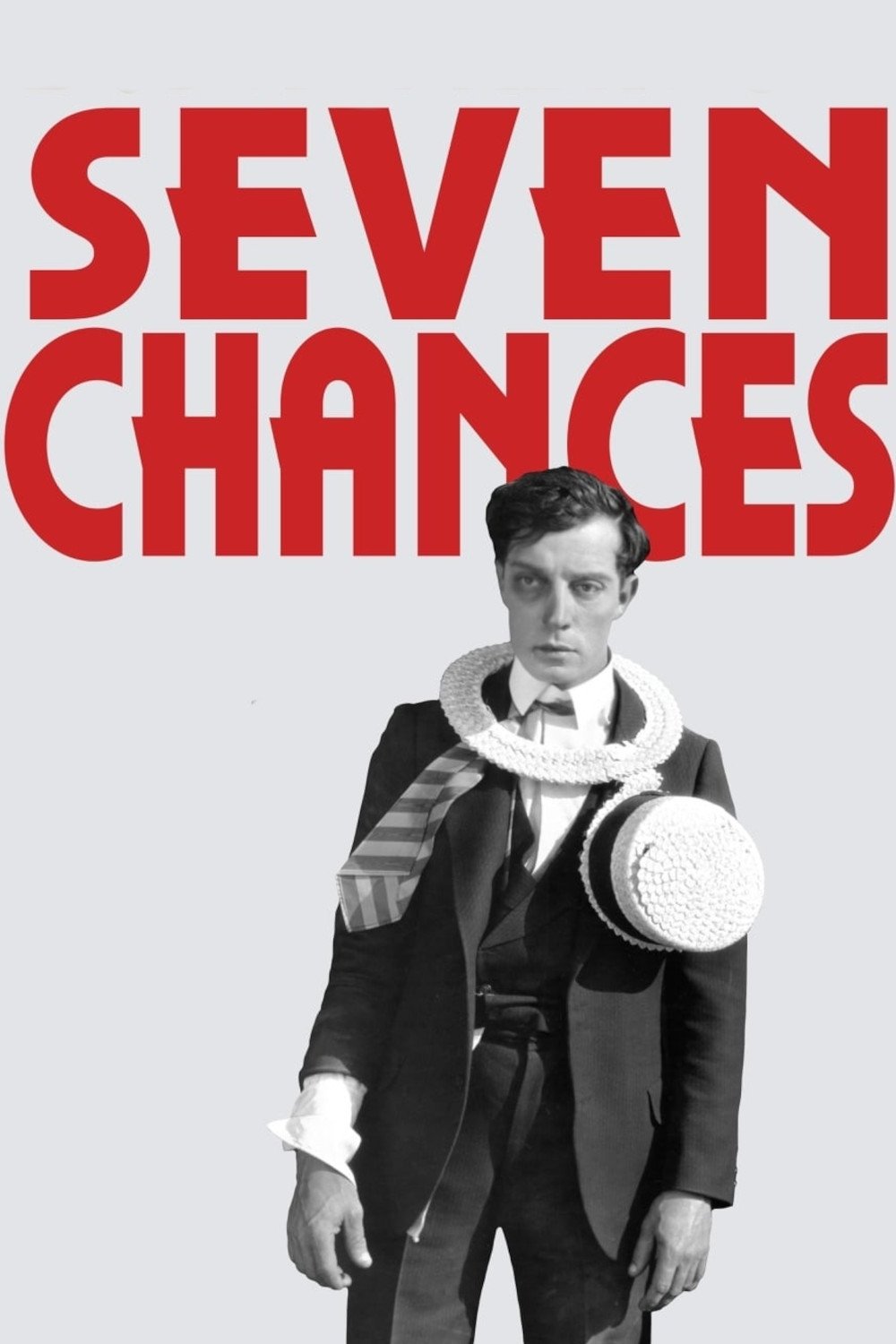
I’ve lost count of how many times I’ve been reminded, in everyday life, of that singular feeling when a plan veers inexorably off course. This sensation—part panic, part exhilaration, with a dash of absurdity—found its purest cinematic expression for me the first time I watched “Seven Chances”. I was barely past adolescence, tracing the outlines of adulthood, when I encountered Buster Keaton’s flailing, dust-streaked protagonist. I recognized in his struggle a strange kinship: an anxious dance with time, societal expectation, and luck. What struck me deepest, though, was how Keaton transformed such raw vulnerability into orchestrated comedy, never letting the audience forget the heartbreak seeded beneath the spectacle. In watching “Seven Chances”, I both laughed at and squirmed with the hero’s predicament—and found in the film’s chaos a lens for the mess of my own ambitions and anxieties.
Stumbling Toward the Altar: A Frenzied Hunt for Happiness
If forced to distill the central arc of “Seven Chances” into words, I’d name it not merely a comic race against the clock, but a frantic pursuit of acceptance—by society, by lovers, and by the self. At its core is Keaton’s Jimmy Shannon, told he must wed by 7 p.m. on his 27th birthday to inherit a formidable fortune. I’ve always felt that the inheritance represents more than dollars; it’s a tangible symbol of belonging and security that feels, especially during one’s insecure twenties, crushingly contingent on meeting societal benchmarks.
What begins as a poised opportunity soon nosedives into chaos. Jimmy fumbles an abrupt proposal to his beloved Mary, then, in desperation, embarks on a humiliating parade of alternative bachelorettes. The emotional journey here is one I find deeply universal: that overwhelming urge to fulfill an external expectation (a deadline, an inheritance, a marriage) even as the heart stutters with uncertainty. The mounting desperation as the sun slants lower recalls the most humiliating moments in my own life, those times when dignity is drowned by necessity. Keaton’s brilliance is to pour all of this into slapstick—so exuberant it nearly overrides the pathos, but never quite erases it. Watching Jimmy’s ordeal is to watch a man discovered by panic, his genuine yearning occasionally visible beneath the surface performance.
Timing, Tango, and the Tyranny of Expectation
“Seven Chances” pivots on one of modernity’s oldest dilemmas: What does it mean to win approval, to be deserving of love, and to make good on opportunity? Social pressure looms like storm clouds over Jimmy, crystallized in the absurd legalistic stipulation that binds his fate to a deadline. In 1925, the film’s premise—a man required to marry swiftly in order to gain security—would have resonated as both farce and a pointed satire of marriage-market conventions. The idea that life’s major transitions are best orchestrated on someone else’s schedule, for reasons misaligned with the heart, satirizes (while slyly reinforcing) the rituals of courtship and maturity.
Encountering this nearly a century later, I was struck by how the theme persists. The anxiety about meeting life’s time-stamped expectations—now more likely to manifest as career, relationship status, or financial milestones—remains unchanged. Keaton’s Jimmy is at once a specific archetype and a stand-in for anyone ever scrutinized for failing to live on schedule. Watching his parade of disastrous proposals, I relived my own brushes with deadlines not entirely my own—a trembling anxiety that is as much about disappointing oneself as about failing others.
But I also find a sly optimism beneath the biting satire. The film is less cynical than it is deeply attuned to the discomforts and compromises of social adulthood. Jimmy’s hopeful awkwardness, his repeated stumbles and recoveries, are a tribute to the ordinary human urge to belong—even, or especially, when the path there is ridiculous.
Rocks, Roses, and Recklessness: Keaton’s Visual Language
Buster Keaton was, to my mind, among the earliest directors to turn the motif of pursuit into something almost mythic: kinetic, relentless, inescapably funny. The rockslide sequence alone became an instant metaphor for how comedy can teeter on the edge of violence or disaster. The visual motif of overwhelming, unrelenting forces (often literalized as crowds of veiled brides or tumbling boulders) is repeated throughout the film, translating Jimmy’s internal panic into palpable danger.
The recurring visual of clocks—pendulums swinging, watches scrutinized—anchors the film’s tension in time. I’ve always admired how Keaton makes the audience count the minutes with him, every tick another drumbeat for the absurd quest. Even the imagery of flowers, most notably the blue bouquet that signals the moment Jimmy realizes his true feelings for Mary, serves as a visual shorthand for sincerity thrust into a narrative otherwise dominated by desperation. These motifs aren’t mere decoration; they become the scaffolding of comedy, reinforcing that all-consuming anxiety with sly repetition.
Yet, amidst the chaos, Keaton never relinquishes control of tone. Physical obstacles repeatedly mirror emotional ones: every rolling stone or crowd is a manifest expression of internal confusion. It’s that rich unity of form and content that makes the film endure as both visceral entertainment and poetic statement.
Moments That Define Mayhem: Three Scenes I Can’t Shake
The Floundering Proposal
Early in “Seven Chances,” Jimmy’s attempt to propose to Mary is as painful as it is hilarious. In its awkwardness, I felt washed over by a kind of secondhand embarrassment. There is no orchestration, no romance—just a man cursed by circumstance, unable to speak plainly the very words that could save him. This scene encapsulates, for me, the profound gap between true feeling and the pressures that distort it. Keaton’s blank, blinking performance underlines how love gets mangled by deadlines and preconceptions, reminding me how often genuine emotion is stifled by nervous timing.
The Church Wedding Stampede
The film’s defining comic set-piece arrives when a miscommunication leads to dozens of would-be brides converging upon the church to marry Jimmy and claim the fortune. Watching Keaton maintain composure amid this growing, surreal throng is one of cinema’s great feats of comic escalation. I’m always struck by how rapidly a private crisis becomes public farce. Panic radiates outward from Jimmy, infecting everyone around him. As the camera pans across veils and bouquets, I sense both the ridiculousness and the unavoidable sense of doom encompassing Jimmy—now physically chased by the future he dreads.
The Tumbling Boulder Gauntlet
Arguably the most iconic moment, Keaton’s mad dash down a hillside—dodging countless boulders released in his wake—is a sequence that fuses suspense and slapstick with unprecedented elegance. Each rolling rock is a stand-in for mounting obstacles, each near miss a physical echo of emotional whiplash. This is more than spectacle: it’s a pure, unfiltered expression of spiraling urgency, a scene in which comedy teeters on the edge of outright disaster. I recall being enthralled by the single-minded energy, by the meticulous choreography, and by the film’s brave willingness to risk both its hero’s body and our sense of safety for the sake of revelation.
Tradition, Satire, and My Take on Keaton’s Intentions
Many traditional readings of “Seven Chances” position it squarely within the American romantic farce, emphasizing Keaton’s deft hand at slapstick and his inventive use of mise-en-scène. Critics routinely laud the technical innovations of the chase sequence and the film’s playful undermining of courtship rituals. For some, Keaton’s acceptance of Mary at the end reads like a restoration of sincerity—comedy as a roundabout journey toward true love’s reward.
Personally, I see the conclusion less as tidy closure than as an ambiguous sigh of relief, as if both Jimmy and Mary (and, by extension, the audience) are grateful simply that the panic has abated. Keaton seems most interested in the struggle itself: in depicting how we contort ourselves to fit expectations, and how easily even our best intentions are swept away by circumstance and crowd. I have never been wholly convinced that the film advocates for the institution of marriage (or the inheritance of wealth) so much as it exposes—with sly sympathy—the sheer absurdity of letting those ambitions dictate the terms of our joy.
Where many see triumphant romance, I see—more tellingly—a liberating collapse of anxiety, a fleeting moment when private longing is reconciled with public performance. It’s not so much happily ever after as finally, mercifully, allowed to rest.
Kindred Spirits in Chaotic Comedy
- The General (1926): Another Keaton masterwork, where romantic pursuit and chaotic physical comedy drive a narrative both sweeping and intimate.
- It Happened One Night (1934): Frank Capra’s screwball classic, in which the pressures of circumstance and love under duress echo many of Keaton’s satirical concerns.
- Some Like It Hot (1959): Billy Wilder’s gender-bending chase narrative, rife with confusion and societal expectation, recalls Keaton’s feverish comic pace.
- The Graduate (1967): Mike Nichols’s film, with its anxious protagonist chased by a different set of social expectations, taps into the same undercurrent of existential dread masked by comedy.
Why the Race Still Resonates
When I watch “Seven Chances” now, I’m reminded that some forms of anxiety and yearning are perennial. The film’s blend of visual bravado and emotional flusteredness may feel like an artifact of silent comedy, but its core—the scramble to define oneself in relation to a merciless clock and unyielding tradition—has lost none of its bite. For anyone ever haunted by deadlines or by their own earnest blunders, the film is an irresistible salve and reckoning. Keaton’s brilliance isn’t only in the intricacy of his gags, but in his empathy: a rare, tactile understanding of just how easily the quest for acceptance can unravel into glorious, harrowing chaos.
I return to “Seven Chances” not just to marvel at physical comedy, but to be reminded—again and again—of the absurd dignity to be found in the chase, the immense relief when it finally ends, and the simple truth that we all, in our moments of panic, are not so different from Jimmy Shannon after all.
If Keaton’s Mayhem Spoke to You…
If you found value in my perspective here, you might also enjoy my takes on “The Freshman” and “Safety Last!”—both mining fertile territory at the crossroads of romance, social anxiety, and comedic innovation.
To broaden this interpretation, you may also explore how critics and audiences responded over time.
🎬 Check out today's best-selling movies on Amazon!
View Deals on Amazon