
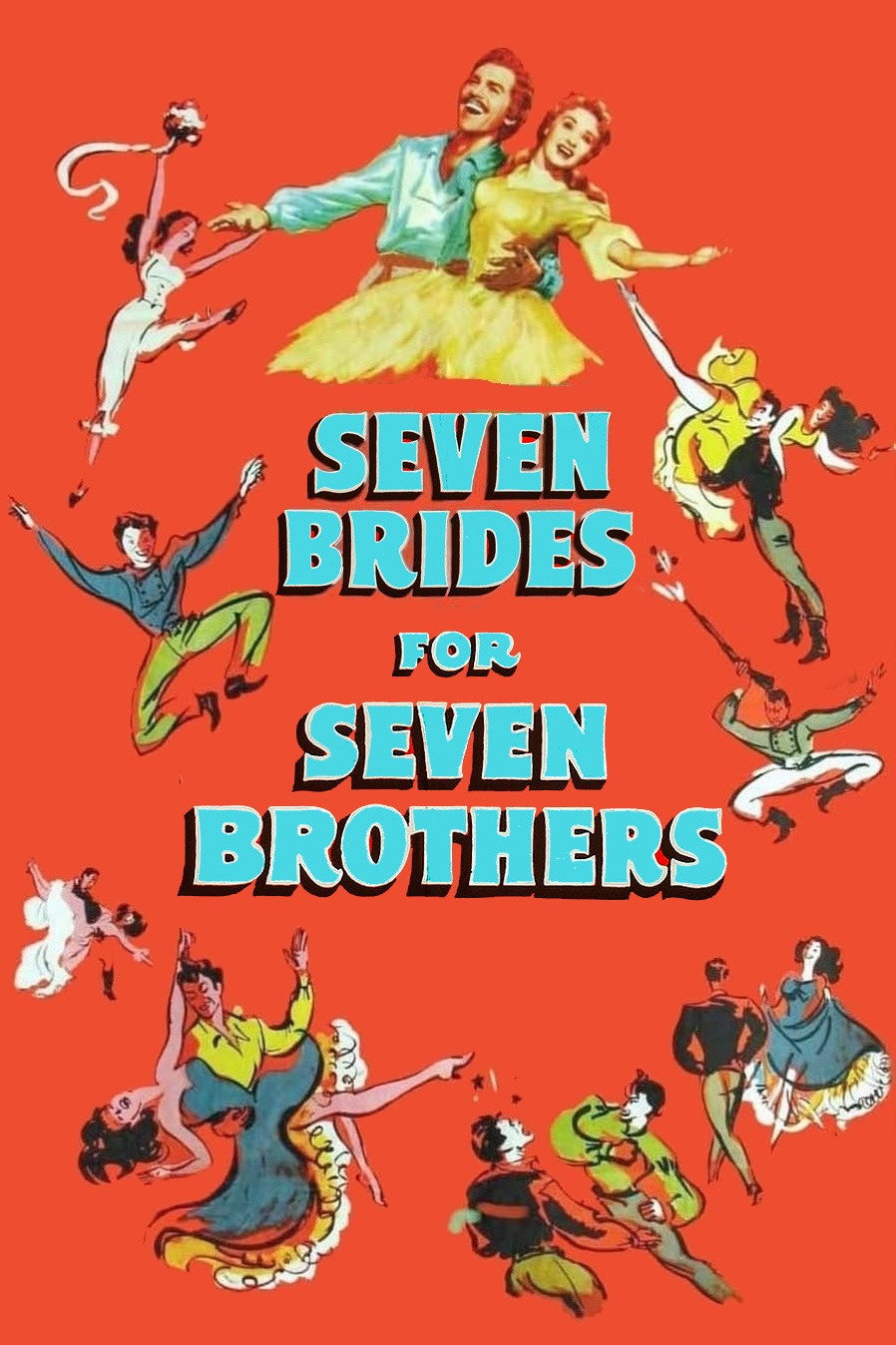
When I first watched “Seven Brides for Seven Brothers,” I was overwhelmed by its explosion of color, song, and movement, but beneath its vibrant musicality, I found myself unraveling knotty threads of rebellion, gender politics, and a mischievous subversion of social order. This film sparkles and stomps with energetic choreography, yet insists on exploring the boundaries of personal autonomy and collective identity in a way that still feels daring today.
Frontier Disorder: Challenging Social Norms in the Wilderness
“Seven Brides for Seven Brothers” locates itself in the wild, untamed Oregon frontier of the 1850s, a decision that is far from arbitrary. I interpret this setting as more than just a picturesque backdrop—it becomes a space outside society’s watchful eyes, where social contracts are made, broken, and renegotiated. The mountain homestead is a crucible, and every log cabin wall is a boundary between civilization and chaos. The film’s setting enables an examination of how communities set their own rules, particularly regarding gender roles and relationships, when far removed from established order. In many ways, the isolation of the brothers is a metaphor for the malleability of social norms; anything is permissible when you’re beyond the reach of town—and yet, the need for community and acceptance pulls even the most ruggedly independent souls back toward some semblance of order.
The Language of Movement: Choreography as Metaphor
What continually fascinates me is how Michael Kidd’s choreography functions as a language unto itself. The barn-raising sequence, in particular, is not just a technical marvel or a showcase for athletic prowess; it is a ballet of rivalry, courtship, and coded social maneuvering. Each leap, somersault, and punch is imbued with meaning, drawing clear lines between insider and outsider. The sequence is a negotiation, a tug-of-war between the established townsfolk and the rough-hewn Pontipee brothers, and it all unfolds without a word spoken.
Kidd’s choreography is lush with storytelling: the brothers’ movements are broad, almost cartoonish, signaling their lack of refinement, while the townsfolk dance with precision, denoting their place within a more structured society. Every physical gesture serves as commentary on the characters’ desires to belong, to compete, and ultimately to find companionship in a world that doesn’t easily accommodate difference.
Color as Emotional and Narrative Code
From the instant I saw the brothers in their color-coded shirts, I realized that “Seven Brides for Seven Brothers” treats color as an emotional shorthand and a narrative device. The vibrant costumes and sets are more than eye candy—they function as signals to the viewer about the shifting alliances and emotional states of the characters. The bright reds, greens, and yellows set the brothers visually apart from the more somberly dressed townsfolk, underscoring their outsider status.
The palette brightens notably as the brides enter the narrative, suggesting a rejuvenation of both the home and the heart, and a softening of the brothers’ rough edges. By the film’s conclusion, the blending of colors mirrors the blending of communities, signaling that a new social contract has been forged—one shaded by compromise, affection, and mutual recognition.
Matriarchal Agency: Milly’s Subtle Revolution
Jane Powell’s Milly is the film’s true architect of change, and I am continually struck by how much agency her character wields—often quietly, but always purposefully. While the brothers initially seek change through force and bravado, Milly’s approach is one of education, empathy, and strategic withdrawal when circumstances demand it. Her role as both nurturer and disciplinarian becomes a subversive force, rewriting the rules of engagement not just for her new family, but for the entire mountain community.
Milly’s insistence on boundaries—refusing to share her bed with Adam, asserting control over the household, and later drawing a line between the abducted brides and their would-be grooms—serves as the moral and structural backbone of the film. She orchestrates a transformation in both the brothers and brides, guiding them toward a more equitable, respectful vision of partnership, one that is hard-won and self-determined.
Abduction as Allegory: Consent, Satire, and Cinematic Irony
The film’s notorious central plot—the kidnapping of the brides—has rightly sparked much debate. Watching it today, I’m acutely aware of the discomfort this scene can invoke. Yet, I view the abduction as a moment of satirical rupture: the film knowingly exaggerates the legend of the Sabine Women, pushing the scenario to such absurdity that it exposes, rather than endorses, the chauvinistic attitudes of the time. The abduction sequence, with its comic tone and blizzard-induced forced proximity, functions less as a glorification of male dominance and more as a lampooning of it.
What’s crucial is how agency shifts after the abduction: the brides themselves assert control, refusing to see their captors and demanding autonomy within their confinement. The blizzard, symbolically, is both a literal and figurative freeze on patriarchal prerogative—it halts the story’s momentum and forces reflection and recalibration. Ultimately, the union of the brothers and brides occurs only when mutual affection and consent have been established, not before.
Masculinity in Flux: From Bravado to Vulnerability
The Pontipee brothers, introduced as coarse, competitive, and hyper-masculine, are gradually unraveled by Milly and the brides, who demand emotional literacy in place of brute strength. I believe the film’s greatest subversion lies in its depiction of masculine vulnerability. By the time the narrative resolves, the brothers have learned to temper their impulses, express regret, and seek forgiveness—qualities that were not just undervalued, but often derided in the classic Western archetype.
Howard Keel’s Adam, in particular, serves as both the perpetuator and eventual victim of rugged individualism. His journey—marked by prideful withdrawal and eventual contrition—mirrors the broader reckoning with the limits of unchecked masculinity. I see this arc as the film’s clearest critique of frontier ideology, suggesting that true strength lies not in domination, but in humility and emotional connection.
Laughter on the Edge: Humor as Subversive Tool
For all its exuberance, “Seven Brides for Seven Brothers” is a film deeply aware of its own absurdities. I treasure how much of the film’s humor arises from confrontation: the brothers’ lack of social grace, the brides’ exasperated assertiveness, and the townsfolk’s melodramatic indignation. Comedy is wielded not to deflate the stakes, but to allow the audience to question what is taken for granted—be it tradition, gender, or even the sanctity of the family unit.
The musical’s playful tone creates the space for serious themes to be explored without didacticism. By inviting laughter, the film invites complicity—then gently subverts the audience’s expectations, encouraging reflection on what constitutes justice, fairness, and belonging.
Nature’s Double-Edged Role: Isolation, Freedom, Renewal
The film’s mountainous setting is not merely scenic; it is an active participant in the drama. As I see it, nature in “Seven Brides for Seven Brothers” symbolizes both the peril and promise of life outside the established social order. The blizzard that traps the townsfolk and their daughters on the mountain is a force of isolation but also a crucible for new relationships. The landscape’s wildness enables transgression, but it also demands reconciliation and adaptation.
Spring’s arrival, signaled by the melting snow, is not just a convenient narrative device but a potent metaphor for renewal, change, and the triumph of new ways of living together. The thawing of the snow mirrors the softening of hearts, the breaking down of old hostilities, and the forging of a collective future.
Beneath the Musical: Artistic Intent and Enduring Resonance
Despite its roots in folklore and its embrace of musical conventions, “Seven Brides for Seven Brothers” has always struck me as an act of sly rebellion against the very genre it inhabits. Its soundtrack—raucously joyful, yet tinged with longing—serves to amplify the film’s undercurrents of desire and unrest. The film uses song and dance to both conceal and reveal, luring the audience in with spectacle while quietly interrogating their assumptions about gender, society, and happily-ever-after endings.
Stanley Donen’s direction is playful and knowing, balancing the boisterous with the intimate. His camera lingers on moments of doubt and tenderness, allowing space for both the grandeur of the landscape and the small, telling gestures between characters. Donen and Kidd, in concert, create a cinematic space where transformation is not just possible, but inevitable—where musicality itself becomes an agent of change.
For Those Drawn to Subversive Musicals
- The Music Man (1962)
- Calamity Jane (1953)
If you’re curious about how this film was originally perceived or how it compares to similar works of its era, these resources may be helpful.
🎬 Check out today's best-selling movies on Amazon!
View Deals on Amazon