
Alone With Myself: Confronting Everything I’ve Ignored
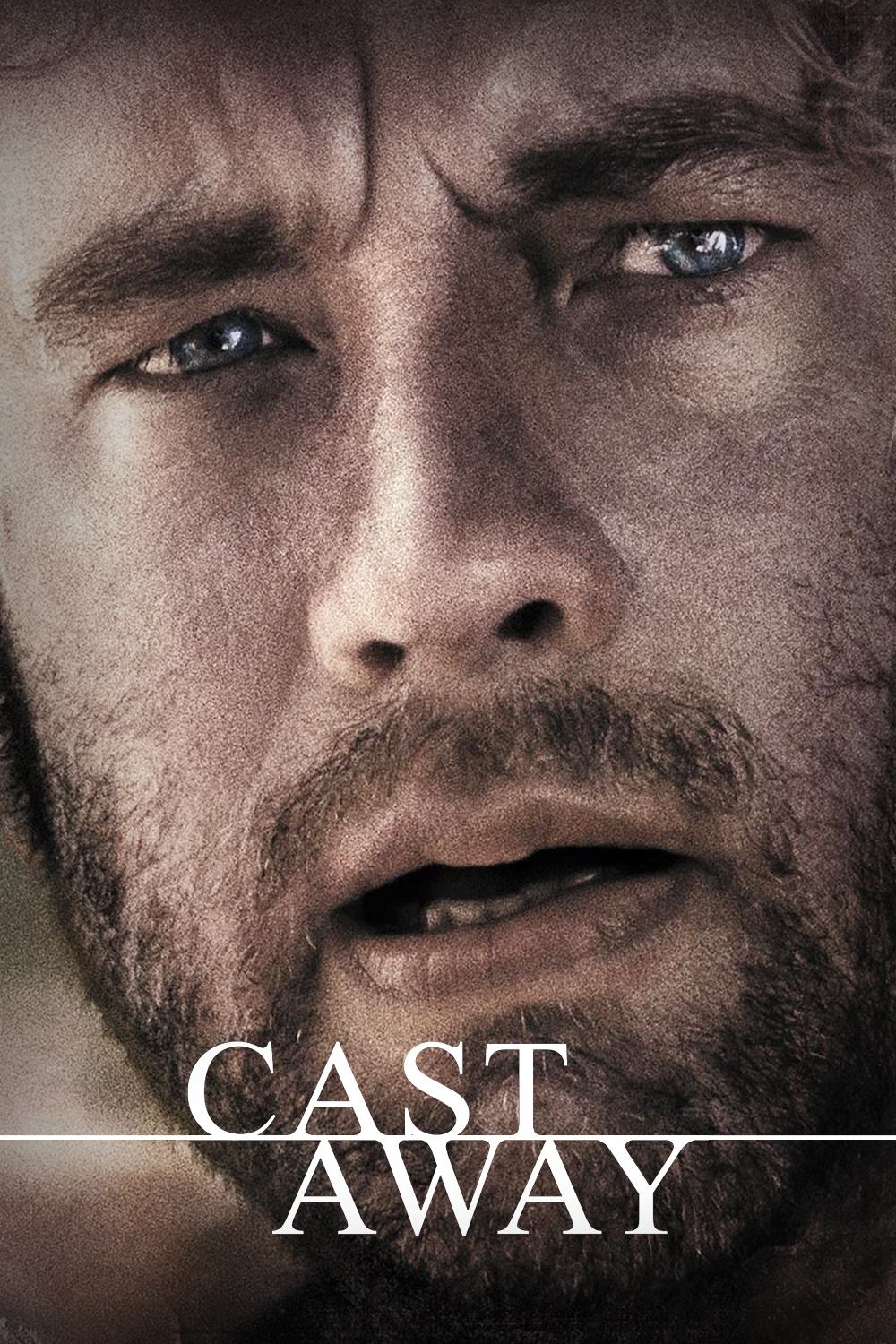
Something in me recoils whenever I hear someone call “Cast Away” just a survival story. My mind leaps back to that empty expanse of Tom Hanks’ face as Chuck Noland, an ordinary man stripped of every familiar comfort, forced to build meaning from nothing but sand, pain, and the sound of his own thoughts. To me, the greatest terror of “Cast Away” isn’t hunger or sharks or storms—it’s the relentless confrontation with the self when every distraction has vanished. The quiet genius of the film lies in how Zemeckis stages not a battle against nature, but a long, merciless interrogation of identity, belonging, and the desperate human need to be seen.
The Prison of Daily Life, and the Shock of Silence
I’ve always been unnerved by the film’s frantic opening: Chuck crisscrosses the globe, obsessed with FedEx delivery times, barking into cell phones. He is everywhere but nowhere, always urgent, never present. Zemeckis doesn’t just set up Chuck as a workaholic—he crafts a cautionary world where time, efficiency, and productivity are worshipped at the expense of real connection. When Chuck is suddenly shipwrecked, the total absence of clocks and deadlines feels like a rebuke, a cosmic prank on his entire worldview. I see in this transition the film’s first major question: What’s left of us when the schedules, the meetings, and the digital noise are torn away?
The Island as Mirror: Stripped Bare and Unflinching
For me, the island is less a physical place than a character that methodically peels Chuck open. Every hardship—whether it’s a wounded foot, a failed fire, or the silence so thick it becomes a sound—exposes the layers of Chuck’s identity that were never sturdy to begin with. The island refuses to be conquered. Instead, it insists that Chuck reckon with his own limits, his pain, his irrelevance. I’ve always read his slow transformation as an act of forced honesty, the universe demanding that he admit how little control he truly has—not just over nature, but over himself, over love, over fate.
Wilson Isn’t Just a Volleyball—He’s Everything We Project and Need
I can’t talk about “Cast Away” without Wilson. To this day, my heart lurches at the sight of that battered volleyball. Wilson is Chuck’s lifeline, but more crucially, he’s proof that solitude is intolerable to the human soul—we will invent company, conjure meaning, rather than bear the weight of genuine isolation. The bond Chuck forms with Wilson isn’t delusion; it’s a profound act of psychological survival. When Chuck loses Wilson, I feel a grief that’s both absurd and wholly real, because the volleyball has absorbed his confessions, his fears, and his hope. Losing Wilson is losing the last audience to his story; the metaphor is both obvious and devastating.
Time’s Tyranny, and the Illusion of Control
Throughout the film, time is both an enemy and a phantom. Chuck’s life before the crash is governed by the ticking of the clock. On the island, time stretches, melts, and eventually fractures. There’s a cruel irony in watching a man who once commanded meetings down to the minute now measuring existence by the tides, the rotation of the sun, the slow healing of wounds. I see in this the film’s fundamental critique of modernity—the notion that all our scheduling and planning is a rickety scaffolding, liable to collapse at any moment. Chuck doesn’t just learn to survive; he’s forced to surrender the myth of mastery over life’s rhythms.
Love, Loss, and the Persistence of Hope
There’s a persistent ache that runs through “Cast Away”—the ache of unfinished love, of promises left hanging in the void. Every time Chuck clings to Kelly’s picture, I’m reminded that our deepest attachments aren’t softened by time or distance; they’re sharpened. What devastates me most is not Chuck’s time on the island, but his haunted longing after he returns—a man out of step with the world, carrying memories like open wounds. The package he refuses to open, the one with the angel wings, becomes his silent pledge to hope, to the idea that something pure and possible still exists beyond his suffering. When he delivers it at the end, I see not closure, but the bravery of starting again, wounded but not extinguished.
Returning Home: The Strangeness of Survival
I’m always struck by how “Cast Away” refuses easy catharsis in its final act. Chuck’s homecoming is awkward, sad, and riddled with dislocation. The world has moved on without him, and his old life no longer fits—survival, the film insists, is not the same as restoration. The reunion with Kelly is almost too painful to watch, both of them changed in irreparable ways. I see Chuck’s return as a subtle tragedy: survival has cost him everything his old self valued, but it’s also given him a kind of clarity, a painful wisdom about love, loss, and the absurdity of human plans. He stands at the crossroads—literally and metaphorically—facing the open road with nothing but a battered soul and the faintest flicker of hope.
The Unbearable Weight of Existential Emptiness
What unsettles me most about “Cast Away” is its relentless refusal to answer the cosmic “why.” The film is haunted by questions—Why did Chuck survive when others didn’t? Why do we persist in the face of hopeless odds? Instead of resolutions, Zemeckis offers us stark images: a tiny man against the ocean, a volleyball drifting out to sea, a package with mysterious wings. These aren’t symbols with neat answers, but fragments of meaning that tease and torment. I find myself staring back at those same horizons, wrestling with the emptiness, and feeling the urgency to invent purpose where none is given. The film’s honesty about existential aloneness—its refusal of cheap comfort—feels both rare and necessary.
If I Could Only Recommend Two: Kindred Spirits in Cinema
For those who, like me, are drawn to the raw honesty and existential depth of “Cast Away,” I always find myself thinking of two other classics. “Ikiru” (1952) is a quiet masterpiece about a man facing his mortality, clawing for meaning amid bureaucratic emptiness. “The Red Turtle” (2016), though wordless, explores solitude and the bittersweet beauty of starting anew. Both films echo the same yearning that pulses through “Cast Away”—the search for connection and the courage to face the unknown.
If you’re curious about how this film was originally perceived or how it compares to similar works of its era, these resources may be helpful.
🎬 Check out today's best-selling movies on Amazon!
View Deals on Amazon