
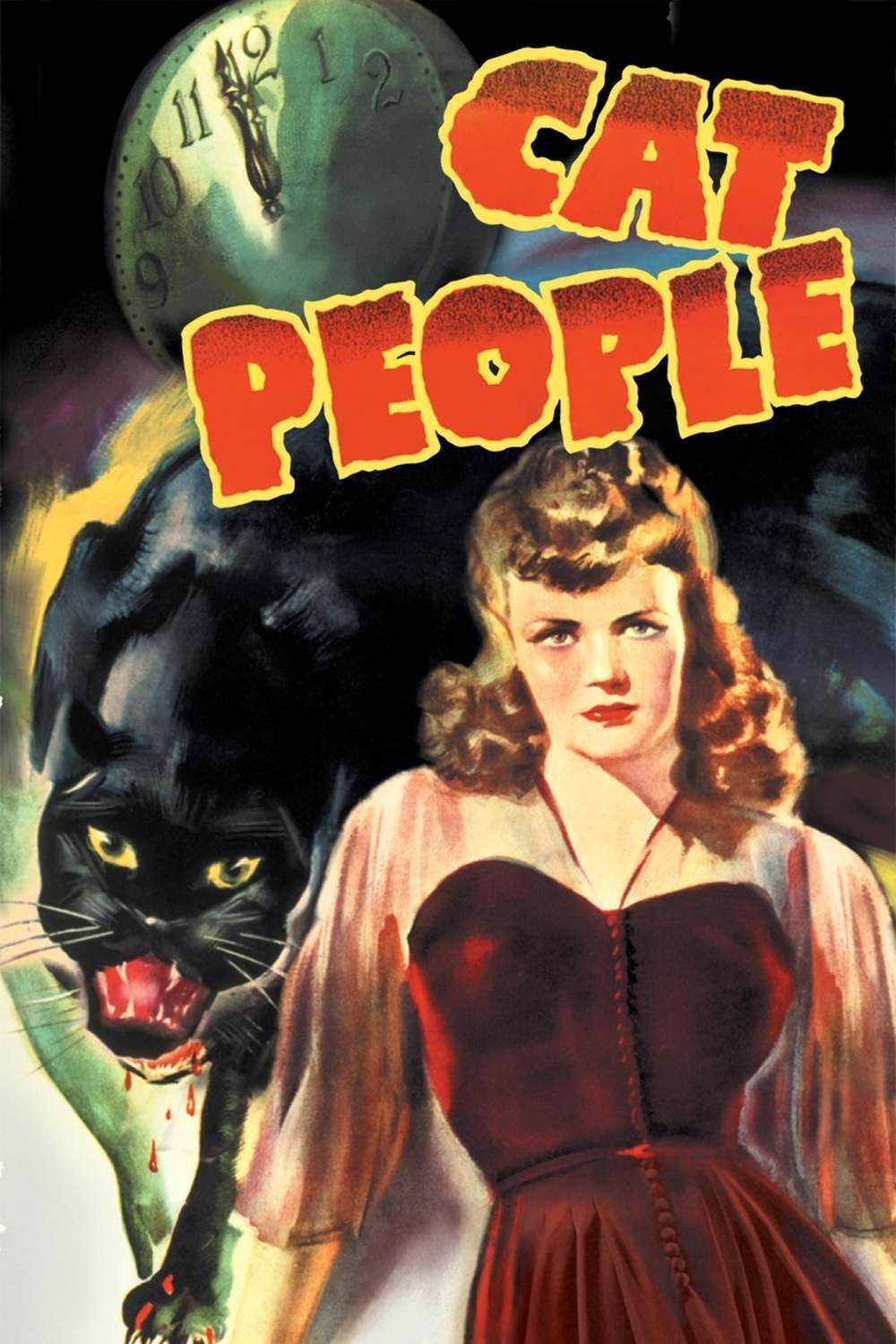
Walking into the shadowy world of “Cat People” for the first time, I felt as though I were stepping into a waking dream—one lined with the slanted bars of moonlight and haunted by secrets no words seemed eager to reveal. My earliest viewing coincided with a rainy evening, the kind that invites your mind to linger over ambiguous fears and half-glimpsed truths. What drew me back, again and again, wasn’t just the notoriety of its ‘psychological horror’ or its place in cinema history; rather, it was the film’s quiet, deliberate feeling of being trapped in otherness, echoed by the faint sound of footsteps haunting the periphery of every scene. The tension in “Cat People” isn’t about what’s seen, but what’s only hinted at—and that has made it a persistent enigma in my imagination.
What the Film Is About
At its trembling heart, “Cat People” is about alienation and desire—set within the fragmented psyche of Irena Dubrovna, a Serbian émigré whose beauty and mystery both beckon and repel those around her. What fascinates me is how the film externalizes internal struggle, transforming psychological disquiet into atmospheric dread. Central to the narrative is Irena’s fear: that she carries an ancient curse, one that turns her into a dangerous beast if she yields to passion. Her story is an allegory not just for forbidden sexuality, but also for how love can become tangled in cultural baggage, guilt, and the terror of losing control over oneself.
But to see “Cat People” as a simple horror tale about a woman-monster would be a dire misreading. Each relationship, every hushed conversation, unfolds with the ache of misunderstanding and the pain of isolation. Irena’s journey is less about physical transformation and more a deep meditation on identity—how she perceives herself, and how others desperately want her to be different. Watching her, I see both the longing to connect and the conviction that true intimacy is impossible. The film’s central conflict, then, emerges not from a supernatural curse but from the cruel chasm between who we are and who we wish to be for the ones we love.
Core Themes
The world that “Cat People” conjures is one filled with dualities—desire and fear, reason and superstition, self and other. What has always struck me is the way the film navigates the thin boundary between repression and revelation. Themes of sexual anxiety and transformation are ever-present, but not in the sensationalist register of so many later horror films. Instead, they’re rendered with subtlety, underscored by the ambiguity of Irena’s curse, which might be nothing more than a manifestation of her deepest mistrust of herself.
The relevance of these themes stretches far beyond the era of its wartime release. In 1942, America was caught between tradition and change, as was Irena herself, who is both hopeful immigrant and haunted outsider. Today, I see in “Cat People” a warning against the dangers of conformity and the repression of individuality. The film’s enduring power lies in its compassionate depiction of difference—and the pain that follows when society insists on normalizing what it cannot understand. The struggle to belong, to be truly seen, is painfully current even now.
Symbolism & Motifs
The film is a treasure trove of leitmotifs—visual and auditory. What’s most enduring for me is the use of shadows and darkness; director Jacques Tourneur and cinematographer Nicholas Musuraca turn low-light into a character itself, at times more expressive than any dialogue. The frequent motif of caged cats or animals behind bars subtly echoes Irena’s own captivity—psychological, cultural, maybe even supernatural.
Mirrors, too, are everywhere, often framing Irena in a way that suggests uncertainty or duality. The mirror becomes less a surface than a threshold, hinting at realities just beyond the visible. There’s also the omnipresence of water—a swimming pool sequence comes to mind—used not only as a literal threat, but as a symbol for the turbulent, unfathomable depths beneath Irena’s composed surface. The repetition of Serbian folklore and the persistent sound of feline growls bleeding into silence enforce the sense that boundaries—between the human and the animal, the rational and the irrational—are porous and ever-shifting. These motifs layer meaning, and I find myself discovering more with each viewing.
Key Scenes
The Menagerie Encounter—A Place of Uneasy Reflection
For me, one of the film’s most unsettling and revealing sequences occurs early on, when Irena visits the Central Park Zoo. The caged panther, restless and wild, immediately becomes more than a mere animal—it’s a living embodiment of Irena’s own sense of being trapped. Her interaction with the animal—a mixture of longing and fear—sets the tone for the psychological tension to follow. This scene anchors the narrative: we’re not simply afraid for Irena, but of what she might unleash, knowingly or not.
The Swimming Pool—Echoes of an Unseen Threat
Few moments in classic cinema raise goosebumps as effortlessly as Alice’s solitary swim, interrupted by the encroaching shadows and the echo of unplaceable growls. This is suspense built on absence; the terror is the feeling of being watched, stalked by an invisible force. The innovative use of lighting and sound here exemplifies what makes “Cat People” so enduring for me: its ability to frighten not with monsters, but with implication and suggestion. The rippling reflection of the water becomes a metaphor for the uncertainty and danger lurking just beneath the surface—of the pool, and of the self.
The Psychotherapist’s Office—Where Truths Collide
The sessions between Irena and Dr. Judd are pivotal, not only for the plot, but for my understanding of the film’s exploration of otherness. Here, rationality and superstition meet—and fail to reconcile. Watching these conversations, I’m struck by the futility of pathologizing Irena’s anxiety; the supposed healing only intensifies her isolation. It’s a devastating illustration of how institutions can try to explain away or correct difference, rarely with compassion. The scene lingers as a critique of the era’s (and perhaps our own’s) obsession with fitting people into tidy psychological boxes.
Common Interpretations
Many critics, both when the film was released and now, read “Cat People” as a classic parable of sexual repression—rooted in Freudian anxieties and the nascent awareness of psychoanalysis in American culture. The prevailing interpretation sees Irena’s ‘curse’ as an allegory for the dangers of female sexuality, or for fears of miscegenation and foreignness in a shifting American society. I understand the logic here, and I find these readings compelling for their historical context.
However, I always find myself returning to the loneliness at the film’s core. For me, it isn’t only about sexual anxiety or cultural otherness, but about the deep existential threat posed by being unable to share one’s true self, even with the people who claim to love you most. While the film certainly reflects contemporary neuroses, its emotional resonance lies in the depiction of longing thwarted by invisible but potent divisions—between self and society, love and fear, belief and skepticism. What others interpret as repressed desire, I see as profound existential exile, and that colors every frame for me.
Films with Similar Themes
- The Innocents (1961) – Like “Cat People,” it’s a film about ambiguity and the dangers of belief; both use suggestion and atmosphere to conjure psychological horror rooted in sexual and cultural anxieties.
- Pandora’s Box (1929) – This silent classic, exploring feminine allure and destruction, shares “Cat People’s” fascination with the otherness and the peril tied to female sexuality.
- Black Narcissus (1947) – Though set in a nunnery, this film takes on the frisson between cultural norms and uncontainable desire, much like the tension in “Cat People.”
- Repulsion (1965) – Polanski’s psychological horror centers on alienation and the horrors of internalized trauma, echoing Irena’s isolation and dread.
Conclusion
For those discovering “Cat People” today, I would insist it demands an active, patient approach—one sensitive to silence and suggestion rather than explicit narrative. The film’s refusal to reveal everything is not a flaw but an invitation to reflect on the boundaries we all struggle against, be they cultural, psychological, or emotional. In revisiting this enigmatic classic, I believe that engaging deeply with its themes—the dangers of otherness, the power of suppressed longing, the beauty and terror of ambiguity—can only enrich the experience, making each subsequent viewing all the more uncanny and profound.
Related Reviews
If you found value in my perspective, you might also enjoy exploring my thoughts on other cinematic landmarks such as Val Lewton’s “I Walked With a Zombie” and Robert Wise’s “The Haunting”.
To broaden this interpretation, you may also explore how critics and audiences responded over time.
🎬 Check out today's best-selling movies on Amazon!
View Deals on Amazon