
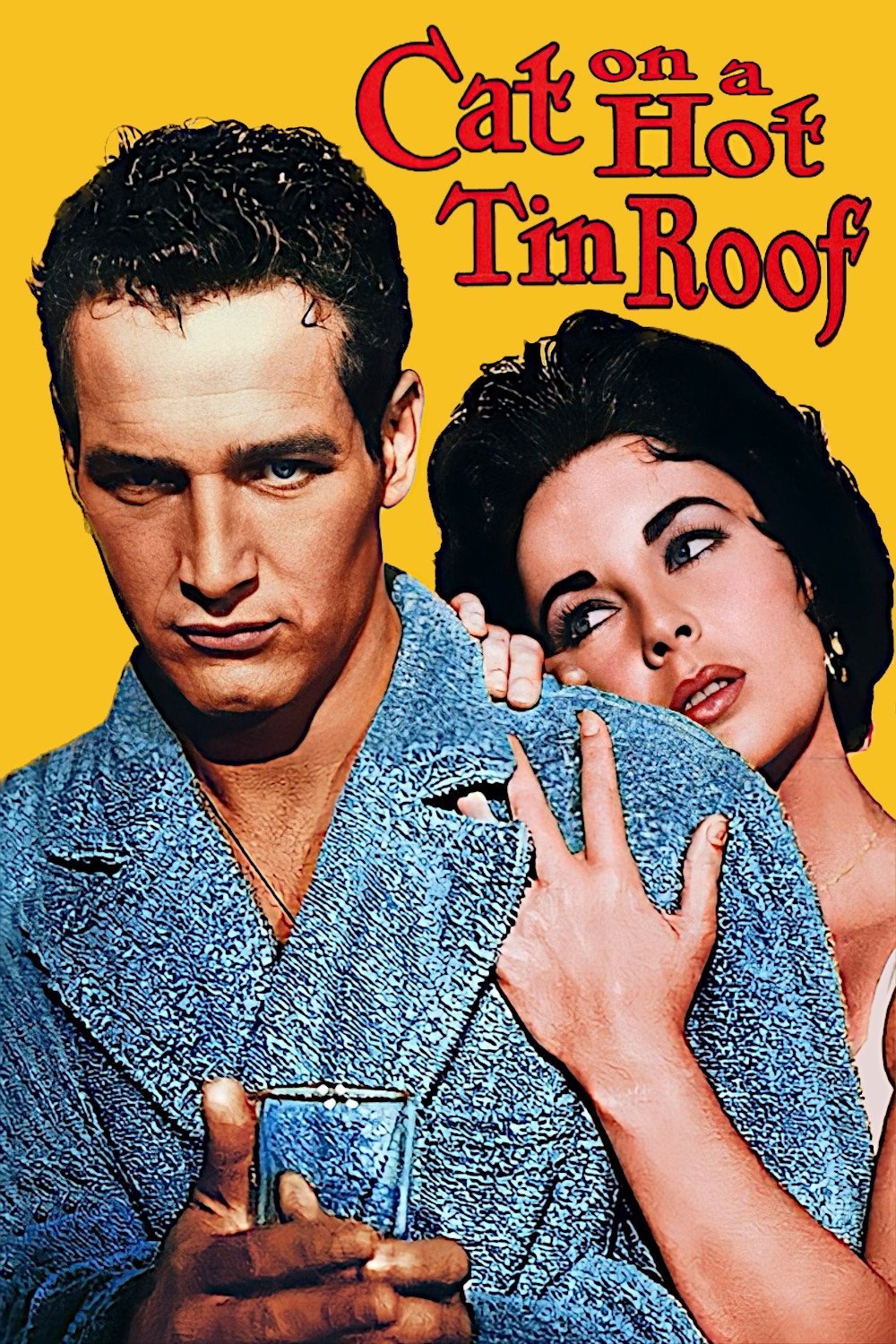
The Scalding Truths Under Southern Skies
I can still remember the first time I felt the humidity of the Pollitt estate pressing in, suffocating and relentless, as if Tennessee Williams’ words had reached beyond the screen to tangle themselves around my own anxieties. “Cat on a Hot Tin Roof” isn’t just a Southern melodrama about greed and lust—it’s a slow, scorching unmasking of the wounds families inflict on each other, and the lies that keep those wounds festering. There’s a particular ache in watching characters who are so desperate to be loved, yet so fiercely unwilling or unable to speak the truth that might save them.
Language as Armor, Silence as Scream
What strikes me most with every viewing is how language in this film operates as a shield, a weapon, and sometimes a prison. Brick, played so quietly and so devastatingly by Paul Newman, barely speaks above a whisper for half the film. His silences aren’t empty—they’re thunderous, resounding with accusation and loss. The gaps in his conversations with Maggie (“the Cat”) are crammed with all the things he refuses to say: about his friend Skipper, about his father’s expectations, about his own pain and shame. In this household, truth is radioactive; everyone knows it’s there, but no one dares touch it. Maggie’s loquacity, her verbal acrobatics, are a desperate bid to distract from the raw emptiness between her and her husband. I came to realize that the film’s drama isn’t in what’s declared, but in what’s left to fester, unspoken.
The Heat of Desire and the Chill of Repression
Desire pulses through “Cat on a Hot Tin Roof,” not just as sexual longing but as a hunger to be seen, touched, needed. Maggie aches for Brick’s love not just physically, but existentially—she’s a survivor, clinging to the one thing she thinks could restore her dignity. But what fascinates me is how the film frames desire as something dangerous, volatile, even shameful. Every character is fighting to keep their own version of desire under wraps, terrified of what would happen if it erupted into full view. Brick’s “disgust” isn’t just for Maggie’s body, but for the whole theater of desire—his own, Skipper’s, his father’s, maybe even his mother’s naive yearning for family harmony. Williams and director Richard Brooks turn the mansion into a crucible, where repression doesn’t quell the fire—it only intensifies the heat, threatening to burn everyone alive.
Big Daddy’s Kingdom: Mortality and the False Promise of Legacy
I’m always drawn to the grotesque pageantry of Big Daddy’s birthday: his children gathered not in love, but in hope of inheritance. Big Daddy looms as a force of nature, a test of masculinity, a monument to everything Brick feels he can never be. What makes this so tragic is how the old man, facing his own mortality, suddenly aches for connection he’s never allowed himself—a real talk with his son, a real understanding of who his family is. The film’s true heartbreak is that, for all the shouting and scheming, no one in this family knows how to love each other without strings attached. Even the moments of vulnerability are fleeting, quickly buried beneath bravado or silence. When Big Daddy demands honesty, it’s not just about the will or the land—it’s the desperate plea of a man who senses, at the end, that the only legacy that matters is whether anyone truly knew him.
The Room as a Battleground, the Estate as a Cage
I keep returning to the way space works in this film. The oppressive bedroom, the suffocating halls, the vast yet confining estate—every room is both sanctuary and trap. There is no privacy in the Pollitt household, only the illusion of refuge. Maggie prowls the bedroom like an animal, constantly seeking warmth that Brick withholds. Even when doors are closed, the walls are thin—eavesdroppers, siblings, servants, all pressing in. The mansion becomes a physical metaphor for the emotional claustrophobia everyone feels: so much luxury, so little freedom. The Southern Gothic tradition is alive here, but what chills me is the sense that these characters, for all their bravado and bluster, are prisoners of expectations they never chose and can’t escape.
The Broken Mirror of Masculinity
Watching Brick, I’m haunted by how the film interrogates masculinity—not just as a social construct, but as an existential wound. Brick’s alcoholism feels like a slow-motion suicide, a refusal to play the role of “man” as defined by his father and his culture. The ghost of Skipper hovers over every scene: is Brick mourning a friend, a lover, or simply the only person who ever saw him clearly? The film never says, and that ambiguity is part of its torment. What matters is that Brick can’t live up to anyone’s expectations—not his wife’s need for passion, not his father’s demand for virility, not even his own ideal of noble suffering. The bottle in his hand is both weapon and shield—the only way he can bear the pain of being misread by everyone who loves him. This isn’t just a tragedy of unspoken homosexuality; it’s the anguish of a man who can’t fit into any of the stories told about him.
Truth as Catastrophe
The defining tension of “Cat on a Hot Tin Roof” is the terror of honesty. Watching the film, I’m struck by how every character believes that speaking the truth will destroy the fragile order of their lives. Maggie, for all her bravado, only comes clean when she’s cornered. Big Daddy demands truth but recoils when it gets too raw. Everyone dances around the real issues—Skipper’s death, Brick’s depression, the rot at the heart of Big Daddy’s marriage—because they believe that exposure would be catastrophic. But there’s a deeper irony: the lies are killing them more slowly, turning love into performance, turning family into farce. By the film’s end, honesty doesn’t solve everything; it leaves wounds bleeding and futures uncertain. But it’s also the only thing with the power to shift the pattern, to turn the cage into something more like a home.
Southern Decay and the Lies We Tell Ourselves
For all its intensity, I find “Cat on a Hot Tin Roof” less about confrontation than about decay—the slow rot of dreams, bodies, and traditions that no longer hold. The Pollitt estate, with its grandeur and its secrets, is a stand-in for the pretense of Southern gentility—a world where everyone is performing, and no one is content. The film doesn’t revel in Southern stereotype; instead, it asks how people learn to live with unbearable truths, and what the cost is for pretending otherwise. I see in every gesture, every half-truth and accusation, the agony of a culture built on denial—one that damns its children to loneliness in exchange for appearances. The beauty of the film is that it doesn’t provide easy redemption. Brick and Maggie may reach a kind of uneasy truce, but the future remains unresolved—a statement about the persistence of hope amid ruin, perhaps, but also a warning about the price of never truly facing ourselves.
If This Film Resonates: Two More Classics Worth Watching
There are other films that unpeel family wounds with the same fervor and intelligence. If you found yourself haunted by the emotional rawness and unspoken pain of “Cat on a Hot Tin Roof,” I recommend:
- “A Streetcar Named Desire” (1951)
- “Long Day’s Journey into Night” (1962)
If you’re curious about how this film was originally perceived or how it compares to similar works of its era, these resources may be helpful.
🎬 Check out today's best-selling movies on Amazon!
View Deals on Amazon