
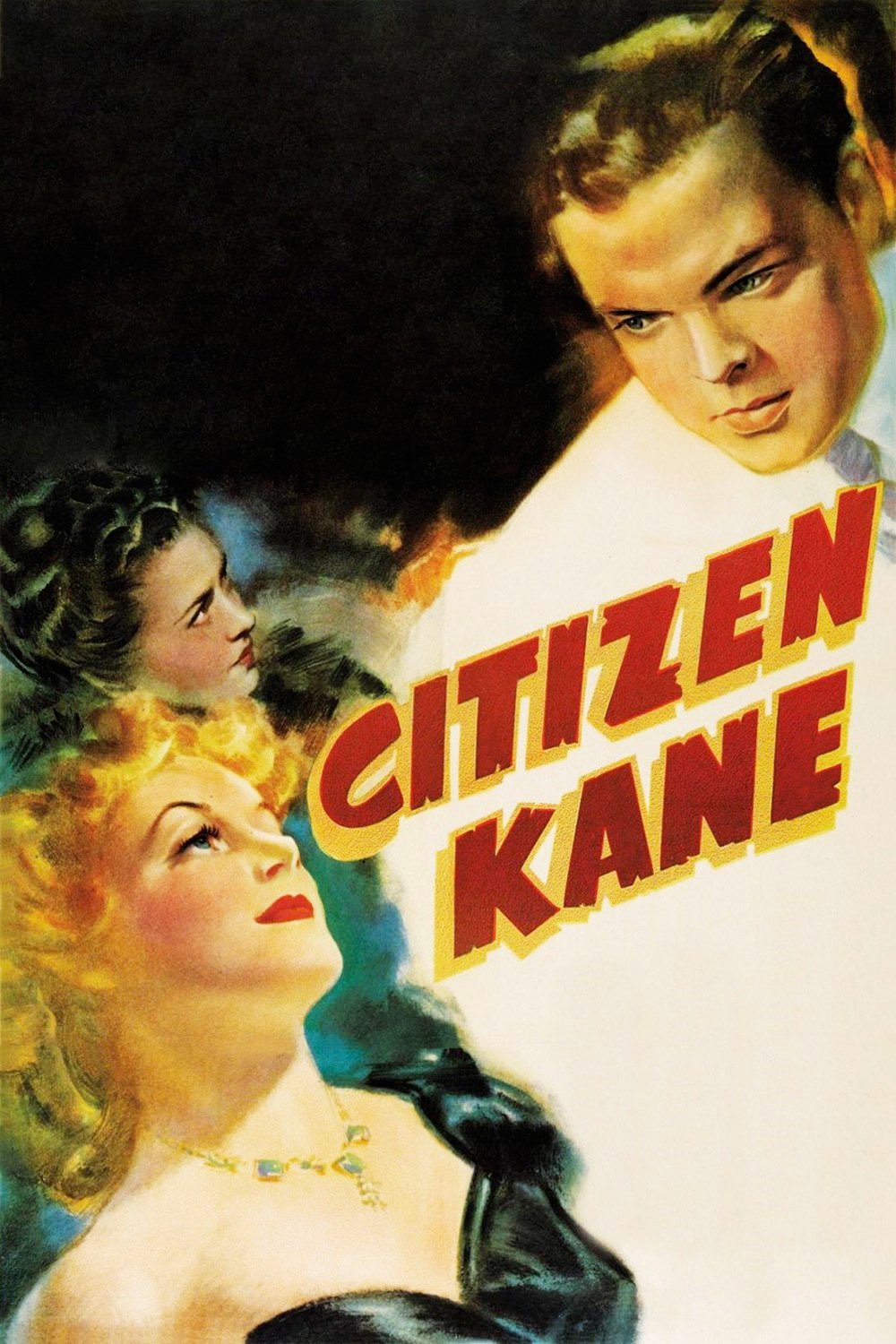
I Never Believed in Snowglobes Until Charles Foster Kane
Long before I ever watched Citizen Kane, the idea of a snowglobe—a tiny, self-contained world, shaking with the memory of its own lost innocence—felt quaint. But after my first encounter with Orson Welles’s spiraling, dazzling debut, I could never see a snowglobe the same way again. The film’s haunting opening, that fragile glass orb slipping from Kane’s hand, did more than introduce the mystery of “Rosebud”—it signaled that every sprawling empire, every mythic life, is in the end a private, inescapable enclosure.
From that moment, I found myself watching Kane not as a story of a tycoon, but as an exploration of the elusive nature of memory and selfhood. The snowglobe isn’t simply a prop—it’s the film’s shattered soul, a metaphor for everything Kane tries desperately to possess, but which slips through his grasp, uncontainable and ultimately lost.
The Labyrinth of Perspective: No Single Truth
As I navigated Welles’s intricate structure, what struck me most was his refusal to offer comfort with a single perspective. Each character’s account of Kane is colored by resentment, nostalgia, longing, or disappointment, until the man himself becomes almost inscrutable. The genius of the film’s mosaic storytelling is its insistence that “truth,” when it comes to a person, is always fractured—shaped as much by the teller as the subject. When Bernstein speaks, Kane is a romantic lost to time; in Susan’s eyes, he’s a destructive force, suffocating in his need for love. The shifting points of view—each one earnest, each unreliable—reminded me just how impossible it is to know another, or even oneself.
Welles never allows me to settle into certainty. I am forced to confront my own desire for closure, my longing to solve the enigma of Kane. This is the film’s cruelest and most brilliant joke: the more the camera circles Kane, the more unknowable he becomes.
The Weight of Ambition
If there’s a single thread I kept tugging at, it’s the vision of ambition twisted into tragedy. Kane’s journey from a wide-eyed boy playing in the snow to a hulking, isolated titan is brutal not for its grandeur, but for its emptiness. It’s tempting to see his vast estate and monumental headlines as the measure of success, but every scene undercuts this with pointed agony. Kane’s ambition, once the spark of hope and possibility, calcifies into a fortress that keeps everyone else out—including himself.
What I found most devastating is that his triumphs are always colored by the dreariest kind of loneliness. Every acquisition, every new construction or relationship, is just another layer of insulation. Watching Kane’s increasing desperation to control the narrative—whether by shaping news or orchestrating Susan’s career—I saw the bitter irony: The more he tries to shape the world to fit his longing, the further away that longing drifts.
Rosebud and the Ghosts of Childhood
As much as “Rosebud” has become a punchline in popular culture, I can’t shake the feeling that the film’s real secret isn’t about a sled at all. Rosebud is a wound, a cipher—Welles’s way of suggesting that what shapes us is not a single moment, but the accumulation of every loss and disappointment we carry. The image of young Kane pulled away from his home, his mother’s cold pragmatism, and the snowy innocence left behind: these details are never dwelled upon, but their shadow stretches across the entire film.
The final revelation of Rosebud’s identity feels less like an answer than a poetic gesture. No one in Kane’s life ever learns its meaning, and neither do I—at least not fully. What strikes me now is that Kane’s vast, echoing mansion is filled with treasures, but the only thing that matters is the one thing he could never reclaim. I see in Rosebud a meditation on the irrevocable nature of loss, and the impossibility of ever returning home.
Reflections in Glass and Shadows
There’s a chilly brilliance in the way Citizen Kane uses visual language to reinforce its themes. Welles’s obsession with mirrors, glass, and darkness goes beyond mere style—these surfaces become characters in themselves, silently commenting on the action. When Kane stands before an endless row of reflected selves, I’m confronted with the movie’s bleakest insight: We are all, in the end, a puzzle of shifting identities, each version of ourselves visible only for a moment in someone else’s gaze.
I’m haunted by these mirrored images, the way light and shadow seem to press against Kane, boxing him in even as he roams his palatial halls. Gregg Toland’s deep-focus cinematography turns every room into a stage for memory and regret. The film’s visual starkness is not just aesthetic—it’s a physical manifestation of isolation, a constant reminder that Kane, for all his power, is always out of reach, even from himself.
The Seduction of Media and Self-Mythology
Perhaps the most prescient thing about Citizen Kane is its understanding of how power warps identity through the machinery of media. Kane’s newspapers don’t just report the news—they create it, and in doing so, they remake Kane himself. The film sees the modern world as a place where selfhood is always mediated, always performative, always up for sale.
Every time Kane’s public persona is amplified by headlines or manipulated photographs, I’m reminded that the real tragedy isn’t just in what’s lost, but in what’s invented: the myth of Charles Foster Kane, the legend that outlives the man. The film’s enduring relevance lies in its critique of our endless hunger to shape our own stories, to curate our legacy, only to discover that the truth is ungraspable—hidden behind the smoke and mirrors we’ve erected.
Love as Possession, Possession as Loss
What aches most about Citizen Kane is its dissection of love not as shared understanding, but as an act of possession. Kane’s relationships betray a tragic symmetry: whether with Emily, Susan, or even his old friend Leland, he cannot help but try to mold others to fit his needs. In his quest to be loved, Kane becomes incapable of loving; every gesture toward intimacy becomes a transaction, every gift a demand.
This toxic pattern is most naked in his marriage to Susan, where his efforts to manufacture her career are less about her happiness than about filling the void inside himself. What I take from this is a warning: the urge to possess—in relationships, in art, in memory—inevitably destroys what is sought after. When Kane pleads, “Love me!” his desperation rings out, icy and pitiful, a plea that no one ever fully answers.
The Empty Palaces We Inherit
As I reach the final scenes, when Kane’s treasures are catalogued and incinerated, I can’t escape the sense that the film is whispering about mortality itself. The sprawling halls of Xanadu, filled with artifacts no one will ever cherish, become a mausoleum to the dreams and follies of a man who tried to buy meaning, only to find it unsellable.
I think about the cluttered warehouses, the unseen objects that once carried promise, and how we all leave behind our own private collections. For me, the message stings: no legacy, no matter how carefully crafted, can rescue us from obscurity or the inevitable forgetting that awaits us all. In the end, the only thing that persists is the ache for what might have been.
If This Film Spoke to You: Two Journeys Worth Taking
If you find yourself as shaken by Kane’s lonely empire as I was, I recommend immersing yourself in the relentless yearning of The Magnificent Ambersons and the feverish, delusional spiral of Sunset Boulevard. Both films unravel the complex relationship between ambition, memory, and the fear of being forgotten, each with their own haunted grace.
If you’re curious about how this film was originally perceived or how it compares to similar works of its era, these resources may be helpful.
🎬 Check out today's best-selling movies on Amazon!
View Deals on Amazon