
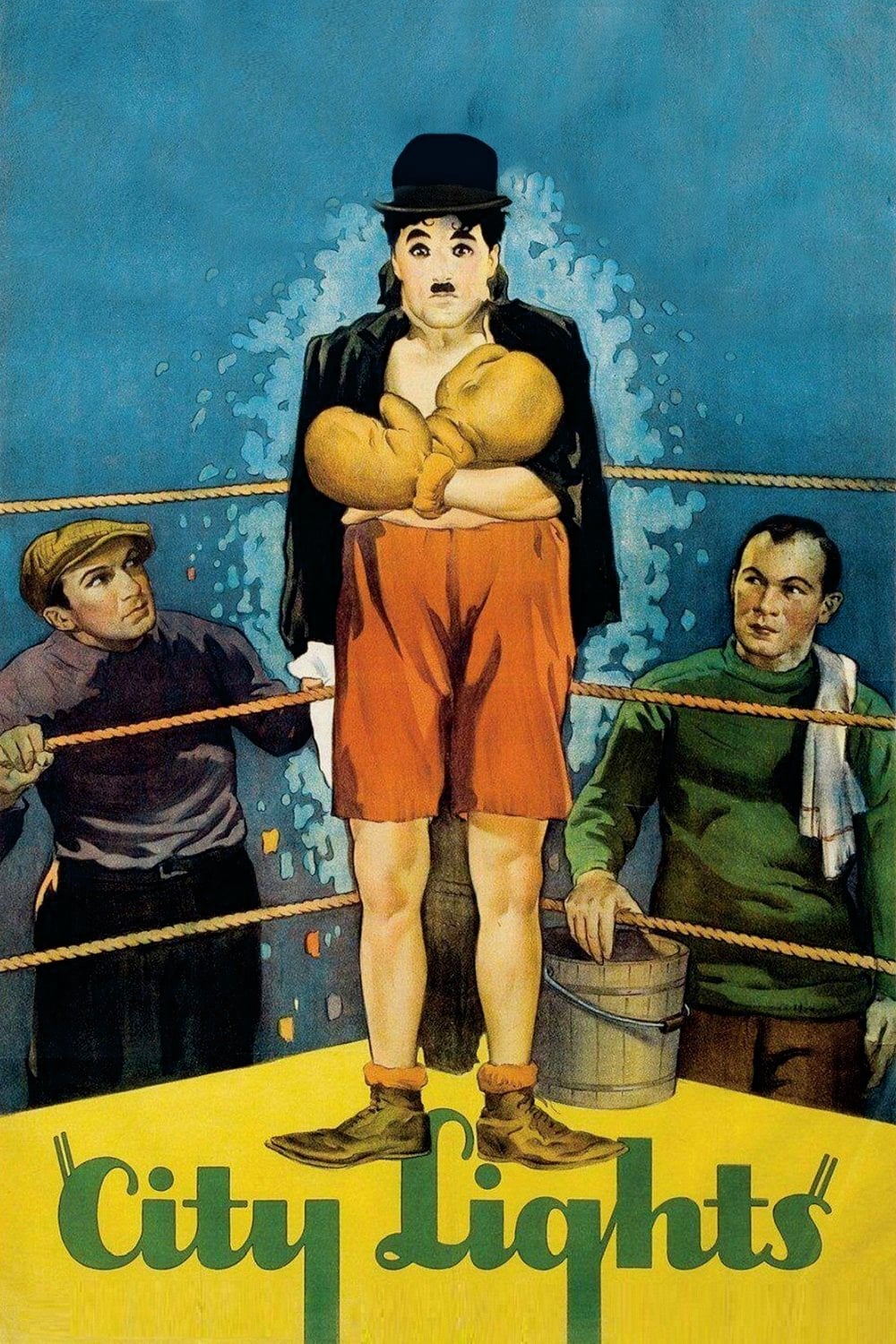
There’s a moment when I find myself laughing at something simple—a man’s accidental pratfall, an awkward tip of the hat—and, once my laughter subsides, I’m left with an odd ache I can’t quite explain. City Lights affects me this way more than most films. My appreciation for Chaplin’s silent masterpiece isn’t just nostalgia for early cinema or admiration for technical bravado; it’s something more personal, like recognizing fragments of my own fears and hopes reflected in the Candide-like resilience of the Tramp. When I return to this film, it feels like visiting an old friend who knows how to joke precisely when life gets hardest—and that, to me, is its quiet, persistent miracle: humor that soothes and honesty that stings.
What the Film Is About
If someone asks what City Lights is about, I’m tempted to say: loneliness. Or hope. Or both, mashed together in a love story that feels utterly pure. On the surface, it’s the saga of Chaplin’s Tramp falling for a blind flower girl and striving—desperately, comically, sometimes humiliatingly—to help her see again. Yet beneath its elegantly plotted slapstick, I sense a deeper dialogue about what it means to be seen at all, by another person or by society at large.
I find the emotional journey remarkable because it’s so relentlessly human. The Tramp’s antics with the eccentric millionaire or his mishaps around the city aren’t just gags; they’re trial balloons sent up by a soul who wants to be part of the world but constantly stumbles on its invisible boundaries. This isn’t simply a love story. It’s a film about yearning for dignity—about how we try to prove our worth to those who cannot (or will not) recognize our value. For me, its central conflict revolves around this plea: will kindness and honesty ever be enough in a world that so often prizes surface over substance?
Core Themes
One major reason I keep returning to City Lights is its treatment of identity, class, and compassion. Chaplin’s Tramp is quintessentially poor—an outsider by appearance, resource, and manner. He tricks a society that’s always in a rush, always watching for weakness, by turning his misfortune into a kind of poetry. There’s a meaningful tension between what he appears to be (a bumbling clown) and who he is (a quietly noble defender of the vulnerable).
These themes couldn’t have arrived at a more telling time. In 1931, with the Great Depression grinding away at hope, City Lights provided a vision of dignity in the face of hardship—where the smallest acts of generosity became heroic. It strikes me that the same divides—between rich and poor, powerful and weak, seen and unseen—persist today. In a world obsessed with instant results and shallow status, the film’s message that real value lies beneath the surface feels more necessary than ever. Chaplin doesn’t offer easy solutions; instead, he emboldens us to persist in doing good, even if grace comes invisibly or—heartbreakingly—unacknowledged.
Symbolism & Motifs
The recurring motif of blindness—literal in the flower girl, figurative in the world’s treatment of the Tramp—anchors every major narrative turn. I’ve always been struck by how the city’s bustle is filled with eyes that fail to see what matters; the most perceptive character is the one without physical sight. The flower becomes another potent image: delicate, momentary, beautiful only because someone chooses to notice it—in other words, just like the Tramp himself.
Chaplin’s urban landscape brims with contrasts. The opening statue scene (where the Tramp is discovered sleeping in a monument’s lap) cues us into how the city prizes ideal forms—elegant stone heroes—while the real business of living is awkward and haphazard down below. Meanwhile, sound itself (or its absence) feels symbolic: Chaplin clung to silence in the era of talkies, making City Lights both an act of artistic resistance and a meditation on communication, isolation, and the eloquence of gestures over words.
Key Scenes
The Statue’s Awakening: Comedy as Social Critique
From the very first scene—with the unveiling of a city monument and the Tramp’s discovery asleep in the arms of Progress—I sense Chaplin’s slyest commentary. The laughter this moment inspires is entwined with a sense of upended dignity; what’s meant to be high art becomes a perch for the outcast. Here, Chaplin signals that he’ll root his story not in the tall ambitions of officialdom, but in the day-to-day struggles of the overlooked.
Boxing Match: Survival in the Modern Arena
The boxing sequence is often cited for its choreographic genius, but what rivets me is its subtext. The ring becomes a microcosm of city life: survival is contingent not just on skill, but also wit, luck, and endless improvisation. Watching the Tramp shimmy and dodge—sometimes in abject terror, sometimes marshaling a brave front—reminds me that life for the marginalized is less about triumph than creative endurance. It’s a ballet of desperation, always hilarious and a little bit tragic.
Final Recognition: The Cost of Kindness
If I had to choose a single moment to define my bond with City Lights, it would be the closing scene—the flower girl, her sight restored, offering the Tramp a coin, then realizing who he truly is. Her dawning understanding—her hand gently taking his—transcends the rest of the film with a raw, unsentimental honesty. In those glances and pauses, I see everything: the fear of not being seen, the longing for acceptance, and, for a fleeting instant, something like grace. It’s the closest I’ve seen to unscripted forgiveness in cinema.
Common Interpretations
Most critics celebrate City Lights as an eternal fable, a crowning achievement of silent cinema’s expressive power. They praise Chaplin’s blend of humor and sentiment, seeing the film as a defense of innocence and a rebuke to modern cynicism. Some go further, reading a political subtext into the Tramp’s relationship with wealth and poverty, or viewing the ending as Chaplin’s pitch for the transformative power of love.
While I understand—and sometimes share—these perspectives, my reading lands in a more ambiguous place. For me, City Lights isn’t just about the redemptive qualities of goodness; it’s about the costs of being gentle in a sharp world. The Tramp isn’t rewarded so much as briefly recognized; the flower girl’s “happy ending” comes twisted with uncertainty. Yes, kindness changes lives, but it may never be enough to bridge the chasms society creates. In that tension, I find the film even richer than its sunny tributes suggest.
Films with Similar Themes
- The Kid (1921): Chaplin’s earlier film features an abandoned child and a tramp finding family with one another, echoing themes of resilience, poverty, and nontraditional love.
- Ikiru (1952): Kurosawa’s story of a desperate bureaucrat seeking meaning resonates in its bittersweet search for purpose and the invisible dignity of small deeds.
- It’s a Wonderful Life (1946): Capra’s classic parallels City Lights in its embrace of ordinary people’s struggles and its faith in quietly heroic actions as lifelines in a world of indifference.
- The Bicycle Thieves (1948): De Sica’s neorealist portrait of poverty and perseverance likewise hinges on ordinary characters striving for survival and dignity against systemic indifference.
Conclusion
I believe that for all its historical context and cinematic innovation, City Lights endures because its questions remain unanswered. Watching it today offers not just a window into a vanished world, but a challenge: What would it mean to truly see those around us—and to have our own struggles, sorrows, and gifts recognized in turn? For viewers willing to look past its period details, the film’s empathy and unsparing wit cut as deeply now as they did nearly a century ago. In sharing more than laughter with us, Chaplin invites us to risk a little heartbreak—and maybe, for a few luminous minutes, to connect more honestly with the world and with each other.
Related Reviews
If you found value in my perspective, you might also enjoy exploring my thoughts on other cinematic landmarks such as The Bicycle Thieves and Ikiru.
To broaden this interpretation, you may also explore how critics and audiences responded over time.
🎬 Check out today's best-selling movies on Amazon!
View Deals on Amazon