
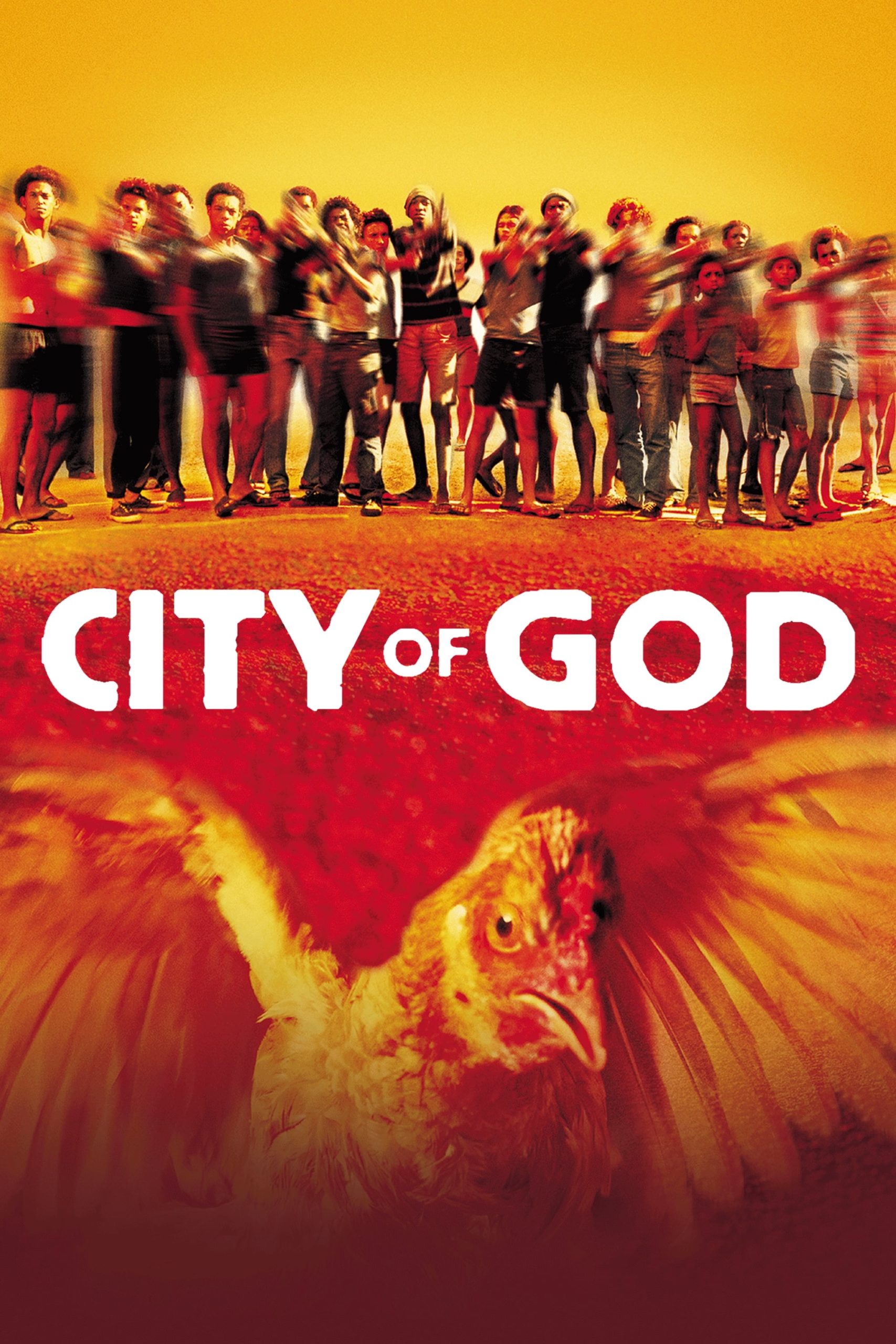
Opening My Eyes in the Favela: First Impressions That Never Left
The first time I watched City of God, I felt a surge of adrenaline, as if I’d stumbled into an electrified world teetering between beauty and brutality. Rarely has a film made me so acutely aware of my own vantage point—an outsider, witness to an ecosystem layered with chaos and grace. I remember feeling breathless, intoxicated by the film’s pulsing rhythm, and then blindsided by its capacity for heartbreak. What stunned me most was not the violence, or even the sheer momentum of the plot, but how every stylistic choice seemed to circle back to one burning question: who gets to tell the story of their own life?
The Camera as Confessor: Whose Story Is It, Anyway?
From the first frenetic frames, City of God confronts me with the act of storytelling itself. Rocket, our narrator, is not the hero in the conventional sense. He’s not even a participant most of the time—he’s an observer, a boy with a camera. Yet, as the film spools out, I realized the camera is less a tool than a lifeline. The act of photographing becomes survival, a way for Rocket to claim agency in a world that constantly threatens to erase him. It made me realize how often voices like his have been denied authorship (both in life and in cinema), their neighborhoods depicted only as statistics or sensational headlines. Meirelles’s camera, frenetic yet purposeful, forced me to confront what it means to see, and to be seen, on one’s own terms.
Decaying Innocence: Children in Grown-Up Wars
What lingers with me, long after the credits, is the devastating evolution of the film’s children: how play becomes war, how laughter curdles into rage. There’s a sequence early on where kids dart through alleys, mimicking the grown-ups—their games morphing into something disquietingly real. The film’s genius is in showing how violence feels learned, almost ritualistic, as though inherited like a family heirloom. I could not shake the sense that innocence here is a currency rapidly devalued, exchanged for survival. When Li’l Dice, mere boy, transforms into Li’l Zé, the monster and the king, I saw not just a single fall from grace but a generational tragedy, one that implicates everyone—spectators included.
The Illusion of Choice in an Unforgiving Landscape
Every time I revisit City of God, the idea that choices exist at all feels questionable. The film is famous for its labyrinth of intersecting stories, but it’s the structure—fractured, looping, self-referential—that keeps gnawing at me. Meirelles doesn’t just show fate as inevitable, he makes it structural, embedded in the editing and narrative spirals. Every character’s attempt at escape—whether through violence, religion, romance, or Rocket’s camera—returns them to the same crosshairs of poverty and power. There’s a moment when a character tries to start over, to leave the slum; the camera lingers on their face, yearning, and I almost believe it’s possible. Then the city pulls them back. The film’s meaning, for me, lies in this cruel elasticity: the limits of agency when every exit is booby-trapped.
Beauty Amid the Bloodshed: Finding Poetry in Ruin
What makes City of God more than just a dirge of despair is its restless search for beauty amid ugliness. The saturated colors, the sun-drenched corners, the pulsing samba—the city feels alive, even seductive. I remember marveling at how Meirelles’s cinematography seemed to sing even as it documented suffering. This tension between violence and vitality is the film’s paradoxical soul: the same streets that breed killers also nurture joy, mischief, and resilience. The motif of golden sunlight caught on Rocket’s lens is not just aesthetic but spiritual, a fleeting reminder that hope flickers even in hellish places. For me, this is City of God’s truest rebellion: refusing to let ugliness have the last word.
Names, Legends, and Oblivion: Who Gets Remembered?
As the cycles of revenge and ambition spool on, I became obsessed with the film’s obsession with names: how nicknames replace given names, how legends are forged in blood. Li’l Zé, Benny, Knockout Ned—their mythologies expand and contract, swelling to fill the void left by absent fathers, absent futures. City of God is a film about memory, and the uneasy transaction between fame and extinction. The film-within-the-film, as Rocket’s photos are published, asks me to reckon with the ethics of witnessing: who profits from these stories? Who vanishes? Every time the narrative resets, introducing a new legend, I’m reminded how easily lives are reduced to anecdotes—glorified or forgotten, depending on who holds the camera.
The Sound of Survival: Music as Resistance
There’s a kinetic energy in the soundtrack I can never ignore, no matter how many times I watch. Samba and funk crash against gunshots and police sirens, creating a dissonant symphony that feels both indigenous and insurgent. The music in City of God is not just background; it’s a character, a pulse of survival against all odds. I found myself tapping along, even when the world on screen was breaking apart, which made the violence feel all the more obscene—joy persisting where it has no right to. Each time Rocket’s friends crowd into a dance party, defying the night, I sense a collective refusal to surrender. The city, despite everything, will not be silent.
The Moral Labyrinth: Culpability in a Broken System
What gnaws at me, long after the adrenaline fades, is the film’s refusal to offer easy villains or heroes. There’s no single author of the violence, no neat division between good and evil. Every authority—corrupt police, absentee parents, indifferent politicians—appears complicit, if not actively predatory. City of God’s most radical argument is that systems, not just individuals, breed monstrosity; evil is not innate but engineered through neglect and exploitation. I watched helplessly as the characters cycled through betrayals, realizing that the city itself is a character—a hungry organism that consumes both predator and prey. Rocket’s decision at the end, both triumphant and ambiguous, left me asking where complicity ends and survival begins.
Two More Journeys into Desperation and Defiance
For those who, like me, find themselves haunted by City of God’s intricate dance between violence, hope, and the act of witnessing, I always return to these searing classics: The Battle of Algiers and Pixote. Both films confront the impossibility of innocence and the longing for agency amid chaos, echoing the same restless hunger for meaning that first drew me to the City of God’s tangled streets.
If you’re curious about how this film was originally perceived or how it compares to similar works of its era, these resources may be helpful.
🎬 Check out today's best-selling movies on Amazon!
View Deals on Amazon