
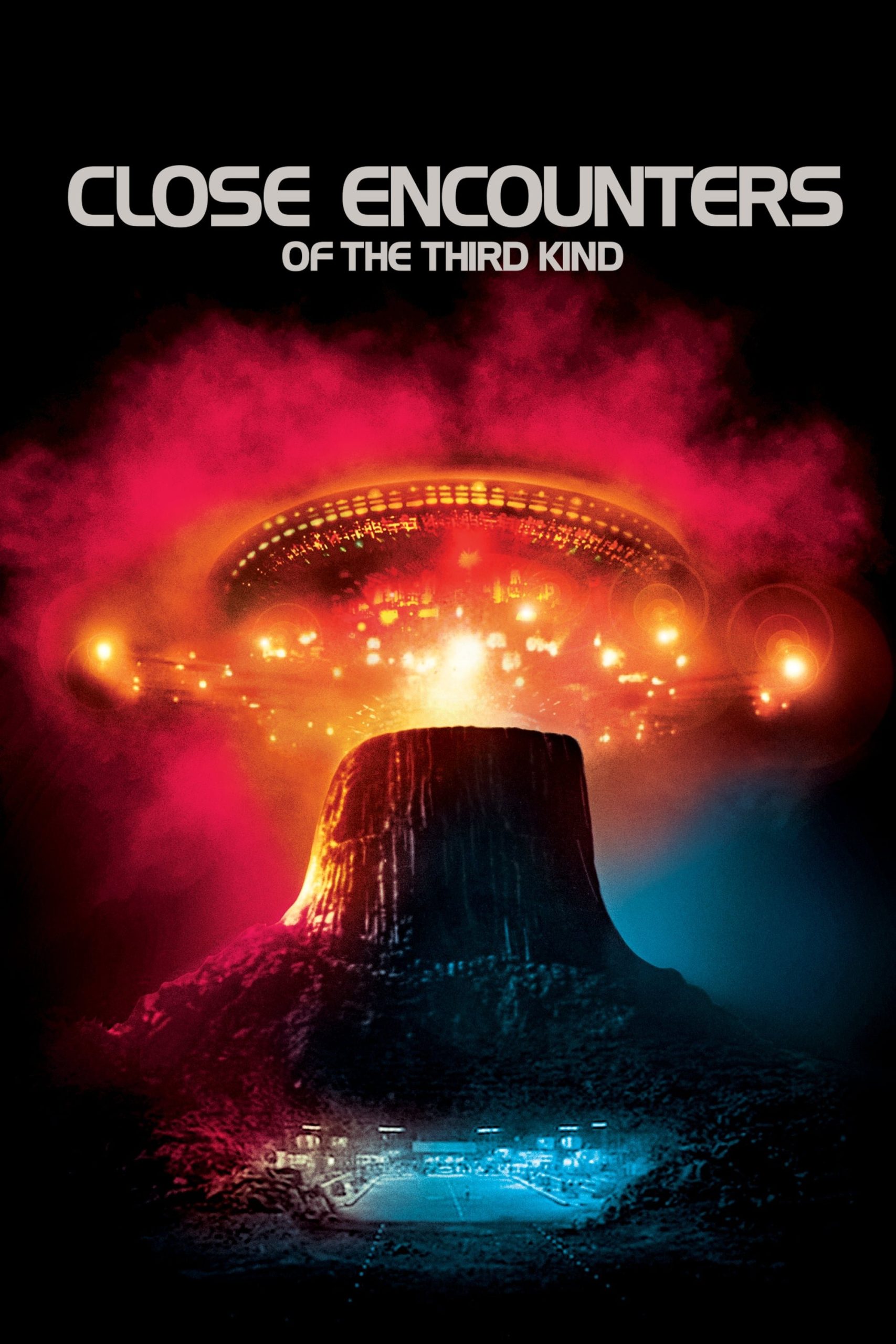
It’s hard for me to recall the first time I watched “Close Encounters of the Third Kind”—not because the memory has faded, but because, with each revisit, the film seems to actively rewrite itself in my mind. I came to Spielberg’s 1977 opus not as a science fiction buff, but as someone fascinated by the ways filmmakers capture obsession and longing. What drew me, and continues to draw me, isn’t the allure of flashing lights in the sky or the famous five-note motif, but something deeply human—the way Spielberg makes cosmic mystery feel terrifyingly intimate. Every time the mashed potatoes mound rises on the kitchen table, I’m both in awe and quietly unsettled. This is cinema that looks up at the stars and somehow finds itself reflected in a suburban living room.
What the Film Is About
“Close Encounters of the Third Kind” grounds its spectacle not in intergalactic warfare or dystopian paranoia, but in one man’s unraveling sense of reality. The emotional journey that sticks with me most is Roy Neary’s evolution from bewildered blue-collar worker to a man possessed, swept up by forces he doesn’t—and cannot—understand. The central conflict is not between humans and extraterrestrials, but between individual compulsion and communal expectation. Roy is driven to the edges of sanity by an experience he can neither explain nor dismiss, haunted by visions that sever his familial bonds and reshape his entire world. In Roy’s haunted eyes, I see both hope and terror—that sense that something vast is out there, and that it wants something from us.
What resonates most deeply for me is how the film communicates its message through the language of emotion rather than logic. This isn’t just a story about first contact; it’s about the costs and consequences of yearning for meaning beyond the prescribed boundaries of ordinary life. Spielberg renders that yearning with a sincerity that still feels risky—a willingness to embrace awe and confusion in equal measure. The film suggests that the universe may be incomprehensible, but that it touches ordinary lives in ways that simultaneously uplift and unravel them.
Core Themes
I’ve always found “Close Encounters of the Third Kind” urgent, both in 1977 and now, thanks to its probing of obsession, alienation, and transcendence. At its heart, the film asks us what we’re willing to sacrifice to find truth, and whether that search liberates or isolates us. Roy’s compulsion—his need to build, to follow, to understand—is both his salvation and his undoing.
That theme dovetails beautifully with late 1970s anxieties. Americans were reckoning with political scandal and cultural upheaval; faith in institutions was eroding, and Spielberg’s depiction of authority figures scrambling to obscure the truth is pointed. I see in these scenes a plea for radical wonder in an era of cynical mistrust. “Close Encounters” urges us to risk everything for authentic experience, even if it means facing ridicule or abandonment. That desire to break through the numbing ordinariness of routine—so prevalent in the decade of its release—makes the film feel timeless. Today, as we negotiate information overload and pervasive disconnection, the film’s questions about curiosity, faith, and belonging feel every bit as relevant.
Symbolism & Motifs
The imagery that lingers most for me from “Close Encounters” isn’t the spectacle of motherships or even the iconic light shows, but rather the domestic and the mundane rendered strange. The motif of molding—whether it’s dirt, mashed potatoes, or bricks—runs through the film as a sign of Roy’s internal chaos. Each sculpted mountain is a desperate attempt to give shape to a vision that words cannot contain. On each rewatch, I’m struck by the gap between what Roy sees and what those around him see; these objects become personal shrines to the ineffable.
There’s also a persistent use of music, which is hardly surprising given the film’s legendary close. The five-note sequence used to communicate with the aliens operates as both symbol and bridge—proof that connection, if possible, will be achieved through shared language and emotion rather than force. Sound, color, and light become a grammar of longing—a way to translate awe into tangible experience. Every time colored lights burst through the Wyoming night, I sense Spielberg urging us to stay open to the possibility of recognition, even across unfathomable divides.
Another recurring visual I can’t shake: faces awash in unnatural light, eyes wide with wonder. Spielberg’s signature “look of awe”—where ordinary characters are confronted with the extraordinary—serves as a motif for human vulnerability and openness in the face of the unknown. It’s never simply about answers; it’s about being present and willing to see, even if what we find threatens to remake us.
Key Scenes
The Dinner Table as a Battleground
There’s something almost primal about the scene where Roy carves a massive mound of mashed potatoes at his family’s dinner table. Here, obsession crowds out domestic routine, shattering any normalcy left in Roy’s life. His children stare, his wife tries to hold the family together, but the kitchen standoff is steeped in fear and confusion. For me, this sequence crystallizes the pain of being gripped by a vision only you can see, and the loneliness awaiting anyone who dares follow it. It’s not just a moment of breakdown, but of creation—a private mystery erupting in an ordinary home.
The Refugee Highway and the Arrival
The haunted exodus to Devil’s Tower—pilgrims converging, drawn together by inexplicable compulsion—is shot with urgency and awe. Spielberg transforms a Wyoming landmark into a site of cosmic pilgrimage, blurring the line between the sacred and the extraterrestrial. When the mothership at last lands, its scale and beauty are staggering, but what moves me is the sense of community among the drawn—people abandoned by the world, now witnesses to revelation. This scene doesn’t just answer questions; it unspools new ones about faith, destiny, and our place in the universe.
The Musical Conversation
The film’s climax rests on an audacious gamble: That communication with the unknown can be achieved through music, not violence. The scientists and the alien vessel “converse” through lights and tones, orchestrating a sequence that’s both technological and transcendent. For me, this is Spielberg’s argument for the unquantifiable beauty in connection, and his clearest rejection of spectacle for spectacle’s sake. It’s a sequence that always silences me, not because of its special effects, but because it taps into something ineffably human—a desire for understanding writ large across an incomprehensible canvas.
Common Interpretations
Critics often frame “Close Encounters” as a hopeful declaration of intergalactic harmony—a utopian vision where humanity rises above its divisions. Many also cite the film’s childlike awe as Spielberg’s defining trait, his signature optimism shining through. I see the logic in these readings, but they’ve always felt incomplete to me. The film is suffused with hope, yes, but it’s also wracked with doubt—about family, about sanity, about the toll of revelation. Roy’s departure is both soaring and tragic; the price of his enlightenment is estrangement and loss. For all the talk of harmonious contact, I’m left with the cost of understanding—what we’re asked to leave behind when we reach for the stars. That unresolved tension, not a simple embrace of wonder, keeps me coming back.
Films with Similar Themes
- 2001: A Space Odyssey (1968) – Like “Close Encounters,” this film probes humankind’s place in the cosmos, using visual metaphor and ambiguity to explore evolution, alien contact, and the limits of understanding.
- Starman (1984) – Another midwestern encounter with the unknown, but here the journey is about empathy and connection between a lonely human and an even lonelier visitor.
- Contact (1997) – Carl Sagan’s story, much like Spielberg’s film, contemplates faith, skepticism, and our longing for cosmic communication, set against both personal and societal turmoil.
- Arrival (2016) – A contemporary echo, this film interrogates language, grief, and the barriers that both unite and divide us when faced with the unfamiliar.
Conclusion
If there’s an invitation in “Close Encounters of the Third Kind,” it’s to remember that awe isn’t comfortable. Modern viewers will find more than nostalgia or dazzling effects here—they’ll discover a meditation on longing, belief, and the pain of transformation. Watching the film now, I’m reminded that real connection, even with the unknown, demands vulnerability and risk. Understanding its themes doesn’t solve the film’s mysteries, but it deepens the experience—teasing the possibility that the answers we seek may unsettle us, even as they set us free.
Related Reviews
If you found value in my perspective, you might also enjoy exploring my thoughts on other cinematic landmarks such as 2001: A Space Odyssey and Contact.
To broaden this interpretation, you may also explore how critics and audiences responded over time.
🎬 Check out today's best-selling movies on Amazon!
View Deals on Amazon