
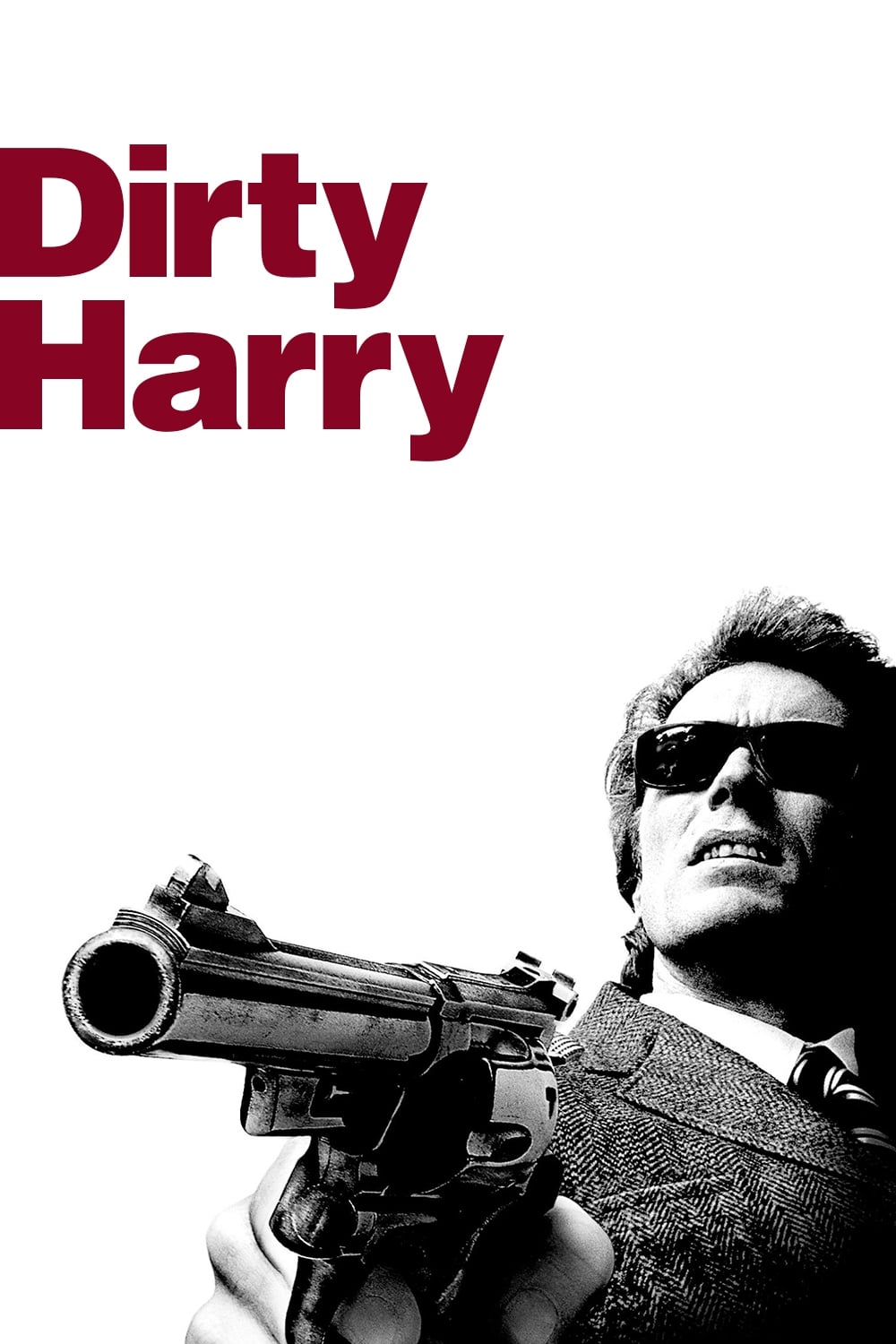
When I recall the first time I encountered “Dirty Harry,” it wasn’t the iconic .44 Magnum or even Clint Eastwood’s gravelly voice that hooked me—it was the inescapable tension that wrapped around the film like a vice. I was a teenager, still forming my own sense of justice, and I remember that sense of unease, the grinding conflict between what felt right and what was legal. Even today, every time I revisit the movie, I’m pulled back into that personal struggle: what would I do if I stood in Harry Callahan’s shoes?
What the Film Is About
At its heart, “Dirty Harry” is a bruising meditation on law, order, and the jagged boundaries of morality. The emotional center is Harry Callahan, an anguished cop whose professional duties collide constantly with a legal system that seems ill-equipped for the brutality he faces. What fascinates me isn’t just his boldness or the threats he neutralizes—it’s Harry’s silent warfare with bureaucracy, the courts, and even himself. The villain, a sadistic serial sniper inspired by California’s real-life Zodiac Killer, is almost secondary; the true drama, I’ve always felt, lies in the internal rupture of a man who believes the law should protect the innocent but feels betrayed by its impotence.
The film thrives on discomfort. Watching as Harry is forced to release the killer because of a legal technicality struck me as fundamentally unjust, but also deeply human. “Dirty Harry” does not offer catharsis; instead, it asks how far one is willing to go for justice, and whether that line—in chasing monsters—transforms you into one. My connection to the film is shaped by this duality. For all its shootouts and urban tension, what lingers with me is the nagging question: Can you break the rules to save lives and still remain the hero?
Core Themes
One of the film’s most haunting themes is vigilantism versus institutional authority. In 1971, the United States was convulsing in the aftermath of the 1960s, battered by protest, mistrust of authority, and a palpable sense of urban decay. Through Harry, I see the theme not simply as an excuse for violence, but as an expression of cultural anxiety: the sense that the mechanisms built to protect us often tie their own hands, leaving individuals dangerously isolated. To me, the film asks whether morality is absolute or circumstantial—when the system breaks, is it right to break with it?
Another compelling motif I find is the loneliness of moral conviction. Callahan is no superhero; he operates on the margins, battered by colleagues, the press, and his own spiritual exhaustion. This solitude is relevant now as it was then, reflecting our modern debates about policing, justice, and accountability. We may not face rooftop snipers, but we grapple daily with institutions that sometimes seem indifferent or inept. The film’s relevance persists because it never provides a neat answer—only a mirror to our anxieties about power and responsibility.
Symbolism & Motifs
The most enduring symbol is, of course, Harry’s .44 Magnum. On paper, it’s just a gun, but in the film it becomes pure iconography—a symbol of unchecked power and authority. Its very wielding is a threat and a promise; when Harry points it, he isn’t just confronting criminals but the limitations of the city’s legal framework. To me, the weapon acts almost as an extension of Harry’s existential doubt: he trusts his own aim more than the system’s efficacy.
The recurring motif of windows and vantage points stands out. The Scorpio Killer operates from dangerous heights, picking off victims from above—his elevated, removed perspective an inversion of Harry’s street-level engagement. These voyeuristic shots reinforce a world where danger is always at a distance, impersonal and unpredictable. When I see Harry on the ground, stalking, searching, questioning, it reads as a metaphor for personal accountability; no one else will get their hands dirty.
I also notice how the city itself—San Francisco’s hills and shadows—becomes an oppressive character. The fog, the ever-present staircases, and fractured lines of sight reflect both the complexity of the moral terrain and Harry’s solitary ascent. The geography is no backdrop, but a living, shifting symbol of confusion and peril.
Key Scenes
The Showdown in the Football Stadium
Few cinematic moments linger with me like Harry confronting Scorpio under the harsh stadium lights. The empty bleachers and echoing gunshots intensify the confrontation, stripping away the city’s usual chaos and placing morality, violence, and desperation under a magnifying glass. This is where Harry’s personal code and the law are put to the ultimate test: rescue the boy or uphold the rules. Watching this, I’m always struck by the emptiness of victory—the sense that something irrecoverable has been lost, regardless of outcome.
“Do You Feel Lucky?” – The Bank Robbery
This iconic moment is more than just a quotable line. The way Eastwood delivers “You’ve got to ask yourself one question: ‘Do I feel lucky?’” is not bravado for its own sake, but a manifestation of the film’s existential gamble. Is it really luck, or the willingness to act outside the code, that defines Callahan? This palpable tension—of threat, of bluff, of weary confidence—captures the internal calculus every bystander in the city must weigh: trust the process or trust the man?
Harry Tosses His Badge
For me, the film’s final gesture—Harry hurling his badge into the water—is the ultimate repudiation of the institution he once believed in. It’s not triumphant; it’s elegiac. This moment crystallizes the cost of straddling two worlds: he’s become both savior and outcast. Every time I watch it, I find myself wondering where that leaves any of us, after we’ve chosen between principle and pragmatism.
Common Interpretations
Most critics treat “Dirty Harry” as a case study in fascist tendencies in American cinema, focusing on Harry as a proto-Reaganite hero—someone willing to sacrifice due process for results. Pauline Kael famously lambasted it as reactionary, seeing Harry as a symptom of America’s desire for strongmen over systems. While I can’t dismiss this reading, I’ve always found the film far less didactic. To me, its real power lies in portraying the emotional wreckage that follows from those ethical short-cuts. The film’s ambiguity—its refusal to paint Harry as purely noble or irredeemably monstrous—is more subversive than most of its critics allow.
Other readings focus on “Dirty Harry” as a turning point for the cop movie genre. I see it as more than a template; it’s a deeply lonely film, one that’s as suspicious of its hero as it is of its villains. Unlike more formulaic imitators, it leaves us with questions, not comfort.
Films with Similar Themes
- The French Connection: Another early 1970s exploration of police procedure versus criminal innovation, examining where ethics break down in pursuit of justice.
- Taxi Driver: Delves into vigilante impulses and the moral corrosion of a man pushed to extremes by urban malaise and institutional failure.
- Serpico: Depicts a lone cop fighting internal corruption, raising questions about morality, individual responsibility, and systemic rot.
- Death Wish: Explores similar territory of a man taking the law into his own hands, sparking debates about retribution versus justice.
Conclusion
For modern audiences, “Dirty Harry” still retains its sting because it refuses the easy answers we crave from stories about good and evil. I believe that engaging with its themes of power, law, and individual responsibility can both challenge and enrich our understanding of today’s societal debates. Revisiting this film is less about nostalgia and more about coming to terms with the ways systems—then and now—sometimes ask the individual to bear impossible burdens. There’s real value, at least for me, in sitting with those uncomfortable questions rather than rushing to judgment.
Related Reviews
If you found value in my perspective, you might also enjoy exploring my thoughts on other cinematic landmarks such as Taxi Driver and The French Connection.
To broaden this interpretation, you may also explore how critics and audiences responded over time.
🎬 Check out today's best-selling movies on Amazon!
View Deals on Amazon